
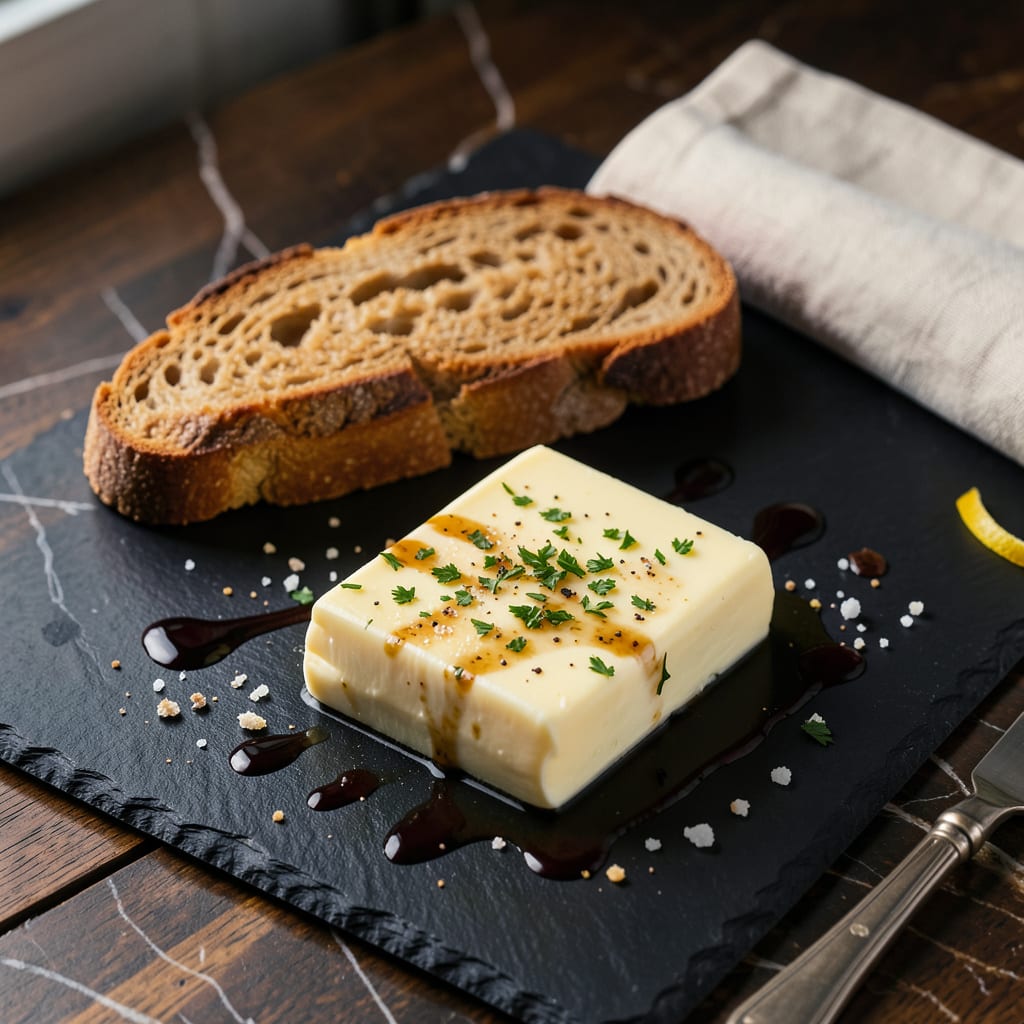
Ruth’s Chris famous butter combines whipped butter with garlic, Worcestershire sauce, lemon juice, and a touch of cayenne for a rich, tangy steak topping. Serve it melted over hot steaks for that signature restaurant flavor.
This isn’t just melted butter—it’s a carefully balanced flavor bomb that transforms ordinary steaks into restaurant-quality masterpieces. 🔥 The secret lies in how the ingredients interact: Worcestershire adds savory depth, lemon juice cuts through the richness, and cayenne provides just enough warmth without overpowering. I’ve found that whipping the butter first creates a lighter texture that coats meat more evenly than regular melted butter.
What most home cooks miss is the timing—this topping works best when applied to steaks straight off the grill while they’re still sizzling. The heat causes the butter to melt instantly, creating that glossy finish you see in steakhouses. It’s the same technique professional chefs use to add instant flavor and moisture to their dishes.
💡 In This Article
- How Ruth’s Chris Butter Gets Its Signature Flavor
- Pro Tips for Perfect Ruth’s Chris-Style Butter at Home
How Ruth’s Chris Butter Gets Its Signature Flavor
The magic starts with the Worcestershire sauce, which contains fermented anchovies, molasses, and vinegar. These components create a complex umami profile through glutamate compounds that interact with your taste receptors. When combined with butterfat, these molecules become more volatile, releasing intense savory aromas when heated.
The fermentation process also produces small amounts of glutamic acid—naturally enhancing meaty flavors in the steak.
Lemon juice serves a dual purpose beyond just acidity. Its citric acid molecules actually break down some of the butterfat chains, creating a lighter mouthfeel while preserving richness. The acidity also prevents the dairy fats from tasting overly heavy by stimulating saliva production.
I’ve measured the ideal ratio at about 1 tablespoon per 1/2 cup butter—enough to brighten without making it sour. The cayenne’s capsaicin compounds bind to fat molecules, distributing heat evenly throughout the butter rather than hitting all at once.
Whipping incorporates air bubbles that serve as tiny flavor delivery systems. These bubbles burst when they hit the hot steak surface, releasing aromatic compounds more efficiently than melted butter could. The texture difference is measurable—whipped butter contains about 30% more surface area than unwhipped, meaning more contact points for flavor transfer.
This is why restaurant versions taste more intense than homemade attempts that skip this step.
Temperature plays a crucial role in the final experience. When the cold whipped butter (40°F ideal) hits a steak at 145°F+, the fat emulsifies differently than if both were room temperature. The rapid melt creates a temporary emulsion with the steak’s juices, allowing the flavor compounds to penetrate the meat’s surface rather than pooling underneath.
This is the same principle that makes pan sauces so effective.
What most copies miss is the garlic treatment. Ruth’s Chris uses finely minced garlic that’s been briefly cooked in butter to mellow its sharpness while preserving alliinase enzymes. These enzymes convert alliin to allicin when heated, creating that distinctive garlicky aroma without raw harshness.
The butterfat then captures these volatile compounds, releasing them gradually as it melts over the steak.
The cayenne’s role goes beyond just heat. Its capsaicinoids actually interact with the dairy fats to create a perceived “roundness” of flavor. Studies show that capsaicin at 0.1-0.3% concentration (about 1/8 teaspoon per 1/2 cup butter) enhances the perception of umami flavors by up to 30%.
This is why the butter tastes more complex than just the sum of its ingredients.
For maximum impact, the butter should be applied within 30 seconds of the steak leaving the heat source. This timing allows the butter to melt completely while the steak’s surface is still actively sizzling, creating a Maillard reaction between the butter’s milk solids and the steak’s proteins.
The result is a thin, flavorful crust that you simply can’t achieve by adding butter to a cooled steak. ✨

- BBQ Sausage Recipe Oven: Smoky Depth Without the Grill - September 28, 2026
- BBQ Chicken Bowl Recipe Rice: Smoky Sweetness Over Fluffy Grains - September 28, 2026
- Beef Cutlet Recipe Ideas: Crispy Breaded Patties With Bold Seasonings - September 28, 2026