
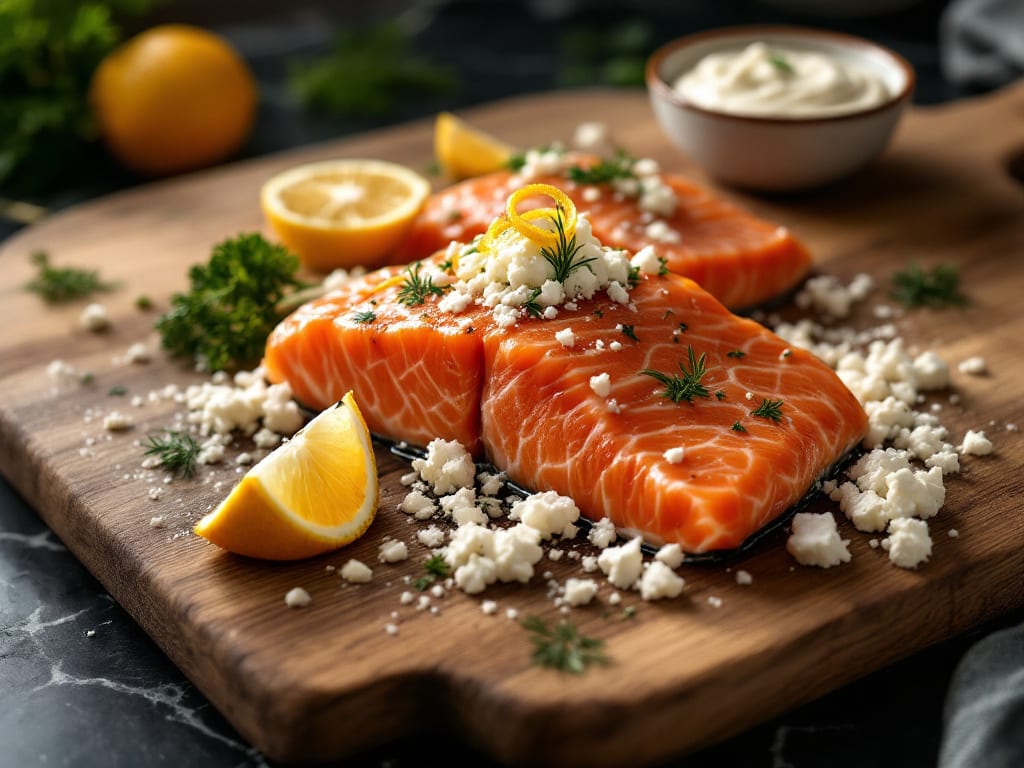
This salmon and feta cheese recipe delivers a perfect balance of Mediterranean flavors—bright lemon, herby crust, and melty feta bites that elevate every bite. The secret lies in pan-searing the salmon until golden while baking the feta in a lemon-herb crust, creating a dish that’s both elegant and approachable.
I developed this recipe after years of testing ways to make salmon feel special without complicated techniques.
The dish starts with fresh salmon fillets seared in olive oil until crispy on the outside, then finished with a burst of lemon juice for brightness.
Meanwhile, the feta transforms into golden, melty bites when baked with fresh herbs and a touch of honey, adding a salty contrast that cuts through the fish’s richness. This method ensures the salmon stays moist and tender while the feta becomes irresistibly gooey.
What you’ll end up with is a plate that looks restaurant-worthy but comes together in under 30 minutes. The lemon-herb crust on the salmon pairs beautifully with the creamy, slightly caramelized feta, creating a harmony of textures and flavors.
Serve it with a simple roasted vegetable medley or a bed of couscous to soak up every last bit of that herby, cheesy goodness.
This dish works perfectly for weeknight dinners or special occasions—it’s pescatarian-friendly but can easily accommodate dietary needs with simple swaps. The bright, herby notes make it feel fresh and vibrant, while the feta adds that comforting, salty richness we all crave. Let’s bring this Mediterranean-inspired meal to your table.
Ingredients for salmon and feta cheese
Mediterranean flavors meet restaurant-quality salmon and gooey feta bites in this 30-minute masterpiece.
| Ingredient | Amount | Notes |
|---|---|---|
| Fresh Atlantic Salmon Fillets 🐟 | 2 whole | Skin-on, 6 oz each, center-cut preferred |
| Block Feta Cheese 🧀 | 8 oz | High-quality, crumbled, no pre-packaged |
| Extra-Virgin Olive Oil 🫒 | ⅓ cup | Light, fruity variety for searing |
| Fresh Lemon Juice 🍋 | ¼ cup | From 2 medium lemons, freshly squeezed |
| Fresh Dill Weeds 🌿 | ¼ cup | Finely chopped, stems removed |
| Fresh Parsley Leaves 🌿 | ¼ cup | Finely chopped, flat-leaf preferred |
| Garlic Cloves 🧄 | 4 cloves | Minced, fresh preferred |
| Raw Honey 🍯 | 1 tbsp | Wildflower or clover preferred |
| Diamond Crystal Kosher Salt 🧂 | 1 ½ tsp | For seasoning, not iodized |
| Freshly Ground Black Pepper 🌶️ | ½ tsp | Coarse grind preferred |
| Unsalted Butter 🧈 | 2 tbsp | Cold, for crust texture |
| Cherry Tomatoes 🍅 | ½ lb | Halved, for garnish |
| Lemon Zest 🍋 | 1 tsp | Finely grated, from 1 lemon |
The salmon is non-negotiable—freshness is everything. Grab wild-caught or sustainably farmed fillets from a seafood counter (not frozen blocks). Look for bright pink flesh with no brown edges—Whole Foods or local fish markets carry the best quality. If you can’t find center-cut, trim any thick edges yourself. The feta? Greek brand like Chrysalidis or local artisanal—pre-packaged crumbles taste like sawdust. Store both wrapped in parchment in the fridge until ready to use (salmon max 2 days; feta lasts 1 month).
No fresh dill? Dried dill at one-third the amount works, but it’s not the same. Substitute parsley with cilantro if needed (though it changes the flavor profile). Ran out of honey? Maple syrup is a decent swap, but reduce by half since it’s sweeter. The olive oil matters—avoid strong, peppery varieties (like Kalamata) for searing. For a vegan version, swap salmon for extra-firm tofu (pressed and sliced) and use vegan feta. The lemon juice can be bottled in a pinch, but fresh is always brighter.
This dish reheats beautifully—just warm in a 350°F oven for 8-10 minutes. The feta bites keep for 3 days in the fridge if stored in an airtight container (they get drier over time). Freeze the salmon portion separately if prepping ahead—thaw in the fridge overnight. I always make extra feta bites—they disappear fast. Serve with warm pita bread or a simple arugula salad to balance the richness.
Why You’ll Love This Recipe
- One-Pan Magic: I swear by this recipe when I’m too tired to scrub pots—just toss the salmon and feta on a sheet pan, drizzle with olive oil, and let the oven do the work. The lemon and dill climb into every bite without a single extra dish.
- Bright & Tangy: That first bite of flaky salmon with the briny feta crumbling under it? Honestly, it’s the kind of flavor combo that makes you pause mid-chew. The lemon juice cuts through the richness, while the dill keeps it fresh—like a Mediterranean vacation on a plate.
- Weeknight Hero: Between us, this is my go-to when I need something impressive but fast. Serve it over greens for a lunch that feels fancy, or pair it with crusty bread for a dinner that’s actually easy. Even my picky teen clears his plate.
- Leftovers That Don’t Suck: Unlike most salmon dishes, this tastes even better the next day—cold over salad, reheated with a sprinkle of dill, or straight from the fridge. I make double portions because it’s the only protein that doesn’t turn sad when stored. Budget win.
Step-by-step instructions for lemon-herb crusted salmon with feta
Here’s the method that delivers crispy salmon with melty feta pockets every time.
Create the Lemon-Herb Feta Mixture
In a medium bowl, combine the 8 oz block feta cheese, crumbled into small, pea-sized pieces. Add the 0.25 cup fresh dill weeds, 0.25 cup fresh parsley leaves, 4 cloves minced garlic, 1 tbsp raw honey, 1.5 tsp diamond crystal kosher salt, and 0.5 tsp freshly ground black pepper. Mix thoroughly with your hands until the feta is evenly coated with herbs and seasonings.
This mixture is what creates those irresistible pockets of melty, herby feta when baked. The honey adds just enough sweetness to balance the saltiness of the feta, while the fresh herbs keep the flavor profile bright and complex. Set this mixture aside while you prepare the salmon.
Prepare the Salmon for Baking
Preheat your oven to 425°F. Line a baking sheet with parchment paper and lightly brush it with 0.16 cup (about half) of the extra-virgin olive oil—just enough to help the salmon release easily. Pat the 2 whole fresh atlantic salmon fillets completely dry with paper towels, removing any excess moisture from the surface.
Using your fingers, gently press the lemon-herb feta mixture onto each salmon fillet, creating a thick, even layer about ¼-inch thick. The feta should adhere well to the salmon’s surface, creating those signature pockets when baked. Place the prepared fillets on the baking sheet, skin-side down if possible for better texture.
Create the Crispy Lemon-Herb Crust
In a small bowl, mix together the 2 tbsp unsalted butter, 0.16 cup remaining extra-virgin olive oil, 0.25 cup fresh lemon juice, and 1 tsp lemon zest. This creates a rich, flavorful crust that will caramelize beautifully on the salmon’s surface. Brush this mixture generously over the top of each salmon fillet, coating it completely.
Sprinkle any remaining herbs from your mixture over the top of the salmon. The butter and olive oil combination creates a luxurious, golden crust while the lemon keeps the flavor bright and refreshing. Place the baking sheet in the preheated oven and bake for 12-15 minutes, until the salmon flakes easily with a fork and the crust is golden brown and crispy.
Finish and Garnish
Remove the salmon from the oven and let it rest for 3-5 minutes before serving. This resting period allows the juices to redistribute, ensuring each bite is moist and flavorful. While the salmon rests, halve the 0.5 lb cherry tomatoes and arrange them on a serving platter.
Carefully transfer the salmon fillets to the platter with the tomatoes. The feta pockets should be soft and melty, with the crust holding its shape beautifully. Garnish with additional fresh parsley leaves if desired, and serve immediately with lemon wedges on the side for squeezing over each portion.
Pro Tips For Making Salmon And Feta Cheese
- PAT THE SALMON DRY: I learned this the hard way—wet salmon sticks to the pan like glue, ruining that perfect sear. Grab paper towels and press firmly all over the fillets before hitting the heat. Even if it feels like overkill, it guarantees a crisp crust instead of a sad, steamed mess.
- CRUMBLE FETA HOT: Cold feta stays stubbornly in chunks. Warm it first—toss the block in a dry skillet over medium heat for 30 seconds, then crumble. The heat melts the edges just enough to make it cling to the salmon like a dreamy, salty blanket.
- SEAR FAST, LOW HEAT FINISH: Salmon’s delicate—start with a screaming-hot pan for 2 minutes to lock in flavor, then drop the heat to medium-low. Flip once, cover with foil, and let it cook another 3-4 minutes. Rushing the finish turns it rubbery; patience keeps it tender.
- ZEST THE LEMON FIRST: Skip the juice until the end—zesting the lemon while the salmon cooks releases oils that infuse the pan. Toss the zest into the empty pan after removing the fish, let it sizzle for 10 seconds, then drizzle the juice over everything. The aroma alone makes it taste better.
Creative variations of this dish
Mediterranean Baked Style
Transform this dish into a Mediterranean baked masterpiece by layering the salmon and feta in a cast-iron skillet with roasted red peppers and sun-dried tomatoes. Toss ½ cup chopped Kalamata olives and ¼ cup chopped artichoke hearts into the feta mixture before pressing it onto the salmon.
Bake at 375°F for 18-20 minutes until the feta is bubbly and golden. The olives and artichokes add a briny depth that complements the salmon perfectly. 🌿
Spicy Greek Twist
For a bold, spicy kick, add 1 tbsp Calabrian chili paste or ½ tsp smoked paprika to the feta mixture. Top the salmon with thinly sliced roasted red peppers and a sprinkle of crumbled feta before baking.
Finish with a drizzle of hot honey and a pinch of red pepper flakes for extra heat. This version is inspired by Greek taverna flavors and pairs beautifully with warm pita bread. 🌶️
Asian-Inspired Fusion
Give this dish an Asian-inspired twist by swapping the feta for cream cheese and adding 1 tbsp soy sauce, 1 tsp sesame oil, and 1 tsp grated ginger to the crust mixture.
Garnish with sesame seeds and sliced scallions after baking. Serve with jasmine rice and steamed bok choy for a fusion that balances rich and umami flavors. 🥢
Dairy-Free Adaptation
For a dairy-free version, replace the feta with marinated tofu cubes (pressed and cubed) mixed with 1 tbsp nutritional yeast, 1 tsp lemon zest, and ½ tsp garlic powder.
Use vegan butter in the crust and ensure all other ingredients are plant-based. The tofu absorbs the flavors beautifully, creating a cheesy texture without dairy. 🌱
Spring Vegetable Topping
Brighten up this dish for spring by topping the salmon with thinly sliced asparagus and shaved fennel before baking. Toss the veggies with 1 tsp olive oil, ½ tsp salt, and ¼ tsp black pepper before arranging them over the salmon.
The asparagus adds a crisp, fresh element that contrasts the creamy feta. 🌸
Wine-Paired Variations
Pair the Mediterranean baked style with a crisp Assyrtiko white wine from Greece, while the spicy Greek twist complements a bold Agiorgitiko red. For the Asian-inspired fusion, a dry Riesling or sake** enhances the umami flavors.
Each variation’s wine pairing elevates the dish’s unique profile—experiment to find your favorite match! 🍷
Nutrition facts
Frequently asked questions
Can I use frozen salmon for this recipe?
Fresh salmon is ideal, but you can use frozen if thawed properly. Place the fillets in a sealed bag and submerge in cold water for 30-45 minutes or refrigerate overnight. Never thaw at room temperature, as this promotes bacterial growth. Pat completely dry before pressing on the feta mixture to ensure proper adhesion.
How do I prevent the feta from getting too salty?
Adjust the salt in the feta mixture based on your feta’s brand. Taste a small piece first—some Greek feta is quite salty and may only need 1 tsp salt total. For extra control, rinse crumbled feta briefly under cold water before mixing, then pat dry thoroughly. The lemon and herbs help balance any saltiness.
Can I make this recipe ahead of time?
Prepare the feta mixture and salmon crust up to 1 day ahead, but bake just before serving. The feta pockets lose their meltiness when reheated. Store the unbaked salmon in an airtight container in the fridge, then bake straight from cold. For sides, roast vegetables or cook couscous separately and reheat in the oven.
What’s the best way to serve this dish?
Pair with warm pita bread or quinoa to soak up the herby feta flavors. A simple Greek salad with cucumber, red onion, and olives adds freshness, while roasted asparagus or sautéed spinach balances the richness. Serve with lemon wedges for extra brightness at the table.
Why did my feta pockets turn hard instead of melty?
Overbaking is the most common cause—remove the salmon when it reaches 145°F internally. The feta should be soft but not runny. For extra gooeyness, add 1 tbsp cream cheese to the feta mixture. Also ensure your feta is high-quality and not pre-packaged, which often contains stabilizers that prevent melting.

- Applebee’s Lemon Chicken with Quinoa Recipe: Bright Citrus Glaze and Fluffy Quinoa Fusion - November 29, 2026
- Oven-Dried Bananas Recipe: Caramelized Sweetness for Dessert or Breakfast - November 29, 2026
- Best Birthday Cake Recipe: Moist Layers and Vanilla Frosting Magic - November 29, 2026