
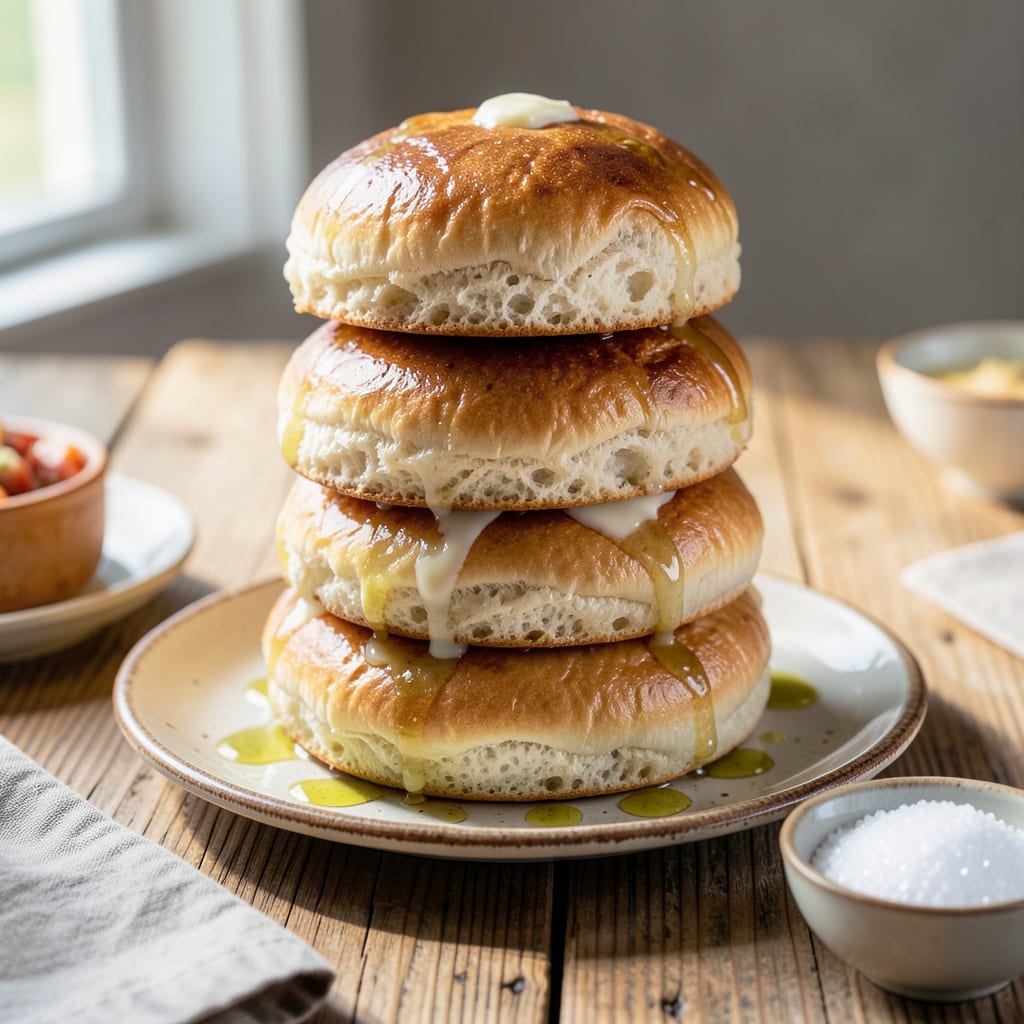
There’s nothing like a homemade burger bun that’s soft, slightly sweet, and sturdy enough to hold any filling. This recipe delivers a pillowy texture with a golden crust, perfect for juicy burgers or sandwiches.
With simple ingredients and a straightforward method, you’ll achieve bakery-quality results. The dough rises beautifully, ensuring a light, airy interior that’s both tender and Durable.
Ingredients for Soft Burger Bun
Simple ingredients, bakery-quality results. Soft, sweet, and sturdy for any filling.
| Ingredient | Amount | Notes |
|---|---|---|
| Bread Flour 🌾 | 4 cups | High-protein for structure and chew |
| Whole Milk 🥛 | 1 cup | Warm to 110°F for yeast activation |
| Granulated Sugar 🍚 | ¼ cup | Feeds yeast and adds subtle sweetness |
| Active Dry Yeast 🍃 | 2 ¼ tsp | 1 packet, proofed in warm milk |
| Unsalted Butter 🧈 | 4 tbsp | Melted and cooled to room temperature |
| Large Egg 🥚 | 1 whole | Room temperature for even incorporation |
| Salt 🧂 | 1 ½ tsp | Fine sea salt for balanced flavor |
| Honey 🍯 | 2 tbsp | Adds moisture and subtle sweetness |
| Vegetable Oil 🫒 | 2 tbsp | For greasing bowl and brushing buns |
| Sesame Seeds 🌰 | 2 tbsp | Optional, for topping before baking |
The flour choice is critical. King Arthur Bread Flour or Gold Medal Bread Flour deliver the high protein content needed for that pillowy yet sturdy texture. Yeast must be active—check the expiration date and store unopened packets in the freezer. Whole milk adds richness, but 2% works in a pinch (avoid skim as the lower fat affects texture).
No bread flour? All-purpose flour plus 2 tbsp vital wheat gluten approximates the protein content. Honey can be swapped for maple syrup or agave at a 1:1 ratio. Butter substitutes like coconut oil work, though flavor will differ slightly. For egg-free, use 1 tbsp ground flaxseed plus 3 tbsp water as a binder.
Dough rises best in a warm, draft-free spot—75-80°F is ideal. Baked buns keep 3 days at room temperature in an airtight container, or freeze for 3 months. Slice just before serving to maintain freshness and structure.
Why You’ll Love This Recipe
- One Bowl Wonder: I mix everything in a single bowl—no fancy equipment, just bread flour, yeast, and a little sugar to get it going.
- Buttery Perfection: The unsalted butter and whole milk make these buns so tender and rich, they melt in your mouth.
- Freezer Friendly: I bake a double batch and freeze half for later—fresh buns anytime I need them.
- Budget Stretcher: Honestly, these cost a fraction of store-bought and taste way better.
Step-by-Step Instructions for Soft Burger Buns
Master the technique for bakery-style buns with a tender crumb and golden crust.
Step 1: Activate the Yeast and Mix Wet Ingredients
Warm the 1 cup Whole Milk to 110°F—it should feel warm to the touch but not hot. In the bowl of a stand mixer, combine the warm milk with the 0.25 cup Granulated Sugar and 2.25 tsp Active Dry Yeast. Let it sit for 5-7 minutes until foamy and fragrant.
Once the yeast is activated, add the 2 tbsp Honey, 1 whole Large Egg, and 4 tbsp Unsalted Butter (melted and cooled to room temperature). Mix on low speed until the wet ingredients are fully incorporated. This foundation ensures even yeast distribution and balanced sweetness.
Step 2: Incorporate Dry Ingredients and Knead
With the mixer running on low speed, gradually add the 4 cups Bread Flour and 1.5 tsp Salt. Using the dough hook attachment, increase the speed to medium and knead for 8-10 minutes until the dough is smooth, elastic, and slightly tacky to the touch.
The high-protein bread flour develops the gluten structure needed for a soft yet sturdy bun. If the dough feels too sticky, resist adding more flour—let the gluten develop fully. The dough should pull away from the sides of the bowl but still cling slightly to the bottom.
Step 3: First Rise Until Doubled in Volume
Lightly grease a large bowl with 1 tbsp Vegetable Oil, then transfer the dough into it, turning to coat all sides. Cover with a clean kitchen towel or plastic wrap and let it rise in a warm, draft-free place for 1 to 1.5 hours, or until doubled in size.
Proper proofing is critical for a light, airy texture. The dough should spring back slowly when gently pressed with a finger. If your kitchen is cool, place the bowl near a warm oven (turned off) to expedite the process.
Step 4: Shape, Second Rise, and Prepare for Baking
Punch down the risen dough to release air, then turn it out onto a lightly floured surface. Divide it into 8 equal portions (about 4 oz each) and shape each into a smooth ball. Place the buns on a parchment-lined baking sheet, spacing them 2 inches apart.
Lightly brush the tops with the remaining 1 tbsp Vegetable Oil to prevent drying, then cover and let rise for another 45-60 minutes until puffy. Preheat the oven to 375°F during the last 15 minutes of rising.
For added texture, sprinkle 2 tbsp Sesame Seeds over the buns just before baking.
Step 5: Bake to Golden Perfection
Bake the buns in the preheated oven for 15-18 minutes, or until they are golden brown and the internal temperature reaches 190°F. Rotate the baking sheet halfway through for even browning.
Remove from the oven and let them cool on a wire rack for at least 20 minutes before slicing. This cooling period allows the structure to set, ensuring a soft, pillowy texture. Serve warm for the best experience.
Pro Tips For Making Soft Burger Bun
- Warm the Milk: Heat the whole milk to about 110°F—any hotter and you’ll kill the yeast, any colder and it won’t activate properly. I learned this the hard way after a few batches that refused to rise.
- Use Room-Temp Butter: Let the unsalted butter sit out for at least 30 minutes before mixing. Cold butter won’t incorporate evenly, and you’ll end up with dense, uneven buns.
- Don’t Over-Flour: Resist the urge to dump extra bread flour on your work surface. Too much flour toughens the dough, and your buns will turn out dry instead of soft.
- Brush With Milk: Before baking, brush the tops with a little whole milk for a golden, shiny finish. It’s a small step, but it makes the buns look and taste like they came from a bakery.
Perfect Pairings for These Flavors
Burger Pairings
These buns are perfect for classic beef burgers with 80/20 ground chuck—the soft texture holds up to juicy patties. I love adding sharp cheddar and crisp bacon for extra flavor. The slight sweetness complements savory toppings beautifully. 🔥
Vegetarian Options
For a meat-free meal, pair with black bean patties or portobello mushrooms. Add avocado slices, pepper jack cheese, and a drizzle of chipotle mayo. The buns’ sturdy structure prevents sogginess from veggie burger juices.
Breakfast Sandwiches
Use these buns for breakfast with fried eggs, sharp cheddar, and Canadian bacon. Toast them lightly first to add crunch. A smear of sriracha mayo adds a nice kick to wake up your morning.
Sliders and Mini Buns
Shape the dough into smaller 2-ounce portions for slider buns. These are great for pulled pork, fried chicken, or even mini philly cheesesteaks. The smaller size makes them perfect for parties or appetizers.
Dessert Twist
Turn leftover buns into bread pudding by cubing and baking with a custard mixture and raisins. Or try French toast—dip in egg batter with cinnamon and cook until golden. The slight sweetness works wonderfully. ✨
Nutrition Facts
Frequently Asked Questions
Why use bread flour instead of all-purpose?
Bread flour has a higher protein content, which develops more gluten for a chewy yet soft texture. All-purpose works in a pinch, but add 2 tbsp vital wheat gluten per cup to mimic bread flour’s structure.
Can I make these ahead of time?
Yes! Shape and let the buns rise overnight in the fridge for a slow proof. Bake the next morning. Store baked buns in an airtight container for up to 3 days or freeze for 3 months.
How do I keep them from getting dense?
Avoid over-kneading or adding too much flour. Let the dough rise until doubled—rushing this step results in heavy buns. Ensure your yeast is fresh and activated in 110°F milk.

- Beyond Burger Recipe Ideas: Plant-Based Creativity for Every Meal - September 28, 2026
- BBQ Bison Recipe Steaks: Smoky Grill Mastery with Bold Flavor - September 28, 2026
- Chicken Breast Recipe Tender: Brine-Soaked Juiciness Without Overcooking - September 28, 2026