
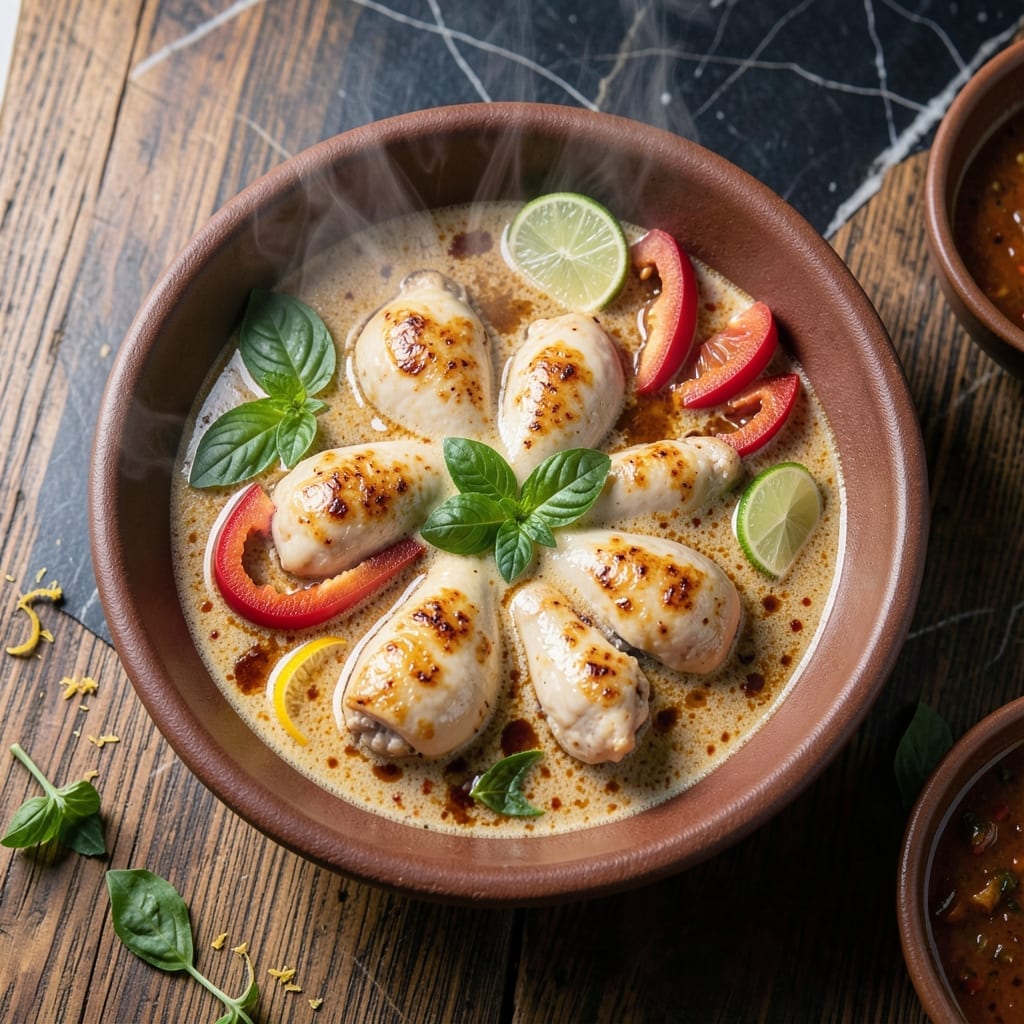
I developed this chicken curry after years of testing different approaches to achieve tender meat in a rich coconut sauce. The key lies in proper preparation and timing.
This recipe uses a balance of traditional Thai flavors—creamy coconut, fragrant herbs, and a touch of heat. Each ingredient plays a specific role in building layers of taste.
What sets this version apart is the method for cooking the chicken just until it reaches that perfect tender consistency without drying out. The sauce comes together beautifully in the same pan.
You will end up with a dish that delivers restaurant-quality results at home, with every bite offering complex flavors and melt-in-your-mouth texture.
Ingredients for Thai Curry Recipe Chicken
A few fresh herbs and pantry staples create this fragrant, layered dish with melt-in-your-mouth results.
| Ingredient | Amount | Notes |
|---|---|---|
| Boneless Chicken Thighs 🍗 | 1 ½ lb | Skin-on or skinless, cut into bite-sized pieces |
| Coconut Milk 🥥 | 2 cups | Full-fat for creamy texture |
| Red Curry Paste 🌶️ | 3 tbsp | Thai-style, check for shrimp-free if needed |
| Fish Sauce 🐟 | 2 tbsp | Or substitute soy sauce for vegetarian |
| Brown Sugar 🍚 | 1 tbsp | Light or dark, for balance |
| Fresh Lime Juice 🍈 | 2 tbsp | About 1 lime, freshly squeezed |
| Fresh Basil Leaves 🌿 | ½ cup | Thai basil preferred, regular works |
| Fresh Cilantro 🌿 | ¼ cup | Chopped, for garnish |
| Red Bell Pepper 🌶️ | 1 whole | Sliced into thin strips |
| Shallot 🧅 | 1 whole | Finely minced |
| Garlic Cloves 🧄 | 4 cloves | Minced for depth of flavor |
| Fresh Ginger 🌿 | 1 tbsp | Peeled and finely grated |
| Vegetable Oil 🫒 | 2 tbsp | Neutral oil for sautéing |
| Chicken Broth 🍲 | ½ cup | Low-sodium preferred |
| Salt 🧂 | ½ tsp | Adjust to taste |
The chicken thighs are non-negotiable for that tender bite—they hold up to the sauce without drying out. Costco has great bulk options, or grab them from the butcher at Whole Foods for consistent sizing. Coconut milk brands vary wildly in richness; Thai Kitchen or Chaokoh deliver the creamiest results. Always shake the can well before opening (the good stuff, not the watery separation).
No red curry paste? Green or yellow curry paste works, but adjust the heat—green is spicier. Fish sauce can be swapped for soy sauce or tamari (use one-third less as it’s saltier). Thai basil is ideal, but Italian basil (or even mint) adds a fresh note. The bell pepper can be any color—just keep the strips uniform for even cooking.
This tastes even better the next day as flavors meld. Stores in the fridge for 3-4 days or freeze for 2 months. Reheat gently on the stove (microwaving can separate the coconut milk). Always garnish with fresh herbs right before serving.
Why You’ll Love This Recipe
- One Pot Wonder: I love that everything simmers together in a single pan—chicken, coconut milk, and curry paste—minimal cleanup, maximum flavor.
- Rich and Balanced: The brown sugar mellows the spice from the red curry paste while fish sauce adds that umami depth I crave.
- Feeds a Crowd: Honestly, this stretches easily for meal prep or unexpected guests, and it reheats beautifully.
- Budget Stretcher: Boneless thighs stay juicy and cost less than breasts, and a little curry paste goes a long way.
Step-by-Step Instructions for Thai Curry Chicken
Master the technique for fall-off-the-bone chicken in a rich, aromatic coconut sauce.
Step 1: Sauté Aromatics Until Fragrant
Heat the 2 tbsp vegetable oil in a large pot or Dutch oven over medium heat. Add the minced shallot, 4 cloves garlic cloves, and 1 tbsp fresh ginger, sautéing for 2-3 minutes until the shallots turn translucent and the mixture releases a strong, sweet aroma.
This base layer of aromatics is the foundation of your curry’s depth. Stir frequently to prevent burning—the ginger and garlic can go from fragrant to bitter quickly if left unattended. You’ll know it’s ready when the raw edge is gone from the garlic.
Step 2: Build the Curry Base with Paste and Chicken
Add the 3 tbsp red curry paste to the pot and stir for 1-2 minutes, toasting it slightly to deepen its flavor. The paste will darken and become intensely fragrant, signaling it’s ready for the next step.
Immediately add the 1.5 lb boneless chicken thighs (cut into bite-sized pieces) and cook for 4-5 minutes, stirring occasionally, until the exterior turns opaque and white. The chicken doesn’t need to be fully cooked through at this stage—it will finish in the sauce.
Step 3: Simmer in Coconut Milk and Broth
Pour in the 2 cups coconut milk and 0.5 cup chicken broth, stirring to dissolve the curry paste and incorporate all the browned bits from the bottom of the pot. Add the sliced red bell pepper, 1 tbsp brown sugar, and 0.5 tsp salt.
Bring the mixture to a gentle simmer, then reduce the heat to low. Cover and let it cook for 15-20 minutes, stirring occasionally, until the chicken is tender and the bell pepper softens. The sauce should thicken slightly, coating the back of a spoon.
Step 4: Finish with Fish Sauce, Lime, and Herbs
Stir in the 2 tbsp fish sauce and 2 tbsp fresh lime juice. Taste and adjust seasoning if needed—this is your chance to balance the sweet, salty, and tangy elements. The lime juice brightens the rich coconut base beautifully.
Remove from heat and stir in the 0.5 cup fresh basil leaves, reserving a few for garnish. The basil should wilt slightly but retain some vibrant color. Let the curry rest for 5 minutes off the heat to allow the flavors to meld.
Serve hot, garnished with the remaining basil and the 0.25 cup fresh cilantro. The cilantro adds a fresh, citrusy finish that complements the creamy, spiced sauce perfectly.
Pro Tips For Making Thai Curry Recipe Chicken
- Brown the Paste: Cook the red curry paste in the pot for 2-3 minutes before adding coconut milk—this deepens the flavor and removes any raw taste. I learned this the hard way after my first batch tasted flat.
- Cut Chicken Small: Slice boneless thighs into 1-inch pieces so they cook through in 8-10 minutes. Larger chunks stay tough and chewy, even in the creamy sauce.
- Skip the Boil: Keep the curry at a gentle simmer, never a rolling boil, or the coconut milk will separate. After ruining a batch with a greasy mess, I now watch that heat like a hawk.
- Balance Last: Taste and adjust the fish sauce and brown sugar at the very end—coconut milk mellows the flavors as it cooks, so early seasoning can leave it too salty or sweet.
Dietary Considerations for This Dish
Gluten-Free Naturally
This dish is inherently gluten-free as written, with no wheat-based ingredients. The only potential concern is the red curry paste—some brands may contain wheat as a thickener. I always check labels and recommend Maesri or Thai Kitchen brands for guaranteed gluten-free options. 💪
Dairy-Free and Vegan Option
Simply swap the chicken for extra-firm tofu or chickpeas to make this vegan. Use soy sauce or tamari instead of fish sauce. The creamy coconut base remains unchanged, delivering the same rich texture without any dairy.
Nut Allergy Note
The recipe contains no nuts, but always verify your red curry paste and coconut milk brands. Some curry pastes include peanuts, and cross-contamination can occur in processing facilities. I stick with Chaokoh coconut milk for nut-free confidence.
Lower Sodium Adjustments
To reduce sodium, use low-sodium chicken broth and cut the fish sauce to 1 tbsp. You can boost flavor with extra lime juice or fresh herbs. I find this maintains the balance without overwhelming saltiness. 💡
Spice Level Control
For heat-sensitive diners, reduce the red curry paste to 2 tbsp and add a pinch of sugar to balance. For extra heat, include ½ tsp cayenne or a chopped Thai chili. I always taste as I go and adjust gradually.
Nutrition Facts
Frequently Asked Questions
Can I use chicken breast instead of thighs?
Thighs stay juicier, but breasts work if cooked carefully. Reduce simmering time to 10-12 minutes to prevent dryness. Slice them thinner for even cooking.
How do I make it less spicy?
Use 2 tbsp curry paste instead of 3 tbsp and add 1 tsp sugar to balance. Stir in extra coconut milk if needed. Taste as you adjust.
Can this be made ahead?
Yes! Flavors deepen overnight. Store in an airtight container for up to 3 days in the fridge. Reheat gently on the stove.
What if my sauce is too thin?
Simmer uncovered for 5-7 minutes to thicken. Avoid high heat to prevent separation. Stir occasionally for even reduction.

- BBQ Sausage Recipe Oven: Smoky Depth Without the Grill - September 28, 2026
- BBQ Chicken Bowl Recipe Rice: Smoky Sweetness Over Fluffy Grains - September 28, 2026
- Beef Cutlet Recipe Ideas: Crispy Breaded Patties With Bold Seasonings - September 28, 2026