
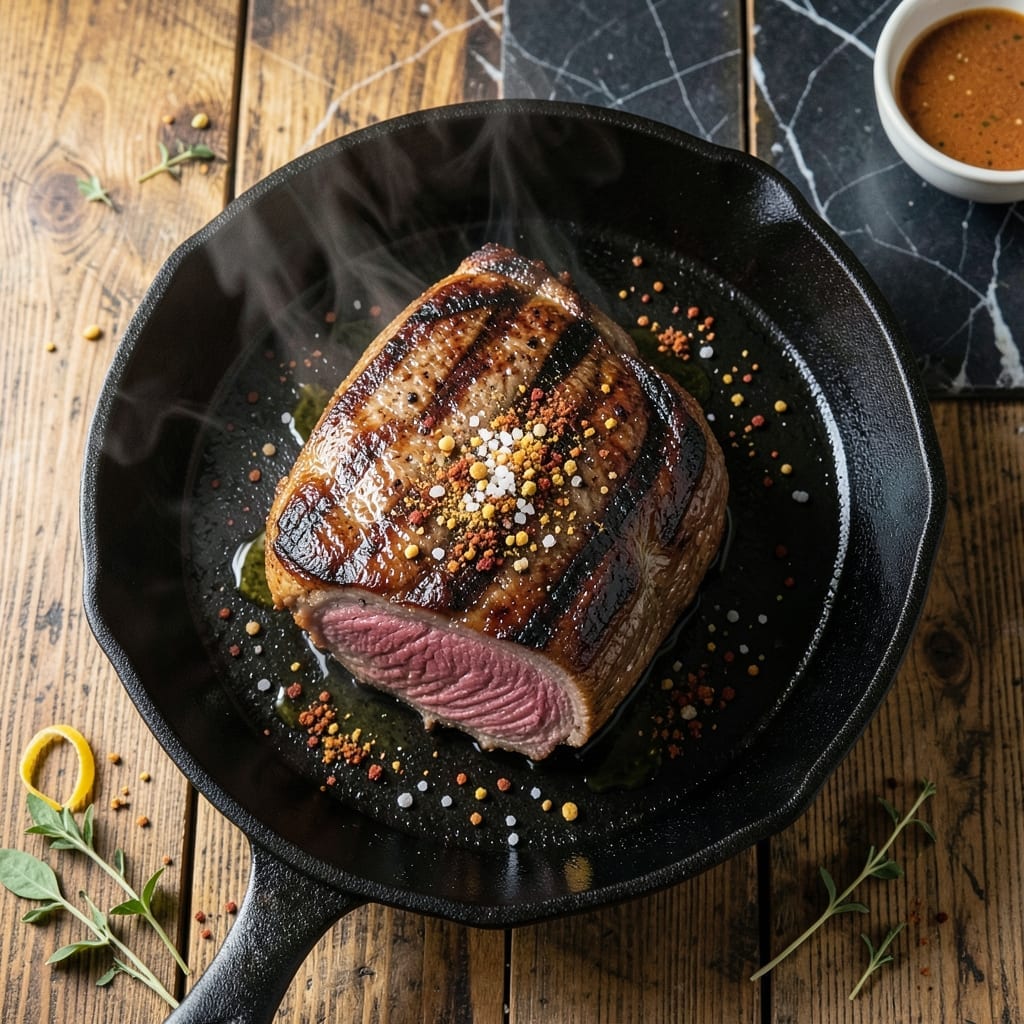
This cast iron method transforms a simple tri tip into a restaurant-quality meal with a perfect sear and tender results every time. The key lies in proper seasoning and precise heat control to develop a flavorful crust while keeping the inside juicy.
I’ve refined this technique to work on any stovetop, using a heavy cast iron skillet to achieve even cooking. The process involves searing the meat first, then finishing with a gentle cook to reach the ideal internal temperature.
What you’ll get is beautifully caramelized tri tip with a rich crust and a pink, juicy center. Slice against the grain for maximum tenderness, and serve with your favorite sides for a complete meal.
This approach delivers consistent results without needing a grill. Let’s start cooking.
Ingredients for Tri Tip Recipe Stove Top
Everything you need for that perfect sear and tender center. Simple but powerful stuff.
| Ingredient | Amount | Notes |
|---|---|---|
| Tri Tip Roast 🥩 | 2 lb | Well-marbled, trimmed of excess fat |
| Kosher Salt 🧂 | 2 tsp | Diamond Crystal preferred for texture |
| Black Pepper 🌶️ | 1 ½ tsp | Coarsely ground for best crust |
| Garlic Powder 🧄 | 1 tsp | Not garlic salt for pure flavor |
| Onion Powder 🧅 | 1 tsp | Adds depth to dry rub |
| Smoked Paprika 🌶️ | 1 tsp | For subtle smoky undertones |
| Dried Rosemary 🍃 | ½ tsp | Crushed to release oils |
| Olive Oil 🫒 | 2 tbsp | High smoke point for searing |
| Unsalted Butter 🧈 | 2 tbsp | For basting during cooking |
| Fresh Thyme Sprigs 🌿 | 4 whole | Optional for aromatic basting |
| Fresh Garlic Cloves 🧄 | 3 cloves | Smashed for basting flavor |
The tri tip is the star, so look for well-marbled pieces at your butcher or Costco—fat equals flavor and juiciness. Avoid anything labeled ‘select’ grade; choice or prime will give you that melt-in-your-mouth texture. I always ask for the cap off (that thick fat layer) to prevent uneven cooking. The dry rub spices should be fresh—if your paprika has been in the cabinet for years, toss it and grab new from Penzeys.
No smoked paprika? Regular paprika plus a pinch of cayenne works in a pinch. Don’t have fresh thyme? Dried thyme at half the amount is fine, but fresh brings that bright note. If you’re avoiding dairy, olive oil alone works for basting instead of butter. The garlic powder can be replaced with granulated garlic at the same amount—just as potent, slightly different texture.
The raw tri tip keeps in the fridge for 2-3 days before cooking. Leftovers? Slice thin, store airtight, and they’ll keep for 4 days. This freezes beautifully too—up to 3 months if wrapped well. Always bring to room temp before cooking for even doneness.
Why You’ll Love This Recipe
- One Pan Wonder: I love that I can sear and cook the tri tip in a single skillet—no oven, no extra dishes, just simple stovetop magic.
- Smoky & Savory: That crust from the garlic and onion powder with a juicy center? Honestly, it’s the reason my family begs for this.
- Feeds a Crowd: A tri tip roast on the stove easily serves six, making it my go-to for Sunday dinners or casual get-togethers.
- Leftovers for Days: Between us, the slices reheat beautifully in sandwiches or tacos—so I’m always happy to have extras.
Step-by-Step Instructions for Tri Tip Stove Top
Here’s the method. Straightforward, tested, works every time.
Step 1: Season the Tri Tip Generously
Pat the 2 lb Tri Tip Roast dry with paper towels—this ensures a good sear. In a small bowl, combine the 2 tsp Kosher Salt, 1.5 tsp Black Pepper, 1 tsp Garlic Powder, 1 tsp Onion Powder, 1 tsp Smoked Paprika, and 0.5 tsp Dried Rosemary.
Rub this mixture evenly over all surfaces of the roast. I like to press it in firmly so it forms a crust. Let the seasoned roast sit at room temperature for 30 minutes—this helps the flavors penetrate and the meat cook more evenly.
Step 2: Sear the Roast in Cast Iron
Heat the 2 tbsp Olive Oil in a large cast iron skillet over medium-high heat until shimmering. Place the roast in the pan and sear undisturbed for 4-5 minutes per side until deeply browned. You’ll know it’s ready to flip when it releases easily from the pan.
This high-heat sear creates a flavorful crust that locks in juices. Don’t rush this step—patience here pays off with a perfectly browned exterior.
Step 3: Baste with Aromatics
Reduce the heat to medium and add the 2 tbsp Unsalted Butter, 4 whole Fresh Thyme Sprigs, and 3 cloves Fresh Garlic Cloves (smashed) to the skillet. Tilt the pan slightly and spoon the melted butter over the roast repeatedly for 2-3 minutes.
This basting step adds incredible flavor and helps cook the roast evenly. The garlic and thyme infuse the butter, creating an aromatic bath for the meat. Keep spooning until the butter turns golden and the herbs are fragrant.
Step 4: Rest and Slice Against the Grain
Transfer the roast to a cutting board and let it rest for 10-15 minutes. This resting period allows the juices to redistribute, ensuring every slice is tender and moist. Tent loosely with foil to keep it warm.
Slice the roast thinly against the grain for maximum tenderness. To find the grain, look for the natural lines running through the meat—they’ll be more pronounced after cooking. Cutting against these lines shortens the muscle fibers, resulting in a more tender bite.
Pro Tips For Making Tri Tip Recipe Stove Top
- Sear Hot, Finish Low: Crank the burner to high for the first 2-3 minutes per side to get a deep crust on that tri tip—then drop to medium-low to cook through without burning the spices.
- Pat It Dry: I learned this the hard way: blot the tri tip with paper towels before seasoning, or the salt and pepper won’t stick properly and you’ll end up with a steamed roast instead of a seared one.
- Don’t Overcrowd: If your pan isn’t big enough for the whole roast, use two burners or cook it in batches—steam from crowding turns that beautiful crust into a soggy mess.
- Rest Before Slicing: Give it a solid 10 minutes under foil after cooking—sounds tedious, but slicing too soon sends all those juices straight to the cutting board instead of your plate.
Health Benefits of This tri tip recipe stove top
Protein Powerhouse
A 2 lb Tri Tip Roast packs about 100 grams of protein per serving, supporting muscle growth and repair. This lean cut delivers all nine essential amino acids your body needs without excessive saturated fat.
Iron Richness
Beef is naturally rich in heme iron, the most easily absorbed form. One serving provides about 20% of your daily iron needs, helping prevent fatigue and supporting oxygen transport in your blood. 💪
Vitamin B Boost
This dish is loaded with B vitamins, especially B12 and B6. These nutrients aid energy metabolism and nervous system function. A single serving covers about 50% of your daily B12 requirement.
Zinc for Immunity
Tri tip provides a healthy dose of zinc, with each serving offering roughly 40% of your daily value. This mineral supports immune function and wound healing while maintaining healthy skin.
Low in Carbs
With virtually no carbohydrates, this meal fits perfectly into low-carb or keto diets. The protein and healthy fats keep you full without spiking blood sugar, making it ideal for balanced energy throughout your day.
Selenium Source
Beef contains selenium, a powerful antioxidant that protects cells from damage. The tri tip cut provides about 30% of your daily selenium needs per serving, supporting thyroid health and immune function. ✨
Nutrition Facts
Frequently Asked Questions
How do I know when to flip the tri tip?
Wait until the meat releases easily from the pan, usually after 4-5 minutes. Forcing it too soon can tear the crust. The surface should be deeply browned before turning.
Can I use a different pan instead of cast iron?
A heavy stainless steel skillet works as a substitute. Avoid nonstick pans—they won’t get hot enough for a proper sear. Cast iron is ideal for heat retention and even cooking.
What internal temperature should I aim for?
Use a meat thermometer and pull it at 130-135°F for medium-rare. The temperature will rise 5-10°F while resting. This ensures a juicy, tender result.
Why does my tri tip turn out tough?
Most likely, it was sliced with the grain rather than against it. Always cut perpendicular to the muscle fibers. Also, check that it didn’t overcook past 140°F.

- Beyond Burger Recipe Ideas: Plant-Based Creativity for Every Meal - September 28, 2026
- BBQ Bison Recipe Steaks: Smoky Grill Mastery with Bold Flavor - September 28, 2026
- Chicken Breast Recipe Tender: Brine-Soaked Juiciness Without Overcooking - September 28, 2026