
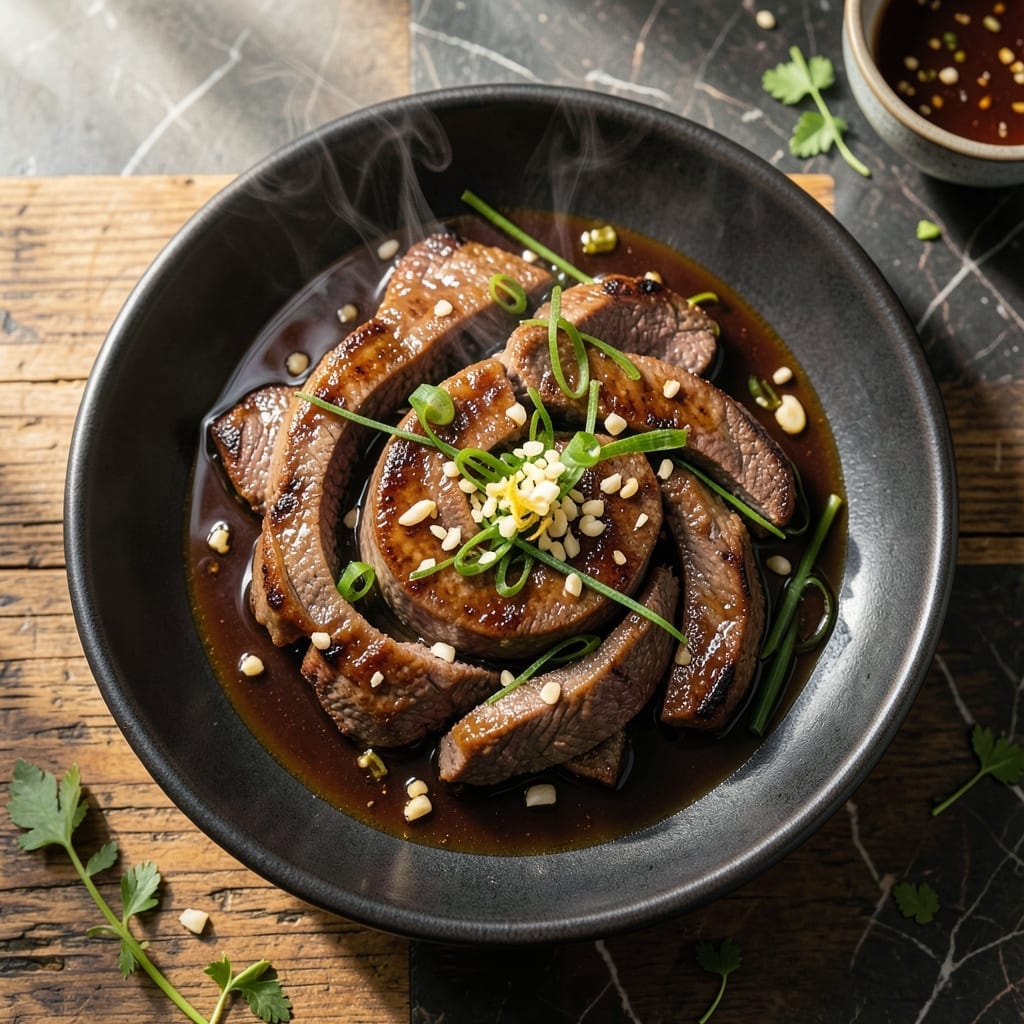
I discovered this technique by accident while trying to recreate my favorite takeout dish. Velveting transforms cheap cuts into melt-in-your-mouth tenderness that rivals any restaurant.
The secret is a simple cornstarch and egg white marinade that coats each beef piece before a quick oil blanch. This creates a silky texture that absorbs sauces beautifully.
What you get is beef so tender it practically dissolves, with that signature velvety coating that makes every bite luxurious. It’s the foundation for stir-fries that taste professionally made.
Works with flank, sirloin, or even chicken. Here’s how to nail this Chinese restaurant staple at home.
Ingredients for Velvet Beef
Transform your stir-fry with this restaurant-quality velveting technique using these ingredients.
| Ingredient | Amount | Notes |
|---|---|---|
| Flank Steak 🥩 | 1 ½ lb | Thinly sliced against grain |
| Cornstarch 🌾 | 2 tbsp | For velveting marinade |
| Egg Whites 🥚 | 2 whole | From large eggs |
| Soy Sauce 🫒 | 2 tbsp | Low-sodium preferred |
| Shaoxing Wine 🍷 | 1 tbsp | Or dry sherry substitute |
| Baking Soda 🧂 | ½ tsp | Neutralizes meat acidity |
| Neutral Oil 🛢️ | 3 cups | For blanch and stir-fry |
| Garlic Cloves 🧄 | 4 cloves | Minced for sauce |
| Fresh Ginger 🌿 | 1 tbsp | Finely grated |
| Green Onions 🧅 | 4 whole | Thinly sliced, white and green parts |
| Oyster Sauce 🍲 | 1 tbsp | For sauce depth |
| Sesame Oil 🫒 | 1 tsp | Toasted, for finishing |
| Sugar 🧂 | ½ tsp | Balances flavors |
| Kosher Salt 🧂 | ½ tsp | For seasoning beef |
| Black Pepper 🌶️ | ¼ tsp | Freshly ground |
The beef cut is crucial here. Flank steak is ideal (well-marbled, lean enough to slice thin), but sirloin works too—just avoid anything too fatty. Look for bright red color with thin white marbling at Whole Foods or your local Asian market. Slice it thin against the grain yourself, or ask the butcher to do it (they often will for free). The cornstarch needs to be fresh—old boxes lose their thickening power.
No Shaoxing wine? Dry sherry at one-to-one ratio gets you 90% there. Out of oyster sauce? Hoisin plus a dash of soy works in a pinch. For the oil blanch, peanut or vegetable oil (high smoke point) is best—skip the olive oil. If you’re gluten-free, swap the soy sauce for tamari. The egg whites can be from a carton (I won’t tell), but fresh separate better for texture.
Prep the beef marinade first—it sits for 15-30 minutes. Once blanched, the beef keeps in the fridge for 2 days before cooking. The sauce base (garlic, ginger, soy) can be mixed a day ahead. Cooked dish? 3 days max in the fridge, but honestly it’s best fresh when that velvety coating is at its peak.
Why You’ll Love This Recipe
- Minimal Effort: I toss the flank steak with cornstarch and egg whites, and it’s ready for the wok in minutes.
- Umami Bomb: The soy sauce and Shaoxing wine create that deep, savory punch I crave every time.
- Feeds a Crowd: Honestly, it’s my go-to for family dinners—everyone cleans their plate.
- Leftovers? Yes Please: The beef stays tender even reheated, so I pack it for lunch the next day.
Step-by-Step Instructions for Velvet Beef
This technique transforms tough cuts into silky, restaurant-quality beef with minimal effort.
Step 1: Velvet the Beef with Marinade
In a large bowl, whisk together the 2 tbsp cornstarch, 2 whole egg whites, 2 tbsp soy sauce, 1 tbsp Shaoxing wine, 0.5 tsp baking soda, 0.5 tsp kosher salt, and 0.25 tsp black pepper until smooth. The baking soda tenderizes the meat by breaking down proteins, while the cornstarch and egg whites create that signature velvety coating.
Add the 1.5 lb flank steak (sliced thinly against the grain) and mix gently with your hands until every piece is evenly coated. Let it marinate for 20-30 minutes at room temperature. You’ll notice the meat becomes slightly opaque as it absorbs the marinade—this is exactly what you want.
Step 2: Blanch the Beef in Hot Oil
Heat 3 cups neutral oil in a wok or deep skillet over medium-high heat until it reaches 325-350°F. To test, drop in a piece of marinated beef—if it sizzles immediately and rises to the surface, the oil is ready. Working in 2-3 batches to avoid crowding, carefully add the beef in a single layer.
Blanch for 30-45 seconds until the pieces turn opaque white and just begin to firm up. They won’t be fully cooked yet—that happens in the next step. Remove with a slotted spoon and drain on a wire rack or paper towels. The oil should remain at a gentle bubble throughout; if it smokes, reduce the heat slightly.
Step 3: Stir-Fry with Aromatics
Carefully pour out all but 2 tbsp of the neutral oil from the wok. Return it to high heat and add the 4 cloves garlic cloves (minced) and 1 tbsp fresh ginger (grated). Stir-fry for 15-20 seconds until fragrant but not browned—burnt garlic turns bitter instantly.
Add the blanched beef back to the wok along with the 4 whole green onions (thinly sliced). Stir-fry for 1-2 minutes until the beef is fully cooked through and the green onions soften slightly. The beef should be tender with a slightly bouncy texture—this is the velveting magic at work.
Step 4: Finish with Sauce and Serve
In a small bowl, mix the 1 tbsp oyster sauce, 0.5 tsp sugar, and 1 tsp sesame oil. Pour this over the beef in the wok and toss everything together for 30 seconds until the sauce coats each piece evenly and becomes glossy.
Taste and adjust seasoning if needed—the sauce should be savory with a hint of sweetness. Transfer to a serving plate and garnish with any remaining green onion slices. Serve immediately over steamed rice while the beef is at its most tender and the sauce is still clinging beautifully to each piece.
Pro Tips For Making Velvet Beef
- Chill the Beef: Let the flank steak sit in the fridge for 15-20 minutes before slicing—makes a real difference in getting clean, even cuts that stay tender. I learned this the hard way after too many jagged, chewy strips.
- Use Cold Egg Whites: Whisk the egg whites while they’re still cold before mixing with cornstarch; they coat the beef more evenly and create that signature silky texture. Sounds weird, but it works.
- Skip the Overmixing: Stir the beef with the cornstarch-egg white slurry just until coated—overworking it turns the mixture gummy and ruins the velvet finish.
- Blanch Before Stir-Frying: Par-cook the beef in hot oil or water for 30 seconds first to set the coating, then stir-fry. This isn’t the prettiest step, but it’s the tastiest way to lock in moisture.
Essential Equipment for Perfect Results
Wok Essentials
A 14-inch carbon steel wok is non-negotiable for proper heat distribution. I use Made In or Joyce Chen brands—avoid nonstick as it can’t handle the high heat needed for velveting. The sloped sides make tossing beef effortless. 🔥
Deep Skillet Alternative
No wok? A 12-inch cast iron skillet works but requires more oil. Heat 3 cups neutral oil to 325-350°F for blanch. Lodge makes affordable, durable options. Just know the flat base means less oil circulation.
Precision Thermometer
An instant-read thermometer ensures perfect oil temp. I swear by ThermoWorks ThermoPop—under $30 and reads in 2 seconds. Guessing oil temp leads to tough or greasy beef.
Slotted Spoon
A stainless steel slotted spoon removes beef without excess oil. Look for one with large slots and a long handle. OXO Good Grips makes ergonomic versions that won’t slip in hot oil.
Wire Rack Draining
After blanching, drain on a wire rack over a baking sheet. This prevents soggy bottoms. A cooling rack from your baking kit works perfectly. Paper towels are fine in a pinch but less effective.
High-Heat Tools
Use wooden or metal utensils—plastic melts. A wok spatula (flat with rounded edge) is ideal for stir-frying. Keep a splash screen nearby to contain hot oil pops.
Nutrition Facts
Frequently Asked Questions
What cuts of beef work best for velveting?
Flank steak or sirloin are ideal due to their marbling and leanness. Avoid overly fatty cuts like ribeye. Slice thinly against the grain for the most tender results.
Why use baking soda in the marinade?
Baking soda raises the meat’s pH, breaking down proteins for extra tenderness. Just 0.5 tsp makes a noticeable difference without altering flavor.
Can I skip the oil blanch step?
Skipping it will result in tougher beef. The blanch sets the velvety coating and partially cooks the meat. It only takes 30-45 seconds per batch.
How long can I store blanched beef?
Blanched beef keeps in the fridge for up to 2 days. Store it in an airtight container with a paper towel to absorb excess moisture.

- BBQ Sausage Recipe Oven: Smoky Depth Without the Grill - September 28, 2026
- BBQ Chicken Bowl Recipe Rice: Smoky Sweetness Over Fluffy Grains - September 28, 2026
- Beef Cutlet Recipe Ideas: Crispy Breaded Patties With Bold Seasonings - September 28, 2026