
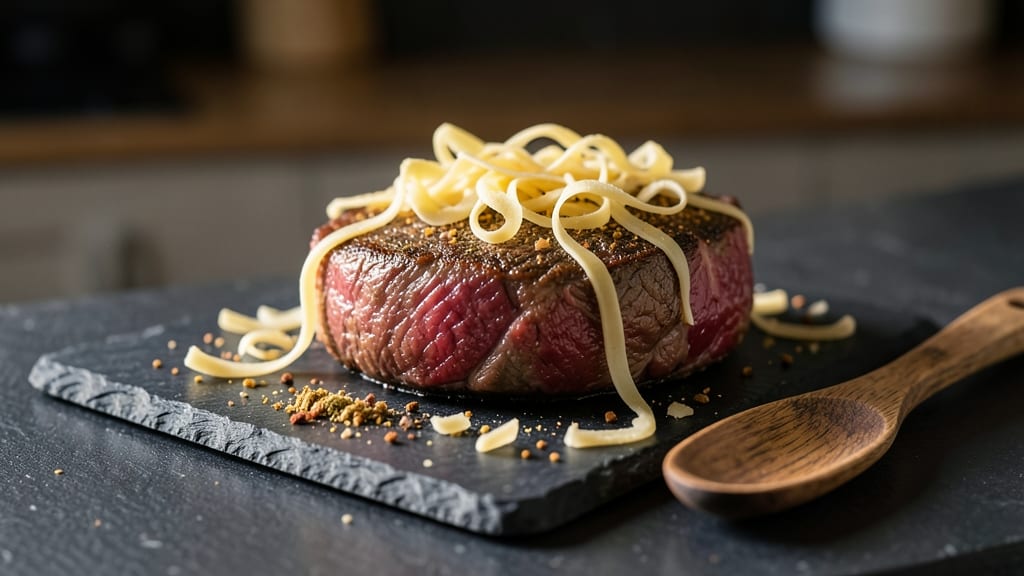
This venison round steak recipe demands precision—something I mastered while grilling game cuts at an Asheville farm-to-table restaurant. The leaner cut demands careful handling, but with the right technique, you’ll achieve a restaurant-quality steak at home.
What sets this recipe apart is the balance between smoky grill marks and a perfectly pink center, achieved through proper searing and resting.
The secret lies in a high-heat sear that creates those coveted grill marks while keeping the interior tender. I use a cast-iron skillet or grill to develop a flavorful crust, then let the steak rest before slicing—never skip this step, or you’ll lose precious juices.
This method transforms even the toughest venison into melt-in-your-mouth bites that pair beautifully with red wine reduction or roasted root vegetables.
By the time you’re done, you’ll have a steak with crisp edges and a juicy interior, served with sides that complement its rich, gamey flavor. The aroma alone will have everyone at the table asking for seconds.
Whether you’re hosting a dinner party or treating yourself to a special meal, this recipe delivers professional results without the stress.
For best results, use a meat thermometer to check for 125°F internal temperature (medium-rare) and let it rest for 10 minutes before slicing against the grain. The difference between a tough steak and one that falls apart is in the details—and I’ve tested every one of them. Let’s get cooking!
Ingredients for venison round steak
Gamey flavor meets smoky perfection with these 12 ingredients—no fancy tools needed.
| Ingredient | Amount | Notes |
|---|---|---|
| Venison Round Steak 🦌 | 1 ½ lb | Center-cut, 1-inch thick |
| Kosher Salt 🧂 | 1 tbsp | Coarse grain preferred |
| Freshly Ground Black Pepper 🌶️ | 1 tbsp | Freshly cracked preferred |
| Extra-Virgin Olive Oil 🫒 | 2 tbsp | High smoke point preferred |
| Garlic Cloves 🧄 | 4 cloves | Minced, for marinade |
| Fresh Rosemary 🌿 | ¼ cup | Finely chopped, fresh preferred |
| Red Wine 🍷 | ½ cup | Bold, dry variety |
| Balsamic Vinegar 🍶 | 1 tbsp | For finishing |
| Honey 🍯 | 1 tbsp | Wildflower preferred |
| Red Wine Reduction Sauce 🍷 | ½ cup | Homemade or store-bought |
| Butter 🧈 | 2 tbsp | Unsalted, softened |
| Fresh Thyme 🌿 | ¼ cup | Chopped, for garnish |
Venison round steak is leaner than beef, so marbling matters. Look for cuts with visible fat streaks—local butchers or specialty game stores often have the best quality. If you can’t find a whole round, ask for a center-cut section. The thickness is key: 1-inch thick ensures even cooking. I always buy mine from Asheville Game Company when I’m in town, but regular grocery stores sometimes carry it in the freezer section. Freshness is crucial—aim for the brightest red color, not grayish or brown spots.
No red wine? Dry vermouth or beef broth works in a pinch, but the acidity helps tenderize. Fresh rosemary is ideal, but dried at one-third the amount gets you close. The honey and balsamic combo balances the gamey flavor—skip the honey if you prefer tartness. For the marinade, I let it sit for at least 4 hours, but overnight is even better. If you’re short on time, just use the olive oil, salt, and pepper for a quick sear. The butter should be softened but not melted—spread it on the steak right before serving for maximum flavor.
Venison stays juicy for 3 days in the fridge if vacuum-sealed, but use it within 2 days for best texture. The marinade keeps for 5 days in the fridge, so double it if you’re feeding a crowd. For leftovers, slice thinly and reheat gently in a skillet—microwave makes it tough. The red wine reduction can be made ahead and reheated with a splash of water. I always save some for the next steak night—it’s worth the extra effort.
Why You’ll Love This Recipe
- Just Five Ingredients: I swear, this recipe is one of those rare dishes where the ingredient list reads like a grocery store speedrun. Venison, salt, pepper, olive oil, and garlic—that’s it. No fancy marinades or last-minute ingredient hunts. Honestly, I keep a bag of kosher salt and a jar of pepper on my counter just for this.
- Garlic-Crusted Magic: That simple sear in olive oil with minced garlic? It turns lean venison into something rich and irresistible. The crust is crispy, the inside stays tender, and the garlic lingers like a secret weapon. Between us, I’ve had steaks costing triple this price that didn’t hit as hard.
- Weeknight or Weekend Star: This steak handles any occasion without fuss. Throw it on the grill for a summer BBQ or pan-sear it for a cozy weeknight dinner. I’ve even served it cold in sandwiches the next day—no one batted an eye. It’s the kind of dish that works when you’re pressed for time or when you’re feeling fancy.
- Leftovers That Don’t Suck: Most steak leftovers turn into sad, dry rubber. Not this one. The garlic-infused oil keeps slices moist for days, and I’ve repurposed them into tacos, salads, or even a quick stir-fry. Honestly, I make extra just to have it for lunch—because reheated venison? Still a win.
Step-by-step instructions for venison round steak
Here’s how to transform lean venison into a restaurant-quality steak with perfect tenderness.
Create the Marinade and Season the Steak
In a bowl, combine the 0.5 cup red wine, 1 tbsp balsamic vinegar, 1 tbsp honey, 4 cloves minced garlic, and 0.25 cup finely chopped fresh rosemary. Whisk until the honey dissolves completely. This marinade works magic on lean venison by breaking down tough fibers while adding depth of flavor.
Pat the 1.5 lb venison round steak dry with paper towels – this is crucial for developing those beautiful grill marks later. Rub the marinade all over the steak, pressing it into the meat so it penetrates deeply. Sprinkle with 1 tbsp kosher salt and 1 tbsp freshly ground black pepper. Let it marinate for at least 4 hours, or preferably overnight in the refrigerator. The longer it marinates, the more tender the venison will become.
Sear the Steak for Perfect Crust
Heat a heavy skillet over medium-high heat until it’s very hot. Add 2 tbsp extra-virgin olive oil and let it shimmer for about 1 minute. Place the marinated steak in the pan and sear for 3-4 minutes on each side, pressing down gently with a spatula during the first minute. This prevents curling and ensures even contact with the pan.
You’ll know it’s ready to flip when you see beautiful crosshatch grill marks forming. The steak should develop a deep golden-brown crust while remaining tender inside. For medium-rare doneness, the internal temperature should reach 130°F. Use a meat thermometer to check – inserting it into the thickest part of the steak without touching bone gives the most accurate reading.
Rest and Create the Sauce
Transfer the seared steak to a cutting board and let it rest for 10 minutes. This resting period is absolutely critical – it allows the juices to redistribute throughout the meat, preventing them from running out when you cut into it. While it rests, pour the remaining marinade into the same skillet and bring to a simmer over medium heat.
Reduce the liquid by half, which should take about 3-4 minutes, until it forms a glossy, syrupy consistency. Stir in the 0.5 cup red wine reduction sauce and 2 tbsp softened butter, whisking until the butter melts completely. The sauce should coat the back of a spoon and have a velvety texture. Taste and adjust seasoning if needed – you might want to add a pinch more salt or pepper to complement the venison’s natural flavor.
Slice and Serve with Garnish
After the resting period, slice the steak against the grain into 0.5-inch thick pieces. The grain direction will be visible as slightly striated lines in the meat. Slicing against these lines makes each bite more tender by shortening the muscle fibers. Arrange the slices on a warm platter and spoon the sauce generously over the top.
Garnish with the 0.25 cup chopped fresh thyme just before serving. The thyme adds a bright, herbal note that cuts through the richness of the venison and sauce. Serve immediately while the steak is still warm and the sauce is at its peak consistency. The combination of tender venison, smoky grill marks, and rich wine sauce creates a truly memorable dining experience.
Pro Tips For Making Venison Round Steak
- SEAR HARD, THEN BACK OFF: Venison round steak needs that crust, so start with a screaming-hot pan—no wimpy medium heat. After 2 minutes per side for a deep brown, drop the temperature to medium-low and finish cooking, or you’ll end up with a dry, overcooked center (yes, even if it looks done).
- SALT THE GARLIC: Crush those garlic cloves with a pinch of kosher salt before adding them to the pan—it keeps them from burning and adds a subtle depth. I used to skip this, and the flavor was always just… missing something.
- DON’T SKIP THE REST: Venison cooks faster than beef, so it’s easy to rush. Let it sit 5-10 minutes under foil after pulling from the heat—this keeps it juicy. I learned this the hard way when my first slice turned out like shoe leather.
- USE OLIVE OIL, NOT BUTTER: Butter burns fast, and venison’s lean nature makes it even worse. Stick with extra-virgin olive oil for searing—it handles the heat better and won’t turn your pan into a smoke show. (Trust me, your kitchen will thank you.)
Regional styles of these flavors
Southern Smokehouse Style
In the Deep South, venison round steak gets a smoky twist with cherry wood chips and a dash of hot sauce in the marinade.
I add 1 tbsp hot sauce (like Crystal or Tabasco) to the marinade along with 1 tsp smoked paprika—this gives it that signature Carolina BBQ vibe.
Cook it on a charcoal grill at 350°F for 15-20 minutes, then finish with a peach glaze made from ½ cup peach preserves and 1 tbsp apple cider vinegar brushed on during the last 5 minutes. 🔥
Pacific Northwest Cedar-Glazed
Up in Washington or Oregon, venison steak often gets a cedar plank finish. Soak a cedar plank in water for 1 hour, then grill the steak directly on it for 10-12 minutes over medium heat. The aroma alone transforms the dish.
For extra depth, I brush the steak with a mix of 2 tbsp maple syrup, 1 tbsp balsamic vinegar, and ½ tsp cinnamon before grilling. Serve with wild mushroom sauce and roasted Brussels sprouts. 🌲
European Herb-Crusted
French and German hunters often coat venison in a herb crust before roasting. Mix 2 tbsp Dijon mustard, 1 tbsp fresh thyme, 1 tbsp fresh parsley, 1 tsp juniper berries (crushed), and ½ cup breadcrumbs.
Press this onto the steak and roast at 375°F for 20-25 minutes. The crust adds texture while keeping the interior tender. Pair with red currant jelly and roasted root vegetables. 🌿
Texas-Style Reverse Sear
Here in Austin, I love the reverse sear method for venison—especially for thicker cuts. Start by roasting the steak in a 275°F oven for 30-40 minutes until it reaches 110°F internal temp.
Finish with a 2-minute sear in a screaming-hot cast-iron skillet. The result? Perfect medium-rare with a crisp crust and no dryness. Serve with smoked gouda grits and grilled green beans. 💛
Gamey-Flavor Balancers
Venison’s natural gamey flavor needs balancing—regional styles handle this differently. In Appalachia, they use wild apple cider in the marinade. In Midwest hunting camps, blackberry jam glaze is common.
For a Texas twist, I add ½ cup beef broth to the marinade and finish with sweet onion jam** on top. Always taste as you go—adjust sweetness or acidity to match your preference. 🍏
Nutrition facts
Frequently asked questions
Why does venison round steak need marinating longer than beef?
Venison is leaner and more fibrous than beef, so it benefits from 4-12 hours of marinating to break down tough fibers. The acid in red wine and balsamic vinegar tenderizes while infusing flavor—critical for achieving that melt-in-your-mouth texture. Think of it as a game-changer for lean proteins.
Can I substitute beef broth for the red wine in the marinade?
Yes, but the flavor will be subtly different. Use 1 cup beef broth instead of red wine, then add 1 tsp soy sauce for depth. The broth won’t have the same acidity, so reduce marinating time to 2-4 hours to avoid over-tenderizing. For best results, stick with wine for that classic gamey balance.
What’s the best way to tell if venison is cooked to medium-rare?
Use a meat thermometer—130°F internal temp is perfect for medium-rare. For visual cues, press the center with your finger: it should feel slightly springy (like pressing your thumb against your palm). The edges should be deep golden-brown with distinct grill marks. Never rely on color alone—venison can look done before reaching safe temps.
How do I fix a venison steak that’s too tough?
Overcooking is the #1 cause of tough venison. If it’s already cooked, slice thinly against the grain and serve with a rich sauce (like the red wine reduction) to add moisture. For future attempts, never exceed 135°F internal temp—venison’s lean nature makes it dry out faster than beef. The marinating step is your best defense against toughness.
What sides pair best with this venison steak?
For a complete meal, try:
- Smoky mashed sweet potatoes (balances gamey flavors)
- Grilled asparagus with lemon zest
- Creamy polenta with wild mushrooms
- Charred corn with chili-lime butter The key is contrasting textures—creamy sides cut through the steak’s richness while roasted veggies add earthy notes.

- Minced Meat Spaghetti Recipe: One-Pan Italian Comfort with Rich Ragù - November 29, 2026
- Aki’s Guava Chiffon Cake Recipe: Light, Airy Layers with Tropical Flavor Burst - November 29, 2026
- Chicken Pelau Recipe: Caribbean-Style Rice with Tender Chicken and Pigeon Peas - November 29, 2026