
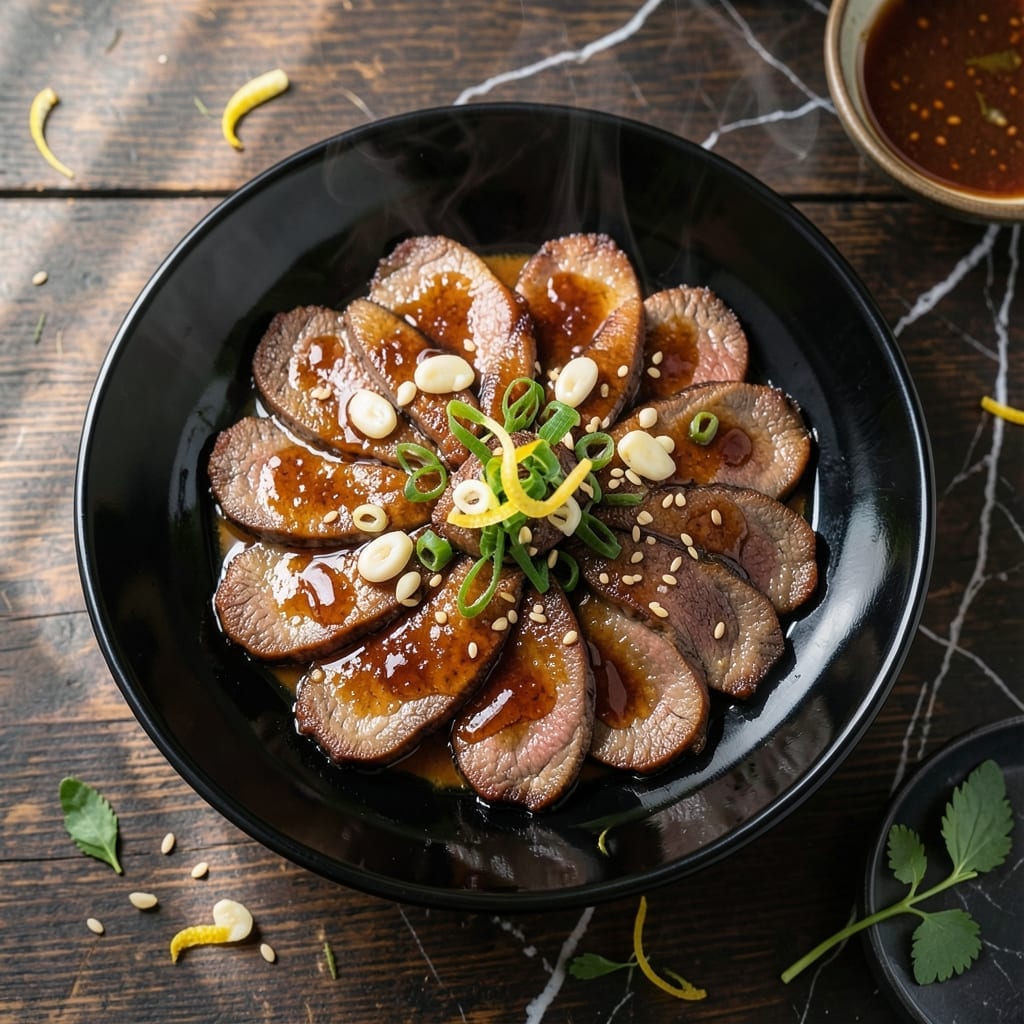
Beef heart transforms into a tender, flavorful dish when prepared with traditional Asian techniques. This stir-fry highlights the organ meat’s rich depth through bold garlic and ginger.
The key lies in proper preparation—slicing thinly against the grain and marinating briefly to ensure tender results. High heat and quick cooking preserve the meat’s natural juices while creating a caramelized exterior.
What emerges is a dish with complex savory notes, elevated by aromatic garlic and fresh ginger. The beef heart absorbs the flavors beautifully, delivering a satisfying texture that surprises first-time tasters.
Serve this over steamed rice with stir-fried vegetables for a complete meal that celebrates offal in the most delicious way. Here’s how to make it.
Ingredients for Beef Heart Recipe Asian
Transform offal into a tender, aromatic stir-fry with pantry staples and fresh ingredients.
| Ingredient | Amount | Notes |
|---|---|---|
| Beef Heart 🥩 | 1 ½ lb | Trimmed of fat and sinew, sliced thinly against the grain |
| Soy Sauce 🫒 | ⅓ cup | Low-sodium preferred for balance |
| Garlic Cloves 🧄 | 6 cloves | Minced finely for even distribution |
| Fresh Ginger 🌿 | 2 tbsp | Grated or minced for maximum flavor |
| Rice Vinegar 🍯 | 2 tbsp | Adds bright acidity to balance richness |
| Brown Sugar 🍚 | 1 tbsp | For subtle caramelization |
| Sesame Oil 🫒 | 1 tbsp | Toasted for nutty aroma |
| Cornstarch 🌾 | 1 tbsp | For velvety sauce texture |
| Green Onions 🧅 | 4 whole | Thinly sliced for garnish and flavor |
| Red Chili Flakes 🌶️ | ½ tsp | Adjust to spice preference |
| Vegetable Oil 🫒 | 2 tbsp | High smoke point for stir-frying |
| Steamed Jasmine Rice 🍚 | 2 cups | Uncooked, for serving |
| Sesame Seeds 🌿 | 1 tsp | Toasted for garnish |
The beef heart must be supremely fresh. Source from a trusted butcher or specialty market like Whole Foods—ask for it trimmed of fat and sinew. Look for a deep red color with no grayish tinge. Slicing against the grain is non-negotiable for tenderness. A sharp knife and steady hand prevent shredding. For best results, chill the meat 30 minutes before slicing to firm up the texture.
No rice vinegar? Apple cider vinegar at half the amount works, though the flavor profile shifts slightly. Fresh ginger is ideal, but ground ginger at one-quarter the quantity can substitute in a pinch (add it to the marinade). For gluten-free, swap soy sauce for tamari. The brown sugar can be replaced with honey if avoiding refined sugars, though the caramel notes will differ.
Beef heart keeps 2-3 days in the fridge, tightly wrapped. For longer storage, freeze up to 3 months. Slice before freezing for quick stir-fry prep later. The cooked dish reheats well but is best fresh—high heat revives it better than microwaving.
Why You’ll Love This Recipe
- One Pan Meal: I toss everything in a single skillet—beef heart, soy sauce, garlic, ginger—and let it work its magic.
- Umami Bomb: The soy sauce and rice vinegar create this deep, tangy richness that makes the beef heart taste incredible.
- Weeknight Hero: Honestly, I make this on busy evenings and it still feels like a special meal.
- Budget Stretcher: Beef heart is so affordable, and this recipe makes it taste like a million bucks.
Step-by-Step Instructions for Stir-Fried Beef Heart with Garlic and Ginger
Master the technique of velveting beef heart for a tender, restaurant-quality stir-fry.
Step 1: Velvet the Beef Heart
In a bowl, combine the 1.5 lb Beef Heart with 1 tbsp Soy Sauce, 1 tbsp Cornstarch, and 1 tbsp Sesame Oil. Mix thoroughly to coat each slice evenly. This velveting process creates a protective layer that locks in moisture during cooking.
Let the mixture marinate for 15-20 minutes at room temperature. You’ll notice the beef heart becomes slightly opaque as the cornstarch absorbs surface moisture. This step is non-negotiable for achieving that signature velvety texture.
Step 2: Prepare the Aromatics and Sauce
While the beef marinates, mince the 6 cloves Garlic Cloves and grate the 2 tbsp Fresh Ginger. In a separate small bowl, whisk together the remaining 0.33 cup Soy Sauce (less the 1 tbsp used earlier), 2 tbsp Rice Vinegar, 1 tbsp Brown Sugar, and 0.5 tsp Red Chili Flakes.
The sauce should be glossy with the sugar fully dissolved. Thinly slice the 4 whole Green Onions, keeping the white and green parts separate for layered flavor. Having all ingredients prepped before cooking ensures a smooth stir-fry process.
Step 3: Stir-Fry the Beef Heart
Heat 1 tbsp Vegetable Oil in a wok or large skillet over high heat until shimmering. Add half the beef heart in a single layer – overcrowding causes steaming rather than searing. Cook undisturbed for 1-2 minutes until the edges turn deep brown.
Flip and cook for another 1 minute, then transfer to a plate. Repeat with the remaining 1 tbsp Vegetable Oil and beef. The beef should be just cooked through but still slightly pink inside – it will finish cooking when combined with the sauce.
Step 4: Build the Sauce and Finish
In the same pan, add the minced garlic and ginger. Stir-fry for 30-45 seconds until fragrant but not browned. Pour in the prepared sauce mixture and bring to a rapid simmer, stirring constantly for 1-2 minutes until slightly thickened.
Return all the beef to the pan along with the sliced green onions. Toss everything together for 30-60 seconds until the beef is fully coated and the sauce has reduced to a glossy sheen that clings to each piece. The beef should be tender with a slight bounce when bitten.
Remove from heat and stir in the 1 tsp Sesame Seeds. Serve immediately over 2 cups Steamed Jasmine Rice, distributing the sauce evenly over the beef and rice. The final dish should have a balanced sweet-savory-spicy profile with each bite.
Pro Tips For Making Beef Heart Recipe Asian
- Trim the Fat: Beef heart has tough, chewy fat and vessels—slice them off before cooking, or you’ll be picking gristle out of your teeth all night. I learned this the hard way after my first batch came out rubbery.
- Marinate Overnight: Soak the heart in soy sauce, rice vinegar, and grated ginger for at least 12 hours. Sounds tedious, but it actually changes the outcome—tenderizes the meat and locks in that deep umami flavor.
- Don’t Overcook: Beef heart turns to leather if you leave it on the heat too long. Pull it at medium doneness (about 145°F internal) and let it rest for 5 minutes before slicing.
- Crush the Garlic: Skip the mincing—smash the garlic cloves with the flat of your knife instead. It releases more flavor into the dish and saves you time, especially when you’re juggling the ginger and soy sauce too.
Serving Suggestions for This Dish
Plating with Rice
I always serve this over steamed jasmine rice—the fragrant grains soak up that glossy garlic-ginger sauce beautifully. Use a rice cooker for perfect texture, or cook on the stovetop with a 1:1.5 rice-to-water ratio. The contrast of tender beef heart with fluffy rice is what makes this dish special. 💛
Garnish for Color
Finish with a sprinkle of toasted sesame seeds and the green onion tops you set aside earlier. These add visual appeal and extra layers of texture. I also love a few extra red chili flakes on top for those who enjoy more heat.
Family-Style Service
This dish works wonderfully in a large serving bowl at the center of the table. Let everyone build their own plates with rice and beef heart. I find this encourages second helpings—my family always cleans the bowl when I serve it this way.
Vegetable Pairings
Quick stir-fried vegetables make excellent companions. Try bok choy or snap peas cooked in the same wok after removing the beef. Their crisp texture contrasts nicely with the tender meat. Add a splash of the remaining sauce for cohesion.
For a complete meal, I often add a simple cucumber salad with rice vinegar and a pinch of sugar. 🥗
Beverage Matching
Serve with jasmine tea—its floral notes complement the garlic and ginger perfectly. For alcohol, a crisp Sauvignon Blanc or light lager cuts through the richness. I prefer tea to keep the focus on the dish’s authentic flavors.
Nutrition Facts
Frequently Asked Questions
How do I know when beef heart is cooked properly?
It should be tender with a slight bounce, cooked to medium doneness. Overcooking makes it tough, so remove from heat when it’s just slightly pink inside.
What can I use instead of rice vinegar?
Apple cider vinegar works in a pinch—use half the amount. The flavor differs slightly but maintains the needed acidity.
Can I make this ahead of time?
Best served fresh, but leftovers keep 2-3 days refrigerated. Reheat quickly over high heat to restore texture.
Why slice against the grain?
This shortens muscle fibers for maximum tenderness. A sharp knife and chilled meat make slicing easier and more precise.

- Pina Colada Dip Recipe Red Lobster: Tropical Creaminess With Toasted Coconut - October 12, 2026
- Pickled Sweet Cherry Peppers Recipe Canning: Tangy Heat for Pantry Staples - October 12, 2026
- Peppercorn Sauce Recipe Vegan: Rich Umami Depth Without Cream - October 12, 2026