
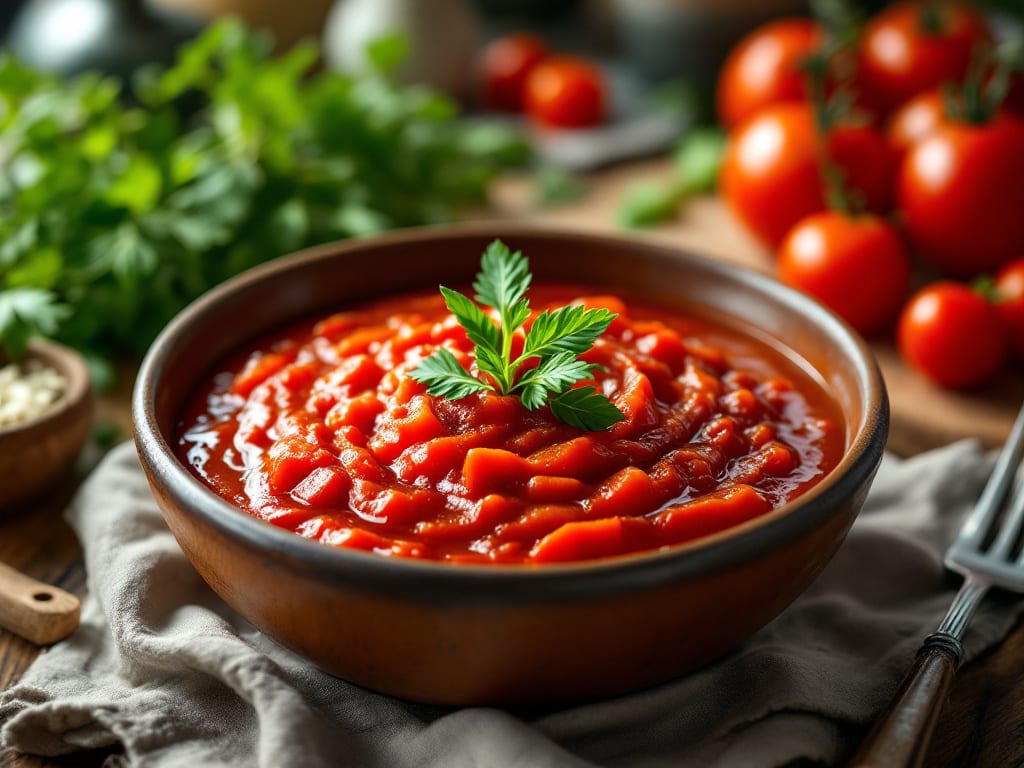
Grandma’s old-fashioned tomato sauce recipe is the kind of heirloom recipe that transforms simple ingredients into something deeply flavorful through slow simmering and careful technique.
The secret lies in balancing ripe tomatoes, fresh garlic, and aromatic herbs while using a touch of acid to preserve that bright, tangy depth—just like my grandmother used to make.
This sauce isn’t just for pasta; it’s the foundation for everything from hearty pizza to rich dips that taste like home.
The beauty of this recipe is its versatility and longevity. Simmered low and slow, it develops layers of complexity that canned sauces simply can’t match, and when properly sealed, it keeps beautifully in the pantry for months.
The process requires patience—letting the tomatoes break down naturally, reducing the sauce to a thick, velvety consistency—but the result is worth every careful step. You’ll end up with a sauce that’s rich, slightly sweet, and packed with herbal notes that make every bite unforgettable.
What sets this sauce apart is the way garlic and herbs infuse the tomatoes during the long simmer, creating a depth of flavor that’s impossible to achieve with quick-cooking methods. The acid—whether from lemon juice or vinegar—preserves that bright tang while ensuring the sauce stays safe for storage.
Whether you’re making a big batch for canning or just enough for the week, this recipe delivers professional-quality results that taste like a hug from your grandmother.
Use it as a base for your favorite pasta dishes, spread it on garlic bread, or serve it with crusty bread for dipping. The possibilities are endless, but the method remains the same: slow, steady, and full of love.
Let’s get started on creating a sauce that will become a family tradition.
Ingredients for grandma’s old fashioned tomato sauce
Simple pantry staples and fresh herbs create this heirloom tomato sauce that simmers into rich, velvety perfection.
| Ingredient | Amount | Notes |
|---|---|---|
| San Marzano Tomato Cans 🍅 | 28 oz | Whole peeled tomatoes, crushed by hand |
| Yellow Onion 🧅 | 1 whole | Medium size, finely chopped |
| Garlic Cloves 🧄 | 6 cloves | Fresh, peeled, minced finely |
| Fresh Basil Leaves 🌿 | ½ cup | Packed, stems removed |
| Fresh Oregano Leaves 🍃 | ¼ cup | Packed, chopped finely |
| Extra-Virgin Olive Oil 🫒 | ½ cup | High quality, fruity |
| Dried Thyme 🌿 | 1 tsp | Or 1 tbsp fresh thyme |
| Salt 🧂 | 1 ½ tsp | Kosher or sea salt |
| Black Pepper 🌶️ | ½ tsp | Freshly ground preferred |
| Lemon Juice 🍋 | 1 tbsp | Freshly squeezed |
San Marzano tomatoes are the gold standard here—their sweet, meaty texture and low acidity make all the difference. Look for the official DOP label at specialty stores like Whole Foods or Eataly, or grab the Mutti brand at most grocery stores. Fresh basil and oregano should be vibrant green with no wilting—farmers markets often have the best quality. The garlic needs to be fresh too: press it gently, and if it’s firm with no sprouts, it’s good to go. For the olive oil, California extra-virgin brands like Corto or Bertolli add nice fruity notes without overpowering.
No San Marzano tomatoes? Plum tomatoes from any reputable brand work in a pinch, but avoid regular sliced tomatoes—they’re too watery. Short on fresh herbs? Dried oregano at half the amount works, but nothing replaces fresh basil’s aroma. The lemon juice can be swapped for white vinegar or apple cider vinegar if needed—just use the same amount. For a deeper flavor, add 1 tsp of sugar to balance any tartness in your tomatoes. The onions can be yellow or red, but yellow onions add a touch more sweetness during the long simmer. And if you’re feeling adventurous, a pinch of red pepper flakes adds warmth without heat.
This sauce improves with time—2-3 days in the fridge lets the flavors meld beautifully. For long-term storage, transfer to sterilized glass jars with a 1/2-inch headspace, then process in a water bath for 75 minutes (for pints) or 90 minutes (for quarts). Properly canned sauce keeps for 12-18 months in a cool, dark pantry. In the fridge, it’ll last 5-7 days once opened. The sauce thickens as it cools, so if it seems too thick while warm, just add a splash of water or broth. Freeze portions in ice cube trays for perfect single-use servings.
Why You’ll Love This Recipe
- No-Fuss Pantry Staples: I swear by this sauce because it only needs a can opener and a knife. The San Marzano tomatoes do all the heavy lifting—no peeling, no dicing, just pour and simmer.
- Herb-Packed Punch: That fresh oregano and basil? They turn a simple tomato sauce into something ridiculously flavorful. The garlic and onion caramelize just enough to give it depth without overpowering.
- Pasta Party Ready: Make a double batch and freeze half—it’s my go-to for lazy Sundays or when unexpected guests show up. Slap it on spaghetti, toss it with meatballs, or even drizzle it over grilled cheese.
- Budget-Friendly Luxury: A single can of tomatoes and a handful of herbs stretch to feed four for under $5. Honestly, it’s the kind of recipe that makes me feel like I’m cooking gourmet without breaking the bank.
Step-by-step instructions for grandma’s old-fashioned tomato sauce
Here’s the method that delivers deep, aromatic flavor with every spoonful.
Sauté the Aromatics Until Fragrant
Heat the 0.5 cup extra-virgin olive oil in a heavy-bottomed saucepan over medium heat. Add the 1 whole yellow onion and cook for 5-6 minutes until softened and translucent, stirring occasionally. The onion should release its sweetness without browning.
Add the 6 cloves garlic cloves and cook for 30 seconds until fragrant—you’ll smell that unmistakable garlic aroma. Be careful not to let it brown, as this can make the sauce bitter. Here’s the thing: garlic burns quickly, so keep an eye on it. Once fragrant, immediately add the 1 tsp dried thyme and stir for 10 seconds to toast the spices gently.
Crush the Tomatoes and Simmer
Using your hands, crush the 28 oz San Marzano tomato cans directly in the saucepan, leaving some larger chunks for texture. Discard the can liquid—we want concentrated tomato flavor, not watered-down sauce. Stir in the 1.5 tsp salt and 0.5 tsp black pepper and bring the mixture to a gentle boil over medium-high heat.
Once boiling, reduce the heat to low and let it simmer uncovered for 45-50 minutes. Stir occasionally to prevent sticking, but don’t over-mix—this can break down the tomatoes too much. You’re looking for a thick, rich consistency where the sauce coats the back of a spoon. The longer it simmers, the deeper the flavor develops.
Finish with Herbs and Brightness
After simmering, stir in the 0.5 cup fresh basil leaves and 0.25 cup fresh oregano leaves. These herbs should be added just before the end to preserve their bright, fresh flavors. Simmer for another 5 minutes to let the flavors meld together.
Remove the pan from heat and stir in the 1 tbsp lemon juice. This final touch brightens the sauce and balances the richness. Taste and adjust seasoning if needed—you might want to add a pinch more salt or pepper depending on your preference. The sauce should be vibrant, aromatic, and perfectly balanced between sweet, savory, and acidic notes.
Rest and Serve
Let the sauce rest for 10 minutes before serving. This allows the flavors to fully develop and the sauce to thicken slightly. The resting period is crucial—it’s when the sauce transforms from good to extraordinary.
Serve warm over pasta, with crusty bread, or alongside your favorite Italian dishes. The sauce should be thick enough to cling to noodles or bread without being gluey, with a rich tomato depth and bright herbal notes. If you find the sauce too thick after resting, you can thin it slightly with a splash of pasta water or broth.
Pro Tips For Making Grandma’S Old Fashioned Tomato Sauce
- CRUSH THE ONIONS: Don’t just chop—give those yellow onions a rough, uneven mince (think ¼-inch pieces) and let them sit in the pot for 5 minutes after cooking. The longer they stew, the deeper the sweetness, and you’ll taste it in every spoonful. I used to rush this, and the sauce always felt flat until I learned to be patient.
- SALT THE TOMATOES: Drain the San Marzano cans, then sprinkle a pinch of salt directly into the tomatoes before crushing them. This draws out excess water and concentrates the flavor—no need to add extra salt later. I was skeptical until I tried it, and now I can’t imagine skipping it.
- SIMMER LOW AND LONG: After adding the garlic, basil, and oregano, reduce the heat to a bare simmer (just tiny bubbles) and let it cook uncovered for at least 45 minutes. The sauce will thicken naturally, and the flavors meld into something rich and cohesive. I learned this the hard way—rushing it leaves the sauce watery and one-dimensional.
- STORE THE BASIL: If you’re not using all the fresh basil at once, strip the leaves from the stems and freeze them in a single layer on a tray before transferring to a bag. Thaw and drain before adding to the sauce—this keeps the flavor vibrant without turning the sauce bitter. (Yes, even if you’re impatient like me.)
Creative variations of these flavors
Italian-Inspired Pizza Sauce
Skip the simmering step and use this sauce as a quick pizza base. After crushing the tomatoes, stir in 1 tsp sugar and ½ tsp red pepper flakes for balance. Spread on pizza dough, top with mozzarella and basil, then bake at 475°F for 12-15 minutes.
The acidity and herbs shine when baked, creating a vibrant topping that clings perfectly. 🍕
Spicy Arrabbiata Twist
For a bold kick, add 1 tbsp Calabrian chili paste with the garlic and ½ tsp crushed fennel seeds during the sauté. Simmer the sauce for 30 minutes instead of 45 to preserve heat.
Finish with 1 tbsp balsamic vinegar and fresh cilantro—this version pairs beautifully with chicken or shrimp. 🌶️
Herb-Infused Marinara
Reduce the simmer time to 30 minutes and add 1 tsp dried rosemary with the thyme. Stir in 2 tbsp chopped parsley at the end for brightness.
This lighter marinara works perfectly for dipping, topping bruschetta, or tossing with linguine. The rosemary adds an earthy depth that complements seafood dishes wonderfully. 🌿
Sweet & Smoky BBQ Fusion
Blend ½ cup tomato sauce with ¼ cup BBQ sauce (like Sweet Baby Ray’s) and 1 tsp smoked paprika. Simmer for 20 minutes to meld flavors. Use as a glaze for pulled pork or chicken wings—this fusion brings sweet, smoky heat that’s addictive. 🔥
Creamy Tomato Basil Soup Base
Thicken the sauce with ½ cup heavy cream or coconut milk after simmering. Stir in 1 cup grated Parmesan and 1 tbsp butter at the end. This velvety soup base pairs perfectly with crusty bread or grilled cheese. The garlic and herbs add depth without overpowering the creamy texture. 🥄
Fermented Tomato Sauce
For a tangy twist, ferment the crushed tomatoes with 1 tbsp apple cider vinegar and 1 tsp salt for 24 hours before simmering. This method enhances probiotics and creates a complex, slightly sour flavor.
Use as a condiment for sandwiches or a base for tangy pasta dishes. The fermentation process deepens the tomato flavor naturally. 💫
Nutrition facts
Frequently asked questions
Can I use fresh tomatoes instead of canned San Marzano?
Fresh tomatoes work but require extra prep. Use 6-8 large ripe tomatoes (peeled, seeded, and chopped) and simmer for 1.5-2 hours to concentrate flavors. Add 1 tbsp sugar to balance acidity. Fresh tomatoes release more liquid, so reduce heat to low to prevent overflowing.
How do I know when the sauce is ready?
The sauce is done when it coats the back of a spoon smoothly and has reduced to about half its original volume. It should smell deeply aromatic with garlic and herbs, not raw. Taste for balance—sweetness from tomatoes, tang from lemon, and herbal notes should harmonize.
Why does my sauce taste bitter?
Bitterness usually comes from overcooked garlic or onions. Keep heat medium-low when sautéing aromatics and remove from heat immediately after garlic turns golden. Another cause is over-simmering—45-50 minutes is ideal. Balance bitterness with a splash of lemon juice or a pinch of sugar.
Can I make this sauce in a slow cooker?
Yes! Follow the same steps but transfer everything to a 6-quart slow cooker after crushing tomatoes. Cook on low for 6-8 hours or high for 3-4 hours. Stir occasionally and add water if needed to prevent burning. The slow cooker enhances flavors but may make the sauce thinner—reduce uncovered for 10 minutes at the end.
How should I store leftover sauce?
Store in an airtight container in the fridge for up to 5-7 days. For longer storage, ladle into sterilized jars, leaving ½-inch headspace, then process in a water bath for 75 minutes (pints) or 90 minutes (quarts). Labeled jars keep for 12-18 months in a cool, dark place. Freeze portions in ice cube trays for single-use servings.

- Buttery Baked Salmon Recipe: Pan-Seared Crispness With Melted Herb Butter - November 29, 2026
- 1 Kg Vanilla Cake Recipe: Moist Layers and Vanilla Infusion Magic - November 29, 2026
- Pork Belly With Fish Sauce Recipe: Crispy Crackling and Umami-Rich Tenderness - November 29, 2026