
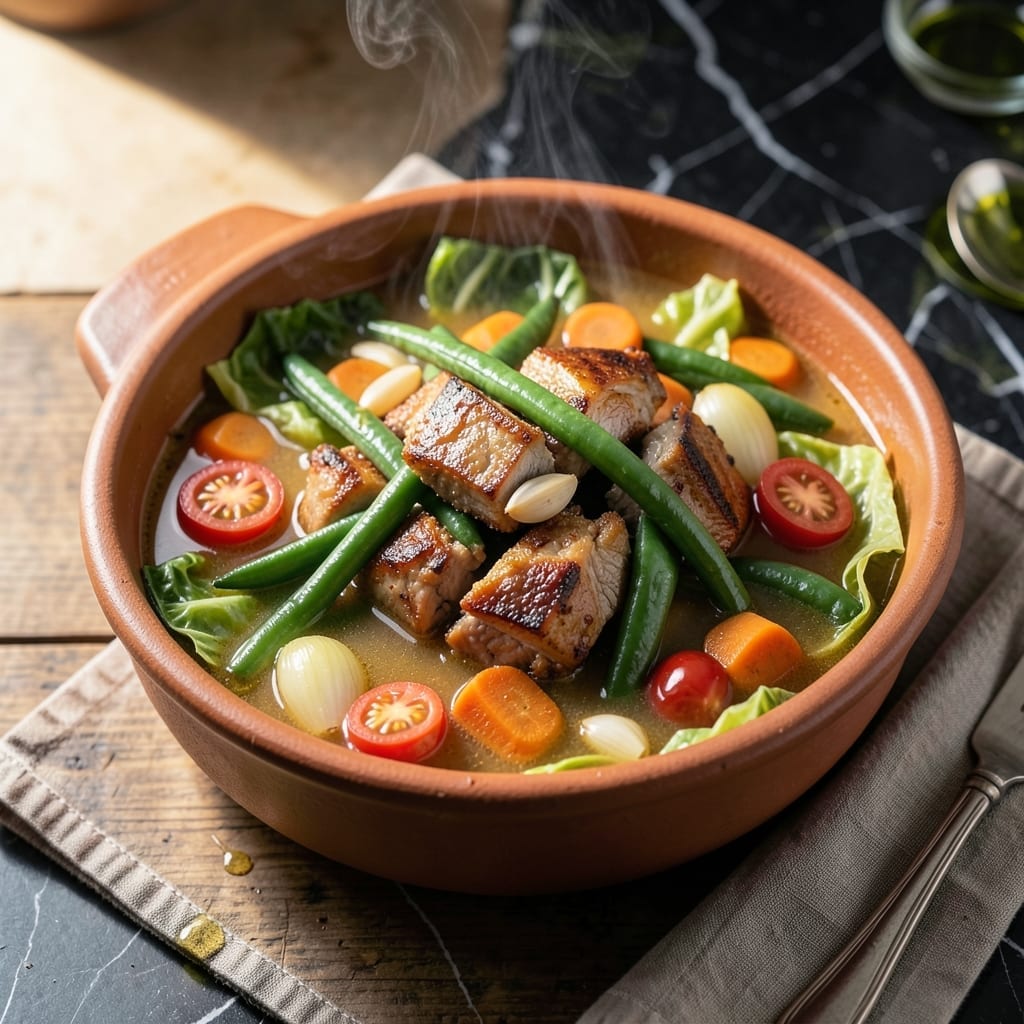
This hearty Filipino stew brings together tender pork and fresh vegetables in a light, flavorful broth that’s both comforting and nourishing. I’ve refined this recipe over years of cooking for family gatherings, ensuring every bite delivers authentic taste.
The beauty of this dish lies in its simplicity—lean pork simmers with cabbage, string beans, and carrots until everything absorbs the savory, slightly tangy broth. It’s a balanced meal that highlights the natural sweetness of the vegetables.
What makes this version special is the careful layering of flavors, from the garlic and onions at the start to the final touch of fish sauce for depth. The result is a savory, lightly tangy stew that’s satisfying without being heavy.
Perfect for a weeknight dinner or a weekend family meal, this stew tastes even better the next day. Here’s how to make it at home.
Ingredients for Gulay
Lean pork and garden-fresh vegetables simmer in a savory, tangy broth for this comforting stew.
| Ingredient | Amount | Notes |
|---|---|---|
| Pork Shoulder 🥩 | 1 ½ lb | Lean, cut into 1-inch pieces |
| Green Cabbage 🥬 | ½ whole | Cored and cut into wedges |
| String Beans 🌿 | 1 lb | Trimmed, cut into 2-inch pieces |
| Carrots 🥕 | 2 whole | Peeled, sliced into rounds |
| Yellow Onion 🧅 | 1 whole | Thinly sliced |
| Garlic Cloves 🧄 | 5 cloves | Minced |
| Tomatoes 🍅 | 2 whole | Ripe, quartered |
| Fish Sauce 🐟 | 2 tbsp | For umami depth |
| Soy Sauce 🫒 | 2 tbsp | Low-sodium preferred |
| Bay Leaf 🌿 | 1 whole | Dried |
| Black Peppercorns 🌶️ | 1 tsp | Whole or freshly ground |
| Water 💧 | 4 cups | For broth |
| Vegetable Oil 🫒 | 2 tbsp | For sautéing |
The pork should be well-marbled but lean—pork shoulder or pork butt works best. Look for pieces with good fat distribution at Filipino markets or your local butcher. Freshness matters most for the vegetables; green cabbage should have crisp, tightly packed leaves. Don’t skip the fish sauce—it’s the backbone of that signature umami depth.
No pork? Chicken thighs work well too, though they cook faster. For a vegetarian twist, mushrooms or tofu absorb the broth beautifully. Can’t find string beans? Green beans or snap peas are great swaps. The soy sauce can be tamari for gluten-free needs. Always taste before adding salt—the fish sauce and soy sauce may be salty enough.
This stew tastes even better the next day. Store in an airtight container in the fridge for up to 4 days, or freeze for 3 months. Reheat gently to preserve the vegetables’ texture.
Why You’ll Love This Recipe
- I’ll be real: the flavors meld overnight, so leftovers taste even richer the next day.
- One Pot Meal: I just toss the pork, cabbage, string beans, and carrots in a single pot and let it simmer—minimal cleanup, maximum flavor.
- Rich Pork Broth: The pork shoulder cooks down into this savory, deeply flavorful broth that soaks into every vegetable.
- Feeds Everyone: Honestly, it’s my go-to when I need to feed a big group without breaking the bank.
Step-by-Step Instructions for Filipino Pork and Vegetable Stew
This traditional method ensures tender pork and vibrant vegetables in a rich, savory broth.
Step 1: Brown the Pork and Sauté Aromatics
Heat the 2 tbsp vegetable oil in a large pot over medium-high heat. Add the 1.5 lb pork shoulder pieces and sear for 5-7 minutes until golden brown on all sides. This builds a flavorful foundation for the stew.
Remove the pork and set aside. In the same pot, sauté the thinly sliced yellow onion and minced garlic cloves for 2-3 minutes until the onions soften and the garlic becomes fragrant. Be careful not to burn the garlic, as it can turn bitter.
Step 2: Build the Broth and Simmer the Pork
Return the pork to the pot and add the 2 whole quartered tomatoes. Pour in the 4 cups water, then stir in the 2 tbsp fish sauce, 2 tbsp soy sauce, 1 whole bay leaf, and 1 tsp black peppercorns.
Bring the mixture to a boil, then reduce the heat to medium-low. Cover and simmer for 45-50 minutes until the pork is fork-tender. Skim off any excess fat that rises to the surface during simmering.
Step 3: Add the Vegetables in Stages
Start with the hardest vegetables. Add the 2 peeled, sliced carrots and cook for 5 minutes. Next, add the 1 lb string beans and cook for another 5 minutes. This ensures even cooking without turning the vegetables mushy.
Finally, add the 0.5 whole green cabbage wedges, pressing them down lightly to submerge in the broth. Cook for an additional 5-7 minutes until the cabbage is tender-crisp and the pork is fully cooked through.
Step 4: Adjust Seasoning and Serve
Taste the broth and adjust seasoning if needed—add a little more fish sauce or soy sauce if the flavor isn’t bold enough. The pork should be incredibly tender, and the vegetables should retain their color and a slight bite.
Remove the bay leaf and discard. Ladle the stew into bowls, ensuring each serving has a good mix of pork and vegetables. Serve hot with steamed rice to soak up the flavorful broth.
Pro Tips For Making Gulay
- Brown the Pork First: Sear the pork shoulder in batches over medium-high heat until deeply browned—this builds a flavor base that simmering alone can’t achieve. I learned this the hard way after my early gulay tasted flat.
- Cut Vegetables Evenly: Slice the carrots and string beans into similar-sized pieces so they cook at the same rate. Sounds obvious, but I used to end up with mushy beans and crunchy carrots.
- Skip the Overcrowding: Don’t dump all the pork in the pot at once—crowding steams instead of sears. Give each piece space, even if it takes an extra 5 minutes.
- Add Cabbage Last: Toss in the cabbage wedges only 10 minutes before serving to keep them tender-crisp. My grandmother swore by this, and she was right: no one likes soggy gulay.
Essential Equipment for gulay
Large Heavy Pot
A 5-6 quart Dutch oven is my go-to for this dish—I use my Le Creuset enameled cast iron because it distributes heat evenly and retains it beautifully. The heavy base prevents hot spots that could burn your aromatics.
Quality Chef Knife
You’ll be doing a lot of chopping, so a sharp 8-inch chef’s knife is essential. I swear by my Wüsthof Classic for clean cuts through pork and vegetables. A dull knife makes prep slower and more dangerous.
Wooden Spoon
For stirring and deglazing, a sturdy wooden spoon won’t scratch your pot. I keep one dedicated to my stews—it’s perfect for scraping up those flavorful browned bits when you sear the pork. 💡
Tongs for Pork
Use 12-inch locking tongs to turn pork pieces while browning. I prefer OXO Good Grips for their comfortable handle and precise control. They also help fish out the bay leaf later.
Ladle for Serving
A 1-cup stainless steel ladle makes portioning easy. I like the RSVP Endurance ladle—it’s durable and the perfect size for serving this stew over rice. The long handle keeps your hands safe from hot broth.
Cutting Board
Protect your counters with a large plastic or wood cutting board. I use a Teakhaus edge grain board that’s gentle on my knives. The size gives you room to prep all your vegetables at once.
Nutrition Facts
Frequently Asked Questions
Can I use chicken instead of pork?
Yes, chicken thighs work wonderfully and cook faster. Reduce simmering time to 25-30 minutes to prevent dryness. The flavor remains rich and satisfying.
How do I store leftovers?
Keep in an airtight container in the fridge for up to 4 days. For longer storage, freeze for up to 3 months. Reheat gently to preserve texture.
Can I add other vegetables?
Try eggplant, potatoes, or squash. Add harder veggies first, softer ones last to ensure even cooking.
Why is my broth too salty?
Fish sauce and soy sauce can be salty. Balance with more water or a splash of vinegar. Always taste before adding extra seasoning.

- BBQ Sausage Recipe Oven: Smoky Depth Without the Grill - September 28, 2026
- BBQ Chicken Bowl Recipe Rice: Smoky Sweetness Over Fluffy Grains - September 28, 2026
- Beef Cutlet Recipe Ideas: Crispy Breaded Patties With Bold Seasonings - September 28, 2026