
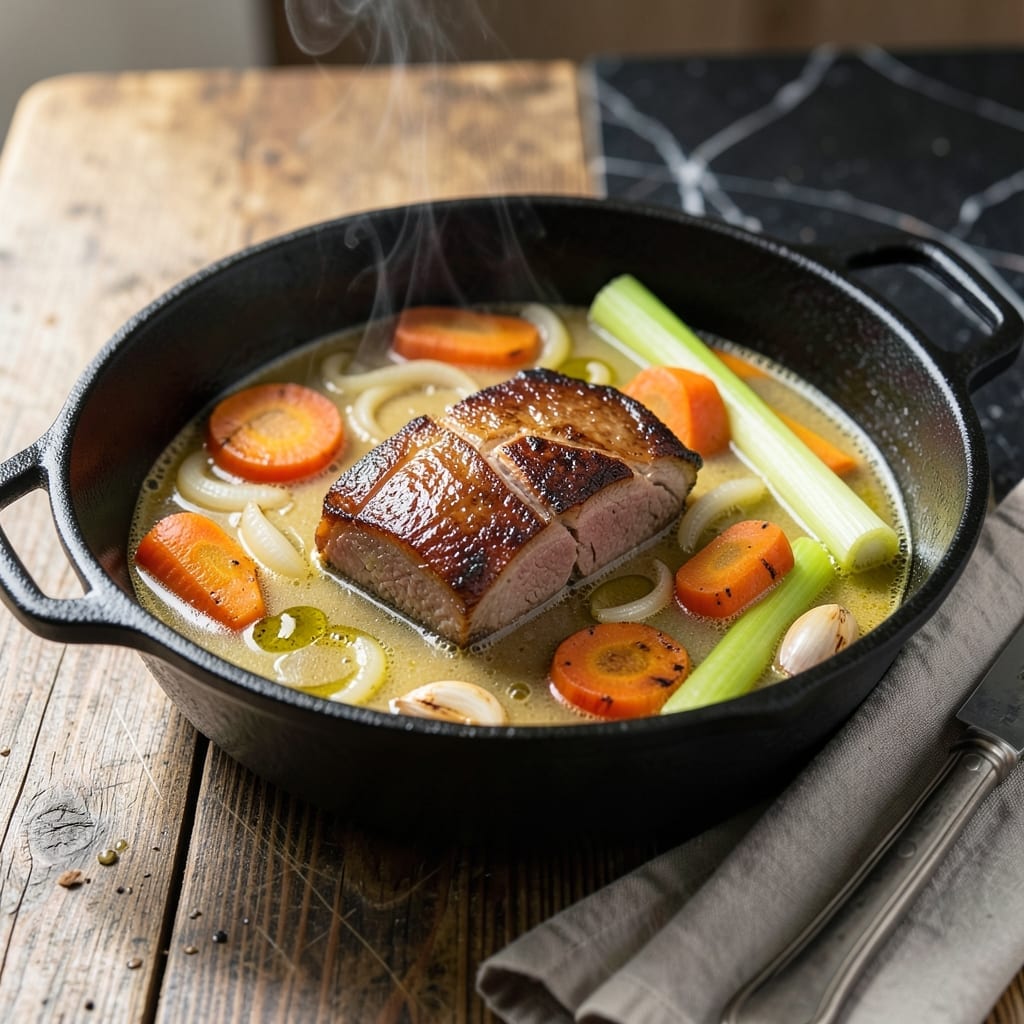
This ham hock recipe transforms a humble cut into a centerpiece of smoky richness and tender perfection.
Slow-cooked with simple seasonings, the meat falls off the bone while the skin develops a crispy, caramelized exterior. The process coaxes out deep, savory flavors that define comfort food.
What emerges is a dish with layers of taste—salty, smoky, and slightly sweet—all in one satisfying bite. The collagen breaks down into a velvety texture that elevates every forkful.
Ideal for Sunday dinners or special occasions, this method delivers consistent results with minimal effort.
Ingredients for Ham.hock
Transform humble ham hock into a rich, smoky centerpiece with these carefully chosen ingredients.
| Ingredient | Amount | Notes |
|---|---|---|
| Smoked Ham Hock 🍖 | 2 lb | Bone-in, skin-on preferred |
| Yellow Onion 🧅 | 1 whole | Medium size, roughly chopped |
| Carrots 🥕 | 3 whole | Peeled and cut into chunks |
| Celery Stalks 🥬 | 3 whole | Trimmed and chopped |
| Garlic Cloves 🧄 | 4 cloves | Minced for depth of flavor |
| Chicken Broth 🍲 | 4 cups | Low-sodium preferred for control |
| Apple Cider Vinegar 🍏 | 2 tbsp | Balances the smoky richness |
| Brown Sugar 🍚 | 2 tbsp | Light or dark both work |
| Dijon Mustard 🟡 | 1 tbsp | Adds a sharp contrast |
| Bay Leaves 🍃 | 2 whole | Dried, for aromatic depth |
| Dried Thyme 🌿 | 1 tsp | Crushed for better infusion |
| Black Peppercorns 🌶️ | 1 tsp | Whole, for slow release |
| Kosher Salt 🧂 | 1 tbsp | Adjust to taste after cooking |
| Olive Oil 🫒 | 2 tbsp | For searing the hock |
The ham hock is the foundation here—look for bone-in, skin-on cuts at butcher shops or well-stocked grocery stores for the best collagen content. The skin should have a good fat cap (this renders down beautifully). I prefer hocks from heritage breed pigs when available, but standard supermarket options work if that’s what you can source. Avoid pre-cooked varieties for this method.
No chicken broth? Vegetable broth with a splash of soy sauce adds similar depth. Out of apple cider vinegar? White vinegar in a pinch, though the fruitiness of cider is ideal. Brown sugar can be swapped for maple syrup (use two-thirds the amount). If you’re missing Dijon, whole-grain mustard works too—just strain the seeds if you prefer a smoother finish.
Cooked ham hocks keep beautifully. Store in the fridge for up to 4 days, or freeze for 3 months. The broth is liquid gold—strain and save for soups or beans. Reheat gently to preserve the texture (microwave tends to dry it out).
Why You’ll Love This Recipe
- Set It and Forget: I toss the ham hock, onion, carrots, and celery into the pot and let the stove do the work.
- Smoky Depth: The smoked ham hock infuses the whole dish with a rich, savory flavor that garlic only amplifies.
- Feeds the Freezer: I double the batch and freeze portions for quick meals on busy nights.
- Budget Stretcher: A single ham hock gives me multiple meals for the price of one. Honestly, it’s my wallet’s favorite cut.
Step-by-Step Instructions for Ham Hock
Achieve melt-in-your-mouth results with this precise method for transforming smoked ham hock into a rich, flavorful dish.
Step 1: Sear the Smoked Ham Hock for Depth of Flavor
Heat the 2 tbsp Olive Oil in a large Dutch oven over medium-high heat until shimmering. Pat the 2 lb Smoked Ham Hock dry with paper towels to ensure proper browning. Place the hock in the pot, skin-side down, and sear undisturbed for 4-5 minutes until the skin develops a deep mahogany crust.
Flip the hock and sear the remaining sides for another 3-4 minutes per side. This step builds a flavor foundation by caramelizing the natural sugars in the ham. Remove the hock and set aside—it will return to the pot later.
Step 2: Build the Aromatic Base
In the same pot, add the roughly chopped 1 whole Yellow Onion, peeled and chunked 3 whole Carrots, and trimmed and chopped 3 whole Celery Stalks. Sauté over medium heat for 5-6 minutes until the vegetables soften and the onion becomes translucent at the edges.
Add the minced 4 cloves Garlic Cloves and cook for 1 minute until fragrant. Stir in the 1 tbsp Dijon Mustard, 2 tbsp Brown Sugar, 2 tbsp Apple Cider Vinegar, 1 tsp Dried Thyme, 1 tsp Black Peppercorns, and 1 tbsp Kosher Salt, toasting the spices for 30 seconds to deepen their aroma.
Step 3: Simmer for Maximum Tenderness
Return the seared 2 lb Smoked Ham Hock to the pot. Pour in the 4 cups Chicken Broth and add the 2 whole Bay Leaves. The liquid should cover about two-thirds of the hock. Bring to a boil over high heat, then reduce to a gentle simmer.
Cover the pot and let it cook for 2 to 2½ hours, turning the hock every 30 minutes to ensure even cooking. The hock is done when the meat pulls away from the bone easily with a fork and the broth has reduced slightly, concentrating the flavors.
Step 4: Rest and Serve
Carefully transfer the ham hock to a cutting board and let it rest for 10 minutes. This allows the juices to redistribute, ensuring moist, tender meat. Skim any excess fat from the surface of the broth if desired, though I often leave it for added richness.
Shred the meat from the bone, discarding any large fat deposits or tough skin. Serve the ham hock in shallow bowls, ladling the flavorful broth and vegetables over the top. The meat should be fall-apart tender, with the broth offering a perfect balance of smoky, sweet, and tangy notes.
Pro Tips For Making Ham.Hock
- Simmer Low and Slow: Keep the heat just below a boil—around 180-200°F—to coax out the ham hock’s smoky richness without toughening the meat. I learned this the hard way after overcooking a few hocks into dry, stringy disappointment.
- Sear the Hock First: Brown the ham hock in the pot before adding liquids; about 3-4 minutes per side. This builds a deep, caramelized base that makes the broth taste like it simmered all day, even if it didn’t.
- Skip the Small Dice: Cut the onion, carrots, and celery into large chunks—think 2-inch pieces—so they hold up during the long cook. Sounds lazy, but it works: they’ll soften just right without turning to mush.
- Use the Rind: Leave the skin and a bit of fat on the ham hock; it adds body and flavor to the broth as it renders down. My grandmother swore by this, and she was right: the texture and taste are better with it.
Serving Suggestions for Leftovers
Classic Plating
Serve the shredded ham hock in shallow bowls with the broth and vegetables ladled over the top. The rich, smoky meat pairs beautifully with the tender carrots and celery. I love using white stoneware for a rustic presentation that lets the dish shine. 💛
Bread Pairings
Offer crusty sourdough bread or cornbread on the side to soak up the flavorful broth. Warm the bread just before serving for maximum comfort. The slight tang of sourdough complements the smoky richness perfectly.
Fresh Contrasts
A simple green salad with a light vinaigrette cuts through the richness. Toss mixed greens with lemon juice and olive oil. The acidity refreshes your palate between bites of the hearty ham hock.
Starchy Sides
Mashed potatoes or buttery grits make excellent accompaniments. The creamy texture balances the meat’s smokiness. For a Southern touch, try collard greens cooked with a splash of the ham broth.
Garnish Ideas
Sprinkle with chopped parsley or green onions for a pop of color. A drizzle of hot sauce adds a spicy kick. I always keep extra broth warm to add if the dish needs more moisture.
Nutrition Facts
Frequently Asked Questions
How long should I cook it to get fall-apart tenderness?
Simmer the hock for 2 to 2½ hours on low heat. Turn it every 30 minutes to ensure even cooking. The meat is ready when it pulls away from the bone with minimal effort.
What can I substitute for apple cider vinegar?
White vinegar works in a pinch, though it lacks the fruity depth. For a milder tang, use lemon juice or white wine vinegar. Adjust to taste as some options may be sharper.
Can I make this in a slow cooker?
Brown the hock first, then transfer to the slow cooker with all ingredients. Cook on low for 6-8 hours or high for 4-5 hours. The result will be just as tender.
Why is my broth too salty?
Ham hocks are cured, so the broth can concentrate salt. Use low-sodium broth and taste before adding extra seasoning. Dilute with water if needed, then reduce to intensify flavors.

- Bread Recipe KitchenAid Mixer: Foolproof Loaf With Perfect Rise - September 28, 2026
- BBQ Oysters Recipe Grill: Smoky Garlic Butter Bliss - September 28, 2026
- Crock Pot Mac and Cheese Recipe Paula Deen: Ultra Creamy Southern-Style Comfort - September 28, 2026