
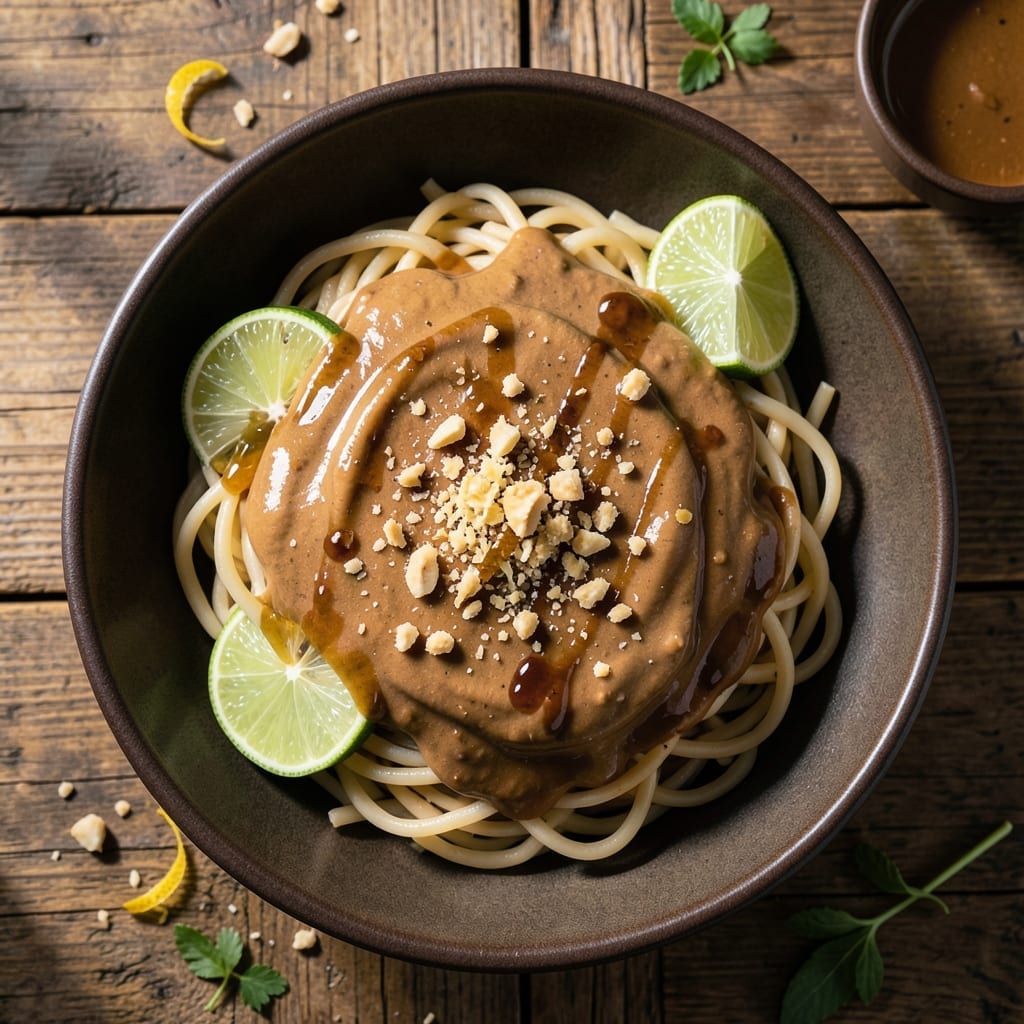
This sauce transforms ordinary noodles into a creamy, restaurant-quality dish with minimal effort. I developed it after years of testing to achieve the perfect balance of nutty richness and tangy depth.
The secret lies in combining smooth peanut butter with a touch of soy sauce, lime juice, and a hint of sweetness. It comes together in 5 minutes with just a whisk and a bowl, no cooking required.
What you get is a velvety sauce that clings beautifully to noodles, delivering complex Thai-inspired flavors in every bite. David insists this is my best creation yet.
Store in the fridge for up to a week, or make it fresh each time. This sauce keeps noodles from sticking together while adding incredible flavor.
Ingredients for Peanut Butter Sauce Recipe for Noodles
Nine simple ingredients create this creamy Thai-inspired satay sauce that clings beautifully to noodles.
| Ingredient | Amount | Notes |
|---|---|---|
| Smooth Peanut Butter 🥜 | ¾ cup | Unsweetened, no added sugar |
| Soy Sauce 🫒 | 3 tbsp | Low-sodium preferred for balance |
| Fresh Lime Juice 🍋 | 2 tbsp | About 1 large lime |
| Maple Syrup 🍁 | 1 ½ tbsp | Or agave nectar for sweetness |
| Rice Vinegar 💧 | 1 tbsp | Adds tangy depth to sauce |
| Fresh Garlic 🧄 | 2 cloves | Minced finely for even flavor |
| Fresh Ginger 🌿 | 1 tbsp | Grated, adds zesty warmth |
| Sesame Oil 🫒 | 1 tsp | Toasted variety for nuttiness |
| Water 💧 | ¼ cup | Adjusts consistency as needed |
The peanut butter is everything here—go for natural, unsweetened from Whole Foods or Trader Joe’s (their creamy version is perfect). Soy sauce adds umami depth; I prefer low-sodium to control the saltiness. Fresh lime and ginger are non-negotiable for that bright, zesty kick (the bottled stuff just doesn’t cut it). Look for vibrant green ginger and limes that feel heavy for their size.
No maple syrup? Agave nectar or coconut sugar works just as well. Out of rice vinegar? Apple cider vinegar at half the amount gets you close. The sesame oil adds a toasty note—if you’re in a pinch, a dash of neutral oil plus a pinch of toasted sesame seeds can sub in. Garlic and ginger can be swapped for 1 tsp each of powdered, but fresh is so much better.
This keeps beautifully—store in an airtight jar in the fridge for up to 1 week. The flavors actually deepen overnight. If it thickens too much, just whisk in a splash of warm water to loosen. Freeze for up to 3 months if you want to batch it.
Why You’ll Love This Recipe
- 5-Minute Magic: I just stir peanut butter, soy sauce, lime juice, and a splash of maple syrup—no cooking, no fuss.
- Sweet-Savory Balance: The tang of rice vinegar cuts the richness of the peanut butter, while lime juice brightens every bite.
- Meal Prep Hero: I make a big batch Sunday night and drizzle it over noodles all week—stays fresh, never boring.
- Budget Keeper: Honestly, peanut butter and pantry staples stretch into a sauce that tastes like takeout for pennies.
Step-by-Step Instructions for Peanut Butter Sauce for Noodles
This creamy sauce comes together in minutes with bold Thai-inspired flavors you’ll love.
Step 1: Combine Aromatic Base Ingredients
In a medium bowl, I start by mincing the 2 cloves fresh garlic and grating the 1 tbsp fresh ginger into a fine paste. These form the fragrant foundation that will make your sauce sing with authentic flavor.
Add the 1 tsp sesame oil to the bowl and stir it into the garlic and ginger. The toasted sesame oil amplifies the nutty notes and adds depth. You should already smell the aroma blossoming—this is your first sign it’s going to be incredible.
Step 2: Whisk in the Liquid Components
Pour in the 3 tbsp soy sauce, 2 tbsp fresh lime juice, 1 tbsp rice vinegar, and 1.5 tbsp maple syrup. Whisk vigorously until everything is fully incorporated and the mixture takes on a glossy sheen.
The combination of salty soy, tangy lime, sharp vinegar, and sweet maple creates that perfect balance we’re after. This is where the magic starts to happen—you’ll notice the colors blending into a rich amber liquid.
Step 3: Incorporate the Peanut Butter
Add all 0.75 cup smooth peanut butter to the bowl. I like to use a silicone spatula to press the peanut butter into the liquid mixture, breaking up any stubborn clumps. The sauce will thicken immediately as the peanut butter begins to dissolve.
Keep stirring until the mixture becomes completely smooth and uniform. You’re looking for a creamy, pourable consistency that coats the back of a spoon. The peanut butter’s natural oils will start to separate slightly—that’s normal and part of the process.
Step 4: Adjust Consistency and Finish
Gradually whisk in the 0.25 cup water, 1 tablespoon at a time, until the sauce reaches your desired thickness. For a creamy satay coating that clings to noodles, I typically use all the water, but start with less if you prefer it thicker.
Taste and adjust the seasoning—if it needs more tang, add a squeeze of lime; if it needs sweetness, add a drizzle more maple syrup. The sauce should be velvety smooth with a perfect balance of all those Thai-inspired flavors. It’s ready to drizzle over your favorite noodles!
Pro Tips For Making Peanut Butter Sauce Recipe For Noodles
- Warm the Peanut Butter: Microwave the peanut butter for 20 seconds before mixing—it blends smoother with the soy sauce and lime juice. I learned this the hard way after stirring for 10 minutes with a cold, stubborn jar.
- Balance the Lime: Start with half the lime juice, taste, then add more. Too much upfront makes the sauce bitter, and you can’t take it out once it’s in.
- Skip Cold Noodles: Toss the sauce with warm noodles so it clings better. Cold noodles absorb less flavor, and the sauce just pools at the bottom.
- Thin with Noodle Water: If the sauce is too thick, stir in a splash of the noodle cooking water—about 2 tablespoons does the trick. It loosens the texture without watering down the flavor.
Pro Cooking Tips for This Dish
Perfect Peanut Butter Texture
Always use natural, unsweetened peanut butter from Central Market—the oils separate naturally, which helps create that silky texture. Stir the jar thoroughly before measuring to avoid dry clumps that won’t dissolve properly. 💡
Temperature Control
If your sauce thickens too much, warm it gently over low heat while whisking in 1 tsp of water at a time. Never boil it, or the peanut butter will separate and turn grainy. I test on the back of a spoon—it should ribbon smoothly.
Flavor Balancing
Taste as you go: if it’s too sweet, add ½ tsp rice vinegar; too salty, a drizzle of maple syrup. David always catches when I’ve gone overboard with the lime—he’s my taste-testing hero. The perfect batch has all flavors in harmony.
Equipment Matters
A silicone spatula is my secret weapon for scraping every last bit of sauce from the bowl. For ultra-smooth results, I sometimes blend it with my immersion blender for 10 seconds. No fancy tools? A whisk and some elbow grease work just fine.
Avoiding Common Pitfalls
Never skip the sesame oil—it adds that toasty depth that makes the sauce sing. And always use fresh lime juice; bottled just doesn’t have the same bright zing. I learned this the hard way during my Asheville farm-to-table days.
Storage Prep
Let the sauce cool completely before storing in an airtight container. This prevents condensation from watering it down. I like to use mason jars—they’re perfect for shaking it back to life if it separates in the fridge. 🥜
Nutrition Facts
Frequently Asked Questions
What can I use instead of maple syrup?
Agave nectar or coconut sugar work perfectly as 1:1 substitutes. Honey is another great option if you don’t need it vegan. Each adds a slightly different nuance, but all balance the sauce’s tangy and salty notes beautifully.
Why did my sauce turn out grainy?
This usually happens if the peanut butter wasn’t fully incorporated or if the mixture got too hot. Always whisk thoroughly and avoid heating above low. If it separates, blend with an immersion blender for 10 seconds to restore smoothness.
How long does it keep in the fridge?
Stored in an airtight container, it stays fresh for up to 1 week. The flavors actually deepen over time. If it thickens, just whisk in 1 tsp warm water to loosen before using.

- Pina Colada Dip Recipe Red Lobster: Tropical Creaminess With Toasted Coconut - October 12, 2026
- Pickled Sweet Cherry Peppers Recipe Canning: Tangy Heat for Pantry Staples - October 12, 2026
- Peppercorn Sauce Recipe Vegan: Rich Umami Depth Without Cream - October 12, 2026