
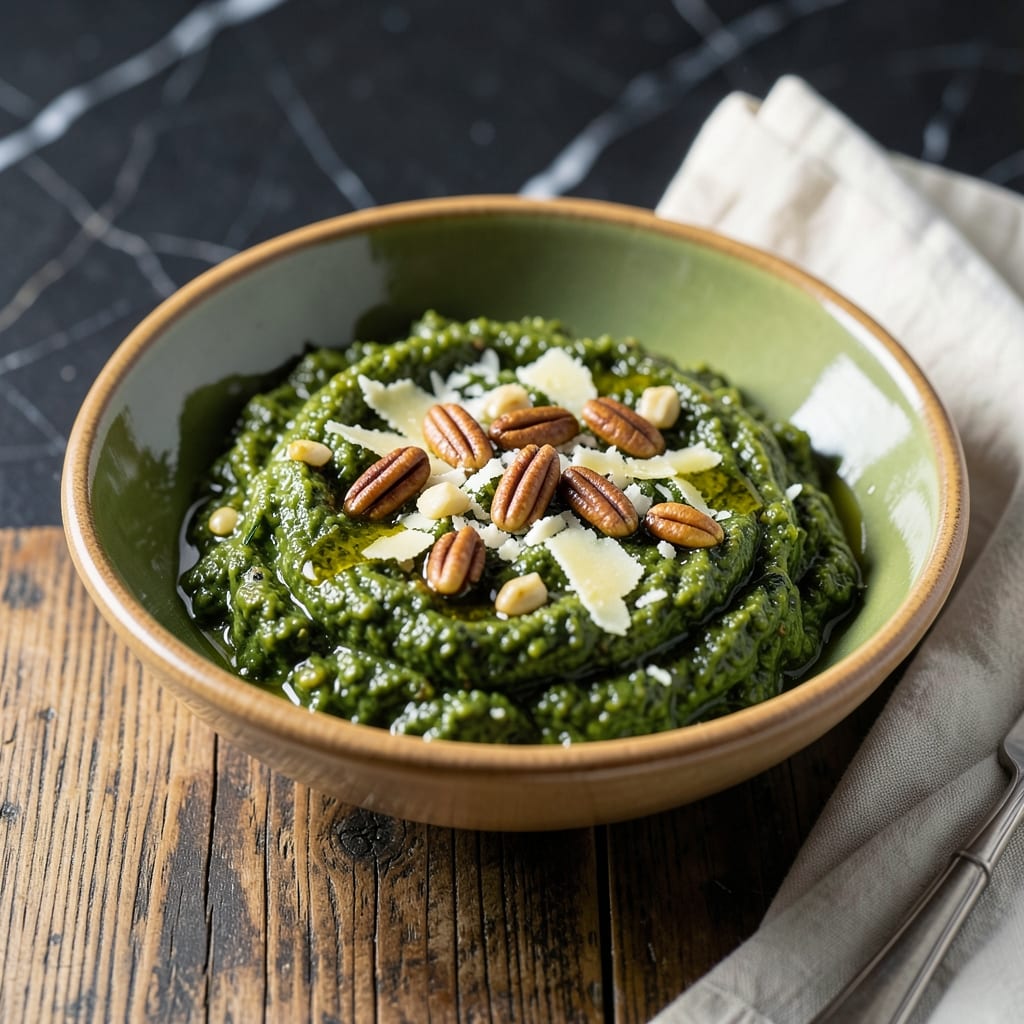
This pesto recipe transforms fresh basil and roasted pine nuts into a rich, aromatic sauce that elevates any dish.
I developed this method to highlight the natural oils in pine nuts, which release their full flavor when lightly toasted. The combination of garlic, parmesan, and olive oil creates a balanced, velvety texture that clings perfectly to pasta or spreads smoothly on sandwiches.
What sets this version apart is the depth from roasting the pine nuts first. This simple step unlocks a nutty intensity that raw nuts can’t match, making every spoonful more complex and satisfying.
Use it immediately or store in the fridge for up to a week. The flavors deepen over time, making leftovers even better.
Ingredients for Pesto Recipe Roasted Pine Nuts
Eight ingredients create this rich, aromatic sauce with nutty depth from roasted pine nuts.
| Ingredient | Amount | Notes |
|---|---|---|
| Fresh Basil Leaves 🌿 | 2 cups | Packed, stems removed |
| Pine Nuts 🥜 | ½ cup | Lightly toasted first |
| Garlic Cloves 🧄 | 3 cloves | Peeled, rough chopped |
| Parmesan Cheese 🧀 | ¾ cup | Freshly grated from wedge |
| Extra-Virgin Olive Oil 🫒 | ¾ cup | High quality, fruity notes |
| Lemon Juice 🍋 | 1 tbsp | Freshly squeezed preferred |
| Sea Salt 🧂 | ½ tsp | Fine grain preferred |
| Black Pepper 🌶️ | ¼ tsp | Freshly ground preferred |
Pine nuts are the star here. Trader Joe’s and Costco offer the best prices for these pricey nuts. Look for plump, pale nuts—avoid any that look shriveled or dark. Toasting them first (as the intro mentions) unlocks their oils and deepens the flavor. For Parmesan, Parmigiano-Reggiano is non-negotiable—pre-grated versions contain anti-caking agents that dull the flavor.
No pine nuts? Walnuts or raw cashews work well (toast them too). Out of Parmesan? Pecorino Romano adds a sharper bite. If your basil isn’t vibrant, spinach or arugula can stretch it without sacrificing color. The olive oil should be something you’d drizzle on bread—avoid anything labeled ‘light’ or ‘pure’ as they lack the fruity depth needed.
Pesto oxidizes quickly. Press plastic wrap directly on the surface before sealing to prevent browning. Keeps for 1 week in the fridge or 6 months frozen in ice cube trays. The flavors meld beautifully over time, making leftovers even more complex.
Why You’ll Love This Recipe
- No-Fuss Blending: I just toss the basil, roasted pine nuts, garlic, Parmesan, and oil in the food processor—no pre-cooking, no fuss.
- Roasted Nut Depth: The toasted pine nuts add this warm, buttery richness that makes the pesto taste way more complex than it is.
- Pasta to Paninis: I slather it on sandwiches, stir it into pasta, or dollop it on soup—honestly, it works with everything.
- Keeps for Days: A jar lasts me a full week in the fridge, and the flavor only gets better after a day or two.
Step-by-Step Instructions for Pesto with Roasted Pine Nuts
Here’s the method that delivers vibrant, nutty pesto with perfect texture every time.
Step 1: Toast the Pine Nuts
Heat a dry skillet over medium-low heat. Add the 0.5 cup Pine Nuts and toast for 3-5 minutes, stirring frequently, until they turn light golden brown and emit a fragrant, buttery aroma.
Watch them closely—pine nuts burn quickly once they start to color. The moment they reach that perfect golden hue, immediately transfer them to a plate to cool. This prevents carryover cooking from making them bitter. Set aside until completely cool to the touch.
Step 2: Pulse the Garlic and Basil
In a food processor, pulse the 3 cloves Garlic Cloves until finely minced. Stop before it becomes a paste; you want small, even pieces. Add the 2 cups Fresh Basil Leaves and pulse in 1-second bursts until the basil is coarsely chopped.
Don’t over-process at this stage—the texture should still be somewhat chunky. Scrape down the sides of the bowl with a spatula to ensure even processing. The leaves should be broken down but still visible as flecks in the final pesto.
Step 3: Incorporate Nuts and Cheese
Add the cooled Pine Nuts to the food processor and pulse 5-6 times until they’re finely chopped but not ground into a paste. Then add the 0.75 cup Parmesan Cheese and pulse again for 5-8 seconds until the mixture resembles coarse sand.
The cheese should be fully incorporated but still slightly grainy. At this point, the mixture will look dry and crumbly—that’s exactly what you want before adding the liquid ingredients.
Step 4: Emulsify with Oil and Seasonings
With the food processor running, slowly drizzle in the 0.75 cup Extra-Virgin Olive Oil through the feed tube. This slow addition is crucial for creating a smooth, creamy emulsion rather than a separated, oily mixture.
Once the oil is incorporated, add the 1 tbsp Lemon Juice, 0.5 tsp Sea Salt, and 0.25 tsp Black Pepper. Pulse 2-3 times just until everything is combined. Taste and adjust seasoning if needed—the flavors should be bright and balanced.
The finished pesto should be thick but pourable, with a vibrant green color and visible texture from the herbs and nuts. If it’s too thick, you can add a splash of water, but the Extra-Virgin Olive Oil should be sufficient for the right consistency.
Pro Tips For Making Pesto Recipe Roasted Pine Nuts
- Toast the Nuts First: Roast the pine nuts in a dry pan over medium-low heat for 2-3 minutes until golden—I learned this the hard way after using raw nuts and getting a pesto that tasted flat.
- Dry the Basil: Pat the basil leaves dry with a paper towel before blending, or the pesto will turn watery and separate.
- Skip the Food Processor: I was skeptical until I tried it, but pounding the ingredients with a mortar and pestle gives a better texture and prevents over-processing the nuts into paste.
- Grate Your Own Cheese: Pre-grated parmesan has anti-caking agents that make the pesto grainy—grate a wedge yourself for a smoother, creamier result.
Flavor Customization for These Flavors
Herb Variations
Swap basil for 2 cups fresh spinach for a milder flavor that still delivers vibrant color. I love using arugula when I want a peppery kick—use 1.5 cups arugula plus 0.5 cup basil to balance the bitterness. 🌿
Nut Alternatives
If pine nuts are too pricey, walnuts or cashews work beautifully. Toast 0.5 cup walnuts at 350°F for 8-10 minutes until fragrant. For a budget option, slivered almonds add a pleasant crunch.
Cheese Swaps
Pecorino Romano replaces Parmesan with a sharper, saltier bite—use 0.5 cup and reduce added salt. For a vegan version, nutritional yeast (0.5 cup) adds a cheesy depth, though the texture will be slightly different.
Spice It Up
Add ½ tsp red pepper flakes with the garlic for a subtle heat. For a smoky twist, include ¼ tsp smoked paprika. I sometimes add 1 tsp lemon zest for extra brightness that pairs well with the nutty base. 🌶️
Texture Adjustments
Prefer a chunkier pesto? Pulse ingredients 3-4 times less than usual. For ultra-smooth, blend for an additional 10-15 seconds after emulsifying. If too thick, thin with 1-2 tbsp warm water rather than more oil.
Citrus Variations
Replace lemon juice with 1 tbsp lime juice for a zesty twist. Orange zest (1 tsp) adds a sweet, floral note that complements the pine nuts beautifully. I find citrus variations brighten up richer dishes like grilled meats.
Nutrition Facts
Frequently Asked Questions
Do I have to toast the pine nuts first?
Yes, toasting deeply enhances their nutty flavor and aroma. Spread 0.5 cup in a dry skillet over medium-low heat for 3-5 minutes until golden. This step makes a noticeable difference in taste.
Can I make this without a food processor?
Use a mortar and pestle for a rustic texture. Crush garlic first, then add basil, pine nuts, and cheese. Drizzle in 0.75 cup olive oil slowly while stirring. It takes more effort but yields excellent results.
How do I prevent my pesto from turning brown?
Press plastic wrap directly on the surface before refrigerating to limit air exposure. The oil layer also helps. For longer storage, freeze in ice cube trays with a thin oil coating on top.
What if I don’t have pine nuts?
Walnuts or cashews work well—just toast 0.5 cup first. Almonds are a budget-friendly substitute. Each nut brings a slightly different flavor profile but will still taste delicious.

- Pina Colada Dip Recipe Red Lobster: Tropical Creaminess With Toasted Coconut - October 12, 2026
- Pickled Sweet Cherry Peppers Recipe Canning: Tangy Heat for Pantry Staples - October 12, 2026
- Peppercorn Sauce Recipe Vegan: Rich Umami Depth Without Cream - October 12, 2026