
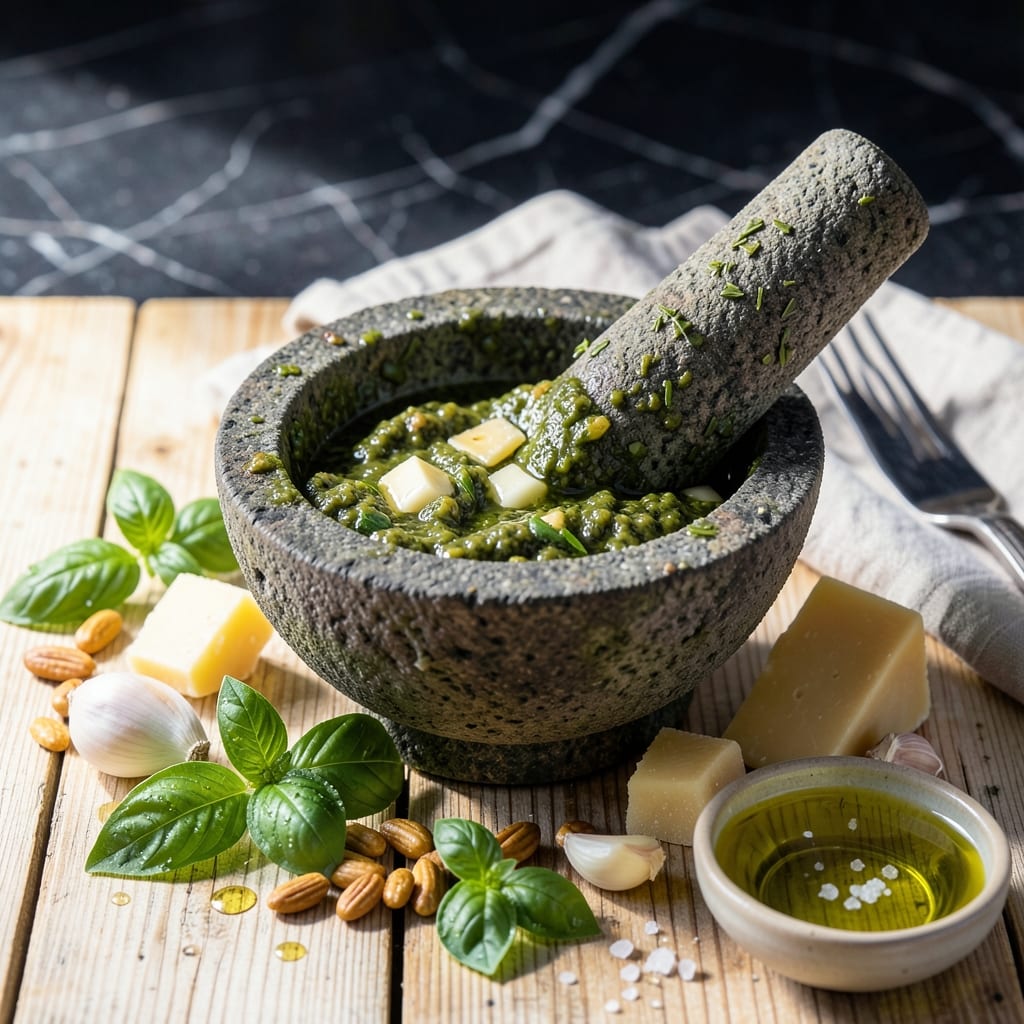
There’s a superior way to make pesto that brings out its true depth of flavor—by hand. This method uses a mortar and pestle to slowly crush and blend ingredients, releasing oils and aromas that electric blades can’t match.
The process is simple yet deliberate, allowing basil, garlic, and pine nuts to meld into a rich, aromatic paste. No electricity required, just patience and a little elbow grease.
What you’ll get is a sauce with layers of freshness and texture that’s far more vibrant than any machine-made version. It’s a small effort for a restaurant-quality result.
Use it on pasta, sandwiches, or as a dip. Here’s how to make it the traditional way.
Ingredients for Pesto Sauce Recipe Without Food Processor
Eight premium ingredients transform into restaurant-quality pesto with mortar and pestle precision.
| Ingredient | Amount | Notes |
|---|---|---|
| Fresh Basil Leaves 🌿 | 2 cups | Packed, stems removed |
| Pine Nuts 🥜 | ½ cup | Toasted for depth of flavor |
| Garlic Cloves 🧄 | 3 cloves | Peeled, roughly chopped |
| Parmesan Cheese 🧀 | ¾ cup | Freshly grated from wedge |
| Extra-Virgin Olive Oil 🫒 | ¾ cup | High-quality, fruity finish |
| Coarse Sea Salt 🧂 | ½ tsp | Adjust to taste preference |
| Freshly Ground Black Pepper 🌶️ | ¼ tsp | Added at the end |
| Lemon Juice 🍋 | 1 tbsp | Freshly squeezed for brightness |
The basil must be pristine—farmers market bunches with vibrant, unblemished leaves deliver the best aroma. Pine nuts from Trader Joe’s or Costco offer consistent quality at a fair price. For Parmesan, Parmigiano-Reggiano is non-negotiable; pre-grated varieties lack the necessary texture and depth. Select a fruity, high-quality extra-virgin olive oil—this is not the place for generic brands.
Substitutions are possible but impact the final product. Walnuts or cashews can replace pine nuts at half the amount for cost savings. Pecorino Romano offers a sharper alternative to Parmesan. If fresh basil is unavailable, baby spinach (blanched) provides a mild substitute, though the flavor profile will differ. The garlic quantity can be adjusted—2 cloves for a milder result.
Store pesto in an airtight container with a thin olive oil layer on top to prevent browning. Refrigerates for 5 days or freezes in ice cube trays for 6 months. The mortar and pestle method ensures optimal texture retention during storage (worth the extra minute).
Why You’ll Love This Recipe
- No Blender Needed: I just use a mortar and pestle or even a knife to chop the basil, garlic, and pine nuts by hand—so simple.
- Rich and Fresh: The combo of Parmesan, olive oil, and fresh basil gives it that bright, herby flavor I crave.
- Endless Uses: I toss it with pasta, drizzle over soups, or even spread on sandwiches for a quick flavor boost.
Step-by-Step Instructions for Pesto Sauce Without Food Processor
This traditional method yields a rustic texture with superior depth of flavor.
Step 1: Toast the Pine Nuts
Heat a dry skillet over medium-low heat. Add the 0.5 cup Pine Nuts and toast for 3-5 minutes, stirring frequently, until they turn light golden brown and release a nutty aroma.
Watch them carefully—pine nuts burn quickly. Transfer the toasted nuts to a plate to cool completely. This toasting step enhances their natural oils and adds a profound depth that raw nuts can’t provide. The cooled nuts will be easier to crush evenly in the mortar.
Step 2: Create the Garlic and Salt Paste
Place the 3 cloves Garlic Cloves and 0.5 tsp Coarse Sea Salt in a mortar. Using a circular motion with the pestle, grind them together for 1-2 minutes until a smooth paste forms.
The salt acts as an abrasive, helping to break down the garlic fibers. This technique ensures the garlic distributes evenly throughout the pesto without leaving large chunks. The paste should be fine enough that you can’t distinguish individual garlic pieces.
Step 3: Incorporate Basil and Pine Nuts
Add the 2 cups Fresh Basil Leaves to the mortar in batches, crushing each addition with the pestle before adding more. Once all basil is incorporated, add the toasted 0.5 cup Pine Nuts and continue grinding.
Use a rocking motion rather than a circular one to bruise the basil leaves, which releases their essential oils. The texture should be coarse but uniform, with no large basil pieces remaining. This step takes about 5-7 minutes of consistent effort.
Step 4: Emulsify with Cheese and Oil
Add the 0.75 cup Parmesan Cheese to the mortar and mix thoroughly with the pestle. Begin drizzling in the 0.75 cup Extra-Virgin Olive Oil a few tablespoons at a time, grinding between additions to create an emulsion.
The mixture will transform from a coarse paste to a thick, creamy sauce. The process should take 3-4 minutes total. The final consistency should be thick but pourable, with visible flecks of basil and pine nuts.
Step 5: Finish and Adjust Seasoning
Stir in the 1 tbsp Lemon Juice to brighten the flavors. Taste and adjust seasoning if needed, though the initial salt should be sufficient. Finally, add the 0.25 tsp Freshly Ground Black Pepper and stir to combine.
Let the pesto rest for 10 minutes before serving to allow the flavors to meld. The finished sauce should have a vibrant green color with a slightly chunky texture that’s characteristic of authentic mortar-and-pestle pesto. Use immediately or store in the refrigerator for up to 3 days.
Pro Tips For Making Pesto Sauce Recipe Without Food Processor
- Crush Pine Nuts First: Start by crushing the pine nuts in your mortar before adding other ingredients—this creates a paste that helps bind the pesto and prevents oily separation.
- Use Room-Temp Cheese: Grate the Parmesan at room temperature so it incorporates smoothly; cold cheese clumps and makes the texture uneven.
- Skip the Stemmy Leaves: Pick only the tender basil leaves and discard stems—they’re bitter and turn pesto grainy when pounded.
- Drizzle Oil Slowly: Add the olive oil a little at a time while grinding to emulsify properly; dumping it all at once makes a greasy, thin sauce.
Make-Ahead Tips for pesto sauce recipe without food processor
Prep Ahead Strategy
You can toast the 0.5 cup Pine Nuts and measure all ingredients up to 2 days in advance. Store the toasted nuts at room temperature in an airtight container. Keep basil in a glass of water like flowers in the fridge. 💡
Basil Preservation
Wash and dry basil leaves thoroughly before storing. Wrap them gently in a damp paper towel, then place in a sealed bag. This keeps the leaves fresh for 3-4 days until you’re ready to make your sauce.
Cheese Prep Tip
Grate the 0.75 cup Parmesan Cheese fresh from the wedge and store it in the refrigerator. Pre-grated cheese doesn’t melt as well into the emulsion. Use within 3 days for best texture and flavor.
Partial Batch Making
Make just the garlic-salt paste and toasted nuts ahead. Store separately in the fridge for 24 hours. The fresh basil should be crushed with the other ingredients right before serving for peak flavor. ⏰
Storage Containers
Use small glass jars with tight-fitting lids for prepared pesto. I love 8-ounce mason jars—they’re perfect for this quantity. Always add a thin layer of olive oil on top before sealing to prevent browning.
Freezing for Later
Portion pesto into ice cube trays and freeze for up to 6 months. Once frozen, transfer cubes to freezer bags. Thaw in the fridge overnight or add directly to hot pasta for quick meals.
Nutrition Facts
Frequently Asked Questions
Can I use a blender instead of a mortar and pestle?
Yes, but the texture will be smoother. A blender works faster but may over-process the basil, turning it bitter. Pulse in 2-second bursts for better control.
Why does handmade pesto taste better?
The slow crushing releases essential oils from basil and nuts more gently than blades. This preserves delicate flavors and creates a richer, more aromatic sauce.
How do I keep pesto from turning brown?
Add a thin layer of olive oil on top before storing. This creates a barrier against air. Refrigerate in an airtight container for up to 5 days.
What can I use instead of pine nuts?
Walnuts or cashews work well at half the amount. They’re more affordable and still provide a creamy texture. Toast them first for best results.

- Pina Colada Dip Recipe Red Lobster: Tropical Creaminess With Toasted Coconut - October 12, 2026
- Pickled Sweet Cherry Peppers Recipe Canning: Tangy Heat for Pantry Staples - October 12, 2026
- Peppercorn Sauce Recipe Vegan: Rich Umami Depth Without Cream - October 12, 2026