
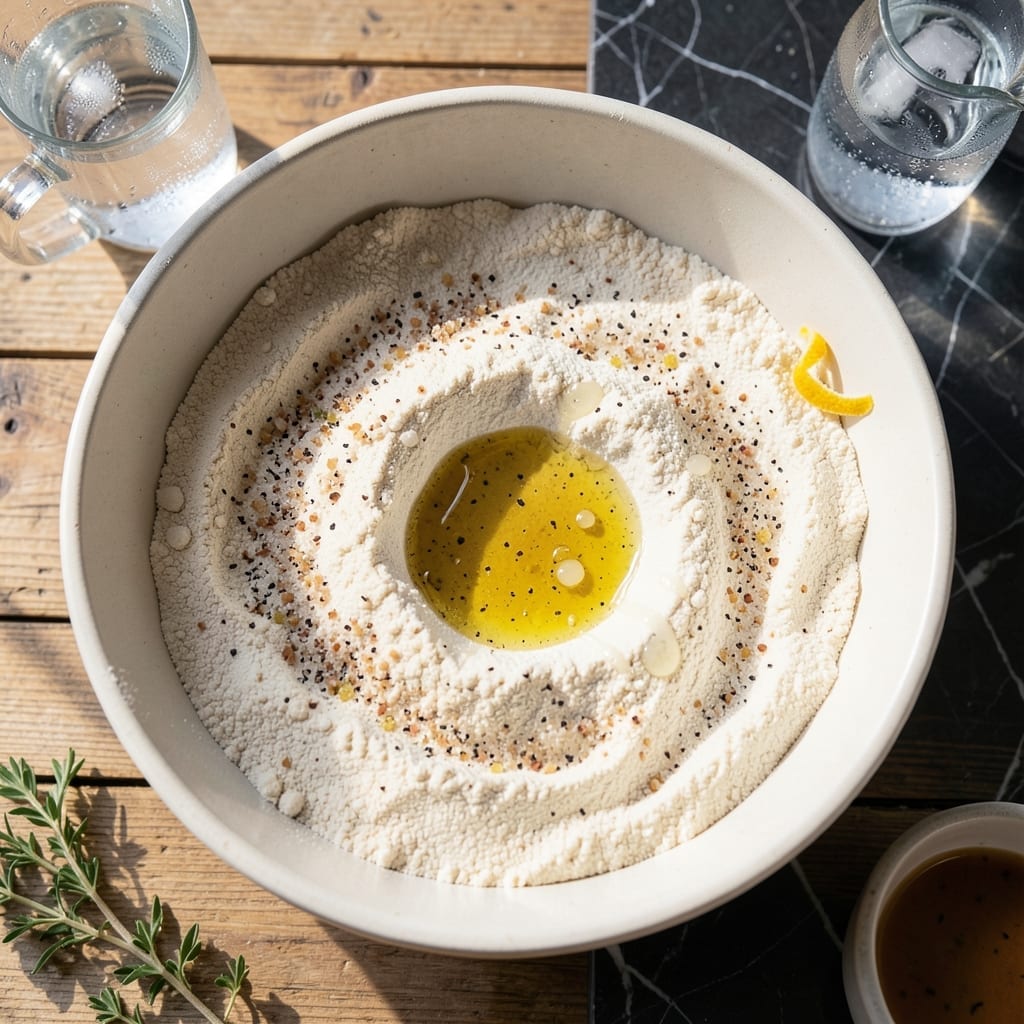
This oil-based pie crust delivers the flaky texture you expect from butter, without the dairy or complicated handling. I developed this method after realizing many home bakers struggle with overworking traditional dough.
The secret lies in using cold oil and minimal water, creating a tender yet sturdy crust that holds its shape. Unlike butter-based versions, this dough stays flexible at room temperature, making it ideal for beginners or those with warm kitchens.
What emerges from the oven is a golden, multi-layered crust that shatters at the touch. It works perfectly for both sweet and savory pies, with a neutral flavor that lets your filling shine.
With just a few pantry staples and 10 minutes of prep, you’ll have a reliable crust ready for any pie recipe. Here’s how to make it.
Ingredients for Pie Crust Recipe Made with Oil
Six simple ingredients for a flaky, golden crust that shines in any pie.
| Ingredient | Amount | Notes |
|---|---|---|
| All-Purpose Flour 🌾 | 2 ½ cups | Plus extra for dusting |
| Vegetable Oil 🫒 | ⅔ cup | Cold, neutral-flavored like canola |
| Ice Water 💧 | ⅓ cup | Plus more as needed |
| Salt 🧂 | 1 tsp | Fine sea salt or table salt |
| Granulated Sugar 🍚 | 1 tsp | Optional, for sweet pies |
| White Vinegar 💧 | 1 tsp | Helps tenderize the crust |
The flour is your foundation—King Arthur or Gold Medal are my go-tos for consistent results. The oil needs to be cold (straight from the fridge) and neutral in flavor; canola or vegetable oil work perfectly. I’ve had luck with Costco’s organic canola oil for this. Don’t skip the vinegar—it’s subtle but makes a noticeable difference in tenderness (worth the extra minute).
No all-purpose flour? Pastry flour at a 1:1 swap works but yields a slightly more delicate crust. Out of neutral oil? Melted coconut oil (chilled first) adds a hint of flavor—great for tropical pies. For savory applications, olive oil can work but may impart its own taste. The sugar is optional, so omit it for savory pies without worry.
The dough keeps 3-4 days wrapped tightly in the fridge, or freeze for 3 months. Let it sit at room temperature for 10-15 minutes before rolling—this prevents cracking. Baked crusts stay fresh for 2 days at room temperature in an airtight container.
Why You’ll Love This Recipe
- No Mess Mixing: I just stir the flour, oil, and ice water together—no rolling pin, no chilled butter, no fuss.
- Buttery Crisp: The oil makes it flaky and tender with a subtle richness that’s honestly hard to beat.
- Endless Uses: I’ve used this for pot pies, quiches, even hand pies for school lunches.
- Pantry Staples: All-purpose flour and vegetable oil are always in my cupboard, so I can make this anytime.
Step-by-Step Instructions for Pie Crust Made With Oil
Here’s how to create flaky, tender layers with just a few simple steps.
Step 1: Combine Dry Ingredients for the Base
In a large mixing bowl, whisk together the 2.5 cups All-Purpose Flour, 1 tsp Salt, and 1 tsp Granulated Sugar. I always start with dry ingredients to ensure even distribution—this prevents pockets of salt or sugar in your finished crust.
The sugar is optional, but I recommend it for sweet pies. It adds a subtle sweetness that balances tart fillings beautifully. Whisk until the mixture looks uniform and slightly aerated.
Step 2: Cut in the Oil for Flaky Texture
Pour the 0.66 cup Vegetable Oil over the flour mixture. Using a fork, cut the oil into the flour until the mixture resembles coarse crumbs with some pea-sized pieces remaining. This is the key to flakiness—those visible oil-coated flour bits will create layers as they bake.
Don’t overmix here. You’re not making a smooth dough yet. The irregular texture is exactly what you want. I like to use a fork because it gives me better control than a pastry cutter for this method.
Step 3: Add the Liquid Ingredients
In a small bowl, combine the 0.33 cup Ice Water and 1 tsp White Vinegar. The vinegar tenderizes the gluten, guaranteeing a flaky result. Create a well in the center of your flour-oil mixture and pour in the liquid all at once.
Using the same fork, stir just until the dough comes together. It will look shaggy and slightly wet—this is perfect. Overworking the dough develops gluten, which makes crusts tough instead of tender.
Step 4: Rest and Roll the Dough
Turn the dough out onto a lightly floured surface and gently pat it into a disk about 1-inch thick. Wrap it in plastic wrap and refrigerate for 30 minutes. This rest period allows the flour to fully hydrate and the oil to solidify, making rolling easier.
When ready, roll the dough between two sheets of parchment paper to ⅛-inch thickness. The parchment prevents sticking without adding extra flour. You’ll know it’s ready when you see those beautiful flaky layers forming at the edges.
Transfer to your pie dish, crimp the edges, and it’s ready for filling. For pre-baking, dock with a fork and blind bake at 400°F for 12-15 minutes until lightly golden.
Pro Tips For Making Pie Crust Recipe Made With Oil
- Chill the Oil: Pop your vegetable oil in the freezer for 15 minutes before mixing—I learned this the hard way after my first few crusts turned out greasy instead of flaky.
- Use Ice-Cold Water: Fill a glass with water and ice cubes, then measure from that. It keeps the dough from toughening up, and yes, even a slight warmth ruins the texture.
- Don’t Overmix: Stir just until the dough comes together, even if it looks a little shaggy. After burning three batches, I finally realized overworking develops gluten, making the crust tough.
- Roll Between Parchment: Skip the floured counter and roll the dough between two sheets of parchment—makes a real difference in preventing sticking and simplifies transfer to the pie dish.
Storing and Reheating This Dish
Room Temperature Storage
Once baked and cooled, your crust stays fresh at room temperature for 2 days in an airtight container. I use a simple glass pie plate with a tight lid. The key is keeping it sealed to prevent drying out. 💡
Refrigerator Storage
For unbaked dough, wrap it tightly in plastic wrap and refrigerate for up to 3-4 days. The cold helps the oil solidify, making it easier to roll later. I always label mine with the date to keep track.
Freezer Storage
This dough freezes beautifully for 3 months. Shape it into a disk, wrap in plastic, then place in a freezer bag. Thaw overnight in the fridge before using. I love having this on hand for last-minute pie cravings.
Reheating Baked Crust
To revive a pre-baked crust, place it in a 350°F oven for 5-7 minutes until warmed through. For filled pies, cover with foil and heat at 325°F for 10-12 minutes. The lower temp prevents over-browning. ❄️
Preventing Soggy Bottoms
If storing a filled pie, place a paper towel on the surface before sealing to absorb moisture. When reheating, vent the container slightly to let steam escape. This keeps your crust crisp, not soggy.
Nutrition Facts
Frequently Asked Questions
Why use oil instead of butter?
Oil creates a tender, flaky crust without dairy. It also stays flexible at room temperature, making it easier to handle than butter-based dough.
Can I use any type of oil?
Stick with neutral oils like canola or vegetable. Avoid strong-flavored oils, as they can overpower your pie. Coconut oil works but adds flavor.
How do I prevent a tough crust?
Mix just until the dough comes together. Overworking develops gluten, which makes the crust tough instead of tender.
Do I need to chill the dough?
Yes, rest it for 30 minutes in the fridge. This lets the flour hydrate and the oil solidify for easier rolling.

- Potato Candy Recipe 1933: Vintage Peanut Butter Roll Delight - October 30, 2026
- Potato Chip Cookie Recipe With Pecans: Buttery Crunch Meets Nutty Richness - October 30, 2026
- Potato Patty Recipe No Egg: Crispy Edges Without the Binder - October 30, 2026