
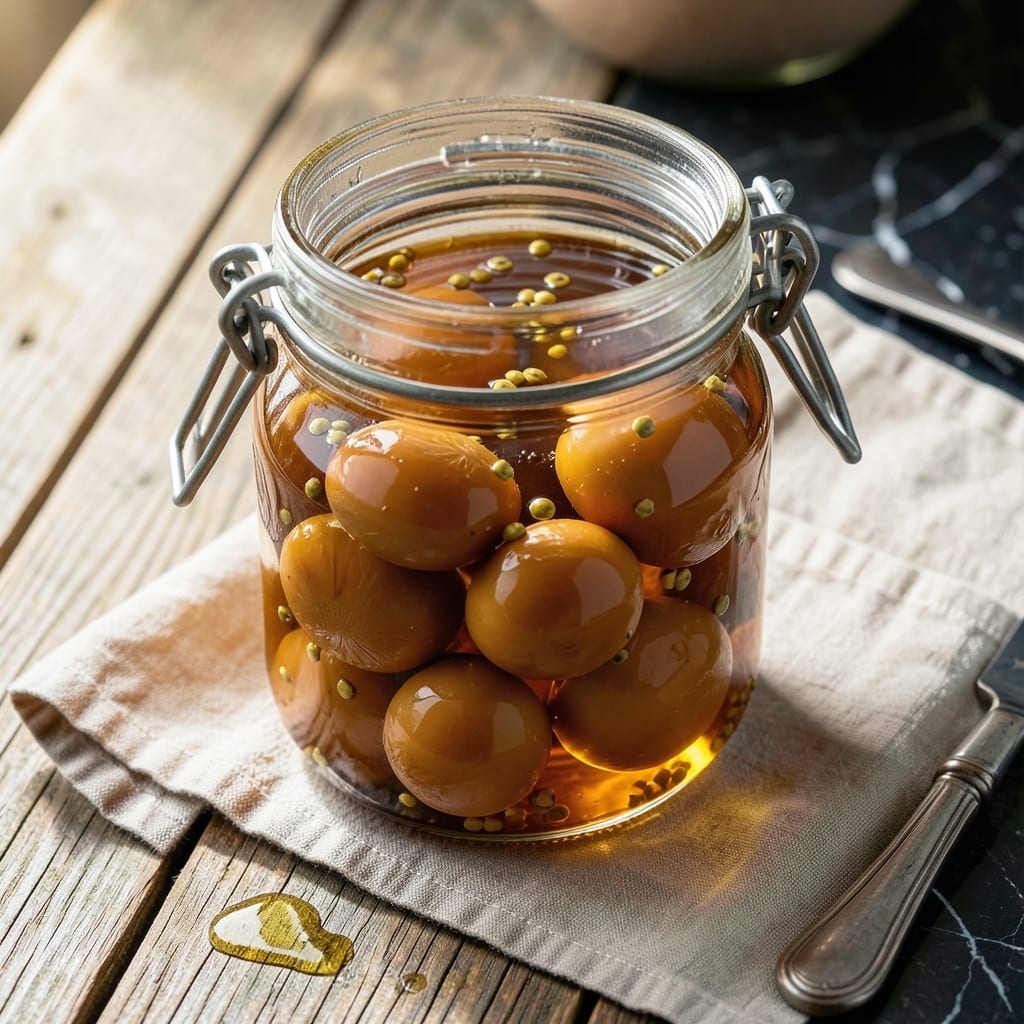
There’s something satisfying about transforming simple hard-boiled eggs into tangy, flavorful pickled eggs that brighten any brunch spread. This method uses apple cider vinegar for a bold, slightly sweet tang that cuts through the richness of the eggs.
The process is straightforward yet precise. Hard-boiled eggs are peeled and submerged in a hot vinegar brine with spices, then left to absorb flavor over 24 hours. The result is eggs with a firm texture and a zesty kick that’s both refreshing and addictive.
What makes this recipe special is its versatility. These pickled eggs work as a protein-packed snack, a salad topping, or a standout addition to a charcuterie board. The apple cider vinegar gives them a distinct depth that white vinegar simply can’t match.
Safety is key with pickling. Always use clean jars and fresh eggs, and store the finished product in the refrigerator. They’ll keep for up to one month, ready to elevate any meal.
Ingredients for Pickled Eggs Recipe Apple Cider Vinegar
Transform simple eggs with bold vinegar, warm spices, and a touch of sweetness. Pantry staples do the work.
| Ingredient | Amount | Notes |
|---|---|---|
| Large Eggs 🥚 | 8 whole | Hard-boiled and peeled |
| Apple Cider Vinegar 🍏 | 2 cups | With mother preferred |
| Water 💧 | 1 cup | Filtered for best results |
| Granulated Sugar 🍚 | 2 tbsp | Adjust to taste preference |
| Kosher Salt 🧂 | 1 tbsp | Diamond Crystal preferred |
| Yellow Mustard Seeds 🌿 | 1 tbsp | Whole or ground works |
| Black Peppercorns 🌶️ | 1 tsp | Whole, lightly crushed |
| Red Pepper Flakes 🔥 | ½ tsp | Adjust for heat level |
| Dried Bay Leaves 🍃 | 2 pieces | Whole leaves, remove before serving |
| Garlic Cloves 🧄 | 4 cloves | Lightly smashed, peeled |
| Small Red Onion 🧅 | 1 whole | Thinly sliced for brine |
| Fresh Dill 🌿 | ¼ cup | Chopped, stems removed |
The vinegar is non-negotiable here. Bragg’s apple cider vinegar with the mother gives the best depth and complexity—look for it in the health food aisle or Whole Foods. The eggs should be as fresh as possible (check the pack date) but not super fresh (older eggs peel more easily). For the spices, Penzeys offers excellent mustard seeds and bay leaves if you want to upgrade from grocery store brands.
No apple cider vinegar? White vinegar plus a tablespoon of apple juice gets you 80% there. Swap mustard seeds for yellow mustard powder at half the amount. Out of fresh dill? Dried dill at one-third the quantity works, or use fresh parsley. The sugar can be swapped for honey (but avoid for strict vegans) or maple syrup. Don’t skip the salt—it’s preserving as much as seasoning.
These keep refrigerated for up to one month in clean, sealed jars. The flavor deepens over time—wait at least 24 hours before tasting. Always use a clean utensil when removing eggs to prevent contamination (worth the extra minute).
Why You’ll Love This Recipe
- No-Fuss Pickling: I boil the eggs, mix the vinegar with sugar and salt, and let time do the rest—no fancy steps.
- Tangy Kick: That apple cider vinegar gives them a bright, slightly sweet bite that’s way more interesting than plain hard-boiled.
- Snack Stash: I keep a jar in the fridge for quick protein—great for lunches, picnics, or when I need a salty-sweet fix.
- Budget Keeper: A dozen eggs and pantry staples make a big batch that lasts for weeks. Honestly, it’s cheaper than chips.
Step-by-Step Instructions for Pickled Eggs with Apple Cider Vinegar
These steps ensure perfectly pickled eggs with vibrant flavor and ideal texture every time.
Step 1: Hard-Boil and Peel the Eggs
Begin by placing the 8 whole Large Eggs in a large saucepan and covering them with cold water by about 1 inch. Bring to a full rolling boil over high heat.
Once boiling, remove from heat, cover the pan, and let the eggs sit for 10-12 minutes. This method prevents cracked shells while ensuring fully set yolks. Immediately transfer the eggs to an ice bath to cool completely—this stops the cooking process and makes peeling easier.
Peel the eggs carefully under cool running water to remove any stubborn shell fragments. Set the peeled eggs aside while you prepare the brine.
Step 2: Prepare the Pickling Brine
In a medium saucepan, combine the 2 cups Apple Cider Vinegar, 1 cup Water, 2 tbsp Granulated Sugar, and 1 tbsp Kosher Salt. Heat over medium-high heat and stir until the sugar and salt are completely dissolved—this should take about 3-4 minutes.
Add the 1 tbsp Yellow Mustard Seeds, 1 tsp Black Peppercorns, 0.5 tsp Red Pepper Flakes, 2 pieces Dried Bay Leaves, and 4 cloves Garlic Cloves to the brine. Lightly crush the peppercorns to release their flavor. Bring the mixture to a gentle simmer, then remove from heat.
Step 3: Layer Eggs and Aromatics in Jars
Divide the 1 whole Small Red Onion, thinly sliced, and 0.25 cup Fresh Dill evenly between two clean, heatproof quart jars. Place the peeled eggs in the jars, packing them snugly but gently to avoid breaking.
Pour the hot brine over the eggs, ensuring they are completely submerged. Use a spoon to press down any floating eggs and remove air bubbles. The liquid should cover the eggs by at least ½ inch.
Step 4: Cool and Refrigerate
Let the jars cool to room temperature, uncovered, for about 30 minutes. This allows the flavors to begin penetrating the eggs without risking bacterial growth from rapid temperature changes.
Once cooled, seal the jars with lids and refrigerate. For best flavor development, wait at least 24 hours before eating. The eggs will continue to develop deeper flavor over time, reaching peak taste at 3-4 days.
Store the pickled eggs in the refrigerator for up to 3 weeks. Remove the dried bay leaves before serving if desired.
Pro Tips For Making Pickled Eggs Recipe Apple Cider Vinegar
- Boil Eggs Gently: Simmer eggs in water with a teaspoon of vinegar for 9-10 minutes—this prevents cracking and makes peeling easier. I learned this the hard way after too many cracked shells ruined my batches.
- Use Fresh Vinegar: Apple cider vinegar loses its punch over time, so check the bottle’s date. Old vinegar won’t give you that sharp, tangy flavor you want in the brine.
- Cool Completely First: Skip adding hot eggs to the brine—let them cool to room temperature, or the heat will dull the vinegar’s acidity and leave your eggs bland.
- Add a Pinch of Spice: Sounds weird, but it works: toss a teaspoon of mustard seeds or black peppercorns into the brine for depth. My grandmother swore by this, and she was right.
Pro Cooking Tips for pickled eggs recipe apple cider vinegar
Brine Clarity Tips
Always use filtered water to prevent cloudy brine that can affect the eggs’ appearance. If your vinegar has sediment, strain it through a fine-mesh sieve before heating with other ingredients.
Flavor Infusion
Lightly crush the black peppercorns and garlic cloves to release their oils into the brine. This simple step dramatically increases flavor penetration. I use the flat side of my chef’s knife for this.
Egg Freshness Matters
Use eggs that are 1-2 weeks old for easiest peeling. Fresh eggs have a lower pH, making the whites stick to the shell. The air pocket in slightly older eggs helps them separate cleanly. 🥚
Jar Sterilization
While not strictly necessary for refrigerator pickles, sterilizing your jars ensures the longest shelf life. I run mine through a hot dishwasher cycle or boil for 10 minutes before using.
Submersion Trick
If your eggs float above the brine, place a small zip-top bag filled with water on top to weigh them down. Alternatively, use a fermentation weight or a shot glass. This guarantees even pickling.
For the clearest brine, avoid metallic utensils when stirring—use wooden spoons or silicone. 💡
Nutrition Facts
Frequently Asked Questions
How long do pickled eggs last in the fridge?
Properly stored in a sealed jar, they stay fresh for up to 3 weeks. Always use clean utensils when removing eggs to prevent contamination. The flavor peaks after 3-4 days of brining.
Can I reuse the pickling brine?
Yes, but only once. Boil the used brine for 5 minutes before adding fresh eggs. The flavor will be milder, so consider adding 1 tbsp of vinegar or sugar to boost it.
Why did my eggs turn greenish?
This happens when eggs are overcooked or the brine is too alkaline. Use 1-2 week old eggs and ensure the brine fully covers them. The color doesn’t affect safety or taste.
Can I use a different vinegar?
White vinegar works but lacks depth. For similar results, mix 1.5 cups white vinegar with 0.5 cup apple juice. Rice vinegar adds a milder, slightly sweet note.

- Potato Candy Recipe 1933: Vintage Peanut Butter Roll Delight - October 30, 2026
- Potato Chip Cookie Recipe With Pecans: Buttery Crunch Meets Nutty Richness - October 30, 2026
- Potato Patty Recipe No Egg: Crispy Edges Without the Binder - October 30, 2026