
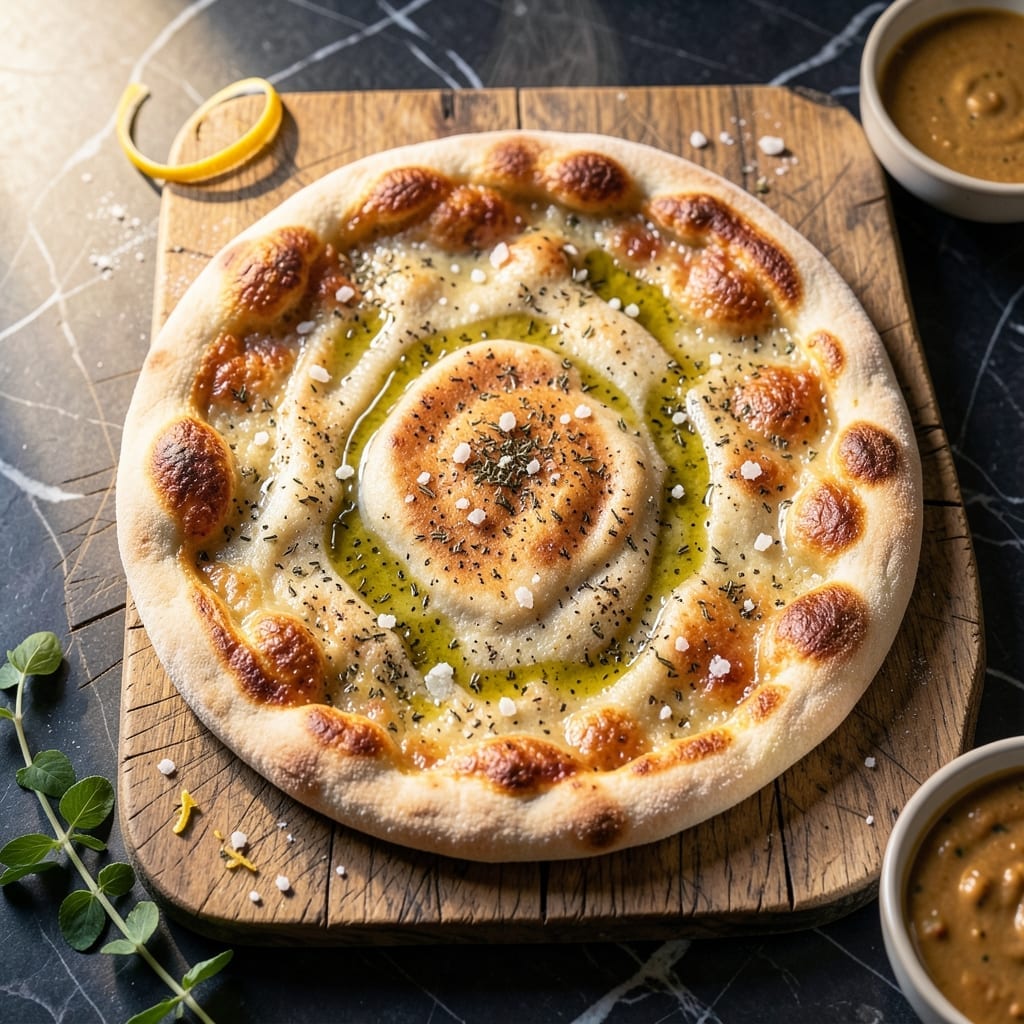
This yeast-free pizza crust delivers a crisp, sturdy base without the wait. I developed this recipe for those who want homemade pizza without traditional rising time.
The secret lies in a simple combination of flour, baking powder, and olive oil. This mixture creates a flatbread-style crust that bakes to golden perfection in just 15 minutes.
What results is a crust that holds toppings beautifully while offering a satisfying crunch. The texture is closer to a thin cracker than traditional dough, but it works perfectly for quick meals.
Vegan-friendly and ready in minutes, this crust proves you don’t need yeast for delicious homemade pizza.
Ingredients for Pizza Crust Recipe Yeast Free
Just nine pantry staples create this crisp, sturdy flatbread pizza base in minutes.
| Ingredient | Amount | Notes |
|---|---|---|
| All-Purpose Flour 🌾 | 2 ½ cups | Plus extra for dusting |
| Baking Powder 🧂 | 2 tsp | Aluminum-free preferred |
| Olive Oil 🫒 | ⅓ cup | Extra-virgin for best flavor |
| Salt 🧂 | 1 tsp | Fine sea salt recommended |
| Water 💧 | ¾ cup | Room temperature for blending |
| Garlic Powder 🧄 | ½ tsp | Optional for extra flavor |
| Dried Oregano 🌿 | ½ tsp | Italian seasoning works too |
| Black Pepper 🌶️ | ¼ tsp | Freshly ground preferred |
| Cornmeal 🌽 | 2 tbsp | For dusting baking sheet |
The flour is the foundation here. King Arthur or Bob’s Red Mill all-purpose give consistent results. Baking powder is your leavening agent—aluminum-free brands like Rumford avoid that metallic aftertaste. I always keep a big container of California Olive Ranch extra-virgin olive oil on hand for recipes like this. It adds that rich, fruity note that makes the crust taste special.
No all-purpose flour? Bread flour works at a 1:1 ratio for a slightly chewier texture. Swap garlic powder for fresh minced garlic at half the amount. Out of oregano? Dried basil or thyme bring their own twist. The cornmeal prevents sticking—polenta or semolina are perfect substitutes if that’s what you’ve got in the cupboard.
This dough comes together quickly and bakes immediately—no resting required. Store dry ingredients in airtight containers for up to 6 months. The baked crust keeps 2-3 days in an airtight container, though it’s best enjoyed fresh out of the oven (trust me on this one).
Why You’ll Love This Recipe
- No Yeast Needed: No waiting for dough to rise—just mix, roll, and bake.
- Crispy & Light: The olive oil gives it a golden crunch you won’t believe came from just flour and baking powder.
- Weeknight Hero: I’ve made this for quick dinners, last-minute guests, even lunch (yes, even on a Tuesday night).
- Pantry Staples: Honestly, I already had everything in my cupboard—no special trips to the store.
Step-by-Step Instructions for Pizza Crust Yeast Free
Here’s the method I rely on for a crisp, flavorful base without any waiting time.
Step 1: Combine Dry Ingredients for Structure
In a large mixing bowl, whisk together the 2.5 cups all-purpose flour, 2 tsp baking powder, 1 tsp salt, 0.5 tsp garlic powder, 0.5 tsp dried oregano, and 0.25 tsp black pepper until evenly distributed. I like to do this by hand—it gives me better control over the texture and ensures no lumps remain.
The baking powder is your leavening agent here, replacing yeast, so make sure it’s fresh. You’ll notice the mixture becomes aromatic as you stir—the oregano and garlic powder create that classic pizza scent you’re after.
Step 2: Incorporate Wet Ingredients into a Shaggy Dough
Create a well in the center of your dry mixture and pour in the 0.33 cup olive oil and 0.75 cup water. Use a wooden spoon to stir everything together until it forms a shaggy dough that pulls away from the sides of the bowl.
This isn’t a smooth, elastic dough like traditional pizza crust—it should look slightly rough. If it seems too sticky, add a tablespoon of flour; if too dry, add a teaspoon of water. The olive oil adds richness and helps create that crispy texture we want.
Step 3: Knead Briefly and Shape the Dough
Turn the dough out onto a lightly floured surface and knead gently for 1-2 minutes until it comes together into a smooth ball. Don’t overwork it—this isn’t bread dough. The gluten development here is minimal, which is exactly what we want for a tender, flatbread-style crust.
Divide the dough into 2 equal portions for thin crusts or leave whole for one thicker base. Press each portion into a rough circle with your hands, then let it rest for 5 minutes—this brief pause makes rolling easier.
Step 4: Roll and Prepare for Baking
On a surface dusted with 2 tbsp cornmeal (this adds texture and prevents sticking), roll each portion into a 12-inch circle or rectangle, about ¼-inch thick. I find a rolling pin works best here, but you can press it out with your hands if you prefer a more rustic look.
The cornmeal not only prevents sticking but also gives that authentic pizzeria-style crunch to the bottom of your crust. If the dough resists rolling, let it rest another 2-3 minutes—the gluten will relax and make shaping easier.
Step 5: Pre-Bake the Crust for Optimal Texture
Preheat your oven to 425°F with a baking sheet inside. Once hot, carefully transfer your shaped dough onto the preheated sheet. Bake for 8-10 minutes until the edges just begin to turn light golden brown and the surface appears dry.
This pre-baking step is crucial—it creates a sturdy base that won’t turn soggy when you add toppings. The crust should be firm enough to hold its shape but still pale enough to accept additional cooking time with toppings. Let it cool slightly before adding your favorite sauce and toppings.
Pro Tips For Making Pizza Crust Recipe Yeast Free
- Preheat the Pan: I learned this the hard way—get your baking sheet or cast iron screaming hot in the oven for at least 10 minutes before adding the dough. Sounds weird, but it’s the only way to get that crispy bottom without yeast.
- Measure Flour Right: After burning three batches, I finally figured out: spoon the flour into your measuring cup and level it off, or you’ll end up with a dense, dry crust. Weighing it (about 120g per cup) is even better.
- Skip Overmixing: Resist the urge to knead it like bread—just stir until the dough comes together, or you’ll activate too much gluten and lose that tender, flaky texture.
- Add Extra Oil: Brush the top with olive oil before baking—about 1 tablespoon—and it’ll brown better and stay softer longer. I was skeptical until I tried it.
Perfect Pairings for This Recipe
Fresh Toppings
This crust pairs beautifully with fresh mozzarella and ripe tomatoes for a simple Margherita-style pizza. I love adding basil leaves right after baking—they wilt slightly from the heat while staying vibrant. A drizzle of balsamic glaze adds a sweet contrast to the savory base. 🌿
Protein Pairings
For heartier meals, try grilled chicken with pesto and sun-dried tomatoes. The crust’s sturdy texture holds up well to sausage crumbles or prosciutto. I often add caramelized onions for extra depth of flavor.
Vegetarian Options
Roasted vegetables like zucchini, bell peppers, and mushrooms work wonderfully. I toss them in olive oil and Italian seasoning before roasting. For a Mediterranean twist, add kalamata olives and feta cheese.
Sauce Suggestions
While traditional tomato sauce is classic, I love using pesto or white sauce for variety. A light garlic-infused olive oil works too—just brush it on before adding toppings. This crust soaks up flavors beautifully without getting soggy. 💫
Dessert Ideas
Don’t limit yourself to savory! This crust makes a great base for fruit desserts. Top with ricotta, honey, and berries for a sweet finish. A sprinkle of powdered sugar and cinnamon transforms it into a quick treat.
Nutrition Facts
Frequently Asked Questions
What can I use instead of baking powder?
Use 1.5 tsp baking soda plus 1 tsp vinegar as a substitute. This creates the same leavening effect for your crust.
How thin should I roll the dough?
Aim for ¼-inch thickness for a crisp base. Go thinner for extra crunch or slightly thicker for a softer bite.
Can I make this gluten-free?
Replace all-purpose flour with a 1:1 gluten-free blend. Add 1 extra tsp xanthan gum for better texture.
Why did my crust taste bitter?
Your baking powder may be old or contain aluminum. Always use fresh, aluminum-free for best flavor.

- Potato Candy Recipe 1933: Vintage Peanut Butter Roll Delight - October 30, 2026
- Potato Chip Cookie Recipe With Pecans: Buttery Crunch Meets Nutty Richness - October 30, 2026
- Potato Patty Recipe No Egg: Crispy Edges Without the Binder - October 30, 2026