
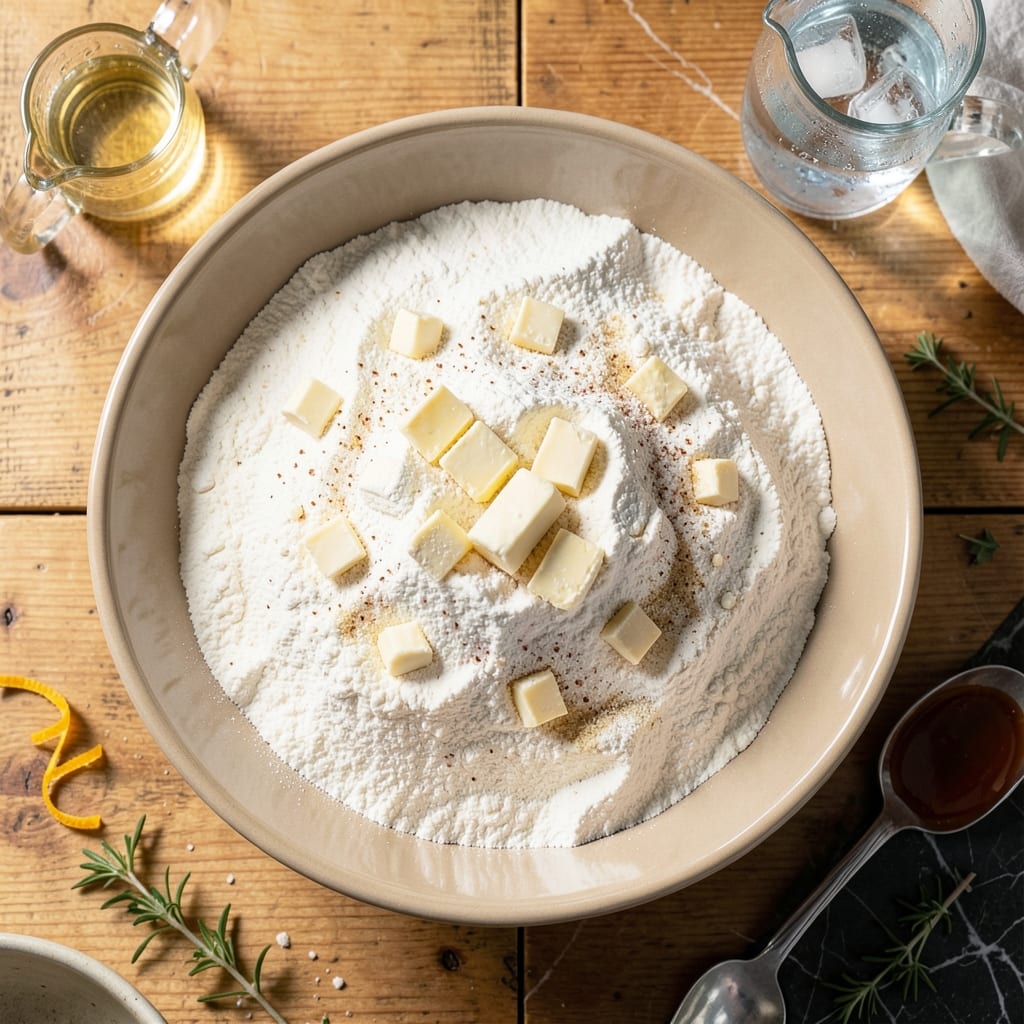
Achieving a perfectly flaky pie crust is what separates good apple pie from unforgettable. My method balances precision with simplicity, ensuring every bite holds its shape without sacrificing tenderness.
The secret lies in cold ingredients and minimal handling. Butter stays in distinct layers, creating that coveted flaky texture when baked. A brief rest in the refrigerator relaxes the dough, preventing shrinkage during rolling and baking.
This technique delivers a golden, crisp crust that cradles your filling without turning soggy. The edges stay defined, each slice maintaining its structure from first cut to last bite.
Master this foundation, and your apple pie will stand tall and proud every time.
Ingredients for Pie Crust Recipe for Apple Pie
Cold butter, minimal handling, and precise flour create the foundation for exceptional flakiness.
| Ingredient | Amount | Notes |
|---|---|---|
| All-Purpose Flour 🌾 | 2 ½ cups | Spoon and level, plus extra for dusting |
| Unsalted Butter 🧈 | 1 cup | Cold, cut into small cubes |
| Granulated Sugar 🍚 | 1 tbsp | Fine grain for even distribution |
| Fine Sea Salt 🧂 | 1 tsp | Diamond Crystal preferred for balance |
| Ice Water 💧 | ½ cup | Plus 1 tbsp as needed |
| Apple Cider Vinegar 🍏 | 1 tbsp | Or white vinegar for acidity |
| Vanilla Extract 🌿 | ½ tsp | Pure extract for depth |
The butter must stay cold—use unsalted European-style for higher fat content and superior layers. King Arthur Flour is ideal for its consistent protein content, ensuring the right balance of tenderness and structure. Weigh your flour if possible (1 cup = 120g) for absolute precision. The vinegar tenderizes the gluten, so don’t skip it—even a splash makes a difference in the final texture.
No unsalted butter? Salted works in a pinch—just omit the added salt. For a richer flavor, substitute 1/4 cup lard for 1/4 cup of the butter (vegetarian lard is available). If avoiding alcohol entirely, replace the vinegar with lemon juice. The sugar can be omitted for savory pies, but it adds a subtle caramelization to the crust.
Dough rests best overnight, but 2 hours minimum in the fridge is essential. Wrapped tightly, it keeps for 3 days refrigerated or 3 months frozen. Bring to room temperature for 10 minutes before rolling to prevent cracking. Always work on a well-floured surface to maintain those distinct layers.
Why You’ll Love This Recipe
- 5-Minute Mix: I can have this crust ready before the oven preheats—just flour, cold butter, and a splash of ice water.
- Buttery Heaven: The unsalted butter and pinch of sea salt make it flaky, rich, and just sweet enough to let the apples shine.
- Holiday Hero: I use this for Thanksgiving pies, weekend desserts, even impromptu galettes when friends drop by.
- Pantry Staples: All-purpose flour and basic ingredients mean I never have to run to the store last minute.
Step-by-Step Instructions for Pie Crust for Apple Pie
Master the technique for achieving a flaky, golden brown crust that complements any fruit filling perfectly.
Step 1: Cut the Butter into the Flour
In a large bowl, combine the 2.5 cups All-Purpose Flour, 1 tbsp Granulated Sugar, and 1 tsp Fine Sea Salt. Whisk until evenly distributed. This ensures the seasoning is uniform throughout the crust.
Add the 1 cup Unsalted Butter (cold, cut into small cubes) to the flour mixture. Using a pastry cutter or your fingertips, work the butter into the flour until the mixture resembles coarse crumbs with pea-sized butter pieces visible. This step is critical for creating flaky layers—don’t overwork it or the butter will melt.
Step 2: Add the Liquid Ingredients
Create a well in the center of the flour-butter mixture. Pour in the 0.5 cup Ice Water, 1 tbsp Apple Cider Vinegar, and 0.5 tsp Vanilla Extract. The vinegar adds tenderness while the vanilla provides subtle depth of flavor.
Using a fork, gently stir the mixture until it just begins to come together. The dough will look shaggy with visible streaks of butter—this is exactly what you want. Avoid overmixing, as this develops gluten, which makes the crust tough rather than tender and flaky.
Step 3: Knead and Chill the Dough
Turn the dough out onto a lightly floured surface and gently press it together into a cohesive ball. Divide it into two equal portions, flatten each into a disk about 1 inch thick, and wrap them tightly in plastic wrap.
Refrigerate the dough for at least 1 hour (or up to 2 days). Chilling relaxes the gluten, prevents shrinkage during baking, and keeps the butter cold, which is essential for creating those coveted flaky layers. The dough should feel firm but not rock-hard when ready to roll.
Step 4: Roll and Fit the Crust
On a lightly floured surface, roll out one disk of dough to a 12-inch circle, about ⅛ inch thick. To prevent sticking, lift and rotate the dough a quarter turn after each roll. This also helps maintain an even thickness throughout.
Transfer the rolled dough to a 9-inch pie dish, gently pressing it into the bottom and up the sides. Trim the edges, leaving a ½-inch overhang. Fold the overhang under and crimp decoratively. For a double-crust pie, repeat with the second disk and cut slits for venting.
Step 5: Pre-Bake or Blind Bake (Optional)
For a pre-baked crust, preheat the oven to 375°F. Line the crust with parchment paper, fill with pie weights or dried beans, and bake for 15 minutes. Remove the weights and parchment, then bake for an additional 5-7 minutes until the crust is light golden brown.
For a double-crust apple pie, brush the top crust with an egg wash (optional) and bake as directed in your filling recipe. The crust should be a deep golden brown and crisp to the touch when fully baked.
Pro Tips For Making Pie Crust Recipe For Apple Pie
- Chill the Butter: Cut your butter into small cubes and freeze for 15 minutes before mixing—cold butter is non-negotiable for flaky layers. I learned this the hard way after ending up with a tough crust more times than I care to admit.
- Use Ice Water: Fill a glass with water and ice cubes, then measure from that—room temp water makes the gluten develop too much. Sounds fussy, but it actually changes the outcome every time.
- Don’t Overwork It: Mix just until the dough comes together, even if it looks a little shaggy. After burning three batches to crispy frustration, I finally figured out that overmixing = tough crust.
- Rest the Dough: Let it chill in the fridge for at least 1 hour before rolling—this relaxes the gluten and prevents shrinking. My grandmother swore by this, and she was right.
Health Benefits of This Dish
Low Sugar Content
This crust contains just 1 tbsp of sugar per double-crust pie, making it a better option for those monitoring their sugar intake. The small amount enhances flavor without spiking blood glucose levels significantly. I often skip it entirely for savory pies. 💪
Healthy Fats Source
The 1 cup of butter provides healthy fats that support cell function and vitamin absorption. While butter contains saturated fats, it also delivers fat-soluble vitamins like A, D, E, and K that are essential for overall health.
Whole Grain Option
For added nutrition, substitute 1 cup of the all-purpose flour with whole wheat flour. This boosts fiber content to about 4 grams per serving, aiding digestion and promoting satiety. The texture remains flaky with proper chilling.
Minimal Processing
With only 6 simple ingredients, this crust avoids the preservatives and additives found in many store-bought versions. The apple cider vinegar even provides a small dose of acetic acid, which may support gut health.
Portion Control
Each serving (⅛ of a double crust) contains about 250 calories and 3 grams of protein. This reasonable portion size allows you to enjoy the treat while maintaining a balanced diet. 💛
Gluten Considerations
While this recipe uses all-purpose flour, you can adapt it with a 1:1 gluten-free flour blend. Look for brands like King Arthur’s Measure for Measure for best results. The texture will differ slightly but still delivers excellent flavor.
Nutrition Facts
Frequently Asked Questions
Why do I need to keep the butter cold?
Cold butter creates flaky layers in the crust. As it melts during baking, it releases steam, creating pockets that make the texture light and crisp.
What if my dough cracks while rolling?
Let it warm slightly at room temperature for 5-10 minutes. Press the edges together to seal, then continue rolling. Chilled dough is more prone to cracking.
Can I use shortening instead of butter?
Yes, but the flavor will be less rich. Use the same amount and keep it cold. Butter provides superior taste and color.
How long should I chill the dough?
At least 1 hour, but overnight is ideal. This prevents shrinkage and ensures maximum flakiness.

- Potato Candy Recipe 1933: Vintage Peanut Butter Roll Delight - October 30, 2026
- Potato Chip Cookie Recipe With Pecans: Buttery Crunch Meets Nutty Richness - October 30, 2026
- Potato Patty Recipe No Egg: Crispy Edges Without the Binder - October 30, 2026