
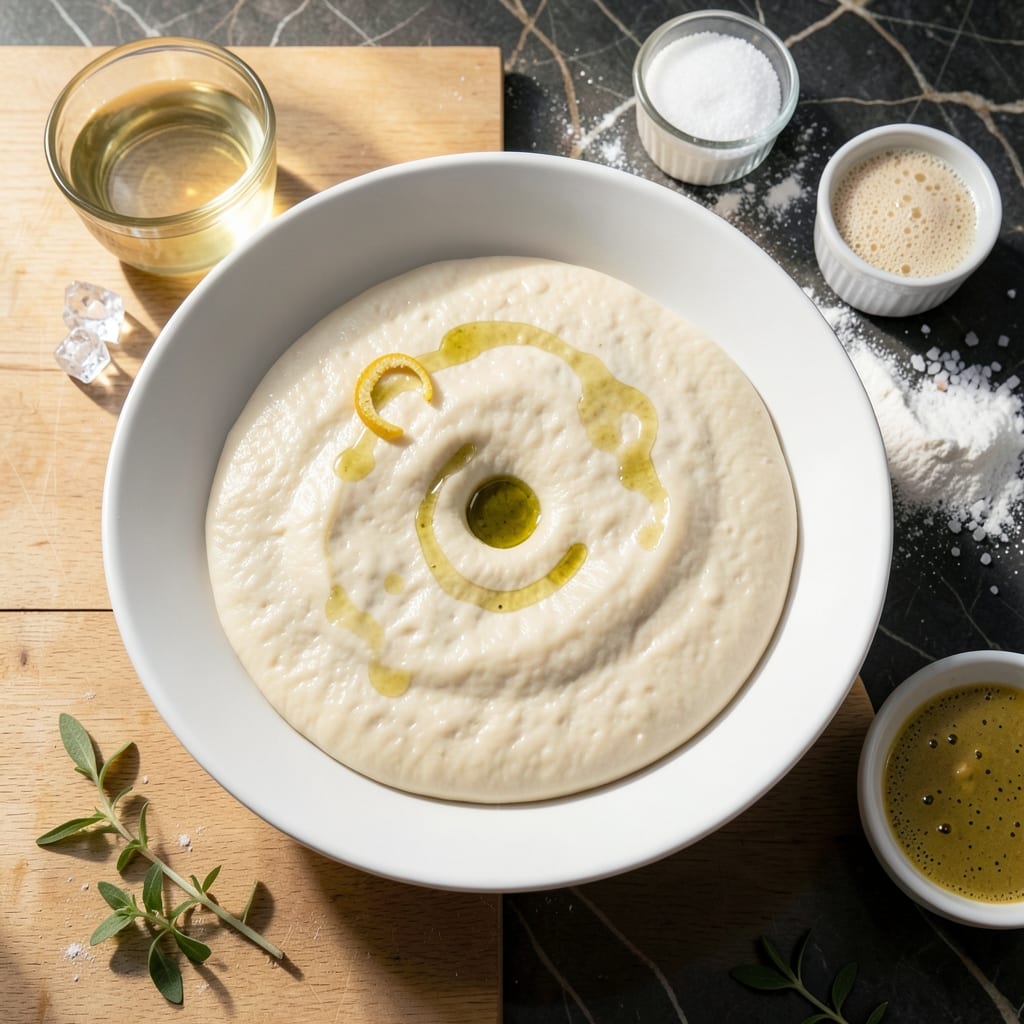
Making perfect pizza dough at home comes down to precise ratios and proper technique. This method delivers consistently excellent results with a crisp yet chewy crust that bakes up golden every time.
The secret is using weight measurements instead of volume for accuracy. A simple calculator helps scale ingredients perfectly whether you’re making one pie or ten. The dough comes together quickly with just flour, water, yeast, salt, and a touch of olive oil.
After mixing, the dough needs time to rise and develop flavor. Proper proofing is what gives pizza that airy, light texture we all love. The baking step transforms it into a perfectly crisp base for your favorite toppings.
This approach works for any style, from thin crust to thick. The ratios never fail.
Ingredients for Pizza Dough Recipe Calculator
Seven simple ingredients create that perfect crisp yet chewy crust every time.
| Ingredient | Amount | Notes |
|---|---|---|
| Bread Flour 🌾 | 3 ½ cups | High-protein for chewy texture |
| Warm Water 💧 | 1 ¼ cups | 110-115°F for yeast activation |
| Active Dry Yeast 🍞 | 2 ¼ tsp | One packet plus a pinch |
| Kosher Salt 🧂 | 2 tsp | Fine grain for even distribution |
| Extra-Virgin Olive Oil 🫒 | 2 tbsp | Adds richness and tenderness |
| Granulated Sugar 🍚 | 1 tsp | Feeds the yeast for rising |
| Cornmeal 🌽 | ¼ cup | For dusting, prevents sticking |
The flour is non-negotiable here. King Arthur Bread Flour is my go-to—high protein content gives you that elastic, chewy texture. Bob’s Red Mill works too if that’s what’s on your shelf. Water temperature matters more than you think: too hot kills the yeast, too cold won’t wake it up. A quick-read thermometer (110-115°F) takes the guesswork out.
No bread flour? All-purpose in a pinch—just add an extra 1 tbsp vital wheat gluten per cup. The yeast can be instant or active dry; active needs that warm water wake-up call. Sugar’s just for the yeast party—honey or maple syrup works the same. Skip the olive oil if you want a leaner crust, but it adds so much flavor.
Dough keeps 2-3 days in the fridge (it’ll develop more flavor), or freeze for 1 month. Bring to room temp before shaping. Cornmeal’s optional but highly recommended—gives that nice crisp bottom we all love.
Why You’ll Love This Recipe
- No-Fuss Mixing: I just dump the bread flour, warm water, yeast, salt, and olive oil in a bowl and let the calculator do the math—no guesswork.
- Rich, Chewy Bite: The bread flour and olive oil give it that perfect crispy-chewy texture I crave in every slice.
- Endless Topping Fun: Honestly, I use this dough for everything—Margherita nights, loaded veggie feasts, even quick flatbreads.
- Budget Stretch: A few cents’ worth of ingredients makes enough for two pizzas, and leftovers freeze beautifully for lazy days.
Step-by-Step Instructions for Homemade Pizza Dough
Here’s the method I use for foolproof dough with perfect texture every time.
Step 1: Activate the Yeast
In a large mixing bowl, whisk together the 1.25 cups Warm Water, 1 tsp Granulated Sugar, and 2.25 tsp Active Dry Yeast. Let this sit for 5-10 minutes until the mixture becomes foamy and bubbly—this tells you the yeast is alive and active.
I always check the water temperature with a thermometer to ensure it’s between 110-115°F. If it’s too hot, it’ll kill the yeast; too cold, and it won’t activate properly. The sugar gives the yeast a quick food source to get started on fermentation.
Step 2: Combine Wet and Dry Ingredients
Once the yeast is foamy, add the 2 tbsp Extra-Virgin Olive Oil to the bowl and stir to combine. In a separate bowl, whisk together the 3.5 cups Bread Flour and 2 tsp Kosher Salt to evenly distribute the salt.
Add the flour mixture to the yeast mixture, about 1 cup at a time, stirring with a wooden spoon until a shaggy dough forms. The dough will be sticky at this stage—that’s normal. The high-protein bread flour gives your crust that perfect chewy texture.
Step 3: Knead the Dough
Turn the dough out onto a lightly floured surface and knead for 8-10 minutes until smooth and elastic. I like to use the heel of my hand to push the dough away, then fold it back over itself repeatedly. The dough is ready when it springs back when you poke it with your finger.
If the dough feels too sticky, add a little more flour 1 tablespoon at a time, but don’t add too much or your crust will be tough. The olive oil in the dough adds richness and helps create a tender crumb.
Step 4: First Rise
Lightly oil a clean bowl, place the dough inside, and turn to coat all sides. Cover with a damp towel and let rise in a warm, draft-free place for 1-2 hours or until doubled in size. I like to turn my oven on to its lowest setting for 2 minutes, then turn it off and place the dough inside to rise.
The dough should spring back slowly when gently pressed with your finger. If it doesn’t rise properly, your yeast might have been old or the environment wasn’t warm enough.
Step 5: Shape and Second Rise
Punch down the risen dough to release the air. Turn it out onto a surface dusted with 0.25 cup Cornmeal—this prevents sticking and adds a nice texture to the crust. Divide the dough into 4 equal portions for individual pizzas.
Shape each portion into a ball, then let them rest covered for 15-20 minutes. This second rise makes the dough easier to stretch and gives it more flavor. You’re now ready to shape, top, and bake your perfect pizza crust.
Pro Tips For Making Pizza Dough Recipe Calculator
- Proof the Yeast: Always dissolve active dry yeast in warm water (105-110°F) with a pinch of sugar first—I learned this the hard way after killing three batches with water that was too hot.
- Weigh Your Flour: Bread flour compacts easily, so use a scale instead of cups; 600g is what you need for a standard recipe, and it actually changes the outcome.
- Skip the Short Rise: Resist the urge to rush fermentation; give the dough at least 1-2 hours at room temp (or overnight in the fridge) for better texture and flavor.
- Oil the Bowl: Coat the mixing bowl with about 1 tablespoon of extra-virgin olive oil before the first rise—sounds weird, but it works to prevent sticking and makes a real difference when shaping.
Creative Variations of pizza dough recipe calculator
Neapolitan Style
For authentic Italian pizza, reduce the Bread Flour to 3 cups and use San Marzano tomato sauce for topping. The dough should be softer and stickier—this creates that signature thin, soft crust with charred edges when baked at 900°F for 90 seconds. 🔥
New York Thin Crust
Stretch the dough as thin as possible, almost translucent in spots. Bake on a preheated pizza stone at 500°F for 8-10 minutes. The high heat and thinness create that crisp, foldable crust New Yorkers love.
Sicilian Thick Crust
Use the full recipe but press the dough into a well-oiled 9×13-inch pan. Let it rise until puffy, then dimple with your fingers. Bake at 425°F for 20-25 minutes for a thick, airy crust.
Whole Wheat Version
Substitute 1.5 cups Whole Wheat Flour for an equal amount of bread flour. Add 1 extra tbsp Warm Water as whole wheat absorbs more liquid. The result is nutty and hearty with a slightly denser texture. 💪
Gluten-Free Adaptation
Replace bread flour with a gluten-free flour blend containing xanthan gum. Use 1 tsp more Kosher Salt to boost flavor. The dough will be stickier, so press it directly into the pan rather than stretching.
Focaccia Style
After the first rise, spread the dough on a sheet pan, dimple deeply with your fingers, and drizzle generously with Extra-Virgin Olive Oil. Top with rosemary and flaky salt, then bake at 400°F for 20 minutes. ✨
Nutrition Facts
Frequently Asked Questions
How do I adjust the recipe for more or fewer pizzas?
Use the 60% hydration ratio as your guide: multiply flour weight by 0.6 for water. Doubling the recipe? Use 7 cups flour and 4.2 cups water. Halving? 1.75 cups flour and 1.05 cups water.
Why is my dough too sticky or too dry?
Sticky dough often means too much water or not enough flour. Dry dough needs more water. Adjust in small increments: 1 tbsp at a time. Humidity and flour brands vary, so trust the texture over exact measurements.
Can I make dough without a scale?
Yes, but expect slight variations. 1 cup bread flour weighs about 120g. Measure by spooning flour into cups and leveling off. For best results, invest in a $10 kitchen scale for precision.
What if my kitchen is cold?
Cold environments slow rising. Speed it up by placing dough in an oven with the light on, or near a warm spot. Expect the first rise to take 2-3 hours instead of 1-2 hours.

- Potato Candy Recipe 1933: Vintage Peanut Butter Roll Delight - October 30, 2026
- Potato Chip Cookie Recipe With Pecans: Buttery Crunch Meets Nutty Richness - October 30, 2026
- Potato Patty Recipe No Egg: Crispy Edges Without the Binder - October 30, 2026