
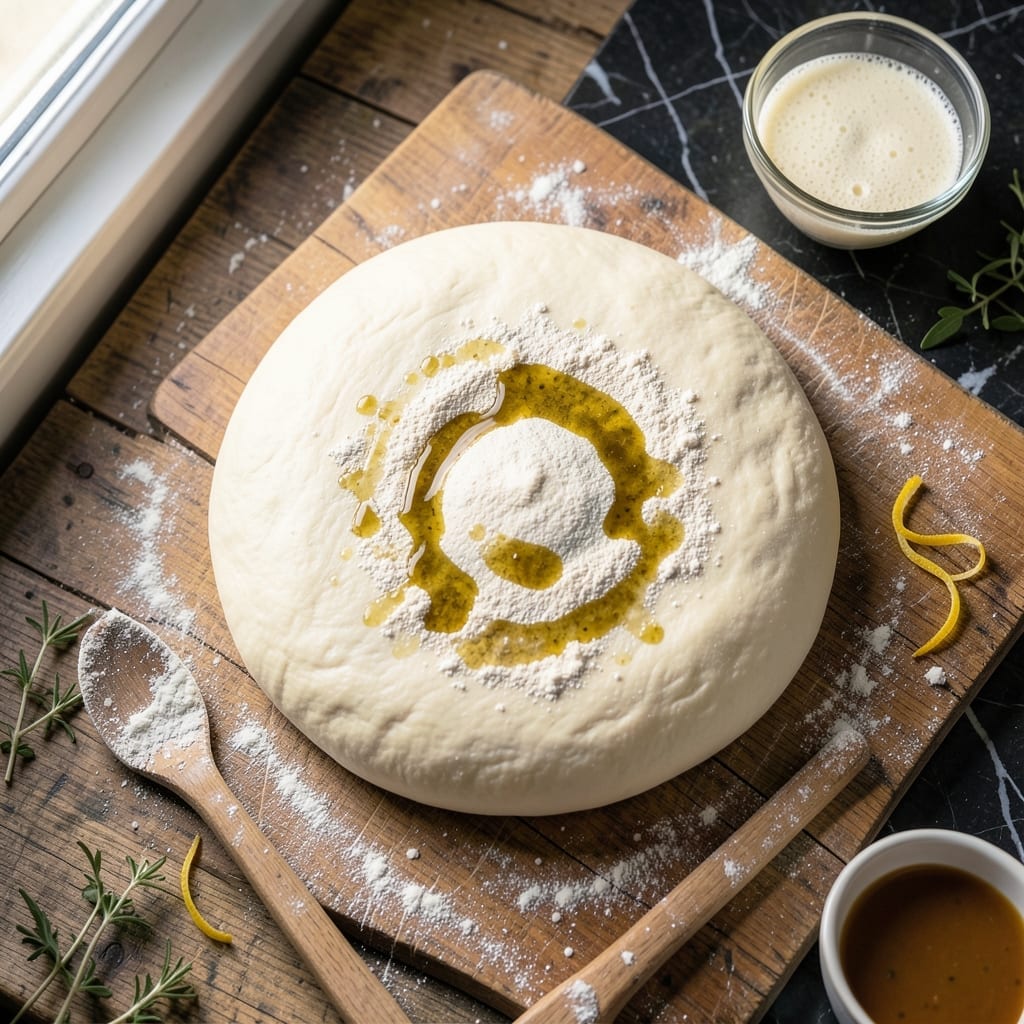
There’s something deeply satisfying about making pizza dough by hand, feeling the transformation from shaggy flour to smooth elastic dough beneath your fingers.
This method proves you don’t need a stand mixer to achieve a chewy, restaurant-quality crust. With just 5 ingredients and 90 minutes, you’ll create a foundation that bakes into golden, airy perfection.
The hand-kneading process develops gluten naturally, resulting in a texture that’s tender yet sturdy enough to hold your favorite toppings. David always requests this version for our Friday movie nights.
No special equipment, no fuss—just your hands and a little patience. The results speak for themselves.
Ingredients for Pizza Dough Recipe No Mixer
Five simple ingredients transform into restaurant-quality crust with just your hands and time.
| Ingredient | Amount | Notes |
|---|---|---|
| Bread Flour 🌾 | 3 ½ cups | High protein for chewiness |
| Warm Water 💧 | 1 ¼ cups | 110°F to 115°F ideal |
| Active Dry Yeast 🍞 | 2 ¼ tsp | One packet plus extra |
| Fine Sea Salt 🧂 | 1 ½ tsp | For flavor and structure |
| Extra-Virgin Olive Oil 🫒 | 2 tbsp | For elasticity and richness |
The flour makes all the difference here. King Arthur Bread Flour is my go-to for that perfect chew—higher protein than all-purpose, which develops better gluten. Yeast needs to be fresh (check the expiration date on the packet). I buy mine from Whole Foods in bulk—lasts longer in the freezer. The water temp matters more than you think: too hot kills the yeast, too cold slows activation.
No bread flour? All-purpose plus 1 tbsp vital wheat gluten per cup gets you close. Out of yeast? Instant yeast at the same amount works fine—no need to proof first. Olive oil can be swapped for any neutral oil (avocado, grapeseed), but you’ll lose some flavor depth. Salt is non-negotiable though—it’s doing double duty for both taste and dough structure.
Dough rises best in a warm, draft-free spot (my oven with the light on works). Keeps 2 days in the fridge or freezes for 1 month in a sealed bag. Let it come to room temp before shaping—cold dough tears easily.
Why You’ll Love This Recipe
- No Mixer Needed: I can make this with just my hands and a bowl—no fancy equipment.
- Rich Olive Oil Depth: The extra-virgin olive oil gives it that golden, buttery crust I crave.
- Endless Topping Playground: Honestly, it’s my blank canvas for whatever’s in the fridge.
- Dough for Days: One batch makes four pizzas, so I freeze half for lazy nights.
Step-by-Step Instructions for Pizza Dough No Mixer
Here’s the method. Straightforward, tested, works every time.
Step 1: Activate the Yeast
In a large bowl, whisk together the 1.25 cups Warm Water and 2.25 tsp Active Dry Yeast. Let it sit for 5-10 minutes until the mixture becomes foamy and bubbly—this confirms your yeast is alive and active.
If after 10 minutes you don’t see bubbles, your yeast might be expired. Don’t proceed until you see that foamy head. The water should be at that sweet spot of 110°F to 115°F—too hot kills the yeast, too cold slows activation.
Step 2: Form the Dough
Add the 3.5 cups Bread Flour and 1.5 tsp Fine Sea Salt to the yeast mixture. Stir with a wooden spoon until a shaggy dough forms and most of the flour is incorporated. You’ll see dry spots at first—that’s normal.
Drizzle in the 2 tbsp Extra-Virgin Olive Oil and continue stirring. The dough will be sticky and rough, but it should pull away from the sides of the bowl. This high-protein flour gives it that chewy texture we’re after.
Step 3: Hand-Knead to Develop Gluten
Turn the dough onto a clean, unfloured surface. Here’s the thing—this will be messy at first. Knead for 8-10 minutes by pushing the dough away with the heel of your hand, then folding it back over itself. Rotate the dough 90° after each fold.
You’ll notice the dough transforms from sticky to smooth and elastic. It should spring back when pressed lightly with your finger. If it tears, it needs more kneading. The olive oil in the dough helps with elasticity, so don’t add extra flour unless absolutely necessary.
Step 4: First Rise Until Doubled
Shape the dough into a ball and place it in a lightly oiled bowl. Cover with a damp towel or plastic wrap. Let it rise in a warm, draft-free spot for 1 hour or until doubled in size.
I’ve found that turning on my oven light creates the perfect warm environment. The dough should look puffy and when you press it gently with your finger, the indent should remain. This is the first fermentation where the yeast does its magic.
Step 5: Shape and Second Rise
Punch down the dough to release the air. Divide it into 4 equal portions for individual pizzas. Roll each portion into a ball, then place on a lightly floured surface.
Cover and let rest for 20-30 minutes for the second rise. This relaxes the gluten, making it easier to stretch. When ready, press each ball from the center outward, leaving a slightly thicker rim for the crust. Your dough is now ready for toppings and baking.
Pro Tips For Making Pizza Dough Recipe No Mixer
- Test Your Yeast: I learned this the hard way—always proof your active dry yeast in the warm water with a pinch of sugar for 5-10 minutes first. If it doesn’t bubble like crazy, your dough won’t rise, and you’ll waste flour.
- Use lukewarm water: Hot water kills yeast, cold water slows it down. Aim for about 110°F—warm to the touch but not uncomfortable.
- Knead Longer: Without a mixer, you’ll need to put in some elbow grease. Knead for at least 8-10 minutes until the dough is smooth and elastic—it’s the only way to develop the gluten properly.
- Let It Double: Resist the urge to rush the first rise. Give it 1-2 hours in a warm spot until it’s truly doubled in size—this is what makes your crust light and airy.
Wine and Beer Pairings for pizza dough recipe no mixer
Italian White Wines
For this handmade dough, I love a crisp Vermentino from Sardinia—its citrus notes cut through the richness. Pinot Grigio from Alto Adige offers a clean finish that won’t overpower your toppings. 🍷
Bold Red Options
A light-bodied Chianti with its bright acidity complements tomato-based pizzas beautifully. For meat-heavy pies, try a Sangiovese with its earthy, cherry notes. David swears by Banfi SummuS for movie nights.
Craft Beer Pairings
An Italian pilsner like Peroni or Moretti cleanses your palate between bites. For craft lovers, a Belgian-style witbier with citrus and coriander notes adds complexity. 🍺
Texas Favorites
Here in Austin, I often grab a Live Oak Hefeweizen—its banana and clove notes pair surprisingly well. Real Ale Firemans #4 is another local go-to with its balanced hop profile.
Non-Alcoholic Choices
Sparkling water with a squeeze of lemon enhances the dough’s flavor. San Pellegrino Aranciata offers a citrusy contrast that’s refreshing. David’s kids always request this with their cheese pizzas.
Nutrition Facts
Frequently Asked Questions
What if my dough doesn’t rise?
Check your yeast first—it may be expired. Also, ensure your water was 110°F to 115°F. If the environment is too cold, place the bowl near a warm oven (light on) to encourage rising.
Can I use all-purpose flour instead?
Yes, but add 1 tbsp vital wheat gluten per cup of flour to boost protein content. This helps achieve that desired chewy texture bread flour provides.
How do I store leftover dough?
Wrap tightly in plastic and refrigerate for up to 2 days. For longer storage, freeze for 1 month in a sealed bag. Thaw in the fridge overnight before using.

- Potato Candy Recipe 1933: Vintage Peanut Butter Roll Delight - October 30, 2026
- Potato Chip Cookie Recipe With Pecans: Buttery Crunch Meets Nutty Richness - October 30, 2026
- Potato Patty Recipe No Egg: Crispy Edges Without the Binder - October 30, 2026