
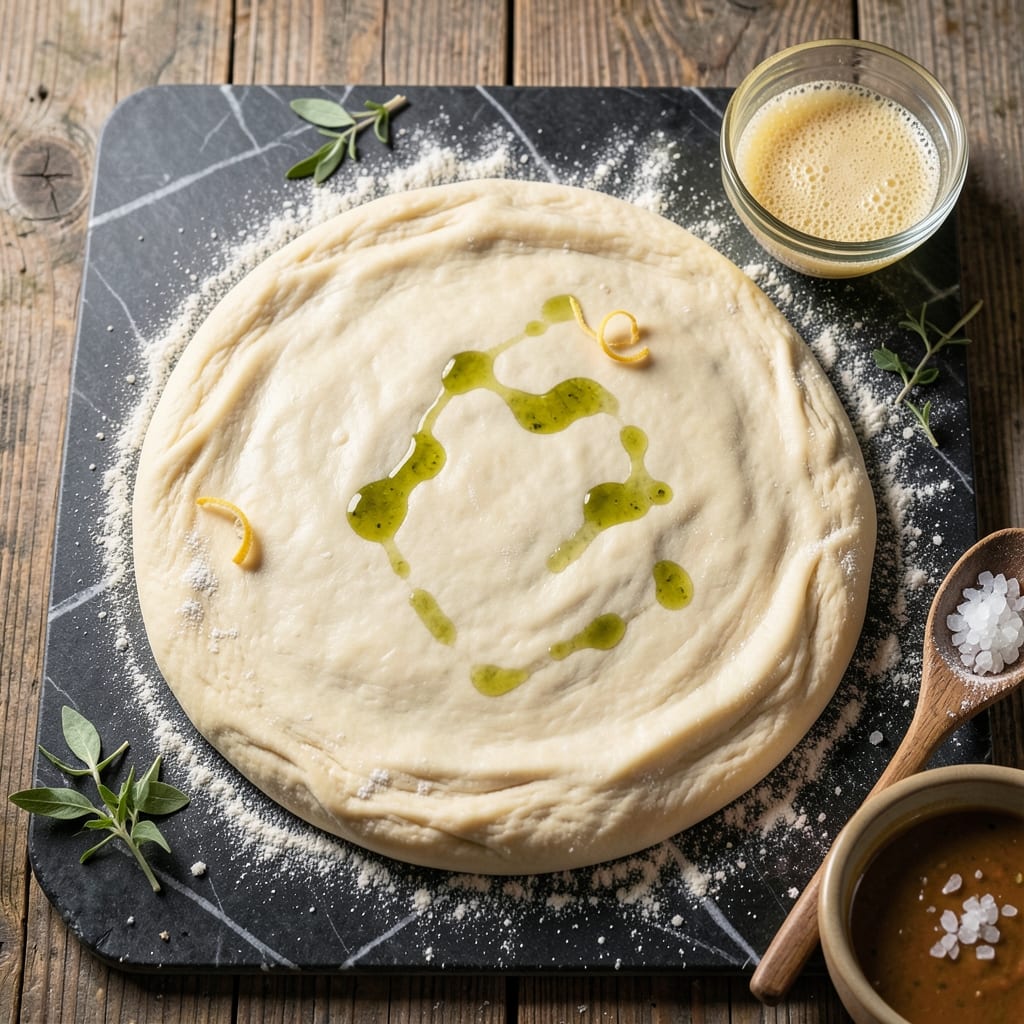
Standing on Nonna’s stool in Sicily, I learned pizza dough isn’t just flour and water—it’s tradition in your hands. This recipe brings that authentic Neapolitan taste to your kitchen.
The secret is in the slow fermentation. Four simple ingredients, 24 hours of patience, and you’ll taste the difference in every chewy, airy bite.
No fancy equipment needed. Just your hands, a bowl, and the will to resist eating it all before baking. The crust comes out golden with those signature leopard spots.
Between you and me, I still use the same wooden spoon Nonna gave me to test the texture. It’s never let me down.
Ingredients for Pizza Dough Recipe Taste
Four simple ingredients for that authentic Neapolitan taste you remember from Nonna’s kitchen.
| Ingredient | Amount | Notes |
|---|---|---|
| 00 Flour 🌾 | 3 ½ cups | Italian-style, finely milled |
| Water 💧 | 1 ½ cups | Filtered, room temperature |
| Active Dry Yeast 🍞 | ¼ tsp | Or 1 gram fresh yeast |
| Sea Salt 🧂 | 2 tsp | Fine grain, Dissolved in water |
| Extra-Virgin Olive Oil 🫒 | 2 tbsp | For bowl and dough |
The flour is non-negotiable here. 00 flour (double-zero, not a typo) is what gives that silky, elastic texture—King Arthur or Caputo if you can find it. Most grocery stores won’t carry it, so Amazon or a specialty Italian market is your best bet. The yeast needs to be fresh; if your jar’s been open for months, grab a new packet. Stale yeast won’t rise properly, and that’s a tragedy for 24 hours of waiting.
No 00 flour? Bread flour at 1:1 ratio works, but the texture won’t be quite as tender. Active dry and instant yeast are interchangeable here—just skip the proofing step with instant. For salt, Diamond Crystal is my go-to (the good stuff, not the iodized table kind). The olive oil is just for the bowl and your hands—no need for the fancy bottle you save for finishing.
The dough ferments best in a cool spot—65-70°F is ideal. Cover it tightly so it doesn’t dry out. After rising, it keeps in the fridge for up to 3 days, or freeze for 1 month (thaw overnight before using).
Why You’ll Love This Recipe
- No-Knead Magic: I just mix the 00 flour, water, yeast, and salt—no fancy techniques, no sore arms.
- That Olive Oil Touch: The extra-virgin olive oil gives it this rich, golden depth that makes every bite taste like a Roman pizzeria.
- Endless Topping Playground: Honestly, I’ve used this dough for margherita, calzone, even garlic knots—it never lets me down.
- Budget-Friendly Staple: A bag of 00 flour and a few cents of yeast stretch into multiple meals, and leftovers freeze beautifully.
Step-by-Step Instructions for Pizza Dough
Here’s the authentic method that delivers that perfect Neapolitan texture and flavor you’re after.
Step 1: Activate the Yeast and Dissolve the Salt
In a small bowl, combine the 1.5 cups water with the 0.25 tsp active dry yeast. Let it sit for 5-10 minutes until the surface becomes frothy and cloudy—this confirms your yeast is alive and active. If nothing happens, your yeast may be expired, and you’ll need to start over with fresh.
Meanwhile, dissolve the 2 tsp sea salt in ¼ cup of the measured water (from the 1.5 cups). This ensures even distribution throughout the dough and prevents any salty pockets in your finished crust. Set this aside until ready to use.
Step 2: Mix and Develop the Dough
In a large mixing bowl, add the 3.5 cups 00 flour. Create a well in the center and pour in the yeast-water mixture, the salt water, and the 2 tbsp extra-virgin olive oil. Using a wooden spoon or your hands, mix until a shaggy dough begins to form and all the liquid is absorbed.
Turn the dough out onto a clean surface and knead for 8-10 minutes by hand, or 5-6 minutes in a stand mixer with a dough hook. You’re aiming for a smooth, elastic dough that springs back slowly when pressed with a finger. The 00 flour gives it that authentic, silky texture.
Step 3: First Rise for Flavor Development
Lightly oil a clean bowl with some of the extra-virgin olive oil and place the dough inside, turning to coat all sides. Cover with a damp towel or plastic wrap and let it rise in a warm, draft-free spot for 1.5-2 hours, or until doubled in volume.
This first rise allows the yeast to ferment the sugars in the 00 flour, developing the complex flavors that make Neapolitan dough special. The dough should look puffy and jiggle slightly when shaken. If your kitchen is cool, this might take up to 3 hours—don’t rush it.
Step 4: Shape and Second Rise
Punch down the dough to release the air, then divide it into 4 equal portions for individual pizzas. Shape each into a smooth ball by tucking the edges under and rolling gently on the counter. Place the balls on a lightly floured surface, cover, and let rest for another 30-60 minutes.
During this second rise, the dough relaxes, making it easier to stretch later. You’ll notice the balls expand slightly and become softer to the touch. This step ensures your crust will be light and airy, not dense or tough.
Step 5: Ready for Stretching and Topping
After the second rise, your dough is ready to be stretched into rounds. Handle it gently to preserve the air bubbles that give Neapolitan pizza its signature chewy, airy crust. Use your fingertips, not your palms, to press the dough from the center outward.
The dough should stretch easily without tearing. If it resists, let it rest for another 10-15 minutes before trying again. This patience ensures a thin, even base with a slightly thicker, puffy edge—just like the pizzas from Naples.
Pro Tips For Making Pizza Dough Recipe Taste
- Warm Your Water: Use water around 105–110°F—hotter than lukewarm but not scalding. I learned this the hard way after killing yeast with water that was too hot and ending up with a dense, sad dough.
- Salt the Flour: Mix the sea salt directly into the 00 flour before adding water. Sounds weird, but it works: the salt dissolves more evenly, and the dough tastes more balanced.
- Skip the Rush: Let the dough rise slowly in the fridge for at least 24 hours. After burning through a few quick-rise attempts, I finally figured out that patience gives the yeast time to develop real flavor.
- Oil the Bowl: Coat the rising bowl with about 1 tablespoon of extra-virgin olive oil before adding the dough. My grandmother swore by this, and she was right: it prevents sticking and adds a subtle richness to the crust.
Best Sauces and Condiments for These Flavors
Classic Marinara
For that authentic Neapolitan pairing, I always use San Marzano tomatoes crushed by hand with 2 cloves garlic, 1 tbsp olive oil, and a pinch of salt. Simmer for 20 minutes until thick. The simplicity lets the dough shine. 💛
Pesto Perfection
My summer favorite blends 2 cups fresh basil, ¼ cup pine nuts, ½ cup Parmesan, and 3 garlic cloves in a food processor. Drizzle with ½ cup olive oil until smooth. Use sparingly—this bold flavor needs the dough’s mild taste as balance.
White Garlic Sauce
Sauté 4 minced garlic cloves in 3 tbsp olive oil on low heat for 2 minutes. Add ½ cup heavy cream and ¼ cup grated Pecorino Romano. Stir until thickened. This rich sauce complements the chewy crust beautifully.
Spicy Arrabbiata
Combine 1 can crushed tomatoes, 3 chopped garlic cloves, 1 tsp red pepper flakes, and 1 tbsp olive oil. Simmer for 15-20 minutes. The heat cuts through the dough’s mildness. I learned this one from my time in East Coast Italian communities. 🔥
Olive Oil Base
Sometimes less is more. Brush the stretched dough with 2 tbsp extra-virgin olive oil and sprinkle with coarse sea salt and fresh rosemary. Bake as-is for a crisp, flavorful flatbread that highlights the dough’s authentic taste.
Nutrition Facts
Frequently Asked Questions
Why does my dough taste bland?
Long fermentation develops flavor. If yours tastes flat, try letting it rise for 24 hours in the fridge. Also, use fine sea salt—it distributes better than coarse.
Can I use all-purpose flour instead?
Yes, but expect a slightly denser texture. For best results, replace 25% of the 00 flour with all-purpose. The taste will still be good, just less authentic.
How do I get that chewy texture?
Knead until smooth and elastic, then let it rest for 1.5-2 hours. The gluten develops during this time, creating that perfect chew. Don’t rush it!
What if my dough doesn’t rise?
Check your yeast first—it may be expired. Also, ensure your kitchen is warm enough (65-70°F). If it’s too cold, the dough will take much longer to proof.

- Potato Candy Recipe 1933: Vintage Peanut Butter Roll Delight - October 30, 2026
- Potato Chip Cookie Recipe With Pecans: Buttery Crunch Meets Nutty Richness - October 30, 2026
- Potato Patty Recipe No Egg: Crispy Edges Without the Binder - October 30, 2026