
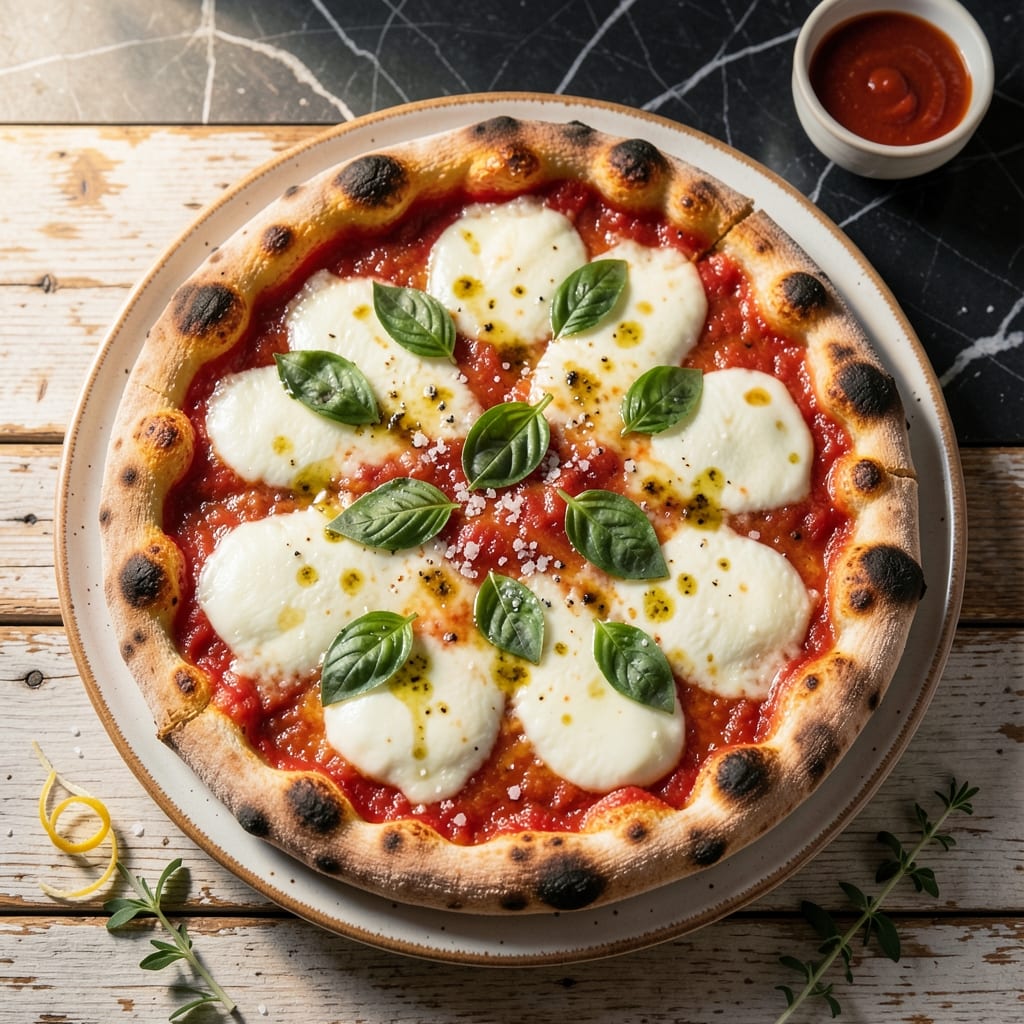
I’ve spent years chasing that perfect Neapolitan-style pizza at home, and this is the closest I’ve gotten to wood-fired flavor without the oven. The trick is high heat—550°F minimum—and a simple dough that ferments slowly for depth.
No fancy equipment needed, just patience and the right technique. The sauce is just San Marzano tomatoes, salt, and a touch of olive oil. Less is more when you’re going for authentic results.
What you’ll get is a crispy, charred crust with chewy edges, topped with bubbling cheese and a sauce that tastes like summer in Italy. The first bite will make you forget takeout exists.
It takes practice, but once you nail it, you’ll never go back. Here’s how to bring that pizzeria magic into your kitchen.
Ingredients for Pizza Recipe Authentic
Pantry raid time. Simple ingredients, restaurant-quality results in your kitchen.
| Ingredient | Amount | Notes |
|---|---|---|
| Bread Flour 🌾 | 3 ½ cups | High protein, 00 flour ideal |
| Active Dry Yeast 🍞 | ¼ oz | One packet, 2 1/4 tsp |
| Sea Salt 🧂 | 1 ½ tsp | Fine grain preferred |
| Sugar 🥄 | ½ tsp | Activates yeast |
| Extra-Virgin Olive Oil 🫒 | 2 tbsp | Divided for dough and sauce |
| Water 💧 | 1 ¼ cups | Warm, 110°F ideal |
| San Marzano Tomatoes 🍅 | 1 can | 28 oz, whole peeled |
| Fresh Mozzarella 🧀 | 8 oz | Low-moisture, shredded |
| Fresh Basil Leaves 🌿 | ¼ cup | Torn for topping |
| Parmigiano-Reggiano Cheese 🧀 | ½ cup | Freshly grated from block |
| Garlic Cloves 🧄 | 2 cloves | Minced for sauce |
| Cornmeal 🌽 | ¼ cup | For dusting peel |
The flour is non-negotiable for authenticity. 00 flour is gold standard (look for Caputo brand at specialty stores or online), but bread flour gets you 90% there. San Marzano tomatoes are the only kind worth using—canned from Italy, not the fresh grocery store kind. For cheese, whole-milk mozzarella (not the pre-shredded stuff) and real Parmigiano-Reggiano make all the difference. I grab both from Whole Foods when I’m being fancy.
No 00 flour? Bread flour works fine. Can’t find San Marzanos? Muir Glen organic are a decent backup. Fresh mozzarella too wet? Pat it dry with paper towels before shredding. The yeast can be instant or active dry—just adjust the activation step. For the sauce, skip the garlic if you’re purist (traditional Neapolitan doesn’t always use it), but I love the extra flavor.
Dough balls freeze beautifully for up to 3 months (thaw overnight in fridge). Sauce keeps 5 days in the fridge or 6 months frozen. Shredded cheese? Use within 1 week or freeze. The cornmeal prevents sticking—don’t skip it (worth the extra minute).
Why You’ll Love This Recipe
- No-Fuss Dough: The yeast does most of the work while I sip coffee—just flour, water, olive oil, and a little patience.
- That Crust Though: Honestly, the bread flour and olive oil give it a chew I’ve never matched with store-bought.
- Feeds a Crowd: I stretch one batch into four pizzas or freeze extras for lazy Fridays.
Step-by-Step Instructions for Authentic Pizza
Here’s how to create that perfect Neapolitan-style crust and sauce right in your own kitchen.
Step 1: Activate the Yeast and Mix the Dough
In a small bowl, combine the 0.25 oz active dry yeast, 0.5 tsp sugar, and 1.25 cups water heated to 110°F. Let it sit for 5-10 minutes until the mixture becomes foamy and bubbly—this tells you the yeast is alive and active.
In a large mixing bowl, combine the 3.5 cups bread flour and 1.5 tsp sea salt. Make a well in the center and pour in the yeast mixture and 1 tbsp extra-virgin olive oil. Use a wooden spoon to stir until a shaggy dough forms, then switch to your hands to knead it into a smooth ball.
Step 2: Knead and Let the Dough Rise
Turn the dough out onto a lightly floured surface and knead for 8-10 minutes until it’s elastic and smooth. You’ll know it’s ready when you press a finger into the dough and it springs back slowly. This develops the gluten, giving your crust that perfect chewy texture.
Place the dough in a lightly oiled bowl, cover it with a damp towel, and let it rise in a warm place for 1-2 hours or until doubled in size. I like to turn my oven on to its lowest setting for 2-3 minutes, then turn it off and place the bowl inside—this creates the ideal rising environment.
Step 3: Prepare the Sauce While the Dough Rises
In a blender or food processor, combine the 1 can San Marzano tomatoes, 2 cloves garlic cloves, 1 tbsp extra-virgin olive oil, and a pinch of the sea salt. Pulse until smooth but still slightly chunky. Taste and adjust seasoning if needed.
The sauce should be simple and fresh—San Marzano tomatoes have the perfect balance of sweetness and acidity. Don’t cook the sauce beforehand; the raw garlic and fresh tomato flavor are key to that authentic taste. Let the sauce sit at room temperature until you’re ready to assemble the pizzas.
Step 4: Shape the Dough and Add Toppings
Punch down the risen dough and divide it into 4 equal portions for individual pizzas. On a surface dusted with 0.25 cup cornmeal, roll out each portion into a 12-inch round, leaving a slightly thicker rim for the crust. The cornmeal adds a nice texture and prevents sticking.
Spread a thin layer of the tomato sauce over each dough round, leaving a ½-inch border. Sprinkle evenly with the 8 oz fresh mozzarella and 0.5 cup Parmigiano-Reggiano cheese. Remember, less is more—overloading with toppings will make your pizza soggy instead of crisp.
Step 5: Bake to Perfection
Preheat your oven to its highest temperature (ideally 500-550°F) with a pizza stone or inverted baking sheet inside. Slide the topped pizza onto the hot surface and bake for 10-12 minutes until the crust is golden brown and the cheese is bubbly and slightly charred in spots.
Remove from the oven and immediately top with torn 0.25 cup fresh basil leaves. Let the pizza cool for 2-3 minutes before slicing—this allows the cheese to set slightly so it doesn’t all slide off when you cut it. Serve hot and enjoy that authentic wood-fired flavor!
Pro Tips For Making Pizza Recipe Authentic
- Proof the Dough Longer: I learned this the hard way—let the dough rise for at least 24 hours in the fridge. It develops deeper flavor and that perfect chewy texture.
- Use Bread Flour Only: Skip all-purpose flour; bread flour’s higher protein content is non-negotiable for that authentic, stretchy Neapolitan-style crust.
- Don’t Over-Oil the Dough: About 2 tablespoons of extra-virgin olive oil is plenty—too much makes the dough greasy and hard to stretch, and I’ve ruined a few pies figuring that out.
- Preheat Your Stone: Crank your oven to its highest setting with the pizza stone inside for at least 45 minutes. Sounds excessive, but it mimics a wood-fired oven’s heat and guarantees a crisp, blistered crust.
Health Benefits of This Dish
Rich in Antioxidants
The San Marzano tomatoes in this dish are packed with lycopene, a powerful antioxidant that supports heart health and may reduce cancer risk. Cooking tomatoes actually increases lycopene bioavailability, making pizza a surprisingly nutrient-dense choice. I always use canned for this reason. 💪
Quality Protein Source
The fresh mozzarella and Parmigiano-Reggiano provide high-quality protein—about 20 grams per serving—with all essential amino acids. This supports muscle repair and keeps you full longer. Opt for whole-milk versions for the best texture and nutritional profile.
Bone Health Boost
Both cheeses are excellent sources of calcium, with one serving delivering about 30% of your daily needs. The Parmigiano-Reggiano also provides phosphorus, which works with calcium to strengthen bones and teeth. A slice contributes meaningfully to your daily intake.
Heart-Healthy Fats
The extra-virgin olive oil in both dough and sauce contains monounsaturated fats, known to support heart health and reduce inflammation. Just 2 tbsp provides a good dose of these beneficial fats. I always use California Olive Ranch for its robust flavor. 💛
Vitamin Enrichment
The fresh basil topping adds vitamin K (essential for blood clotting) and vitamin A (supports vision and immune function). One serving provides about 10% of your daily vitamin K needs. Plus, it brings that signature Italian aroma.
Low Glycemic Impact
Using 00 flour or bread flour creates a crust with a lower glycemic index than typical white flour. The slow fermentation process also helps reduce the glycemic response. Pair with a side salad to further balance blood sugar levels.
Nutrition Facts
Frequently Asked Questions
What’s the best flour for authentic results?
Use 00 flour for the most authentic texture, but bread flour works well too. The high protein content creates that perfect chewy crust. Avoid all-purpose flour for this recipe.
Why do we need such high oven temperature?
The 500-550°F heat mimics wood-fired ovens, creating a crispy yet chewy crust with charred spots. Lower temps produce a dense, bread-like base instead of authentic Neapolitan style.
Can I make the dough ahead of time?
The dough can be refrigerated for up to 3 days or frozen for 3 months. Cold fermentation actually enhances flavor development. Just bring it to room temperature before shaping.
How do I prevent a soggy crust?
Use a thin layer of sauce and don’t overload toppings. Preheat your stone or baking sheet for 30 minutes and bake on the lowest oven rack for maximum heat exposure.

- Potato Candy Recipe 1933: Vintage Peanut Butter Roll Delight - October 30, 2026
- Potato Chip Cookie Recipe With Pecans: Buttery Crunch Meets Nutty Richness - October 30, 2026
- Potato Patty Recipe No Egg: Crispy Edges Without the Binder - October 30, 2026