
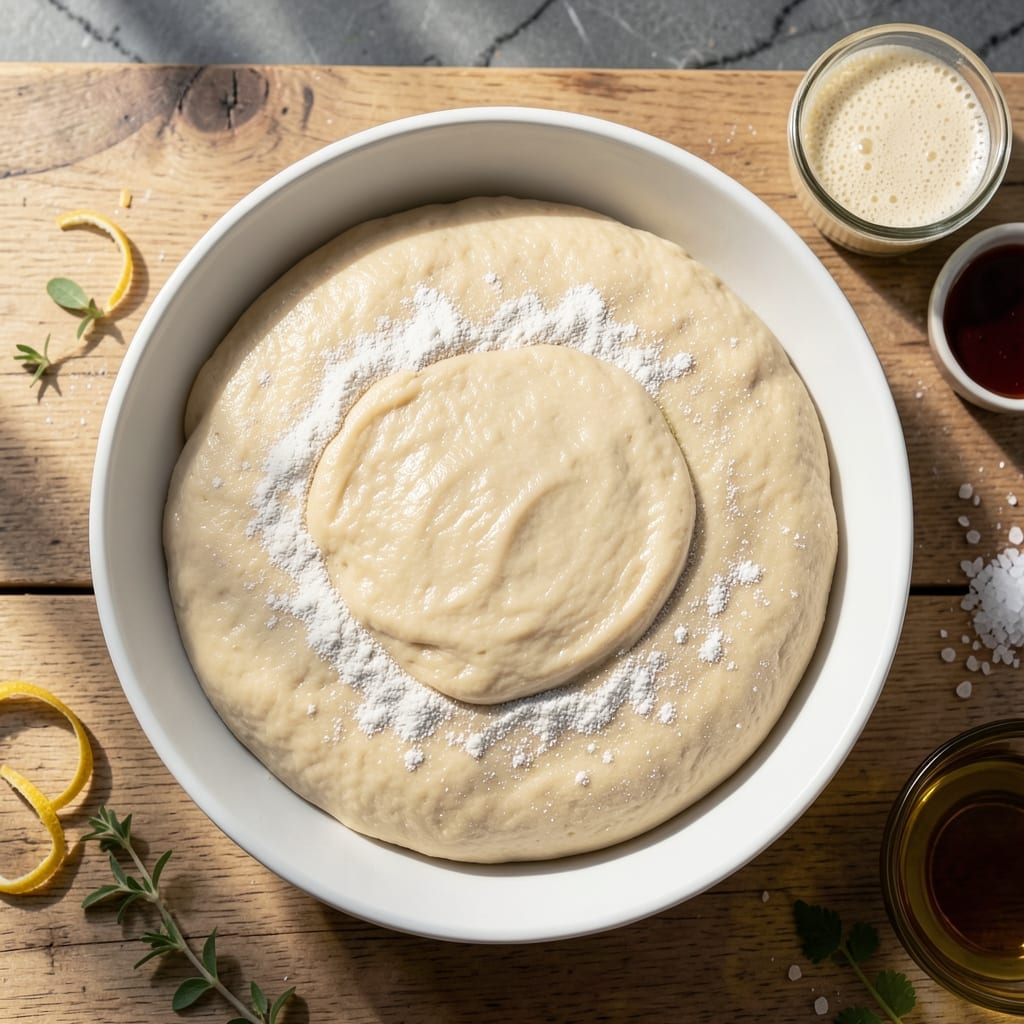
Standing in my grandmother’s Sicilian kitchen, I learned that great pizza begins with patience and the right foundation. This recipe honors her tradition with a proven method for dough that develops deep, complex flavors through slow fermentation.
Active yeast works overnight to transform simple ingredients into a silky, elastic base with just the right chew. The extended rise time allows the gluten to relax naturally, ensuring a light, airy crumb and a crust that bakes to golden perfection.
By morning, you’ll have a smooth, supple dough ready to shape into classic rounds or creative forms. It bakes into a crisp yet tender base that supports any topping combination with confidence.
This method delivers professional results with minimal hands-on effort, making it ideal for both weeknight dinners and special occasions.
Ingredients for Pizza Dough Recipe with Active Yeast
Simple, quality ingredients transform into a silky, elastic dough base ready for any topping.
| Ingredient | Amount | Notes |
|---|---|---|
| Active Dry Yeast 🍞 | 2 ¼ tsp | One packet, proofed in warm water |
| All-Purpose Flour 🌾 | 4 cups | Bread flour works too |
| Warm Water 💧 | 1 ½ cups | 110-115°F for yeast activation |
| Olive Oil 🫒 | 2 tbsp | Extra-virgin preferred |
| Sea Salt 🧂 | 2 tsp | Fine grain for even distribution |
| Granulated Sugar 🍚 | 1 tsp | Feeds the yeast |
| Semolina Flour 🌾 | ½ cup | For dusting work surface |
| Cornmeal 🌽 | ¼ cup | For pizza peel dusting |
The flour is the foundation here. King Arthur or Bob’s Red Mill all-purpose are reliable choices with consistent protein content. Active dry yeast from Fleischmann’s or Red Star works perfectly (check the expiration date—old yeast won’t rise). The olive oil should be something you’d drizzle on a finished dish—extra-virgin adds depth to the dough’s flavor profile.
No all-purpose flour? Bread flour at a 1:1 ratio gives a slightly chewier texture. Out of yeast? This method won’t work with instant yeast the same way—stick to active dry. For the sugar, honey or maple syrup at the same amount can substitute, though sugar is traditional in Sicilian dough. The salt quantity is precise—don’t reduce it, as it regulates yeast activity.
Dough can rest in the fridge for up to 48 hours—the flavor deepens with time. Store flour in airtight containers to prevent moisture. Yeast keeps 6-12 months unopened in a cool, dry place. Always bring ingredients to room temperature before mixing for best results.
Why You’ll Love This Recipe
- One Bowl Wonder: Honestly, I just dump the yeast, flour, warm water, olive oil, and salt in a single bowl and mix—no fancy equipment needed.
- Crispy Chewy Magic: The yeast gives it that perfect airy texture, while the olive oil adds a subtle richness that makes every bite irresistible.
- Endless Topping Playground: I’ve used this dough for everything from classic margherita to breakfast pizza—even my kids’ crazy combos turn out great.
- Pennywise Perfection: A bag of flour and a packet of yeast make multiple pizzas for the cost of one delivery. I’ll be real: my wallet notices.
Step-by-Step Instructions for Pizza Dough With Active Yeast
This method ensures a perfectly elastic dough with deep, fermented flavor.
Step 1: Activate the Yeast
In a small bowl, combine the 2.25 tsp Active Dry Yeast, 1 tsp Granulated Sugar, and 1.5 cups Warm Water. The water should be between 110-115°F—too hot will kill the yeast, too cool won’t activate it.
Let the mixture sit for 5-10 minutes until it becomes foamy and cloudy. This visual confirmation means the yeast is alive and ready to work. If you don’t see bubbles, your yeast may be expired—start over with fresh yeast.
Step 2: Mix and Knead the Dough
In a large bowl, combine the 4 cups All-Purpose Flour and 2 tsp Sea Salt. Make a well in the center and pour in the activated yeast mixture and 2 tbsp Olive Oil. Use a wooden spoon to mix until a shaggy dough forms.
Turn the dough out onto a surface dusted with 0.5 cup Semolina Flour. Knead for 8-10 minutes until smooth and elastic. The dough should spring back when pressed lightly with a finger. If it’s too sticky, add a bit more all-purpose flour; if too dry, add warm water 1 tablespoon at a time.
Step 3: First Rise Until Doubled
Lightly oil a clean bowl, place the dough inside, and cover with a damp towel. Let it rise in a warm, draft-free place for 1-2 hours or until doubled in size. The ideal temperature is around 75°F—a slightly warm oven with the light on works well.
You’ll know it’s ready when the dough holds an indent when pressed gently with a finger. This first rise develops the gluten structure and begins the flavor development.
Step 4: Cold Ferment for Maximum Flavor
Punch down the dough to release air, then cover the bowl tightly with plastic wrap. Refrigerate for at least 8 hours or up to 24 hours. This overnight fermentation is what gives the dough its complex, slightly tangy flavor.
The cold slows yeast activity, allowing longer fermentation without over-proofing. The dough will continue to rise slowly in the fridge, nearly doubling in volume by morning.
Step 5: Shape and Prepare for Baking
Remove the dough from the fridge and let it sit at room temperature for 30-60 minutes to take the chill off. Divide into 4 equal portions for individual pizzas.
On a surface dusted with 0.5 cup Semolina Flour, roll or stretch each portion to your desired thickness. For easy transfer to the oven, use 0.25 cup Cornmeal to dust your pizza peel—this prevents sticking and adds a nice crisp texture to the crust.
Pro Tips For Making Pizza Dough Recipe With Active Yeast
- Test Your Yeast: I learned this the hard way—always proof your active dry yeast in warm water with a pinch of sugar first. If it doesn’t bubble within 5-10 minutes, your dough won’t rise and you’ll waste flour.
- Use Bread Flour: Sounds weird, but swapping all-purpose for bread flour gives your crust that chewy, pizzeria-style texture. The extra gluten actually changes the outcome.
- Skip Cold Water: Resist the urge to use cold water to speed things up—yeast needs that 105-110°F warmth to activate properly, or your dough will stay dense and flat.
- Rest Overnight: After burning through a few same-day attempts, I finally figured out that letting the dough rise in the fridge for 12-24 hours develops way more flavor. Yes, it takes patience, but it’s worth it.
Perfect Pairings for This Recipe
Classic Italian Pairings
This dough begs for traditional Sicilian toppings. Try a Margherita with San Marzano tomato sauce, fresh mozzarella, and basil. The simplicity lets the crust’s flavor shine through. I still taste Nonna’s version from her kitchen in Sicily. 💡
Wine Selections
A crisp Italian white like Pinot Grigio from Veneto cuts through the richness. For red lovers, Chianti Classico offers earthy notes that complement the fermented depth of the dough. Serve slightly chilled for best results.
Beer Choices
An Italian lager like Peroni or Moretti provides a clean, refreshing contrast. For craft beer fans, a light pilsner with its subtle hop profile won’t overpower the delicate crust flavors.
Antipasto Starters
Begin your meal with a simple antipasto platter featuring cured meats, olives, and marinated artichokes. These bold flavors prepare the palate for the main event. I love sourcing these from my local Italian deli.
Salad Companions
A bitter greens salad with radicchio and endive balances the richness. Toss with extra-virgin olive oil and lemon juice. The slight bitterness contrasts beautifully with the crust’s sweetness. 🥗
Dessert Finish
End with cannoli or tiramisu for a true Italian experience. The light, creamy textures provide a perfect counterpoint to the meal’s savory elements. These are staples at our Sunday family dinners.
Nutrition Facts
Frequently Asked Questions
Why use active dry yeast instead of instant?
Active dry yeast needs proofing, which ensures it’s alive before mixing. This step guarantees a successful rise. Instant yeast skips proofing but may not develop the same depth of flavor during overnight fermentation.
Can I make this dough same-day?
Yes, but the flavor won’t be as complex. After the first rise, let it rest at room temperature for 1-2 hours instead of refrigerating. The texture will be good, but lacks the fermented depth.
How do I know if my yeast is still good?
Test it in warm water with sugar. If it doesn’t bubble within 5-10 minutes, it’s expired. Fresh yeast should smell slightly sweet and look foamy when activated.
What if my dough doesn’t rise?
Check your yeast freshness first. If that’s good, ensure your kitchen is warm enough (75°F). Drafts or cold temperatures can slow rising significantly.

- Potato Candy Recipe 1933: Vintage Peanut Butter Roll Delight - October 30, 2026
- Potato Chip Cookie Recipe With Pecans: Buttery Crunch Meets Nutty Richness - October 30, 2026
- Potato Patty Recipe No Egg: Crispy Edges Without the Binder - October 30, 2026