
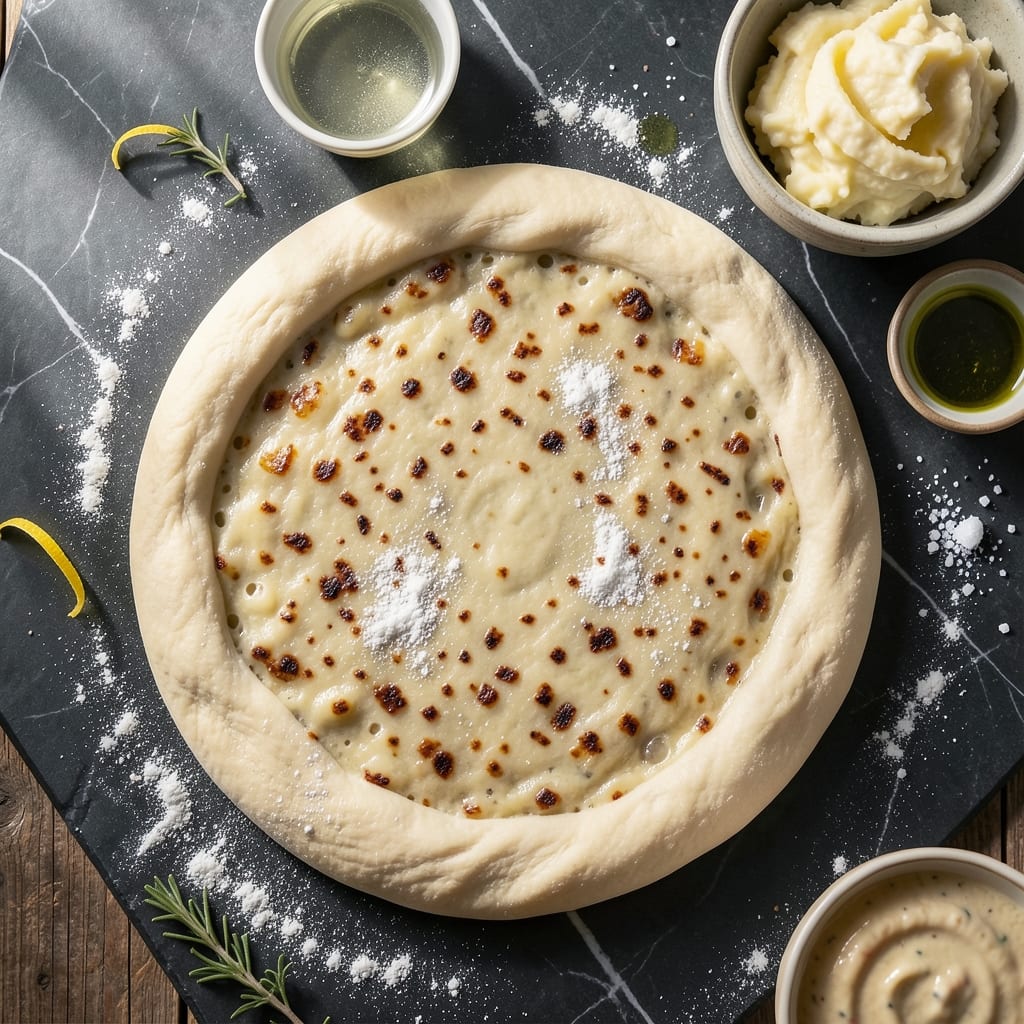
This unique pizza dough transforms your homemade pies with an unexpectedly soft texture and subtle earthy notes. I developed this version after discovering how mashed potato creates a more tender crumb while maintaining structure.
The potato adds moisture and a delicate sweetness that pairs perfectly with tomato sauce and cheese. Unlike traditional dough, this version produces a pillowy crust that stays tender even when reheated.
What makes this recipe special is its simplicity—just a few extra minutes to boil and mash the potato before mixing. The result is a dough that bakes up golden with a rustic flavor that’s anything but ordinary.
Use it for classic Margherita or loaded vegetable pizzas. The potato base gives it a distinctive character that will become your new favorite.
Ingredients for Pizza Dough Recipe with Potato
A few pantry staples plus one humble potato make this dough sing.
| Ingredient | Amount | Notes |
|---|---|---|
| Russet Potato 🥔 | ½ lb | Peeled, boiled, mashed smooth |
| Bread Flour 🌾 | 3 ½ cups | All-purpose works in a pinch |
| Active Dry Yeast 🍞 | 2 ¼ tsp | One 0.25-oz package |
| Granulated Sugar 🍚 | 1 tsp | Feeds the yeast |
| Kosher Salt 🧂 | 1 ½ tsp | Diamond Crystal preferred |
| Extra-Virgin Olive Oil 🫒 | 2 tbsp | For dough elasticity |
| Lukewarm Water 💧 | 1 ¼ cups | About 110°F, divided |
| Honey 🍯 | 1 tbsp | Adds subtle sweetness |
| Semolina Flour 🌾 | ¼ cup | For dusting work surface |
| All-Purpose Flour 🌾 | ¼ cup | For adjusting dough consistency |
| Cornmeal 🌽 | ¼ cup | For pizza peel dusting |
The potato is non-negotiable here. Russet potatoes give the best texture—Yukon Golds work too but they’re waxier. Boil them whole (skin on for flavor if you’re peeling after), then mash until completely smooth. Lumpy potato = lumpy dough. Most grocery stores carry these year-round, but farmers markets often have the freshest in fall. Look for firm, unblemished spuds with no green spots.
No bread flour? All-purpose plus 1 tbsp vital wheat gluten per cup mimics the chew. Honey can be swapped for maple syrup or sugar—just dissolve it in the warm water first. Short on yeast? Instant yeast at 25% less quantity works the same. For the olive oil, use something fruity and good—this isn’t the place for that sad old bottle in the back of your cabinet.
Dough keeps 2 days in the fridge (it’ll actually develop more flavor) or freezes for 1 month. Portion it into balls before freezing so you can grab exactly what you need. Thaw overnight in the fridge before using. Don’t skip the cornmeal—it’s what gives you that crisp, restaurant-style bottom crust (worth the extra minute).
Why You’ll Love This Recipe
- No-Knead Magic: I just mix, let it rise, and the potato makes the dough so soft I don’t even need to wrestle with it.
- That Creamy Bite: The mashed russet adds this subtle sweetness and the crust gets this perfect chewy texture.
- Weeknight Hero: I’ve used this dough for calzones, focaccia, even cinnamon rolls—same batch, totally different meals.
- Pennywise Perfection: A single potato stretches the flour further, so I get two pizzas for the price of one. Honestly, my wallet thanks me.
Step-by-Step Instructions for Pizza Dough With Potato
This method delivers a tender, flavorful crust that’s worth the extra effort.
Step 1: Prepare the Potato Base
Peel and boil the 0.5 lb Russet Potato until fork-tender, then drain and mash until completely smooth. I press it through a ricer for the silkiest texture—lumps will create uneven pockets in your dough.
Let the mashed potato cool to room temperature before mixing. This prevents the heat from killing the yeast when you combine everything. You should have about 1 cup of smooth, cool potato puree to work with.
The potato adds moisture and subtle sweetness, which creates that signature pillowy texture. Don’t skip this cooling step—it’s the difference between active yeast and a dense brick of dough.
Step 2: Activate the Yeast and Mix Wet Ingredients
In a small bowl, whisk together 1.25 cups lukewarm water (about 110°F), the 1 tsp Granulated Sugar, and 2.25 tsp Active Dry Yeast. Let it sit for 5-7 minutes until foamy—this confirms the yeast is alive and ready to work.
In a large mixing bowl, combine the cooled potato with the 2 tbsp Extra-Virgin Olive Oil and 1 tbsp Honey. The honey balances the yeast’s bitterness and enhances the crust’s color as it bakes.
Pour in the proofed yeast mixture and stir until fully incorporated. The liquid will look slightly cloudy from the potato starch—this is normal and contributes to the dough’s tenderness.
Step 3: Incorporate Dry Ingredients and Knead
In a separate bowl, whisk together the 3.5 cups Bread Flour and 1.5 tsp Kosher Salt. Add this to the wet ingredients and mix with a wooden spoon until a shaggy dough forms. It’ll be sticky at first—that’s the potato working its magic.
Turn the dough onto a surface dusted with 0.25 cup Semolina Flour. Knead for 8-10 minutes until smooth and elastic. If the dough sticks, sprinkle in some of the reserved 0.25 cup All-Purpose Flour, but use it sparingly—too much will toughen the crust.
You’ll know it’s ready when the dough springs back slowly when poked and has a slightly tacky (but not sticky) surface. The semolina adds a subtle grit that improves the texture without overpowering the potato’s softness.
Step 4: First Rise and Shape
Lightly oil a large bowl, place the dough inside, and cover with a damp towel. Let it rise in a warm, draft-free spot for 1.5-2 hours or until doubled in size. I like to turn on my oven light for a gentle, consistent warmth.
Once risen, punch down the dough to release the air. Divide it into 4 equal portions for individual pizzas, or leave it whole for a larger pie. Shape each portion into a ball and let rest for 15 minutes—this relaxes the gluten for easier stretching.
The dough will feel softer than traditional pizza dough thanks to the potato. Don’t be tempted to add more flour; the stickiness diminishes as it rests.
Step 5: Final Proof and Dust for Baking
Dust your work surface with 0.25 cup Cornmeal to prevent sticking and add a rustic crunch to the crust. Gently stretch each dough ball into your desired shape—this dough is forgiving, so don’t stress over perfection.
Let the shaped dough proof for another 30-45 minutes while you preheat your oven to its highest setting (ideally 500°F or hotter). The cornmeal not only prevents sticking but also creates a beautiful, crisp underside.
Bake as usual, but watch closely—the potato in the dough can cause it to brown faster than traditional recipes. The result is a crust with a golden hue, airy interior, and a subtle earthy sweetness that pairs perfectly with any topping.
Pro Tips For Making Pizza Dough Recipe With Potato
- Cook the Potato Thoroughly: I learned this the hard way—undercooked potato lumps will ruin your dough texture. Boil and mash the russets until completely smooth before mixing.
- Use Warm Water: Activate the yeast properly with water around 110°F. Too hot kills it, too cold slows the rise—both make for sad, dense dough.
- Don’t Over-Flour: Resist the urge to dump extra flour when kneading. A slightly sticky dough yields a lighter, chewier crust once baked.
- Rest the Dough Longer: Give it at least 2 hours to rise, or even overnight in the fridge. The potato starch needs time to hydrate fully for the best texture.
Health Benefits of This Recipe
Nutrient-Rich Carbs
Potatoes in this dough add fiber and vitamin C, turning your crust into a more balanced base. A ½ cup serving of this dough provides about 2g of fiber, which aids digestion and keeps you fuller longer. 💪
Lower Glycemic Impact
The potato’s natural starches create a slower-digesting carb compared to traditional flour-only doughs. This helps maintain steady blood sugar levels, making it a smarter choice for those monitoring their glucose intake.
Essential Minerals
Russet potatoes bring potassium and magnesium to the mix. These minerals support muscle function and heart health. One batch contains about 15% of your daily potassium needs from the potato alone.
Reduced Fat Content
This recipe uses only 2 tbsp olive oil for the entire batch, significantly less than many store-bought doughs. The potato’s natural moisture replaces some of the fat typically needed for tenderness.
Vitamin B Boost
Potatoes contribute vitamin B6 and niacin, which help convert food into energy. These B vitamins also support brain function and red blood cell production, making this dough more nutritious than you might expect.
Antioxidant Properties
The combination of potato and extra-virgin olive oil provides antioxidants that combat inflammation. This gives your pizza crust a subtle health edge while maintaining that irresistible taste and texture. ✨
Nutrition Facts
Frequently Asked Questions
Why add potato to pizza dough?
Potato makes the crust extra tender and adds subtle sweetness. It also keeps the dough moist longer, so your pizza stays soft even the next day.
Can I use leftover mashed potatoes?
Yes, but avoid butter or milk in them. Use plain, smooth mashed potatoes and adjust the water in the recipe slightly, as leftovers may be drier.
How thin should I roll the dough?
For a crispy crust, aim for ⅛-¼ inch thick. This dough is soft, so go thinner if you prefer a crunchier base. Use cornmeal to prevent sticking.
Can I make this dough ahead of time?
Store in the fridge for up to 2 days or freeze for 1 month. Thaw overnight before shaping.

- Potato Candy Recipe 1933: Vintage Peanut Butter Roll Delight - October 30, 2026
- Potato Chip Cookie Recipe With Pecans: Buttery Crunch Meets Nutty Richness - October 30, 2026
- Potato Patty Recipe No Egg: Crispy Edges Without the Binder - October 30, 2026