
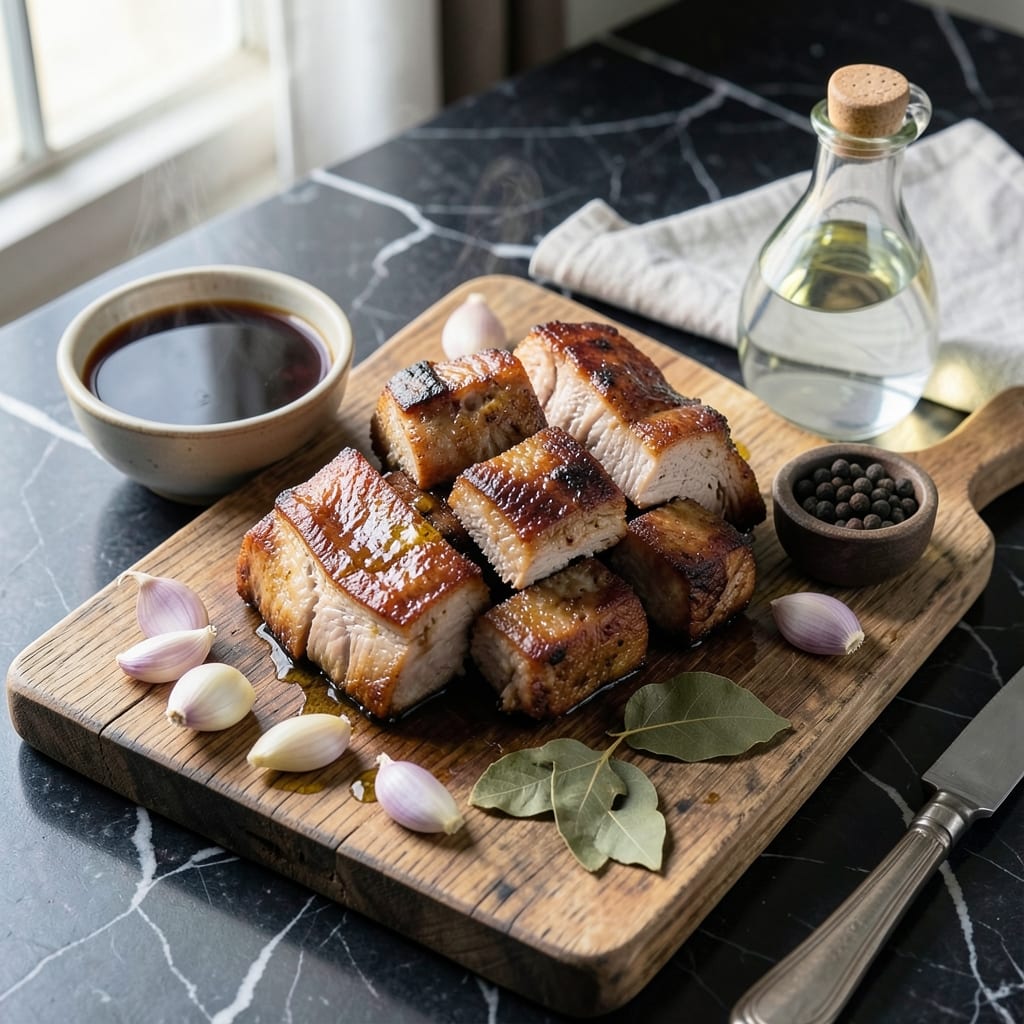
This vinegar-braised pork delivers restaurant-quality flavor with minimal effort. The combination of soy sauce, vinegar, and garlic creates a tangy, savory base that defines authentic Filipino adobo.
Bay leaves add subtle depth while black peppercorns deliver gentle heat. The pork simmers until fall-apart tender, absorbing every layer of flavor from the braising liquid.
Traditional versions vary by region, but this method stays true to the dish’s roots with a perfect balance of sour, salty, and umami. The sauce reduces to a glossy coating that clings to each piece.
Serve over steamed rice to soak up every drop of the rich, aromatic sauce. This is the kind of dish that improves overnight as flavors meld together.
Ingredients for Pork Adobo Recipe Ingredients
Restaurant-quality pork adobo starts with these bold, tangy ingredients ready for braising perfection.
| Ingredient | Amount | Notes |
|---|---|---|
| Pork Shoulder 🥩 | 2 lb | Cut into 2-inch pieces, bone-in preferred |
| Soy Sauce 🫙 | ¾ cup | Low-sodium for controlled saltiness |
| White Vinegar 🧴 | ¾ cup | Cane or distilled white vinegar |
| Garlic Cloves 🧄 | 12 cloves | Peeled, smashed lightly |
| Bay Leaves 🌿 | 5 pieces | Dried, whole leaves |
| Black Peppercorns 🌶️ | 1 tbsp | Whole, lightly crushed |
| Brown Sugar 🧈 | 2 tbsp | Light or dark, for balance |
| Water 💧 | 1 cup | To adjust braising liquid |
| Vegetable Oil 🫒 | 2 tbsp | For searing pork |
| Onion 🧅 | 1 whole | Yellow or white, sliced |
| Salt 🧂 | 1 tsp | Kosher or sea salt |
The pork should be fatty cuts—pork shoulder or belly work best for that fall-apart texture. Asian markets often have pre-cut pieces, but any grocery store with a butcher counter can prep it for you. Look for good marbling; lean cuts won’t hold up to the long braise. The soy sauce is the backbone here, so use a Filipino brand like Silver Swan or Datu Puti if you can find it.
No white vinegar? Apple cider vinegar works in a pinch but has a fruitier note. Want more depth? Add a splash of coconut vinegar. The bay leaves are non-negotiable for that signature aroma—don’t skip them. If you’re out of whole peppercorns, freshly ground black pepper at half the amount is acceptable, but whole delivers a more complex heat.
This tastes even better the next day. Store in the fridge for up to 5 days or freeze for 3 months. The fat will solidify when cold—just reheat gently to melt it back into the sauce.
Why You’ll Love This Recipe
- One Pot Wonder: I just dump pork shoulder, soy sauce, vinegar, garlic, and bay leaves in a pot and let it simmer. No fancy techniques.
- Tangy Garlic Bomb: The soy-vinegar combo with all that garlic hits that sweet-savory-tangy balance I crave every time.
- Meal Prep Hero: I make a big batch on Sunday and it tastes even better reheated for lunch all week.
- Budget Stretcher: Pork shoulder is cheap, and this recipe turns it into something ridiculously good without breaking the bank.
Step-by-Step Instructions for Vinegar-Braised Pork With Bay Leaf Depth
Here’s the method. Straightforward, tested, works every time.
Step 1: Sear the Pork Shoulder for Deep Flavor
Heat the 2 tbsp vegetable oil in a large, heavy pot over medium-high heat until shimmering. Pat the 2 lb pork shoulder dry with paper towels and season with the 1 tsp salt. Working in batches to avoid crowding, add the pork pieces and sear until deep golden brown on all sides, about 4-5 minutes per side.
This browning step creates the fond that builds rich, complex flavor in your adobo. Don’t rush it—you want a good crust on each piece. Transfer the seared pork to a plate and set aside while you build the braising liquid.
Step 2: Bloom Aromatics in the Rendered Fat
In the same pot, reduce heat to medium and add the sliced 1 whole onion. Sauté for 3-4 minutes until softened and just beginning to turn translucent. Add the 12 cloves garlic cloves, 1 tbsp black peppercorns, and 5 pieces bay leaves, stirring constantly for 1 minute until fragrant.
Be careful not to let the garlic burn—it should turn a pale gold color, not dark brown. The crushed peppercorns and whole bay leaves will infuse the oil with their aromatic compounds, creating the foundation for your braising liquid.
Step 3: Deglaze and Create the Braising Liquid
Pour in the 0.75 cup white vinegar and use a wooden spoon to scrape up all those browned bits from the bottom of the pot. This deglazing step dissolves the fond into the liquid, adding incredible depth to your adobo. Let the vinegar simmer for 2-3 minutes until reduced by about half.
Add the 0.75 cup soy sauce, 2 tbsp brown sugar, and 1 cup water. Stir well to combine and dissolve the sugar. The mixture should come to a gentle simmer. Return the seared pork to the pot along with any accumulated juices.
Step 4: Braise Until Tender and Flavorful
Reduce the heat to low, cover the pot, and let the pork braise for 1.5 to 2 hours. You want a gentle simmer, not a rolling boil—this ensures the pork stays tender. Stir occasionally and turn the pork pieces halfway through cooking to ensure even cooking and flavor distribution.
You’ll know the pork is done when it’s fork-tender and the meat easily pulls away from the bone. The sauce should have thickened slightly and taken on a rich, mahogany color from the caramelizing sugars and soy sauce.
Taste and adjust seasoning if needed, though be careful with additional salt as the soy sauce is already quite salty. Remove the bay leaves before serving.
Pro Tips For Making Pork Adobo Recipe Ingredients
- Simmer Low and Slow: I learned this the hard way—boiling the vinegar too hard turns the pork tough. Keep it at a gentle simmer, around 180-190°F, for at least 45 minutes to let the flavors meld and the meat get fork-tender.
- Crush the Garlic: Skip the mincing and just give the garlic cloves a good smash with the side of your knife. It releases more flavor into the adobo and saves you 5 minutes of chopping—plus, you can fish out the cloves later if you prefer.
- Balance the Vinegar: Sounds weird, but it works: taste as you go and add a teaspoon of sugar if the vinegar’s bite is too sharp. My grandmother swore by this, and it actually changes the outcome without making it sweet.
- Use More Bay Leaves: After burning three batches, I finally figured out that 2-3 bay leaves isn’t enough. Toss in 4-5 dried leaves—it deepens the aroma and makes the sauce richer, especially if you’re using store-bought soy sauce.
Health Benefits of This pork adobo recipe ingredients
Rich in Protein
This dish provides about 40 grams of protein per serving from the 2 lb pork shoulder, supporting muscle maintenance and repair. Protein keeps you feeling full longer, which helps with weight management. 💪
Low in Carbohydrates
With only 2 tbsp brown sugar in the entire recipe, each serving contains minimal carbs, making it ideal for low-carb or keto diets. The natural sweetness balances the tangy vinegar without spiking blood sugar.
Vitamin B Complex
Pork is an excellent source of B vitamins, particularly B1, B6, and B12, which support energy metabolism and brain function. The 12 cloves garlic add immune-boosting properties and additional B vitamins.
Electrolyte Balance
The 0.75 cup soy sauce provides sodium, while the 0.75 cup white vinegar offers potassium, helping maintain proper electrolyte balance. This is especially beneficial after physical activity.
Antioxidant Boost
Garlic and onions contain antioxidants that combat oxidative stress. The 5 pieces bay leaves and 1 tbsp black peppercorns also contribute compounds that support overall health. I always feel revitalized after enjoying this dish. ✨
Healthy Fats
Pork shoulder contains healthy monounsaturated fats, particularly when you choose well-marbled cuts. These fats support heart health and help your body absorb fat-soluble vitamins from other ingredients.
Nutrition Facts
Frequently Asked Questions
Can I substitute chicken for pork?
Use 2 lb bone-in chicken thighs and reduce braising time to 45-50 minutes. Chicken adobo is just as delicious and cooks faster.
Why is vinegar added last in some recipes?
Adding vinegar too early can make the meat tough by breaking down proteins before they’ve had time to tenderize. Simmering it with the pork after initial browning gives the best texture.
What if my sauce is too sour?
Balance it with a touch more brown sugar or a splash of water to dilute. Taste as you go—adobo should be tangy but not overpowering.

- Potato Chip Cookie Recipe With Pecans: Buttery Crunch Meets Nutty Richness - October 30, 2026
- Potato Patty Recipe No Egg: Crispy Edges Without the Binder - October 30, 2026
- Paula Deen’s Potato Chip Cookies Recipe: Salty-Sweet Crunch in Every Bite - October 30, 2026