
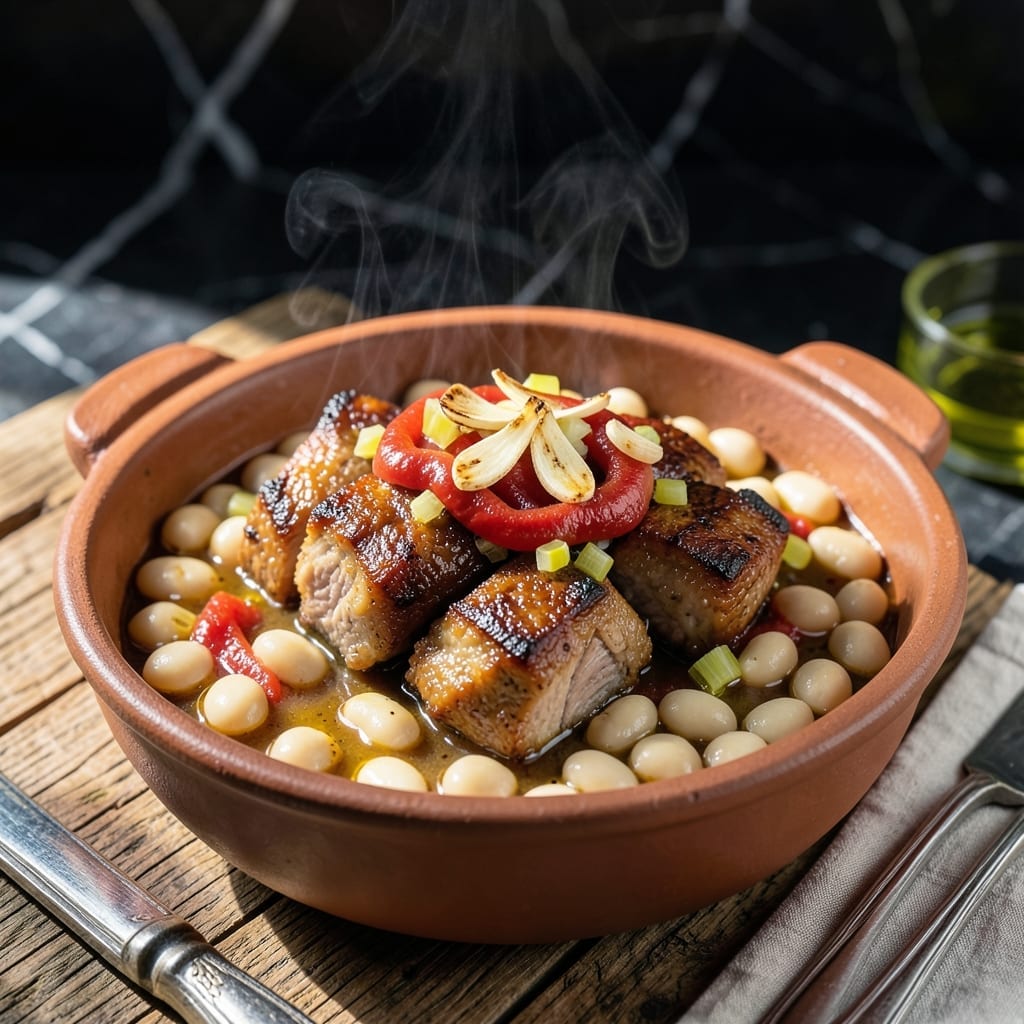
This Filipino-style pork and white beans stew brings comfort in every bite. The dish combines tender pork with creamy beans in a savory broth that’s rich with traditional flavors.
I learned this recipe from my grandmother’s vague handwritten notes, perfecting the balance of garlic, onions, and a touch of vinegar for that authentic Pinoy taste. It’s hearty, satisfying, and perfect for family meals.
The slow cooking process ensures the pork becomes fall-apart tender while the beans soak up the flavorful broth. It’s a dish that tastes like home, no matter where you are.
Serve it with steamed rice to complete the meal. Here’s how to make it.
Ingredients for Pork and White Beans Recipe Pinoy
Hearty pork, creamy beans, and a few pantry staples create this comforting stew.
| Ingredient | Amount | Notes |
|---|---|---|
| Pork Shoulder 🥩 | 1 ½ lb | Cut into 1-inch cubes |
| White Beans 🫘 | 2 cans | Drained and rinsed |
| Garlic Cloves 🧄 | 6 cloves | Minced for depth |
| Yellow Onion 🧅 | 1 whole | Medium, finely chopped |
| Tomato Paste 🍅 | 2 tbsp | For richness in broth |
| Soy Sauce 🫒 | 3 tbsp | Filipino or regular |
| White Vinegar 💧 | 2 tbsp | Balances the savory |
| Bay Leaves 🍃 | 2 pieces | Dried, for aroma |
| Black Peppercorns 🌶️ | 1 tsp | Whole or ground |
| Water 💧 | 4 cups | For simmering broth |
| Cooking Oil 🫒 | 2 tbsp | Neutral oil preferred |
| Salt 🧂 | 1 tsp | Adjust to taste |
| Brown Sugar 🍚 | 1 tbsp | Optional for balance |
The pork is key here. Pork shoulder works best for that fall-apart texture—Costco or your local butcher can cube it for you. Look for pieces with good marbling. I grab mine from the Filipino market (they know what we’re making). The beans? Cannellini or great northern both work—just avoid kidney beans, they’re too firm.
No soy sauce? Fish sauce at half the amount gets you close to that umami depth. Out of vinegar? Calamansi juice (if you’ve got it) or a splash of lemon works in a pinch. The tomato paste can be skipped, but it adds that rich, savory base. Fresh garlic is ideal, but jarred minced garlic saves time if you’re in a rush.
This stew tastes even better the next day—flavors meld overnight. Keeps 4-5 days in the fridge, freezes for 3 months. I always make a double batch and freeze half for lazy nights (worth the extra minute).
Why You’ll Love This Recipe
- One Pot Wonder: I toss in pork shoulder, white beans, and tomato paste with garlic and onion, then let it simmer—minimal cleanup, maximum flavor.
- Rich and Hearty: The pork melts in your mouth while the beans soak up the deep, garlicky tomato sauce. Honestly, it’s the kind of dish that tastes like it cooked all day.
- Feeds a Crowd: Between us, this is my go-to for family gatherings—stretches easily, fills everyone up, and still tastes great the next day.
- Budget Friendly: Pork shoulder and white beans are affordable staples, and this recipe turns them into something crave-worthy without breaking the bank.
Step-by-Step Instructions for Pork and White Beans
This method delivers rich, tender pork with creamy beans in a savory Filipino-style stew.
Step 1: Brown the Pork Shoulder
Heat the 2 tbsp cooking oil in a large pot over medium-high heat. Add the 1.5 lb pork shoulder (cut into 1-inch cubes) in batches, being careful not to overcrowd the pot. You want each piece to develop a deep, golden-brown crust on all sides.
This searing step builds the flavor foundation for the stew. It should take about 5-7 minutes per batch. Don’t rush it—you’re looking for that rich caramelization that signals the Maillard reaction is working its magic. Remove the browned pork and set aside temporarily.
Step 2: Sauté Aromatics and Build the Base
In the same pot (now with those flavorful browned bits), add the finely chopped yellow onion and cook for 2-3 minutes until soft and translucent. Then add the minced garlic cloves and cook for another 30 seconds until fragrant.
Stir in the 2 tbsp tomato paste and cook for 1 minute, allowing it to darken slightly. This step deepens the umami base of your stew. Pour in the 3 tbsp soy sauce, 2 tbsp white vinegar, and 1 tbsp brown sugar, stirring to combine all those bold flavors.
Step 3: Simmer the Stew to Perfection
Return the browned pork to the pot along with the 2 pieces bay leaves and 1 tsp black peppercorns. Pour in the 4 cups water and stir to combine. Bring the mixture to a boil, then reduce heat to medium-low and let it simmer uncovered for 45 minutes.
This simmering time allows the pork to become fork-tender while the flavors meld together. You’ll notice the liquid reducing slightly and the pork becoming more tender. Add the 2 cans white beans (drained and rinsed) and the 1 tsp salt, then simmer for another 15-20 minutes until the beans are heated through and the stew has thickened to your desired consistency.
Step 4: Adjust Seasoning and Serve
Taste the stew and adjust the seasoning if needed. The soy sauce provides saltiness, but you might want to add a bit more salt to taste. The vinegar should provide a nice balance to the richness, but if it needs more brightness, a splash more white vinegar can be added.
Discard the bay leaves before serving. The pork should be fall-apart tender and the beans should be creamy and flavorful, having absorbed all that delicious broth. This stew tastes even better the next day as the flavors continue to develop and meld together.
Pro Tips For Making Pork And White Beans Recipe Pinoy
- Parboil the Beans: Soak the white beans overnight or parboil for 10 minutes before adding pork—this cuts cooking time in half and prevents that dreaded undercooked bite.
- Brown the Pork: Sear the pork shoulder in batches over medium-high heat until deeply browned; it adds a rich, caramelized base that simmering alone can’t achieve.
- Skip the Salting: Hold off on salting the beans until they’re fully tender—I learned the hard way that early salt toughens them up like little pebbles.
- Use Tomato Paste: Cook the tomato paste with the onions and garlic for 2-3 minutes until it darkens; this builds a deeper, sweeter flavor foundation for the whole dish.
Pro Cooking Tips for pork and white beans recipe pinoy
Perfect Pork Browning
Don’t overcrowd the pot when browning your 1.5 lb pork shoulder. I use a Dutch oven for even heat distribution. Work in batches if needed—each piece should have space to develop that deep golden-brown crust on all sides.
Layer Flavors Right
After removing pork, sauté onion until translucent before adding garlic. This prevents burning. Cook the 2 tbsp tomato paste until it darkens slightly—this builds the umami base that defines the stew’s depth. 🌡️
Simmering Success
Once everything’s in the pot, maintain a gentle simmer at medium-low heat. Too high and the pork toughens; too low and flavors won’t meld. I check the temperature with a candy thermometer to keep it steady.
Bean Timing
Add the 2 cans white beans only after the pork is nearly tender—about 45 minutes in. This prevents them from turning mushy. The final 15-20 minutes lets them soak up the rich, savory broth.
Seasoning Adjustments
Taste before final adjustments. The 3 tbsp soy sauce and 2 tbsp vinegar should balance, but I often add a pinch more salt or a splash of vinegar for brightness. Trust your palate. 💛
Rest Before Serving
Let the stew sit off heat for 10 minutes before serving. This allows the flavors to settle and the pork to reabsorb some of the broth. My grandmother swore by this step—it makes all the difference.
Nutrition Facts
Frequently Asked Questions
Can I use a different cut of pork?
Yes, but pork shoulder is ideal for its marbling. Pork belly adds richness, while pork loin stays leaner. Avoid very lean cuts as they can dry out during the 45-minute simmer.
Why add vinegar to the stew?
The 2 tbsp white vinegar balances the richness and adds a subtle tang that’s classic in Pinoy cooking. It brightens the flavors without making the dish sour.
Can I make this in a slow cooker?
Brown the pork first, then transfer everything to the slow cooker. Cook on low for 6-7 hours or high for 3-4 hours, adding beans the last 30 minutes.
How do I fix a too-salty stew?
Add a peeled potato or extra white beans to absorb salt. Simmer for 10-15 minutes, then taste and adjust. Avoid adding water as it dilutes flavor.

- Potato Chip Cookie Recipe With Pecans: Buttery Crunch Meets Nutty Richness - October 30, 2026
- Potato Patty Recipe No Egg: Crispy Edges Without the Binder - October 30, 2026
- Paula Deen’s Potato Chip Cookies Recipe: Salty-Sweet Crunch in Every Bite - October 30, 2026