
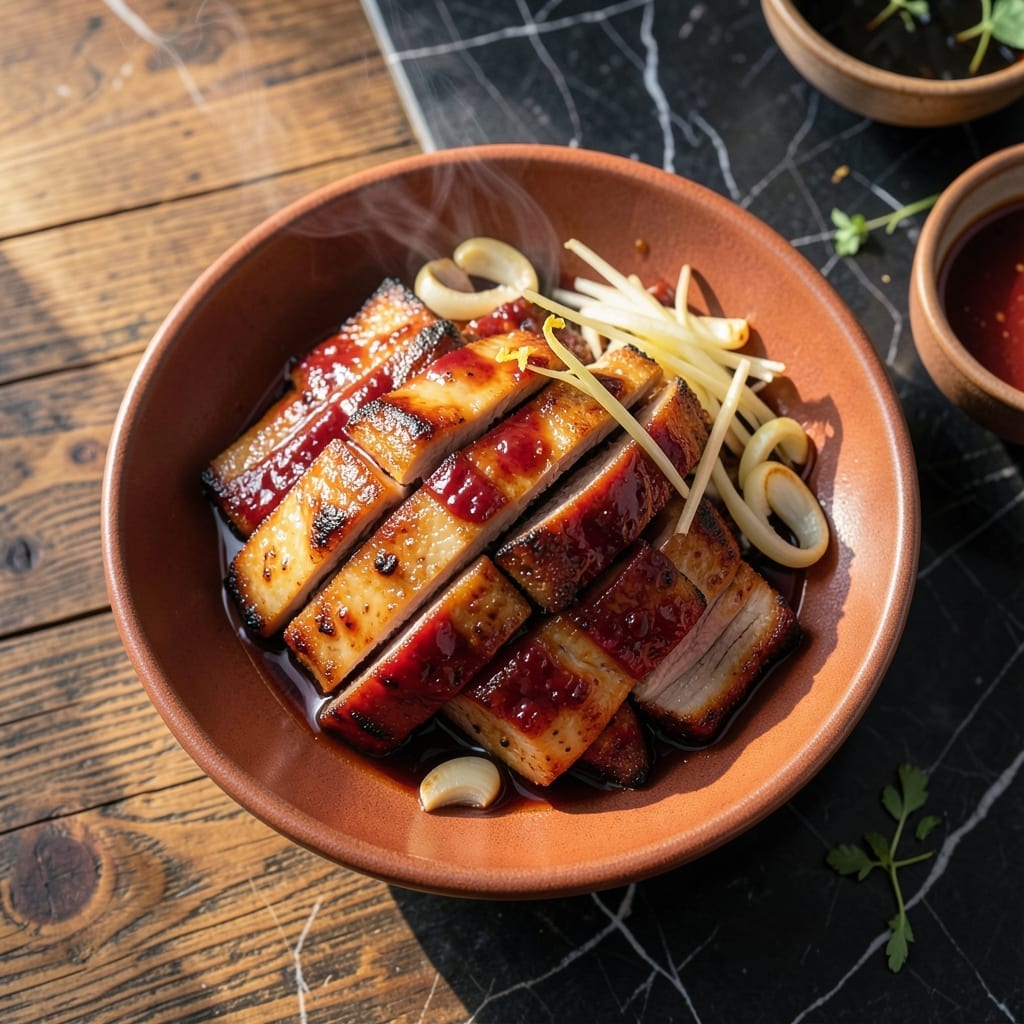
This Korean-inspired pork belly delivers a sweet-spicy glaze with a caramelized crust that’s impossible to resist. The marinade blends gochujang, soy sauce, and brown sugar for complex flavors that deepen as it cooks.
I’ve refined this method to ensure the pork stays juicy inside while developing that signature sticky exterior. A hot oven finish creates the perfect texture contrast without drying out the meat.
The result is tender slices with layers of flavor—smoky from the grill, sweet from the glaze, and spicy from the chili paste. It’s a dish that balances richness with bright, bold notes.
Serve with rice and pickled vegetables for a complete meal that feels authentic yet approachable.
Ingredients for Pork Belly Recipe Korean
Pantry staples and a few Korean essentials create this bold, caramelized dish.
| Ingredient | Amount | Notes |
|---|---|---|
| Pork Belly 🥓 | 2 lb | Skin-on, cut into 1-inch strips |
| Gochujang 🌶️ | ½ cup | Korean red chili paste |
| Soy Sauce 🫒 | ½ cup | Low-sodium preferred |
| Brown Sugar 🧂 | ½ cup | Light or dark variety |
| Garlic Cloves 🧄 | 6 cloves | Minced for marinade |
| Fresh Ginger 🌿 | 2 tbsp | Grated or minced |
| Rice Vinegar 💧 | 2 tbsp | For acidity balance |
| Sesame Oil 🫒 | 1 tbsp | Toasted variety preferred |
| Green Onions 🧅 | 4 whole | Thinly sliced for garnish |
| Sesame Seeds 🌾 | 2 tbsp | Toasted for garnish |
| Black Pepper 🌶️ | 1 tsp | Freshly ground preferred |
| Cooked White Rice 🍚 | 4 cups | For serving |
The pork belly is non-negotiable here. Look for skin-on cuts at an Asian market—they often carry it pre-sliced, which saves time. If your butcher doesn’t stock it, Costco or Whole Foods can special order it. For the gochujang, Sempio or CJ brands are widely available and deliver consistent heat and depth. Fresh ginger and garlic are key, so avoid the jarred varieties if possible (their texture can affect the marinade).
No gochujang? Mix 3 tbsp sriracha with 1 tbsp miso paste for a similar sweet-spicy profile. Out of brown sugar? Honey or maple syrup works in a pinch, though the flavor will shift slightly. The rice vinegar can be swapped with apple cider vinegar, but avoid white vinegar—it’s too harsh. For extra smokiness, add a pinch of smoked paprika to the marinade.
Marinated pork belly keeps in the fridge for up to 3 days before cooking. Once cooked, it’s best served immediately but reheats well in a 350°F oven for 10 minutes. Leftovers? Store in an airtight container for 4 days—perfect for quick lunches.
Why You’ll Love This Recipe
- Set It and Forget It: This recipe does most of the work in the oven while I prep sides or just relax.
- Sticky Sweet Heat: The gochujang and brown sugar caramelize into this glossy, finger-licking glaze on the pork belly.
- Feeds a Hungry Table: I’ve served this at dinner parties and as a weeknight meal—everyone goes back for seconds.
- Budget Stretch: Pork belly is affordable, and the bold flavors mean a little goes a long way for leftovers.
Step-by-Step Instructions for Korean Pork Belly
This method ensures a sticky, caramelized crust with tender meat underneath every time.
Step 1: Prepare the Marinade Base
In a large bowl, combine the 0.5 cup Gochujang, 0.5 cup Soy Sauce, and 0.5 cup Brown Sugar. Whisk vigorously until the mixture becomes smooth and the brown sugar fully dissolves, creating a glossy, deep red paste.
Add the 2 tbsp Rice Vinegar, 1 tbsp Sesame Oil, 6 cloves Garlic Cloves (minced), 2 tbsp Fresh Ginger (grated), and 1 tsp Black Pepper. Stir thoroughly to distribute the aromatics evenly. This balance of sweet, spicy, and umami forms the foundation of the dish.
Step 2: Marinate the Pork Belly
Add the 2 lb Pork Belly (cut into 1-inch strips) to the marinade, ensuring each piece is fully coated. Massage the marinade into the meat for 2-3 minutes, pressing it into all the crevices. The pork belly should glisten uniformly with the marinade.
Cover the bowl with plastic wrap and refrigerate for at least 4 hours, or preferably overnight. This extended marinating time allows the flavors to penetrate deeply, tenderizing the meat while the sugars begin to break down for optimal caramelization later.
Step 3: Sear and Caramelize
Preheat your oven to 400°F. Heat a large oven-safe skillet over medium-high heat. Remove the pork belly from the marinade (reserve the marinade) and sear for 3-4 minutes per side until the edges develop a deep, mahogany brown crust.
Pour the reserved marinade over the pork belly, then transfer the skillet to the preheated oven. Roast for 25-30 minutes, basting the pork belly with the marinade every 10 minutes. The sauce should reduce to a thick, glossy glaze that coats each piece.
Step 4: Rest and Garnish
Remove the skillet from the oven and transfer the pork belly to a cutting board. Let it rest for 5-10 minutes—this allows the juices to redistribute and the glaze to set slightly. Slice the pork belly into bite-sized pieces if desired.
Thinly slice the 4 whole Green Onions and toast the 2 tbsp Sesame Seeds in a dry pan over low heat for 1-2 minutes until fragrant. Sprinkle both over the pork belly just before serving to add freshness and crunch.
Step 5: Serve with Cooked White Rice
Spoon the thickened glaze from the skillet over the pork belly. Serve immediately with 4 cups Cooked White Rice, allowing the rice to soak up any extra sauce. The contrast of the tender, glazy pork belly with the fluffy rice creates a balanced, satisfying bite.
Each piece should have a sticky, slightly charred exterior with juicy, flavorful meat inside. The glaze will be intense and slightly spicy, balanced by the sweetness of the caramelized sugars.
Pro Tips For Making Pork Belly Recipe Korean
- Parboil First: I learned this the hard way—boil the pork belly slices for 5-7 minutes before marinating to remove excess fat and tighten the meat, so your gochujang glaze clings better.
- Score the Skin: Use a sharp knife to cut shallow slits in a crosshatch pattern on the pork belly skin. Sounds weird, but it works—helps the marinade penetrate and gives you that sticky, caramelized crust.
- Don’t Overcrowd: After burning three batches, I finally figured out to cook the pork belly in a single layer in the pan. Steer clear of piling it up, or it’ll steam instead of crisp.
- Rest Before Slicing: Give it a solid 5-10 minutes under foil after cooking—your future self will thank you. The juices redistribute, and the pork stays tender instead of dry.
Wine and Beer Pairings for This pork belly recipe korean
Korean Beer Pairings
I love pairing this with Hite or OB—Korean lagers with crisp, clean profiles that cut through the richness. Their light bitterness balances the sweet-spicy glaze beautifully. Serve ice-cold for maximum refreshment. 🍺
Light White Wines
A chilled Riesling with its bright acidity and touch of sweetness complements the dish perfectly. I prefer a German Kabinett Riesling—its stone fruit notes and mineral finish refresh your palate between sticky, savory bites.
Bold Red Options
For red wine lovers, a Pinot Noir with moderate tannins works surprisingly well. Look for a New World style from Oregon or California—their ripe cherry and earthy notes stand up to the gochujang without overwhelming it.
Sparkling Alternatives
Prosecco or Cava offer effervescent contrast to the dish’s richness. The bubbles cleanse your palate while the slight sweetness harmonizes with the caramelized glaze. I find the crispness enhances each bite. ✨
Non-Alcoholic Choices
For a non-alcoholic option, try Korean barley tea (boricha) served chilled. Its nutty, toasty flavor pairs naturally with the pork belly. Sparkling water with a lime wedge also works to refresh between bites.
Nutrition Facts
Frequently Asked Questions
Can I use pork shoulder instead?
Pork shoulder works in a pinch but lacks the fat marbling that makes belly so tender. The texture will be leaner and less luxurious. Stick to belly for authentic results.
How do I make it less spicy?
Reduce gochujang to 1/4 cup and add 1 tbsp honey to balance. The sweetness will offset the heat while keeping the depth of flavor.
Can I grill this instead of using the oven?
Grill over medium-high heat for 4-5 minutes per side, then move to indirect heat to finish. Baste frequently to build that sticky glaze.
Why is my glaze runny?
It needs more reduction time. After searing, simmer the reserved marinade in the skillet for 5-7 minutes before adding the pork back in. This thickens the sauce perfectly.

- BBQ Bison Recipe Steaks: Smoky Grill Mastery with Bold Flavor - September 28, 2026
- Chicken Breast Recipe Tender: Brine-Soaked Juiciness Without Overcooking - September 28, 2026
- Baked Chicken Recipe for Acid Reflux: Gentle Flavors for Sensitive Stomachs - September 28, 2026