
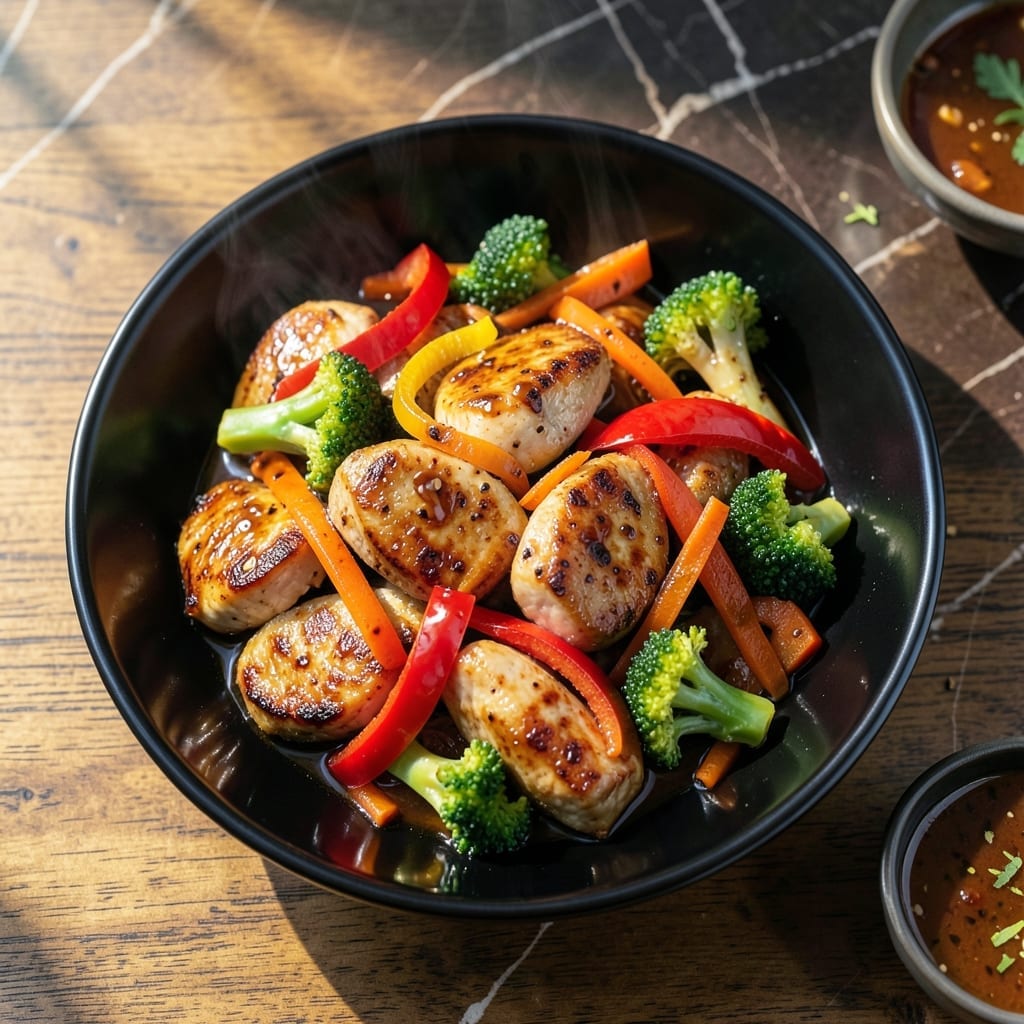
This stir fry delivers bold, savory depth with every bite, thanks to the rich umami of oyster sauce as its foundation. The sauce transforms simple ingredients into a restaurant-quality dish with minimal effort.
I developed this method after years of takeout disappointment, focusing on perfect timing and heat control. The key is cooking proteins first, then vegetables, ensuring each maintains its ideal texture and absorbs the sauce evenly.
What emerges is a dish with glossy, caramelized edges and a balance of crisp-tender vegetables and perfectly cooked protein. The oyster sauce creates a savory glaze that clings to every piece.
Ready in under 30 minutes, this becomes a weeknight staple that tastes anything but ordinary. Here’s how to make it right.
Ingredients for Stir Fry Recipe with Oyster Sauce
Transform simple proteins and vegetables into restaurant-quality results with these ingredients.
| Ingredient | Amount | Notes |
|---|---|---|
| Boneless Chicken Thighs 🍗 | 1 ½ lb | Cut into bite-sized pieces |
| Oyster Sauce 🍶 | ½ cup | High-quality for best umami |
| Soy Sauce 🥢 | 3 tbsp | Low-sodium preferred |
| Bell Peppers 🌶️ | 2 whole | Assorted colors, sliced |
| Broccoli Florets 🥦 | 3 cups | Fresh or frozen |
| Carrots 🥕 | 2 whole | Julienned or thinly sliced |
| Garlic Cloves 🧄 | 4 cloves | Minced finely |
| Fresh Ginger 🌿 | 1 tbsp | Peeled and grated |
| Red Onion 🧅 | 1 whole | Thinly sliced |
| Sesame Oil 🫒 | 2 tsp | Toasted for depth |
| Cornstarch 🌾 | 1 tbsp | For sauce thickening |
| Vegetable Oil 💧 | 3 tbsp | High smoke point for stir-frying |
| Green Onions 🧅 | ½ cup | Sliced for garnish |
| Sesame Seeds 🌾 | 1 tbsp | Toasted for garnish |
Oyster sauce is non-negotiable for authentic flavor. Lee Kum Kee or Kikkoman are reliable brands—avoid anything with added preservatives or artificial flavors. For the chicken, thighs stay juicier than breasts during high-heat cooking. Look for uniform pieces to ensure even cooking. Most Asian markets carry fresh ginger and garlic at better prices than standard grocery stores.
No oyster sauce? Vegan oyster sauce or a mix of soy sauce plus a dash of fish sauce can work in a pinch. Swap chicken for tofu or shrimp—just adjust cooking times. The vegetables can be customized: snap peas, mushrooms, or zucchini all work well. If using frozen broccoli, thaw and drain thoroughly to avoid a watery stir-fry.
Store oyster sauce in a cool, dark place—it keeps for 1-2 years unopened. Fresh ginger and garlic last 3 weeks in the fridge. Prep all ingredients before heating the wok (mise en place), as stir-frying moves quickly. Leftovers keep 3-4 days refrigerated.
Why You’ll Love This Recipe
- One Pan Wonder: I toss everything in a single skillet—chicken, peppers, broccoli—and it’s done before the rice finishes cooking.
- Umami Bomb: The oyster sauce mixed with soy creates this deep, savory-sweet glaze that coats every bite. Honestly, I could drink it straight from the pan.
- Feeds a Crowd: I double the batch on Sundays and pack it for lunches all week. My picky nephew even eats it cold.
- Budget Winner: Boneless thighs and frozen broccoli keep costs low, and it still tastes like takeout. I’ll be real: it’s cheaper than my old Friday night habit.
Step-by-Step Instructions for Stir Fry With Oyster Sauce
Master the wok technique and achieve restaurant-quality results with precise timing and heat control.
Step 1: Velvet the Chicken for Maximum Tenderness
Cut the 1.5 lb boneless chicken thighs into bite-sized pieces and place them in a bowl. Add the 3 tbsp soy sauce, 2 tsp sesame oil, and 1 tbsp cornstarch. Mix thoroughly to coat each piece evenly—this marinade tenderizes the meat and creates a silky texture.
The cornstarch forms a thin coating that protects the chicken from the intense heat of the wok, preventing it from drying out. Let it marinate for 10-15 minutes while you prepare the remaining ingredients. This step ensures each piece stays juicy and absorbs the sauce beautifully.
Step 2: Stir-Fry Aromatics and Vegetables in Batches
Heat 2 tbsp vegetable oil in a wok or large skillet over high heat until it shimmers. Add the 4 cloves minced garlic cloves and 1 tbsp grated fresh ginger, stirring for 30 seconds until fragrant but not browned. Immediately add the 1 whole thinly sliced red onion, 2 whole sliced bell peppers, 2 whole julienned carrots, and 3 cups broccoli florets.
Stir-fry for 4-5 minutes until the vegetables are crisp-tender but still vibrant in color. I cook them in a single layer initially to ensure even browning, then toss frequently. The vegetables should retain a slight bite—overcooking will make them mushy and dull the dish’s texture. Remove the vegetables and set aside.
Step 3: Cook the Chicken to Golden Perfection
Add the remaining 1 tbsp vegetable oil to the wok and increase the heat to maximum. Working in batches if necessary to avoid crowding, add the marinated chicken in a single layer. Let it sear undisturbed for 1-2 minutes until the edges turn golden brown and crisp.
Flip and cook for another 1-2 minutes until the chicken is cooked through and no longer pink inside. The cornstarch coating will create a light, crispy exterior while keeping the interior moist. Remove the chicken and combine it with the cooked vegetables.
Step 4: Create the Umami-Rich Sauce and Finish
Return the wok to medium-high heat and add the 0.5 cup oyster sauce. Stir for 1 minute until it begins to bubble and thicken slightly. The sauce should coat the back of a spoon with a glossy sheen, indicating it has reduced enough to cling to the ingredients.
Add the chicken and vegetables back to the wok and toss everything together for 2-3 minutes until evenly coated and heated through. The sauce will transform into a rich, glistening layer that enhances every component without making the dish soggy. Taste and adjust seasoning if needed, though the oyster sauce typically provides sufficient depth.
Transfer to a serving platter and garnish with the 0.5 cup sliced green onions and 1 tbsp toasted sesame seeds. The green onions add a fresh, sharp contrast, while the sesame seeds provide a nutty crunch. Serve immediately while hot.
Pro Tips For Making Stir Fry Recipe With Oyster Sauce
- Velvet the Chicken: Cut the chicken into 1-inch pieces, then toss with 1 tsp cornstarch and 1 tbsp soy sauce before cooking. I learned this the hard way—it keeps the chicken juicy and prevents that chewy, overcooked texture in stir fries.
- Blanch the Broccoli: Parboil the broccoli florets for 1-2 minutes in salted water before stir frying. Sounds weird, but it works: they stay crisp-tender instead of turning mushy in the wok.
- Skip the Crowding: Cook the chicken in batches if needed—overloading the pan steams the meat instead of searing it. After burning three batches, I finally figured out that patience here actually changes the outcome.
- Sauce Last: Add the oyster and soy sauce only in the final 1-2 minutes of cooking. My grandmother swore by this, and she was right: it prevents the sauce from reducing too much and keeps the flavors bright.
Common Mistakes When Making stir fry recipe with oyster sauce
Overcrowding the Wok
This is the most common mistake I see—adding too many ingredients at once causes steaming instead of stir-frying. Cook in small batches with 1-2 cups of ingredients per batch. The wok needs space for proper heat circulation and browning.
Low Heat Cooking
Stir-fry demands high heat—your wok should be smoking hot before adding oil. I set my burner to maximum and let it preheat for 2-3 minutes. Low heat results in soggy vegetables and pale chicken that lacks the characteristic sear. 🔥
Skipping the Velveting Step
The cornstarch marinade isn’t optional—it creates that silky texture and protects the protein. Without it, chicken releases juices, boils in its own liquid, and turns rubbery. Always marinate for at least 10 minutes before cooking.
Overcooking Vegetables
They should retain crisp-tender texture—cook for 4-5 minutes max. I pull them out when still vibrant in color. Remember, they’ll continue cooking slightly when returned to the wok with the sauce and protein.
Neglecting the Sauce
Oyster sauce needs 30-60 seconds to thicken and develop depth. Don’t just dump it in at the end. I stir it in the hot wok first, letting it bubble and reduce slightly before combining with other ingredients.
Using Wrong Oil
Choose high smoke point oils like vegetable or peanut oil. Sesame oil burns at stir-fry temperatures. I use 3 tbsp vegetable oil for this recipe, adding 2 tsp toasted sesame oil only at the end for flavor. 💡
Nutrition Facts
Frequently Asked Questions
Can I use a regular pan instead of a wok?
Yes, a large skillet with high sides works fine. Just ensure it’s over high heat and don’t overcrowd it. A wok’s shape helps, but a pan can still deliver great results.
What protein can I swap for chicken?
Try shrimp, tofu, or beef strips. Shrimp cooks in 2-3 minutes, while beef needs 3-4 minutes for medium-rare. Adjust times to avoid overcooking.
How do I store leftovers?
Keep in an airtight container in the fridge for up to 3-4 days. Reheat in a skillet over medium heat to restore texture. Avoid microwaving for best results.
Can I make the sauce ahead of time?
Mix oyster sauce, soy sauce, and cornstarch, then refrigerate for up to 2 days. Stir well before using, as it may thicken slightly.

- BBQ Bison Recipe Steaks: Smoky Grill Mastery with Bold Flavor - September 28, 2026
- Chicken Breast Recipe Tender: Brine-Soaked Juiciness Without Overcooking - September 28, 2026
- Baked Chicken Recipe for Acid Reflux: Gentle Flavors for Sensitive Stomachs - September 28, 2026