
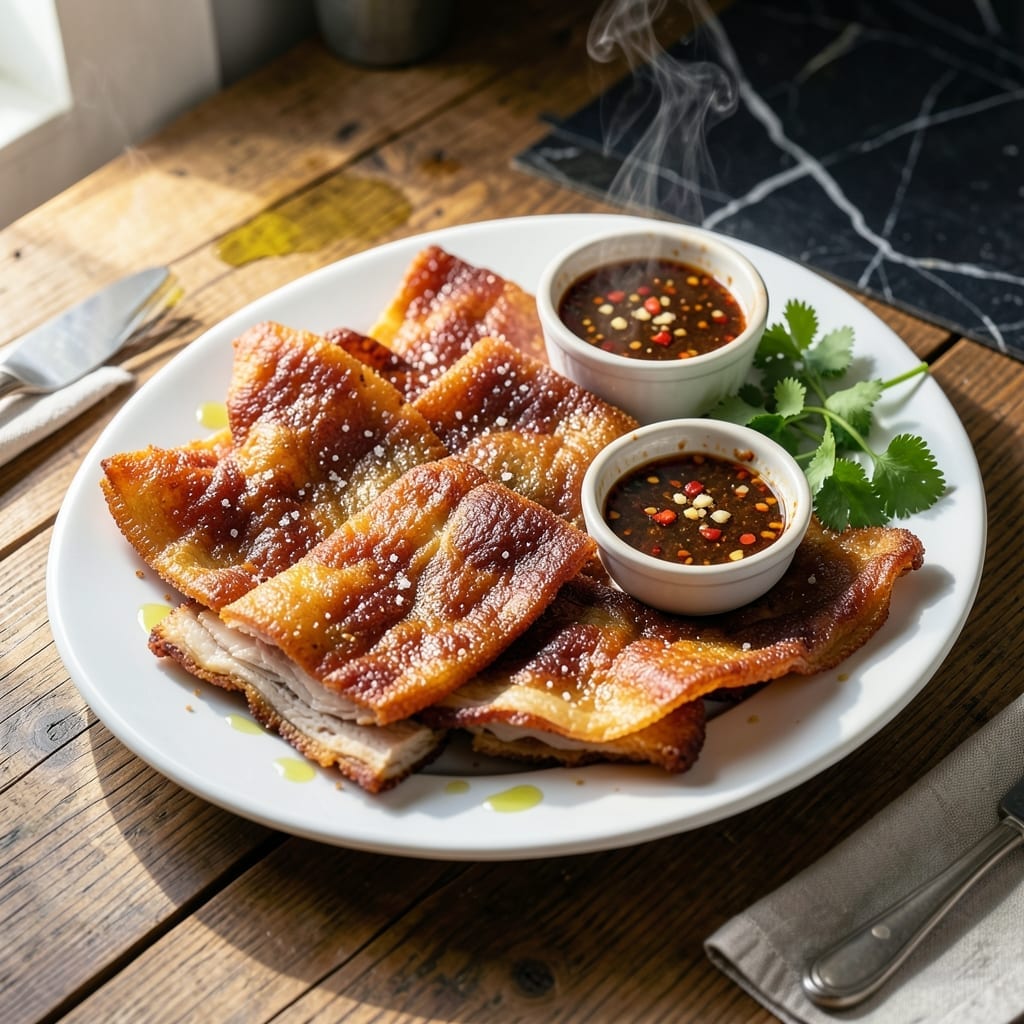
Mastering pork chicharon requires patience and precision, but the reward is crispy, golden cracklings that shatter with every bite. This Filipino classic transforms simple pork skin into an irresistible snack through careful boiling and frying.
I learned the traditional technique during my time in Charleston, where properly rendering fat is as important as the final fry. The key is drying the skin thoroughly before frying to ensure maximum puff and crunch without any chewy bits.
The process creates layers of texture—airy, bubbly centers with glass-like exteriors. Each piece delivers pure pork flavor with a satisfying snap that keeps you reaching for more.
Serve as a bar snack, pulutan, or alongside vinegar for dipping. This method guarantees perfect results every time.
Ingredients for Pork Chicharon Recipe Panlasang Pinoy
Transform pork belly skin into golden, shatteringly crisp chicharon with these essential ingredients for authentic Filipino flavor.
| Ingredient | Amount | Notes |
|---|---|---|
| Pork Belly Skin 🐖 | 2 lb | Fresh, untrimmed, with fat attached |
| Water 💧 | 8 cups | For initial boiling process |
| Salt 🧂 | 2 tbsp | Kosher or sea salt preferred |
| White Vinegar 🫒 | ½ cup | For acidity and cleaning skin |
| Baking Soda 🧴 | 1 tsp | Optional, for extra crispness |
| Vegetable Oil 🛢️ | 4 cups | For deep frying, neutral high-smoke point |
| Garlic Cloves 🧄 | 6 cloves | Smashed for infusing oil |
| Bay Leaves 🌿 | 3 pieces | For boiling aromatic |
| Black Peppercorns 🌶️ | 1 tsp | Whole for boiling |
| Cane Vinegar 🍶 | ½ cup | For serving (Filipino-style dipping) |
| Crushed Red Pepper 🌶️ | ½ tsp | For vinegar dipping sauce |
| Minced Garlic 🧄 | 1 tbsp | For vinegar dipping sauce |
The pork belly skin is non-negotiable—source from a trusted butcher or Asian market where they understand the importance of freshness and proper fat-to-skin ratio. Look for pieces with even fat distribution; avoid pre-trimmed skin as it lacks the fat needed for proper rendering. Costco sometimes carries suitable pork belly, but call ahead to confirm. The vinegar for boiling should be plain white, while cane vinegar for dipping is traditional.
No pork belly? This recipe won’t work with substitutes—the fat content is crucial. For the vinegar dip, apple cider vinegar can replace cane vinegar at one-to-one ratio, though the flavor profile differs slightly. Skip the baking soda if unavailable; it merely enhances crispness. The frying oil must have a high smoke point—peanut or sunflower oil are excellent alternatives to vegetable oil.
Store raw pork belly in the fridge for up to 2 days or freeze for 3 months. Once fried, chicharon stays crisp in an airtight container at room temperature for 1 week—though it’s rarely around that long. Re-crisp in a hot oven if it softens (don’t microwave).
Why You’ll Love This Recipe
- Five Ingredients Only: I love that I just need pork belly skin, water, salt, vinegar, and baking soda—no fancy shopping.
- Crispy Satisfaction: That first crunch of the chicharon fresh from the oil, with its salty-sour kick from the vinegar, is pure bliss.
- Pulutan Ready: Honestly, it’s my go-to for game nights or casual get-togethers with friends over beers.
- Budget Stretcher: A kilo of pork skin costs peanuts and turns into a mountain of chicharon that keeps well for days.
Step-by-Step Instructions for Pork Chicharon
Master the technique behind perfectly crispy pork cracklings with this proven method.
Step 1: Boil and Clean the Pork Belly Skin
In a large stockpot, combine the 8 cups Water, 2 tbsp Salt, 3 pieces Bay Leaves, 1 tsp Black Peppercorns, and 0.5 cup White Vinegar. This aromatic broth will both clean and flavor the skin.
Add the 2 lb Pork Belly Skin and bring to a boil. Reduce heat to medium-low and simmer for 45-60 minutes until the skin becomes tender but still retains some bite. This step removes impurities and softens the skin for optimal crisping later.
Remove the pork belly skin from the pot and rinse under cold water. Pat completely dry with paper towels—any moisture will cause dangerous oil splatter during frying.
Step 2: Dry and Prepare for Frying
Lay the boiled pork belly skin on a wire rack set over a baking sheet. Sprinkle evenly with the 1 tsp Baking Soda, which raises the pH for extra crispiness. Refrigerate uncovered for at least 2 hours, or preferably overnight.
This drying process is crucial—the skin must be completely dry to achieve that coveted crackling texture. The exposed surface in the fridge allows moisture to evaporate while the baking soda begins working its magic on the skin’s structure.
For even better results, place the skin in front of a fan for the last 30 minutes to ensure all surfaces are bone-dry before frying.
Step 3: Deep Fry to Golden Perfection
Heat the 4 cups Vegetable Oil in a deep, heavy-bottomed pot to 325°F. Add the 6 cloves Garlic Cloves to infuse the oil with aroma—this adds subtle flavor to the final product.
Working in batches to avoid overcrowding, carefully lower the dried pork belly skin into the hot oil. Fry for 10-15 minutes initially at 325°F, then increase heat to 375°F for the final 5-8 minutes until the skin turns deep golden brown and puffs up dramatically.
The skin will transform from soft to rigid and translucent as it cooks. You’ll know it’s done when it’s completely crispy throughout and makes a hollow sound when tapped with tongs. Remove with a slotted spoon and drain on paper towels.
Step 4: Prepare the Vinegar Dipping Sauce
While the chicharon cools, combine the 0.5 cup Cane Vinegar, 1 tbsp Minced Garlic, and 0.5 tsp Crushed Red Pepper in a small bowl. Stir well to distribute the flavors evenly.
Let the sauce sit for at least 10 minutes to allow the garlic and chili to infuse the vinegar. The resulting dip should have a sharp tang balanced with garlicky heat—perfect for cutting through the richness of the crispy pork.
Taste and adjust the spice level if needed, but remember this is meant to be a bold, vinegary contrast to the rich chicharon.
Pro Tips For Making Pork Chicharon Recipe Panlasang Pinoy
- Boil with Vinegar First: Add 1/4 cup white vinegar to the boiling water when parboiling the pork skin—it softens the collagen and helps remove impurities. I learned this the hard way after my first batch came out tough and gamey.
- Dry Thoroughly: After boiling, let the skin air-dry completely on a rack for at least 2 hours. Sounds tedious, but it guarantees that crispy crackle when frying.
- Skip the Overcrowding: Fry in small batches—pork skin needs space to puff and crisp. I used to cram the pan, and all I got was soggy, flat chicharon.
- Baking Soda Soak: Rub a pinch of baking soda into the skin after drying and before frying. My grandmother swore by this, and it actually makes the chicharon lighter and crunchier.
Essential Equipment for Perfect Results
Deep Frying Setup
For home cooks, I recommend a 5.5-quart Dutch oven like my trusted Lodge Enameled Cast Iron—it distributes heat evenly and prevents hot spots. The deep sides contain oil splatter while providing enough volume for safe frying. 🔥
Temperature Control
A candy/deep fry thermometer is non-negotiable. I use the Taylor Precision 594 for its 300-400°F range and quick response. Clip it to the pot side for accurate readings without touching the bottom.
Drying Equipment
Invest in a wire cooling rack and half-sheet pan for the drying phase. The rack elevates the skin, allowing air circulation on all sides. I prefer Nordic Ware for its sturdy construction and perfect fit in my fridge.
Oil Management
Use a fine-mesh skimmer or slotted spoon to remove chicharon from oil. A paper towel-lined tray catches excess oil. Never reuse frying oil—it degrades and imparts off-flavors to future batches.
Safety Gear
Hot oil demands respect. Keep a fire extinguisher rated for grease fires nearby, never move a pot of hot oil, and use long tongs for handling. I learned this the hard way during my early Charleston days. 💡
Vinegar Dip Tools
A small glass mixing bowl and whisk are perfect for combining your dipping sauce. The glass won’t absorb odors, and the whisk ensures even distribution of garlic and chili through the vinegar.
Nutrition Facts
Frequently Asked Questions
Can I use pork rind instead of pork belly skin?
No, pork rind lacks the essential fat layer needed to render properly. The fat attached to pork belly skin is what creates that signature puff and crunch. Stick with fresh, untrimmed pork belly skin for authentic results.
Why does my chicharon turn out chewy?
Chewy chicharon usually means insufficient drying time. Ensure the skin is completely dry before frying, and fry at 325°F first, then increase to 375°F for the final crisp. Patience is key for that perfect snap.
How do I store leftover chicharon?
Keep in an airtight container at room temperature for up to 1 week. If it loses crispness, re-crisp in a 350°F oven for 5-10 minutes. Never use the microwave, as it will make them soggy.

- Potato Chip Cookie Recipe With Pecans: Buttery Crunch Meets Nutty Richness - October 30, 2026
- Potato Patty Recipe No Egg: Crispy Edges Without the Binder - October 30, 2026
- Paula Deen’s Potato Chip Cookies Recipe: Salty-Sweet Crunch in Every Bite - October 30, 2026