
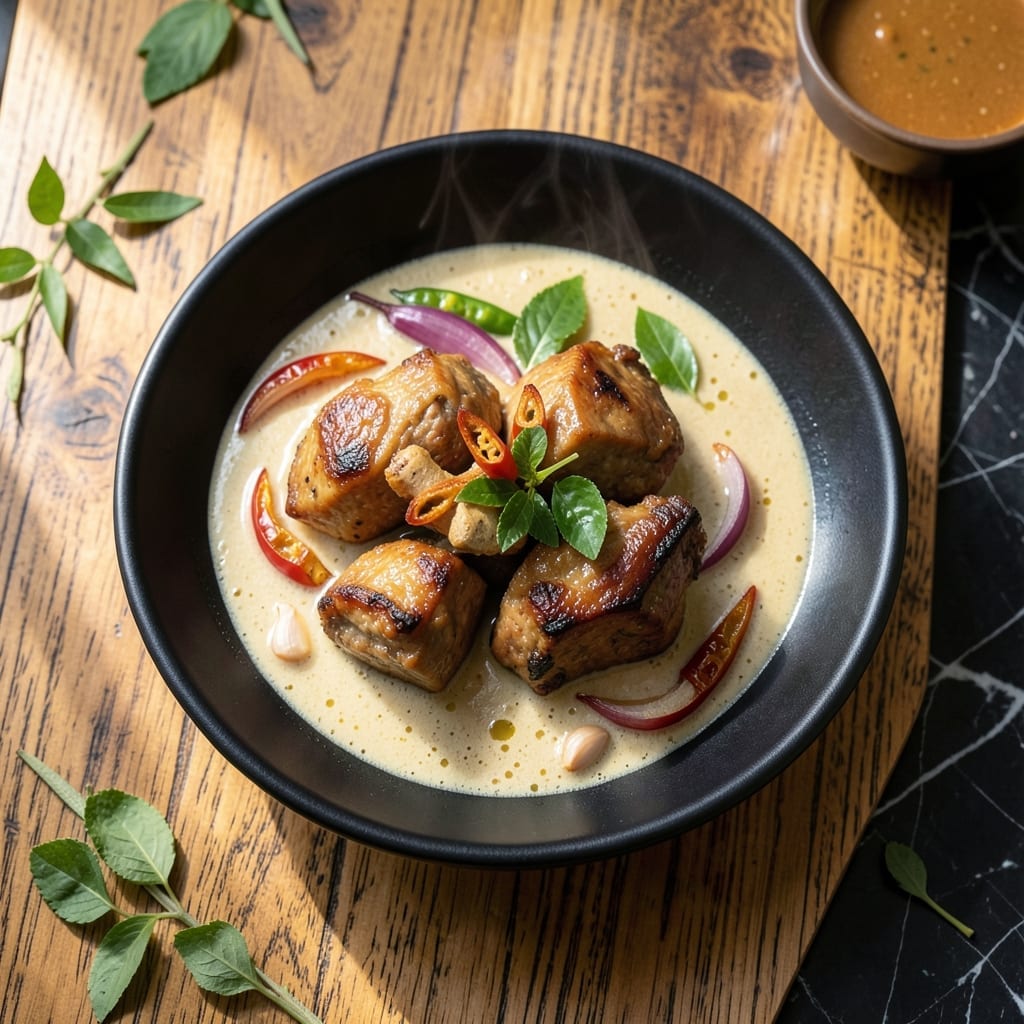
This Kerala-style pork curry brings the bold flavors of South India to your kitchen with a perfect balance of heat and coconut richness. The dish transforms simple ingredients through traditional spice blending and slow cooking techniques.
I developed this recipe after studying authentic methods from Kerala cooks, focusing on the proper layering of spices and coconut milk. The result is tender pork in a deeply aromatic sauce that’s both complex and comforting.
You’ll achieve restaurant-quality results with this foolproof method that respects traditional preparation while adapting to home kitchens. The slow simmer allows flavors to meld beautifully.
Serve with steamed rice or appam to soak up every bit of the rich, spiced sauce. Here’s how to make this authentic dish at home.
Ingredients for Pork Curry Recipe Kerala Style
Authentic Kerala flavors start with these carefully selected traditional ingredients and aromatic spices.
| Ingredient | Amount | Notes |
|---|---|---|
| Pork Shoulder 🥩 | 2 lb | Boneless, cut into cubes |
| Coconut Milk 🥥 | 2 cups | Full-fat canned variety |
| Onion 🧅 | 2 whole | Medium, thinly sliced |
| Garlic Cloves 🧄 | 6 cloves | Minced for depth of flavor |
| Fresh Ginger 🌿 | 1 tbsp | Grated or minced |
| Green Chilies 🌶️ | 3 whole | Slit lengthwise, seeds removed |
| Curry Leaves 🍃 | 10 whole | Fresh for authentic aroma |
| Tomatoes 🍅 | 2 whole | Medium, chopped |
| Turmeric Powder 🌶️ | 1 tsp | Ground, for color |
| Red Chili Powder 🌶️ | 2 tsp | Adjust to heat preference |
| Coriander Powder 🌿 | 2 tsp | Ground, for earthiness |
| Garam Masala 🌶️ | 1 tsp | Freshly ground if possible |
| Coconut Oil 🥥 | 2 tbsp | For sautéing and depth |
| Salt 🧂 | 1 ½ tsp | Adjust to taste |
| Black Pepper 🌶️ | ½ tsp | Freshly ground |
The pork is the foundation here. Pork shoulder is ideal for its marbling and tender texture after slow cooking. Look for well-marbled cuts at your local butcher or specialty market—Whole Foods and Asian grocers often carry excellent options. For coconut milk, full-fat canned versions like Thai Kitchen or Native Forest deliver the richness this dish demands. Fresh curry leaves are non-negotiable for authenticity; find them at Indian or Sri Lankan markets.
No fresh curry leaves? Dried curry leaf powder at half the amount works in a pinch, though the flavor won’t be as vibrant. Out of green chilies? Jalapeños or serranos can substitute, but reduce quantity as they’re hotter. Coconut oil can be swapped for any neutral oil, but it won’t have the same depth. For the pork, chicken thighs can work, though the texture and flavor will differ. Always toast whole spices lightly before grinding for maximum aroma.
Store pork in the fridge for up to 2 days before cooking or freeze for 3 months. Coconut milk and curry leaves (if fresh) should be used within 3 days. The finished curry keeps well in the fridge for 4-5 days and freezes beautifully for 3 months. Reheat gently to preserve the layers of flavor.
Why You’ll Love This Recipe
- One Pot Simplicity: I love that this comes together in a single pot—just sear the pork shoulder, toss in the onion, garlic, and ginger, then let the coconut milk work its magic.
- Ridiculously Rich Taste: The slow-cooked pork soaks up the coconut milk and spices until every bite is tender and layered with bold, warm flavor. Honestly, it’s the ginger that really makes it sing.
- Feeds the Crowd: This curry stretches beautifully for family dinners or meal prep, and the flavors only deepen the next day.
- Budget-Friendly Comfort: Pork shoulder is affordable, and with just a handful of staples like coconut milk and garlic, I get a hearty, satisfying dish that feels like a treat without the cost.
Step-by-Step Instructions for Kerala Style Pork Curry
Master the technique for building deep, complex flavors in this traditional South Indian dish.
Step 1: Bloom Spices in Coconut Oil
Heat the 2 tbsp Coconut Oil in a heavy-bottomed pot over medium heat. When the oil shimmers, add the 10 whole Curry Leaves and let them sizzle for 10-15 seconds until fragrant. This releases their citrusy aroma that defines the dish.
Immediately add the 2 whole Onion, thinly sliced, and sauté for 5-6 minutes until they turn golden brown. Stir occasionally to prevent burning. The onions should be soft and caramelizing at the edges—this builds the flavor foundation.
Step 2: Build the Spice Base
Add the 1 tbsp Fresh Ginger, 6 cloves Garlic Cloves, and 3 whole Green Chilies to the pot. Sauté for 1-2 minutes until the raw garlic smell mellows. The ginger and garlic should be fragrant but not browned.
Stir in the 1 tsp Turmeric Powder, 2 tsp Red Chili Powder, and 2 tsp Coriander Powder. Cook for 30 seconds, stirring constantly, to toast the spices. This step deepens their flavors and prevents a raw taste. Add the 2 whole Tomatoes and cook for 3-4 minutes until they soften and break down.
Step 3: Brown the Pork
Increase heat to medium-high and add the 2 lb Pork Shoulder, cut into cubes. Sear the pork for 5-6 minutes, turning occasionally, until it browns on all sides. You want a light crust on each piece—this adds texture and locks in juices.
The pork will release some liquid as it cooks. Let it evaporate before moving to the next step. Season with the 1.5 tsp Salt and 0.5 tsp Black Pepper, stirring to coat the meat evenly.
Step 4: Simmer in Coconut Milk
Pour in the 2 cups Coconut Milk and stir to combine with the spice mixture. Bring to a gentle simmer, then reduce heat to low. Cover the pot and let it cook for 40-45 minutes, stirring occasionally.
The curry is ready when the pork is fork-tender and the sauce has thickened slightly. If the sauce reduces too much, add a splash of water. The oil should start to separate slightly at the edges when done.
Step 5: Finish with Garam Masala
Stir in the 1 tsp Garam Masala and simmer uncovered for 5 minutes to allow the flavors to meld. Taste and adjust the salt if needed. The curry should have a rich, balanced heat with a creamy, aromatic sauce.
Remove from heat and let it rest for 10 minutes before serving. This allows the flavors to deepen further. Garnish with fresh curry leaves if desired and serve hot with steamed rice or appam.
Pro Tips For Making Pork Curry Recipe Kerala Style
- Brown the Pork: Cook the pork shoulder in batches on medium-high heat until deeply browned. I learned this the hard way—skipping this step leaves the curry tasting flat, even with all the spices.
- Grind Spices Fresh: Toast and grind whole spices like coriander, cumin, and black pepper just before adding. Pre-ground spices lose their punch fast, especially in a long-cooked dish like this.
- Skip the Rush: Let the curry simmer on low for at least 1.5 hours. After burning a batch by cranking the heat, I finally figured out that slow cooking melts the pork and blends the flavors properly.
- Use Full-Fat Coconut Milk: Sounds weird, but it works: the fat in full-fat coconut milk balances the heat and adds richness. The light version just doesn’t hold up to the bold Kerala spices.
Make-Ahead Tips for This Recipe
Overnight Flavor Boost
I always prep the spice paste the night before. Combine turmeric, red chili powder, coriander powder, and garlic-ginger with 2 tbsp water to form a thick paste. This resting time deepens the flavor complexity significantly. 💡
Pork Prep Ahead
Trim and cube the 2 lb Pork Shoulder up to 24 hours in advance. Store in an airtight container in the fridge. For extra tenderness, marinate the pork with 1 tsp salt, ½ tsp turmeric, and 1 tbsp coconut milk overnight.
Onion-Coconut Base
Sauté and caramelize the 2 Onions in coconut oil the day before. Store in the fridge in a sealed container. Reheat gently before adding spices to maintain their sweet, deep flavor base.
Curry Leaf Prep
Fresh curry leaves can be washed, dried, and stored in a damp paper towel in the fridge for 3-4 days. If using dried, rehydrate in warm water for 10 minutes before cooking to restore their aroma.
Freeze for Later
This curry freezes beautifully for up to 3 months. Cool completely, then portion into freezer-safe containers. Thaw overnight in the fridge before reheating gently on the stove with a splash of water. ❄️
Reheating Tips
Warm leftovers on low heat to prevent coconut milk separation. Add ¼ cup water if needed to restore the sauce consistency. Stir occasionally for even heating and best flavor distribution.
Nutrition Facts
Frequently Asked Questions
Can I use chicken instead of pork?
Yes, substitute 2 lb boneless chicken thighs for pork. Reduce cooking time to 25-30 minutes since chicken cooks faster. The flavor will be milder but still delicious.
How spicy is this curry?
With 2 tsp red chili powder and 3 green chilies, it has medium heat. For milder flavor, reduce chili powder to 1 tsp and remove chili seeds. Adjust to taste.
What if I don’t have curry leaves?
Use 1 tsp dried curry leaf powder or 1 bay leaf plus 1 tsp lime zest for similar citrus notes. Fresh leaves are ideal, but these work in a pinch.
How long does it keep in the fridge?
Store in an airtight container for up to 4-5 days. Reheat gently on the stove with a splash of water to maintain consistency.

- Potato Chip Cookie Recipe With Pecans: Buttery Crunch Meets Nutty Richness - October 30, 2026
- Potato Patty Recipe No Egg: Crispy Edges Without the Binder - October 30, 2026
- Paula Deen’s Potato Chip Cookies Recipe: Salty-Sweet Crunch in Every Bite - October 30, 2026