
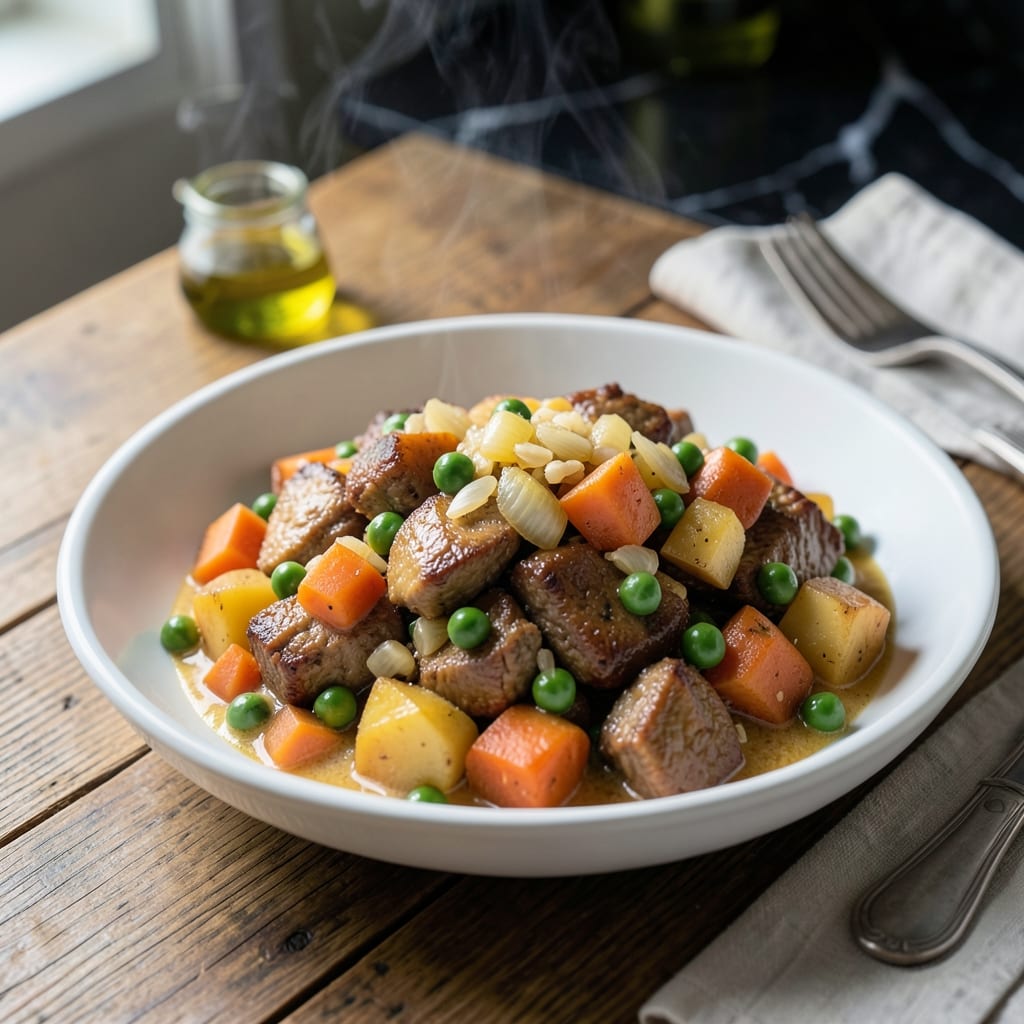
This Filipino-style ground pork dish brings comfort food to a new level with its savory, slightly sweet profile. I developed this version after testing multiple techniques to balance the flavors just right.
The combination of ground pork with potatoes, carrots, and peas creates a hearty one-pan meal. Traditional soy sauce and tomato sauce form the base, while a touch of sugar rounds out the taste.
What results is a tender, flavorful dish that’s perfect over steamed rice. The vegetables soak up the rich sauce, making every bite satisfying.
Simple ingredients come together in under 30 minutes for a meal that tastes like it simmered all day. Here’s how to make it.
Ingredients for Pork Giniling Recipe with Vegetables
Ground pork and fresh vegetables simmered in a rich, savory-sweet sauce over rice.
| Ingredient | Amount | Notes |
|---|---|---|
| Ground Pork 🐷 | 1 ½ lb | 80/20 fat ratio preferred |
| Russet Potatoes 🥔 | 2 whole | Peeled and diced small |
| Carrots 🥕 | 2 whole | Peeled and diced small |
| Green Peas 🌱 | 1 cup | Fresh or frozen (thawed) |
| Yellow Onion 🧅 | 1 whole | Finely diced for base |
| Garlic Cloves 🧄 | 4 cloves | Minced for maximum flavor |
| Soy Sauce 🫒 | ¼ cup | Low-sodium if preferred |
| Tomato Sauce 🍅 | 1 cup | Plain, unsweetened variety |
| Granulated Sugar 💧 | 1 tbsp | Balances the savory notes |
| Bay Leaves 🌿 | 2 pieces | Dried, for aroma |
| Ground Black Pepper 🌶️ | ½ tsp | Freshly ground preferred |
| Salt 🧂 | 1 tsp | Adjust to taste |
| Vegetable Oil 🫒 | 2 tbsp | For sautéing pork |
For the pork, 80/20 fat ratio ensures the dish stays moist and flavorful. Local butchers often have the best quality, but standard grocery store ground pork works well too. The potatoes should be Russet—they hold their shape during cooking. If you’re short on time, pre-diced mirepoix from the produce section can save a few minutes (worth the extra dollar).
No ground pork? Ground chicken or turkey work in a pinch (though the flavor changes). For a vegetarian version, crumbled firm tofu soaks up the sauce nicely. Swap frozen peas for canned if needed—just drain well. Out of tomato sauce? Tomato paste thinned with water gets you close. The bay leaves add depth, but dried thyme can substitute if that’s what you’ve got.
This tastes even better the next day—flavors meld overnight. Keeps in the fridge for 3-4 days or freezes for 2 months. Reheat gently on the stove with a splash of water to loosen the sauce.
Why You’ll Love This Recipe
- One Pan Wonder: I love that I can sauté the pork, potatoes, and veggies all in one pan—minimal cleanup, maximum flavor.
- Comfort in a Bite: The sweet carrots and peas balance the savory ground pork so well, it’s like a warm hug in every spoonful.
- Feeds a Crowd: Between us, this dish stretches easily for unexpected guests or meal prep—leftovers taste even better the next day.
- Budget Friendly: Honestly, ground pork and seasonal veggies keep costs low without sacrificing taste.
Step-by-Step Instructions for Filipino-Style Ground Pork and Veggies
This method delivers perfectly balanced flavors and textures with every bite.
Step 1: Sauté Aromatics and Brown the Ground Pork
Heat the 2 tbsp vegetable oil in a large skillet over medium heat. Add the finely diced yellow onion and cook for 2-3 minutes until it becomes translucent and fragrant. The onion should soften but not brown.
Add the minced garlic cloves and cook for 30 seconds, stirring constantly to prevent burning. Pour in the 1.5 lb ground pork, breaking it into small pieces with a wooden spoon. Cook for 6-8 minutes until the pork is no longer pink and begins to brown lightly.
Step 2: Incorporate Vegetables and Seasonings
Stir in the 2 whole peeled and diced russet potatoes and 2 whole peeled and diced carrots. Cook for 5 minutes, allowing the vegetables to soften slightly while absorbing the pork’s savory flavors.
Add the 1 cup green peas, 0.25 cup soy sauce, 1 cup tomato sauce, 1 tbsp granulated sugar, 2 pieces bay leaves, 1 tsp salt, and 0.5 tsp ground black pepper. Stir thoroughly to combine all ingredients evenly.
Step 3: Simmer Until Vegetables Are Tender
Reduce heat to low and cover the skillet. Let the mixture simmer for 15-20 minutes, stirring every 5 minutes to prevent sticking and ensure even cooking.
Check that the potatoes and carrots are fork-tender and the sauce has thickened slightly. The bay leaves will have infused the dish with their subtle aroma, and the sauce should coat the back of a spoon. If the mixture appears too dry, add a small amount of water and let it cook longer.
Step 4: Adjust Seasoning and Finish
Remove the bay leaves from the skillet. Taste and adjust seasoning if needed—you might want to add a bit more salt or ground black pepper to suit your preference.
Turn off the heat and let the dish rest for 5 minutes before serving. This allows the flavors to meld together beautifully. The final result should be a rich, savory dish with tender vegetables and perfectly cooked ground pork in every spoonful.
Pro Tips For Making Pork Giniling Recipe With Vegetables
- Brown the Pork First: Cook the ground pork until deeply browned and crispy at the edges before adding vegetables—this builds flavor that carries through the whole dish.
- Dice Uniformly: Cut the potatoes, carrots, and onion into small, even pieces (about 1/4-inch) so everything cooks at the same rate and no one gets a crunchy bite.
- Skip the Watery Peas: If using frozen green peas, thaw and drain them well first—I learned this the hard way after ending up with a soupy giniling.
- Use Starchy Potatoes: Russets break down just enough to thicken the sauce naturally, so don’t swap for waxy potatoes unless you want a thinner, less cohesive dish.
Flavor Customization for This Recipe
Spicy Kick
For heat lovers, add 1-2 chopped siling labuyo (Filipino bird’s eye chili) when sautéing the garlic. If those aren’t available, ½ tsp red pepper flakes or 1 diced jalapeño work well. I learned this trick from my Nonna—just a little heat wakes up all the flavors. 🌶️
Sweeter Profile
Increase the sugar to 2 tbsp for a more pronounced sweet-savory balance. Some Filipino cooks also add 1 tbsp banana ketchup for a unique twist. This version reminds me of the sweeter dishes we enjoyed at family gatherings in Boston.
Extra Umami
Boost depth with 1 tbsp oyster sauce or 1 tsp fish sauce mixed into the sauce. These additions enhance the savory notes without overpowering. I always keep Lee Kum Kee oyster sauce in my pantry for this exact purpose.
Vegetable Swaps
Swap potatoes for sweet potatoes—they add natural sweetness. For color, use bell peppers (red, green, or yellow) instead of carrots. Frozen mixed vegetables work in a pinch, though fresh always tastes better to me.
Creamy Addition
Stir in ½ cup evaporated milk or coconut milk during the last 5 minutes for a richer, creamier sauce. This variation, called Giniling na Baboy with Gata, is popular in some regions. It adds a lovely velvety texture.
Herb Freshness
Finish with 2 tbsp chopped cilantro or green onions just before serving. The fresh herbs brighten up the dish and add a pop of color. I always have a small pot of cilantro growing on my windowsill for moments like this. 💛
Nutrition Facts
Frequently Asked Questions
Can I use ground chicken instead of pork?
Yes, ground chicken works as a leaner alternative. Brown it first to develop flavor since it’s milder than pork. Add an extra 1 tbsp soy sauce for depth.
What if my sauce is too thin?
Simmer uncovered for 5-10 minutes to reduce. For faster results, mix 1 tsp cornstarch with water and stir in during the last 5 minutes.
How do I store leftovers?
Cool completely, then refrigerate in an airtight container for 3-4 days. Freeze for up to 2 months with minimal quality loss.

- Potato Chip Cookie Recipe With Pecans: Buttery Crunch Meets Nutty Richness - October 30, 2026
- Potato Patty Recipe No Egg: Crispy Edges Without the Binder - October 30, 2026
- Paula Deen’s Potato Chip Cookies Recipe: Salty-Sweet Crunch in Every Bite - October 30, 2026