
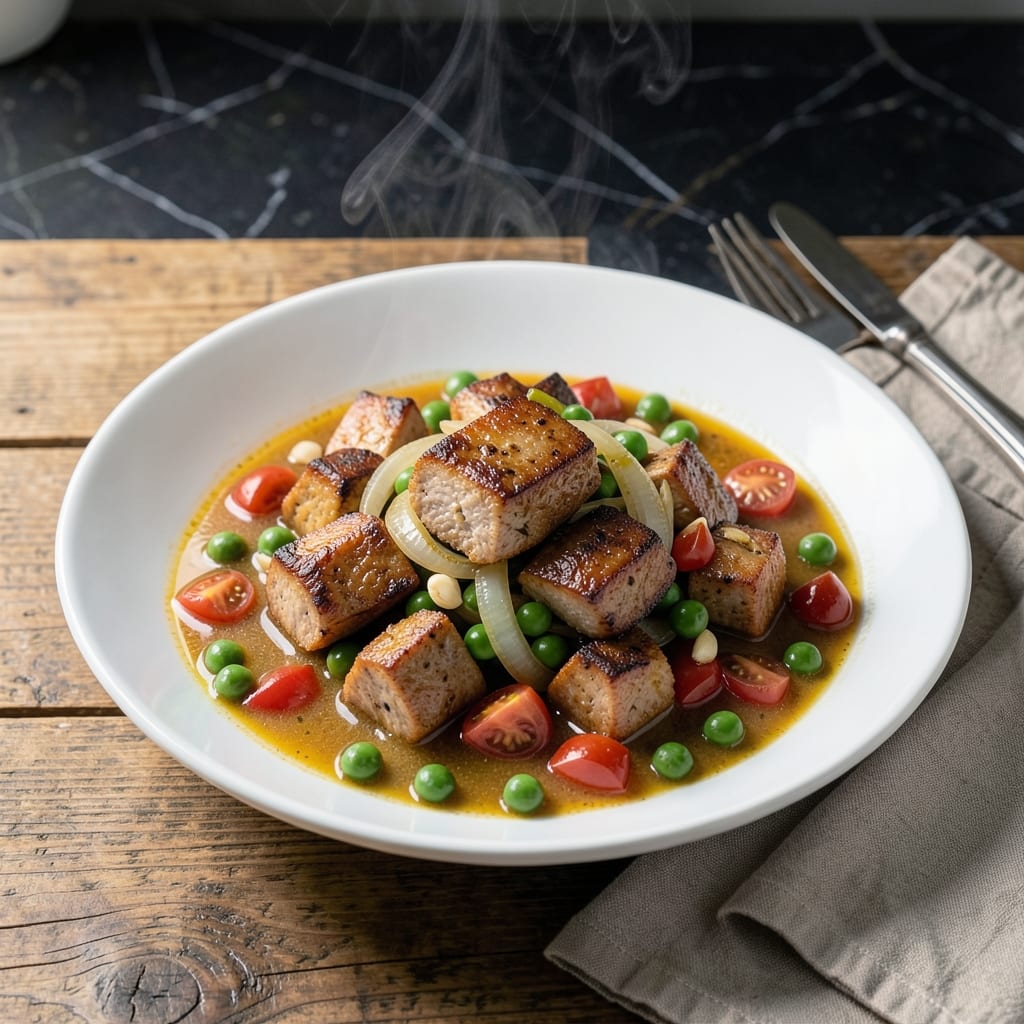
This Filipino pork and peas stew brings authentic comfort in a bowl. The dish combines tender pork pieces with sweet green peas in a savory sauce enriched with patis for that signature umami depth.
I developed this version after years of testing to capture the traditional flavors while keeping the process straightforward. The key is slow cooking the pork until it melts in your mouth, then finishing with peas to maintain their bright color and snap.
The patis adds a salty complexity that balances the natural sweetness of the peas and pork. It’s a simple combination that creates a deeply satisfying stew perfect for serving over steamed rice.
This recipe delivers the hearty, home-style taste Filipino families have cherished for generations. Here’s how to make it exactly right.
Ingredients for Pork Guisantes Recipe Filipino
Tender pork, sweet peas, and a savory patis sauce. Simple ingredients, authentic Filipino flavor.
| Ingredient | Amount | Notes |
|---|---|---|
| Pork Shoulder 🥩 | 1 ½ lb | Cut into 1-inch cubes |
| Green Peas 🌱 | 2 cups | Fresh or frozen |
| Patis 🐟 | 2 tbsp | Filipino fish sauce |
| Onion 🧅 | 1 whole | Medium, diced |
| Garlic Cloves 🧄 | 4 cloves | Minced |
| Tomatoes 🍅 | 2 whole | Medium, diced |
| Potatoes 🥔 | 2 whole | Medium, cubed |
| Carrots 🥕 | 2 whole | Sliced into rounds |
| Water 💧 | 2 cups | Or low-sodium broth |
| Olive Oil 🫒 | 2 tbsp | For sautéing |
| Bay Leaves 🌿 | 2 pieces | Dried |
| Salt 🧂 | 1 tsp | Adjust to taste |
| Black Pepper 🌶️ | ½ tsp | Freshly ground |
The pork is the star here. Pork shoulder gives you that melt-in-your-mouth texture—pork belly works too but’s richer. I grab mine from local Asian markets where it’s often pre-cut (saves time). Patis is non-negotiable for that authentic taste; Red Boat or Silver Swan are reliable brands. If your grocery store doesn’t carry it, check the international aisle or order online.
No patis? Soy sauce plus a dash of salt gets you close, but it won’t be the same. Fresh peas are ideal, but frozen works perfectly (no need to thaw). Short on time? Pre-diced mirepoix from the store is fine. The potatoes can be swapped for sweet potatoes if you want a twist—just adjust cooking time since they soften faster.
This stew tastes even better the next day once the flavors meld. Keeps 4-5 days in the fridge, freezes for 3 months. Reheat gently on the stove—microwave can make the pork chewy. Always serve with steamed rice to soak up that delicious sauce.
Why You’ll Love This Recipe
- One-Pot Meal: I love tossing the pork shoulder, peas, and aromatics in a single pan—minimal cleanup, maximum flavor.
- Umami Bomb: The patis and garlic create this deep, salty-savory richness that makes every bite irresistible.
- Weeknight Hero: Honestly, it’s my go-to for busy evenings. Ready in 40 minutes, and the leftovers taste even better the next day.
- Budget Friendly: Pork shoulder and frozen peas stretch far. I’ll be real: it feeds my family of four for under $10.
Step-by-Step Instructions for Pork Guisantes
Here’s how to build layers of flavor in this comforting Filipino stew.
Step 1: Sear the Pork and Build the Base
Heat the 2 tbsp olive oil in a large pot over medium-high heat. Add the 1.5 lb pork shoulder cubes and sear until browned on all sides—this should take about 5-7 minutes. Don’t skip this step; the caramelization adds depth to the stew.
Once browned, transfer the pork to a plate and set aside. In the same pot, sauté the diced 1 whole onion for 2-3 minutes until it turns translucent and just starts to soften. The residual oil and pork drippings will give it a rich, savory base.
Step 2: Add Aromatics and Tomatoes
Stir in the minced 4 cloves garlic cloves and cook for 30 seconds until fragrant—be careful not to let it burn. Add the diced 2 whole tomatoes and cook for another 2-3 minutes until they start to break down and release their juices.
This is where the foundation of flavor develops. The tomatoes will melt into the onions and garlic, creating a slightly sweet and tangy base for the stew. You’ll notice the mixture becoming thicker as the tomatoes soften.
Step 3: Simmer with Vegetables and Seasonings
Return the pork to the pot and pour in the 2 cups water. Add the cubed 2 whole potatoes, sliced 2 whole carrots, 2 pieces bay leaves, 1 tsp salt, and 0.5 tsp black pepper. Bring to a boil, then reduce the heat to medium-low.
Cover and let it simmer for 25-30 minutes until the pork and potatoes are fork-tender. Check occasionally and add a splash of water if it looks too dry. The potatoes should easily pierce with a fork when done.
Step 4: Add Peas and Patis
Once the pork and potatoes are tender, stir in the 2 cups green peas and 2 tbsp patis. The patis adds that signature Filipino umami punch, so taste as you go—you can always add more later if needed.
Simmer uncovered for another 5-7 minutes until the peas are heated through and the stew thickens slightly. The peas should be vibrant and tender, not mushy. If the stew is too thin, let it cook for a few more minutes to reduce.
Step 5: Adjust and Serve
Give it a final taste and adjust the seasoning if needed. The patis is salty, so you might not need additional salt. Remove the bay leaves before serving.
Ladle the stew into bowls while hot. The pork should be fall-apart tender, the potatoes soft, and the sauce rich and flavorful. Serve with steamed rice to soak up every last bit of that delicious broth.
Pro Tips For Making Pork Guisantes Recipe Filipino
- Brown the Pork First: Sear the pork shoulder in small batches over medium-high heat until golden—this builds flavor and prevents a gray, boiled look. I learned this the hard way after skipping it once and getting a bland, pale stew.
- Use Frozen Peas: Toss in frozen green peas during the last 5 minutes of cooking. They hold their texture better than canned and won’t turn mushy, plus you skip the hassle of shelling fresh ones.
- Skip the Water: Replace water with low-sodium chicken broth or even just patis diluted with a little water—it adds depth without overpowering the dish. My grandmother swore by this, and she was right.
- Simmer Uncovered: Let the sauce reduce uncovered for the last 10 minutes to thicken it naturally. After burning three batches from impatience, I finally figured out this is the easiest way to get that rich, glossy finish.
Dietary Considerations for These Flavors
Gluten-Free Naturally
This stew is inherently gluten-free since it uses patis instead of soy sauce. Just verify your patis brand—I trust Red Boat and Silver Swan for pure fish sauce without additives. Always check labels at New Seasons Market if you’re sensitive. 💪
Dairy-Free Friendly
No dairy appears in traditional pork guisantes, making this a safe choice for lactose-intolerant friends. The rich mouthfeel comes from slow-cooked pork and starchy potatoes, not cream or butter. I often serve it to my daughter Lily’s playdates without worry.
Lower Sodium Option
To reduce sodium, start with 1 tbsp patis instead of 2 tbsp, then adjust to taste. You can also use low-sodium broth instead of water. I’ve found this cuts sodium by about 30% without sacrificing flavor depth.
Vegetable Swaps
For a lighter version, replace potatoes with cauliflower florets—add them during the last 15 minutes of cooking. The carrots can become zucchini from my Portland garden. These swaps reduce carbs while keeping the stew hearty.
Protein Alternatives
Chicken thighs work beautifully here—use 1.5 lb boneless and reduce simmering time to 20 minutes. For a vegetarian version, try extra-firm tofu cubes (press first) and mushrooms for umami. The cooking process remains identical. 🌱
Allergen Notes
The only common allergen is fish from patis. For fish allergies, substitute coconut aminos—use 1.5 tbsp as it’s less salty. This maintains the savory profile while being allergy-safe. Always disclose this swap to guests.
Nutrition Facts
Frequently Asked Questions
Can I use frozen peas for this stew?
Yes, frozen peas work perfectly and don’t need thawing. Add them directly to the pot when the recipe calls for peas—they’ll cook through in the same 5-7 minutes. Fresh peas are ideal but frozen are just as tasty and more convenient.
What can I substitute for patis?
If you can’t find patis, use 1.5 tbsp coconut aminos or 1 tbsp soy sauce plus 1 tsp salt. Coconut aminos are less salty and allergy-friendly, while soy sauce adds depth but may alter the flavor slightly.
How do I know when the pork is done?
The pork is ready when it’s fork-tender and easily pulls apart after 25-30 minutes of simmering. If it resists, let it cook longer. Overcooking won’t hurt it—this dish actually improves with extra time.
Can I make this in a slow cooker?
Brown the pork first, then transfer everything to a slow cooker. Cook on low for 6-7 hours or high for 3-4 hours. Add peas during the last 30 minutes to keep them vibrant.

- Potato Chip Cookie Recipe With Pecans: Buttery Crunch Meets Nutty Richness - October 30, 2026
- Potato Patty Recipe No Egg: Crispy Edges Without the Binder - October 30, 2026
- Paula Deen’s Potato Chip Cookies Recipe: Salty-Sweet Crunch in Every Bite - October 30, 2026