
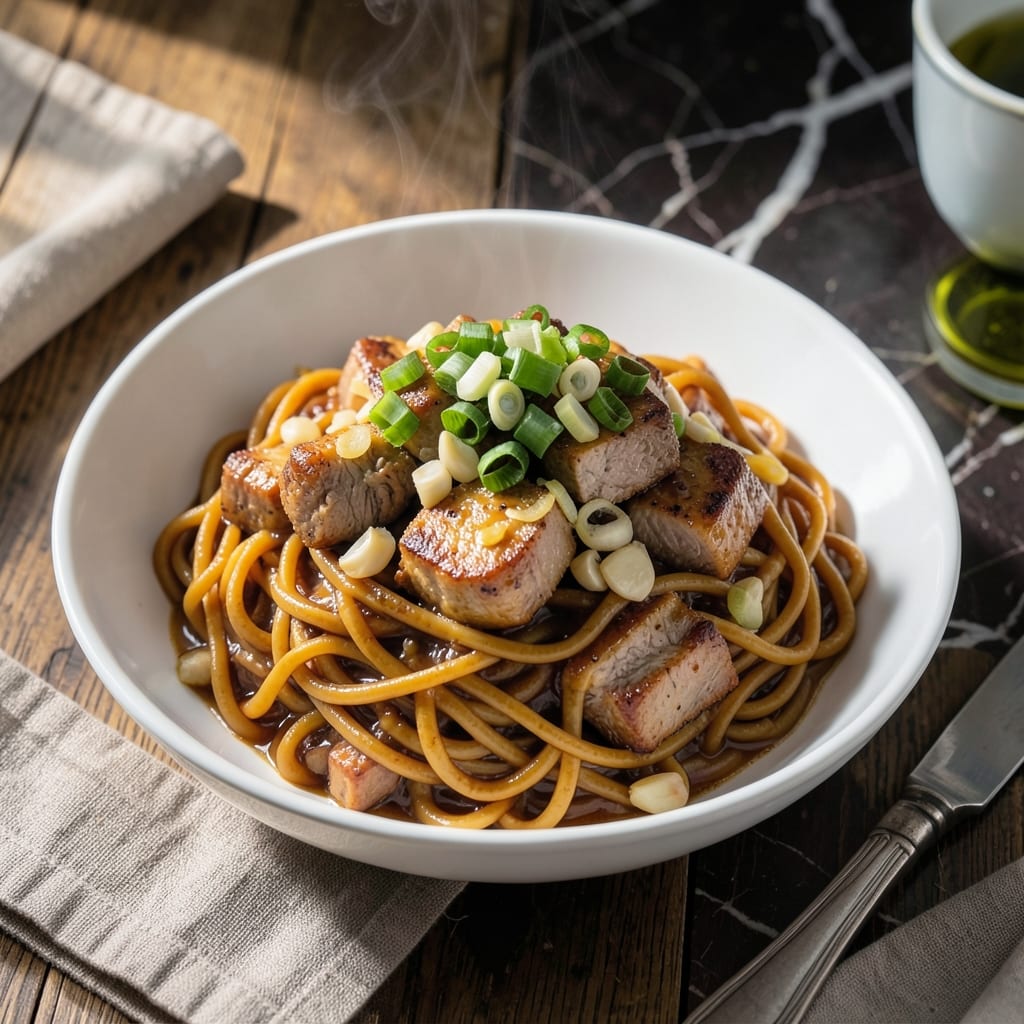
This Filipino-style noodle stew brings the comforting flavors of Panlasang Pinoy to your kitchen table. I discovered this dish while exploring Pacific Northwest food markets, and its rich, savory broth immediately won me over.
The secret lies in slow-cooking tender pork until it melts in your mouth, then pairing it with thick egg noodles that soak up the flavorful sauce. Traditional versions often include hard-boiled eggs and liver, but this recipe keeps it simple.
What emerges is a hearty bowl with tender pork pieces, springy noodles, and a deeply savory broth that warms you from the inside out. The texture contrast between the meat and noodles makes every bite satisfying.
Perfect for chilly Portland evenings or whenever you need a taste of Filipino comfort food. Here’s how to make this classic dish at home.
Ingredients for Pork Lomi Recipe Panlasang Pinoy
Thick noodles, tender pork, and rich broth make this comforting bowl sing.
| Ingredient | Amount | Notes |
|---|---|---|
| Pork Shoulder 🥩 | 1 ½ lb | Cut into bite-sized pieces, well-marbled |
| Egg Noodles 🍜 | 8 oz | Thick, fresh or dried |
| Garlic Cloves 🧄 | 6 cloves | Minced for depth of flavor |
| Yellow Onion 🧅 | 1 whole | Medium, finely chopped |
| Soy Sauce 🫒 | ½ cup | Low-sodium preferred for balance |
| Oyster Sauce 🫒 | 3 tbsp | Vegetarian oyster sauce if needed |
| Chicken Broth 🥣 | 4 cups | Low-sodium for controlled seasoning |
| Carrots 🥕 | 2 whole | Medium, sliced into rounds |
| Green Cabbage 🥬 | 2 cups | Shredded for texture contrast |
| Green Onions 🌱 | 4 whole | Sliced thin for garnish |
| Cornstarch 🌾 | 2 tbsp | Mixed with water for thickening |
| Black Pepper 🌶️ | 1 tsp | Freshly ground for best flavor |
| Vegetable Oil 🫒 | 2 tbsp | Neutral flavor for sautéing |
| Hard-Boiled Eggs 🥚 | 4 whole | Peeled and halved for serving |
The pork is what makes this dish. Pork shoulder is ideal—it’s fatty enough to stay juicy through the long simmer (bonus: it’s cheap). Asian markets often have pre-cut stew meat, which saves time. If you’re at a regular grocery, look for well-marbled pieces. The noodles matter too—thick egg noodles soak up the broth beautifully. Trader Joe’s has great fresh ones, but dried works in a pinch.
No oyster sauce? Substitute hoisin or soy sauce plus a pinch of sugar. Want extra richness? Add a splash of fish sauce (or skip it for a milder flavor). The cabbage can be swapped for bok choy or Napa. If you’re missing green onions, cilantro or parsley add a fresh finish. Hard-boiled eggs are traditional but optional—tofu cubes work for a vegetarian twist (though this isn’t that).
This stew tastes even better the next day once the flavors meld. Keeps 4-5 days in the fridge, freezes for 3 months. Store noodles separately if freezing to avoid mushiness. Reheat gently on the stove—microwaving can make the pork tough.
Why You’ll Love This Recipe
- One Pot Wonder: I just toss the pork shoulder, noodles, and soy sauce in a pot—no fancy techniques, just simple layering of flavors.
- Garlic Soy Magic: The garlic and soy sauce create this deep, savory richness that coats every noodle. Honestly, it’s the kind of taste that lingers in the best way.
- Feeds a Crowd: Perfect for family dinners or potlucks, and the leftovers? Still fantastic the next day.
- Budget Stretch: Pork shoulder is affordable, and a little goes a long way with the egg noodles soaking up all that flavor. I’ll be real: it’s my go-to when I want to impress without overspending.
Step-by-Step Instructions for Filipino-Style Noodle Stew With Tender Pork
Here’s how to build layers of flavor that make this dish unforgettable.
Step 1: Sear and Brown the Pork Shoulder
Heat the 2 tbsp vegetable oil in a large pot over medium-high heat until it shimmers. Add the 1.5 lb pork shoulder pieces and cook undisturbed for 3-4 minutes until deeply browned on one side.
Flip and repeat on all sides. You’ll know it’s ready when the pork releases easily from the pot and has developed a rich, caramelized crust. This searing step locks in juices and creates a flavor foundation for the stew. Remove the pork and set aside.
Step 2: Sauté Aromatics and Build the Base
In the same pot, add the 6 cloves garlic cloves and 1 whole yellow onion. Sauté for 2-3 minutes until the onion becomes translucent and the garlic turns fragrant and just begins to color.
Pour in the 0.5 cup soy sauce and 3 tbsp oyster sauce, scraping up all the browned bits from the bottom. Add the pork back to the pot along with the 4 cups chicken broth and 1 tsp black pepper. Bring to a gentle boil, then reduce heat to medium-low.
Step 3: Simmer Pork Until Tender and Add Vegetables
Cover and simmer for 45-50 minutes until the pork is fork-tender. I check by piercing a piece with a fork—it should slide in with almost no resistance. This slow cooking transforms the pork shoulder into melt-in-your-mouth tenderness.
Add the 2 whole carrots and 2 cups green cabbage, then cook for another 8-10 minutes until the carrots are tender but still hold their shape. The cabbage should be vibrant and just wilted, not mushy.
Step 4: Add Noodles and Thicken the Stew
Stir in the 8 oz egg noodles and cook for 5-7 minutes until they’re al dente. Meanwhile, mix the 2 tbsp cornstarch with 2 tbsp water to create a slurry. Stir this into the stew and simmer for 2-3 minutes until the broth thickens to a rich, gravy-like consistency.
Taste and adjust seasoning if needed. The sauce should coat the back of a spoon but still flow easily. The noodles will continue to absorb liquid as it sits, so aim for slightly thinner than your final preference.
Step 5: Finish and Serve with Garnishes
Remove from heat and let the stew rest for 5 minutes. This allows the flavors to meld together. Ladle into bowls and top each serving with halves of the 4 whole hard-boiled eggs and a sprinkle of the sliced 4 whole green onions.
The eggs add a creamy contrast to the rich stew, while the green onions provide a fresh, crisp finish. Serve immediately while hot—the noodles will continue to soak up the delicious broth as it sits, so don’t wait too long to dig in.
Pro Tips For Making Pork Lomi Recipe Panlasang Pinoy
- Parboil the Pork: I learned this the hard way—simmer the pork shoulder for 10-15 minutes first to remove impurities, or your broth will turn cloudy and bitter.
- Toast the Garlic: Sounds weird, but it works: cook the minced garlic in oil until golden before adding onions—it deepens the flavor of your lomi base.
- Don’t Overcook Noodles: Add the egg noodles last and cook just until tender, about 3-4 minutes. They’ll keep absorbing broth and turn mushy if left too long.
- Use Reservable Fat: After browning the pork, use the rendered fat to sauté the garlic and onions—it adds a rich, meaty depth you can’t get with plain oil.
Pro Cooking Tips for pork lomi recipe panlasang pinoy
Perfect Pork Searing
Don’t rush the browning step—this is where the magic happens. I use a heavy-bottomed Dutch oven to ensure even heat distribution. Pat the 1.5 lb pork shoulder completely dry first, then sear in 2 tbsp vegetable oil until it develops a deep mahogany crust on all sides. 🔥
Layering Flavors Right
After removing the pork, those browned bits stuck to the pot are pure flavor. Deglaze with 0.5 cup soy sauce and 3 tbsp oyster sauce, scraping aggressively with a wooden spoon. This step builds the rich, savory base that defines this dish.
Low and Slow Wins
Simmer the pork covered for 45-50 minutes at medium-low heat. I check doneness by piercing with a fork—it should slide in effortlessly. Resist the urge to boil; gentle simmering keeps the meat juicy and tender.
Noodle Timing Trick
Add the 8 oz egg noodles only after the pork is fully tender. They’ll cook in 5-7 minutes while soaking up the flavorful broth. Test a noodle at 5 minutes—it should be chewy but not mushy.
Thickening Like a Pro
Mix 2 tbsp cornstarch with 2 tbsp cold water before adding to the stew. Stir constantly while simmering for 2-3 minutes until the broth coats the back of a spoon. This prevents lumps and ensures a silky texture. 💡
Rest for Best Results
Let the stew rest off heat for 5 minutes before serving. This allows the flavors to meld and the noodles to fully absorb the sauce. I learned this trick from my Portland farmers market friends—it makes all the difference.
Nutrition Facts
Frequently Asked Questions
Can I use a different cut of pork?
Yes! While pork shoulder is ideal for its tenderness, you can substitute pork belly or pork ribs. Avoid lean cuts like tenderloin, as they may dry out during the 45-50 minute simmer.
What if my stew is too thin?
Mix an extra 1 tbsp cornstarch with 1 tbsp water and stir it in. Simmer for 2-3 minutes until thickened. Avoid over-thickening—the noodles will absorb more liquid as they sit.
Can I make this ahead?
The flavors deepen overnight. Store in the fridge for up to 4-5 days or freeze for 3 months. Reheat gently, adding a splash of broth if needed.

- Potato Patty Recipe No Egg: Crispy Edges Without the Binder - October 30, 2026
- Paula Deen’s Potato Chip Cookies Recipe: Salty-Sweet Crunch in Every Bite - October 30, 2026
- Potato Gnocchi Recipe Ideas: Pillowy Soft Dumplings With Rustic Charm - October 30, 2026