
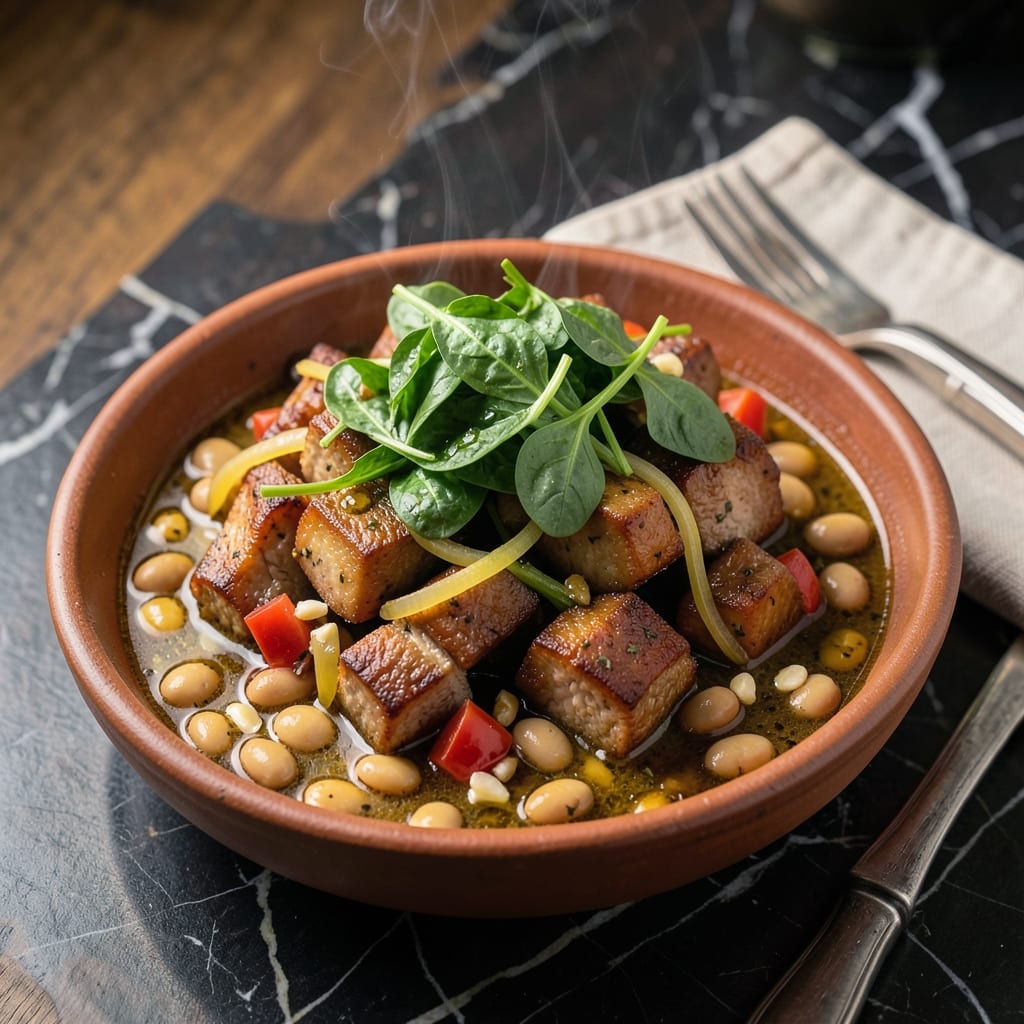
This Filipino pork monggo delivers comfort in every spoonful with its rich, savory stew of tender pork and mung beans. I’ve tested this recipe multiple times to perfect the balance of flavors and textures, ensuring it works in any home kitchen.
The dish comes together in one pot, with simple ingredients that create a hearty, satisfying meal. The pork simmers until fall-apart tender, while the mung beans absorb the broth’s deep, umami-rich flavors.
What you’ll get is a thick, flavorful stew that’s both filling and nutritious. The mung beans add earthiness, while the pork brings richness, making it a complete, balanced dish.
Serve it hot with steamed rice for the full experience. Here’s how to make it.
Ingredients for Pork Monggo Recipe Filipino
Simple, hearty ingredients create a rich, comforting stew with tender pork and mung beans.
| Ingredient | Amount | Notes |
|---|---|---|
| Pork Belly 🥩 | 1 lb | Cut into 1-inch cubes |
| Dried Mung Beans 🌱 | 1 cup | Rinsed and drained |
| Onion 🧅 | 1 whole | Medium, diced |
| Garlic Cloves 🧄 | 4 cloves | Minced |
| Tomatoes 🍅 | 2 whole | Medium, diced |
| Spinach 🥬 | 4 cups | Fresh, roughly chopped |
| Fish Sauce 🐟 | 2 tbsp | Filipino brand preferred |
| Soy Sauce 🫙 | 1 tbsp | Low-sodium preferred |
| Bay Leaves 🌿 | 2 pieces | Dried |
| Black Peppercorns 🌶️ | 1 tsp | Whole or ground |
| Water 💧 | 4 cups | For simmering |
| Vegetable Oil 🫒 | 2 tbsp | For sautéing |
| Salt 🧂 | 1 tsp | Adjust to taste |
The pork belly is key here—look for well-marbled cuts at Asian markets or the meat section of Whole Foods. Dried mung beans are sold in bulk at most international grocery stores. For the best flavor, grab Filipino fish sauce (patis) like Silver Swan or Delfino. Bay leaves should be dried but still fragrant; if they crumble to dust, they’re too old to use effectively.
No pork belly? Pork shoulder works in a pinch, though it’s leaner. Out of fish sauce? Soy sauce plus a pinch of salt can substitute, but the flavor won’t be as deep. Fresh spinach can be swapped for bok choy or kangkong (water spinach). If using canned mung beans, reduce water and simmer time by half. The tomatoes add acidity—don’t skip them.
Store dried mung beans in an airtight container in a cool, dark place for up to 1 year. Once cooked, this stew keeps in the fridge for 3-4 days or freezes beautifully for 3 months. The flavors deepen overnight, so it tastes even better the next day.
Why You’ll Love This Recipe
- One Pot Wonder: I love tossing everything in a single pot—pork belly, mung beans, and tomatoes—and letting it simmer while I do other things.
- Savory Comfort: The garlic and pork belly create this rich, hearty flavor that’s hard to resist. Honestly, it’s the kind of dish that feels like a warm hug.
- Feeds a Crowd: Between us, this stretches easily for family dinners or meal prep. Leftovers taste even better the next day.
- Budget Friendly: Dried mung beans and pork belly are affordable, and a little goes a long way. I’ll be real: it’s one of my go-to recipes when I need to save without sacrificing taste.
Step-by-Step Instructions for Pork Monggo
Here’s the method. Straightforward, tested, works every time.
Step 1: Sauté Aromatics and Brown the Pork
Heat the 2 tbsp vegetable oil in a large pot over medium heat. Add the diced 1 whole onion and cook for 2-3 minutes until softened and slightly translucent. You’ll see the edges start to turn light golden brown—that’s your signal to add the minced 4 cloves garlic cloves.
Cook for another 30 seconds until fragrant, then add the cubed 1 lb pork belly. Brown the pork on all sides for 5-7 minutes, stirring occasionally. The pork should develop a light brown crust while the fat begins to render slightly. This step builds the flavor foundation for your stew.
Step 2: Add Tomatoes and Seasonings
Stir in the diced 2 whole tomatoes and cook for 2-3 minutes until they begin to break down. Add the 1 tbsp soy sauce, 2 pieces bay leaves, and 1 tsp black peppercorns, stirring to combine with the pork and aromatics.
Pour in the 4 cups water and bring to a gentle boil. Reduce heat to medium-low and let it simmer for 5 minutes. You’ll notice the liquid start to take on a rich, slightly golden color as the pork and tomatoes release their flavors.
Step 3: Cook the Mung Beans
Add the rinsed 1 cup dried mung beans to the pot and stir well. Return to a simmer, then reduce heat to low. Cover and cook for 30-35 minutes, stirring occasionally to prevent sticking.
The mung beans will absorb liquid and expand significantly. You’re aiming for beans that are tender but still hold their shape. If the stew becomes too thick before the beans are done, add a small amount of water and continue cooking.
Step 4: Add Spinach and Fish Sauce
Once the mung beans are nearly tender, stir in the 2 tbsp fish sauce and 1 tsp salt. Taste and adjust seasoning if needed. Add the roughly chopped 4 cups spinach and cook for 3-4 minutes until wilted.
The spinach will turn bright green and soften quickly. This is the final step in building your stew’s texture and flavor. The spinach should be fully incorporated but still visible in the dish.
Step 5: Simmer and Serve
Reduce heat to low and let the stew simmer uncovered for an additional 5-10 minutes. This allows the flavors to meld together and the stew to reach your desired consistency—thick enough to coat the back of a spoon but not dry.
Discard the bay leaves before serving. The pork should be fork-tender, the mung beans soft but not mushy, and the broth rich and flavorful. Serve hot with steamed rice for the authentic experience.
Pro Tips For Making Pork Monggo Recipe Filipino
- Soak the Mung Beans: Cover dried mung beans in water for at least 2 hours before cooking—I learned this the hard way after ending up with undercooked beans in an otherwise perfect pot.
- Brown the Pork First: Sear pork belly cubes in batches over medium-high heat until golden; this builds deep flavor that simmering alone can’t achieve.
- Skip the Salt Early: Hold off on seasoning until the mung beans are tender, since salt can toughen them if added too soon.
- Use Bone-In Pork: Swap pork belly for bone-in pork cuts like ribs or shoulder for richer broth—sounds weird, but it actually changes the outcome.
Health Benefits of These Flavors
Protein-Packed Goodness
The mung beans in this stew deliver 14 grams of plant-based protein per cup, while the pork belly adds 20 grams of complete protein per serving. Together, they create a powerhouse meal that keeps you full and energized for hours. I love how this dish fuels my busy days. 💪
Fiber for Digestion
Mung beans are an excellent source of dietary fiber—about 15 grams per cup—which supports healthy digestion and helps maintain steady blood sugar levels. The spinach adds even more fiber, making this a gut-friendly dish.
Rich in Vitamins
This stew is loaded with vitamin A from the spinach and tomatoes, plus B vitamins from the pork. These nutrients support immune function, energy metabolism, and overall vitality. One bowl covers a significant portion of your daily needs.
Iron Boost
Both pork and mung beans provide heme and non-heme iron, essential for oxygen transport in your body. Pairing them with the vitamin C in tomatoes enhances iron absorption, making this a smart choice for energy levels.
Low Glycemic Index
Mung beans have a low glycemic index, meaning they release glucose slowly into your bloodstream. This makes the dish ideal for sustained energy without blood sugar spikes. Perfect for those watching their carbohydrate intake.
Heart-Healthy Fats
While pork belly contains saturated fat, the mung beans and spinach contribute heart-healthy monounsaturated fats and antioxidants. Balance is key, and this dish offers a satisfying mix of nutrients. 🥗
Nutrition Facts
Frequently Asked Questions
Can I use canned mung beans instead?
Yes, but reduce water to 2 cups and cooking time to 15 minutes. Canned beans are softer, so add them later.
Why is my stew too thin?
Simmer uncovered for 5-10 extra minutes. For faster thickening, mash some beans to release starch. The stew should coat a spoon.
What can I substitute for fish sauce?
Use 1 tbsp soy sauce plus 1 tsp salt. It won’t be identical, but adds needed umami. Avoid skipping it entirely.
How do I store leftovers?
Keep in an airtight container in the fridge for 3-4 days or freeze for 3 months. Flavors deepen overnight.

- Potato Chip Cookie Recipe With Pecans: Buttery Crunch Meets Nutty Richness - October 30, 2026
- Potato Patty Recipe No Egg: Crispy Edges Without the Binder - October 30, 2026
- Paula Deen’s Potato Chip Cookies Recipe: Salty-Sweet Crunch in Every Bite - October 30, 2026