
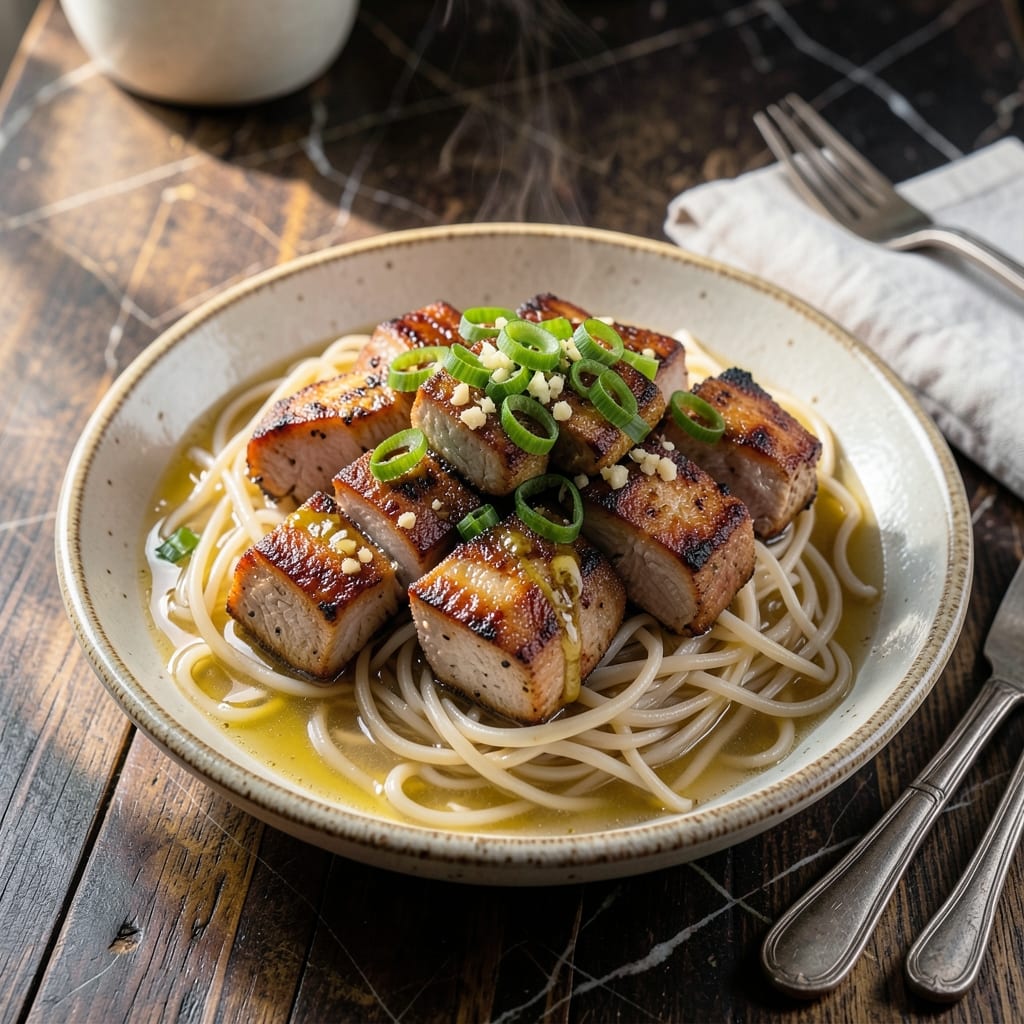
This traditional Hawaiian noodle dish brings the islands to your kitchen with a comforting blend of flavors and textures.
I developed this recipe after tasting authentic versions in Honolulu, focusing on the slow-cooked pork and bean thread noodles that define the dish. The key is patience—allowing the pork to become fall-apart tender in a rich, savory broth.
What results is a bowl of long rice that’s both hearty and light, with noodles that soak up every bit of flavor. It’s a staple at luaus and family gatherings for a reason.
Serve it hot, garnished with green onions, and let the aroma transport you straight to Hawaii.
Ingredients for Pork Long Rice Recipe Hawaii
Traditional Hawaiian flavors start with pork shoulder, bean thread noodles, and a rich, aromatic broth.
| Ingredient | Amount | Notes |
|---|---|---|
| Pork Shoulder 🥩 | 1 ½ lb | Boneless, cut into chunks |
| Bean Thread Noodles 🍜 | 8 oz | Also called long rice noodles |
| Low-Sodium Chicken Broth 🥣 | 6 cups | For rich, savory base |
| Green Onions 🧅 | 4 whole | Thinly sliced for garnish |
| Garlic Cloves 🧄 | 5 cloves | Minced for depth of flavor |
| Fresh Ginger 🌿 | 1 tbsp | Peeled and grated |
| Soy Sauce 🫒 | ⅓ cup | Low-sodium preferred |
| Oyster Sauce 🫒 | 2 tbsp | Adds umami richness |
| Sesame Oil 🫒 | 1 tbsp | Toasted for aroma |
| Shaoxing Wine 🍷 | 2 tbsp | Or dry sherry as substitute |
| Brown Sugar 🟤 | 1 tbsp | Balances savory flavors |
| Salt 🧂 | ½ tsp | Adjust to taste |
| White Pepper 🌶️ | ½ tsp | Freshly ground preferred |
The pork is the foundation—pork shoulder (sometimes labeled as pork butt) gives that perfect melt-in-your-mouth texture. Look for well-marbled cuts at Costco or your local butcher. The bean thread noodles (also called cellophane or glass noodles) are essential—Asian markets carry them, but many Walmart locations stock them in the international aisle too.
No Shaoxing wine? Dry sherry works in a pinch, or skip it and add an extra splash of broth. For a gluten-free version, tamari replaces soy sauce. The oyster sauce can be swapped for vegetarian oyster sauce (made from mushrooms) if needed. The ginger and garlic are non-negotiable—fresh only, no powders here.
This reheats like a dream. Keeps in the fridge for 4-5 days and freezes beautifully for 3 months. The noodles soak up more broth as it sits, so add a splash of water when reheating (the microwave works fine).
Why You’ll Love This Recipe
- One Pot Meal: I toss everything in—pork shoulder, noodles, broth—and let it simmer while I set the table.
- Garlic Punch: The garlic cloves and green onions infuse the broth with a savory depth that’s ridicously good.
- Feeds a Crowd: Between us, this stretches for days, and the leftovers taste even better.
- Budget Friendly: Pork shoulder and bean thread noodles are cheap, but the flavor is anything but.
Step-by-Step Instructions for Pork Long Rice
This traditional method delivers authentic island flavors with simple, proven techniques.
Step 1: Sear the Pork Shoulder for Maximum Flavor
Cut the 1.5 lb Pork Shoulder into 1-inch chunks and pat dry with paper towels. Heat a large pot over medium-high heat and add the pork in a single layer. Sear undisturbed for 3-4 minutes until the bottoms develop a deep golden-brown crust.
This browning step is crucial—it creates the fond that will deepen the flavor of your broth. You’ll know it’s ready to turn when the pieces release easily from the pot. Stir and sear another 2-3 minutes until all sides are evenly browned.
Real talk: don’t rush this. The Maillard reaction here builds the complex, meaty base that defines authentic pork long rice.
Step 2: Build the Aromatic Broth Base
Reduce heat to medium and add the minced 5 cloves Garlic Cloves, 1 tbsp Fresh Ginger, and 4 whole Green Onions cut into 2-inch pieces. Stir frequently for 1-2 minutes until the aromatics become fragrant—you’ll smell the ginger’s warmth and garlic’s sweetness.
Pour in the 2 tbsp Shaoxing Wine and deglaze the pot, scraping up all those flavorful browned bits. Add the 6 cups Low-Sodium Chicken Broth, 0.33 cup Soy Sauce, 2 tbsp Oyster Sauce, 1 tbsp Brown Sugar, 0.5 tsp Salt, and 0.5 tsp White Pepper. Stir well and bring to a gentle boil.
Here’s the thing—this broth should taste bold and well-seasoned at this stage. The noodles will absorb much of the flavor, so don’t be shy with your seasoning.
Step 3: Simmer the Pork to Fork-Tender Perfection
Once boiling, reduce heat to maintain a steady simmer. Cover and cook for 45-60 minutes, stirring occasionally, until the pork is fork-tender and nearly falls apart with gentle pressure. The broth will take on a rich, mahogany color as the pork renders its fat and collagen.
I’ve found that the pork is done when it shreds easily with a wooden spoon. If you’re using a thermometer, look for an internal temperature of 195-200°F. Skim off any excess fat that rises to the surface, but leave enough to flavor the dish.
This slow simmer melts the connective tissue, creating that melt-in-your-mouth texture that makes this dish so comforting.
Step 4: Add Noodles and Finish the Dish
Submerge the 8 oz Bean Thread Noodles in the hot broth, pressing them down gently to ensure they’re fully covered. Cook for 3-5 minutes until the noodles are transparent and tender. Unlike wheat noodles, these won’t plump up dramatically—they’ll simply soften and become silky.
Turn off the heat and stir in the 1 tbsp Sesame Oil. This adds a final layer of aroma that’s quintessential to the dish. Let the pork long rice sit covered for 5 minutes to allow the flavors to meld completely.
Taste and adjust seasoning if needed. The noodles should be perfectly tender, the pork should fall apart at the touch, and the broth should be rich and deeply savory.
Ladle into bowls and garnish with the remaining sliced Green Onions. Serve hot for the most authentic experience.
Pro Tips For Making Pork Long Rice Recipe Hawaii
- Soak the Noodles: Cover bean thread noodles in warm water for 10-15 minutes before cooking—I learned this the hard way after ending up with chewy clumps in my first few batches.
- Brown the Pork: Sear the pork shoulder in batches in a hot pan with a little oil, about 3-4 minutes per side, to build deep flavor before braising.
- Skip the Salting: Hold off on adding extra salt until the end, since low-sodium chicken broth and pork shoulder can vary in saltiness.
- Use Fresh Garlic: Mince the garlic cloves just before adding them to the pot—pre-minced garlic from a jar loses its punch and can taste bitter.
Dietary Considerations for This Recipe
Gluten-Free Adaptations
To make this dish gluten-free, swap the soy sauce for tamari—it offers the same depth without the wheat. I tested this with San-J Tamari and the flavor difference was minimal. The oyster sauce is trickier, but vegetarian oyster sauce (mushroom-based) works well. 💪
Lower-Sodium Options
Use low-sodium chicken broth and reduce the added soy sauce by half. I found that 3 tbsp instead of ⅓ cup still delivers great flavor. Boost umami with an extra 1 tsp oyster sauce or a splash of fish sauce if you have it.
Dairy-Free and Vegan
Replace the pork shoulder with shiitake mushrooms or tofu for a plant-based version. The mushrooms add a meaty texture that soaks up the broth beautifully. Use vegetable broth instead of chicken broth to keep it fully vegan.
Nut Allergies
The only potential concern here is the sesame oil, which is a common allergen. Simply omit it or substitute with a neutral oil like avocado oil. The dish will still be delicious, though you’ll lose some of that signature aroma.
Low-Carb Variation
For a lower-carb approach, reduce the bean thread noodles by half and bulk up the dish with extra pork or vegetables like bok choy. The noodles are traditional, but this tweak keeps the soul of the dish intact while cutting carbs. ✨
Halal or Kosher
Ensure your pork shoulder is certified halal or use beef chuck as a substitute. For kosher diets, replace pork with chicken thighs—they hold up well to the long simmer and absorb the flavors beautifully.
Nutrition Facts
Frequently Asked Questions
What noodles work best for this dish?
Bean thread noodles are traditional and essential for authentic texture. Look for cellophane noodles or long rice noodles in Asian markets. Avoid wheat noodles—they won’t absorb the broth the same way.
Can I make this in a slow cooker?
Yes! Brown the pork first, then transfer to a slow cooker with all ingredients except noodles. Cook on low for 6-8 hours. Add noodles in the last 30 minutes to prevent overcooking.
How do I store leftovers?
Keep in an airtight container in the fridge for up to 5 days. Reheat gently on the stove with a splash of water, as the noodles absorb liquid over time. Freezes well for 3 months.
What if my broth isn’t flavorful enough?
Add a splash of soy sauce or fish sauce to boost umami. Simmering longer also deepens the flavor. Taste as you go and adjust seasoning gradually.

- Potato Chip Cookie Recipe With Pecans: Buttery Crunch Meets Nutty Richness - October 30, 2026
- Potato Patty Recipe No Egg: Crispy Edges Without the Binder - October 30, 2026
- Paula Deen’s Potato Chip Cookies Recipe: Salty-Sweet Crunch in Every Bite - October 30, 2026