
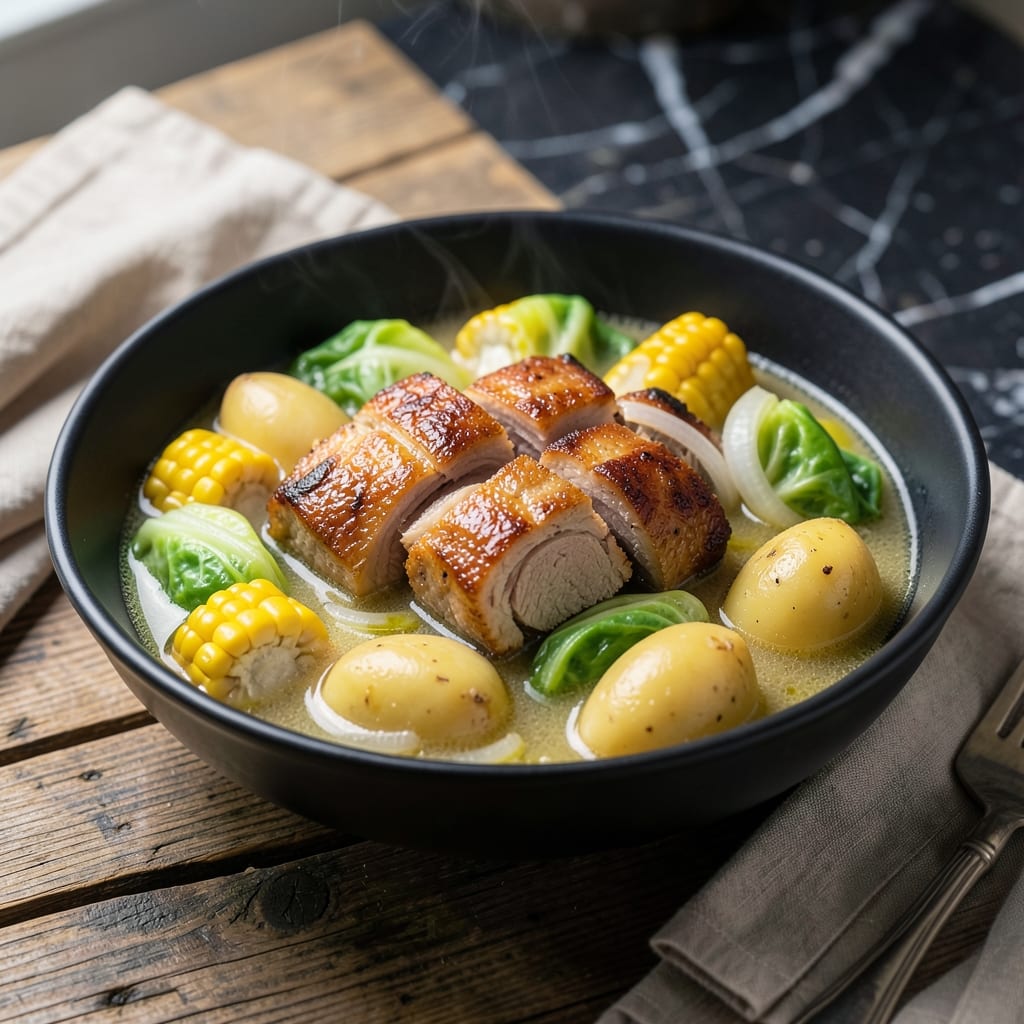
This Filipino pork nilaga delivers tender meat and hearty vegetables in a light, flavorful broth. A classic comfort dish that brings families together, it’s simple yet deeply satisfying.
Pork shoulder simmers with cabbage, potatoes, and corn, absorbing subtle seasonings for a clean, authentic taste. The slow cooking process ensures every ingredient becomes fork-tender without overpowering the natural flavors.
The broth is the star—light but rich, carrying the essence of pork and vegetables in every spoonful. It’s the kind of dish that warms you from the inside out, perfect for any meal.
Traditional techniques make this recipe foolproof. Here’s how to bring this comfort classic to your table with ease.
Ingredients for Pork Nilaga Recipe with Cabbage
Pork shoulder and veggies simmer into pure comfort food. Simple ingredients, huge flavor.
| Ingredient | Amount | Notes |
|---|---|---|
| Pork Shoulder 🥩 | 1 ½ lb | Cut into serving pieces, bone-in preferred |
| Green Cabbage 🥬 | ½ whole | Cut into wedges, core removed |
| Yukon Gold Potatoes 🥔 | 3 whole | Peeled and quartered |
| Corn on the Cob 🌽 | 2 whole | Cut into 3-inch pieces |
| Yellow Onion 🧅 | 1 whole | Peeled and quartered |
| Garlic Cloves 🧄 | 6 cloves | Lightly crushed, peeled |
| Fish Sauce 🫒 | 1 tbsp | Filipino patis preferred |
| Whole Black Peppercorns 🌶️ | 1 tsp | Lightly crushed |
| Bay Leaves 🍃 | 2 pieces | Dried, whole |
| Water 💧 | 8 cups | Or enough to cover pork |
| Salt 🧂 | 1 tsp | Adjust to taste |
| Scallions 🧅 | 3 whole | Chopped, for garnish |
The pork shoulder is key here—bone-in pieces give the broth depth and the meat stays juicy through the long simmer. Asian markets often have it pre-cut into perfect stew chunks, but any grocery store butcher can do it. Look for pieces with good marbling (the white fat streaks) for the most tender result. Don’t trim all the fat off—it renders into the broth for richness.
No pork shoulder? Pork belly works but gets fattier—skimming the broth helps. Fish sauce can be swapped for soy sauce at half the amount if needed, though the flavor changes slightly. Frozen corn works fine (add it later so it doesn’t turn mushy). If your cabbage is small, use three-quarters of it. The bay leaves are worth hunting down—they add that subtle background note.
This tastes even better the next day (the flavors meld overnight). Keeps 3-4 days in the fridge, freezes for 3 months. Reheat gently so the pork doesn’t fall apart. I always make extra broth—it’s great for soups or cooking rice.
Why You’ll Love This Recipe
- Minimal Chopping Required: I just slice the onion, cube the potatoes, and cut the corn—no fancy knife skills needed.
- Rich Broth Magic: The pork shoulder simmers into the most comforting, savory broth that soaks into the cabbage and potatoes.
- Feeds a Crowd: Between us, this is my go-to when I need to fill hungry bellies without breaking the bank.
- Better the Next Day: Honestly, the flavors deepen overnight, so leftovers taste even richer for lunch the next day.
Step-by-Step Instructions for Pork Nilaga With Cabbage
This method guarantees fall-off-the-bone tenderness and rich, savory broth every time.
Step 1: Sear the Pork and Build the Broth Base
In a large pot over medium-high heat, add the 1.5 lb pork shoulder pieces and sear until lightly browned on all sides. This step develops deep flavor in the broth. I don’t add oil—the pork will render its own fat as it cooks.
Once browned, pour in the 8 cups water and add the 1 whole yellow onion, 6 cloves garlic cloves, 1 tsp whole black peppercorns, and 2 pieces bay leaves. Bring to a rolling boil, then reduce heat to medium-low to maintain a gentle simmer.
Simmer the pork for 30 minutes to extract rich flavor into the broth. Skim off any foam that rises to the surface—this keeps the broth clean and clear. The pork should start to soften but won’t be fully tender yet.
Step 2: Add the Hearty Vegetables
After the initial simmer, add the 3 whole Yukon Gold Potatoes and 2 whole corn on the cob pieces. These vegetables need more time to cook through, so they go in before the delicate cabbage. Return the broth to a gentle simmer.
Cook for another 15 minutes until the potatoes are just fork-tender. Test by piercing with a knife—it should slide in with slight resistance. The corn should also be bright yellow and easily pierced with a fork.
Step 3: Incorporate the Cabbage and Season
Add the 0.5 whole green cabbage wedges to the pot, pressing them down gently to submerge in the broth. Cabbage cooks quickly, so it goes in last to prevent it from turning mushy. Stir in the 1 tsp salt and 1 tbsp fish sauce at this stage.
Simmer for a final 10 minutes until the cabbage is tender but still vibrant green. The pork should now be fork-tender—it’s ready when it pulls apart easily with a gentle tug. Taste the broth and adjust seasoning if needed.
Step 4: Finish and Serve
Turn off the heat and let the nilaga sit covered for 5 minutes. This resting time allows the flavors to meld together beautifully. The pork will absorb some of the broth, becoming even more tender and flavorful.
Ladle the nilaga into bowls, making sure each serving gets a mix of pork, vegetables, and plenty of broth. Garnish with the 3 whole scallions, chopped. Serve hot with steamed rice to soak up the delicious broth.
Pro Tips For Making Pork Nilaga Recipe With Cabbage
- Skim the Fat: I learned this the hard way—after simmering, let the broth sit for 5 minutes then skim off the floating fat with a spoon. It keeps the nilaga clean and light, not greasy.
- Salt in Layers: Season the pork shoulder with about 1 teaspoon of salt before browning, then adjust the broth later. Sounds simple, but it builds flavor deeper than just dumping it all in at once.
- Add Cabbage Last: Resist the urge to toss everything in together—add the green cabbage wedges only in the last 8-10 minutes of cooking. Otherwise, it turns to mushy nothingness.
- Use Corn Husks: Sounds weird, but it works: leave the corn husks on while boiling. They add a subtle sweetness to the broth and make the corn easier to handle when serving.
Perfect Pairings for This pork nilaga recipe with cabbage
Filipino Rice Pairings
Steamed jasmine rice is the classic choice, soaking up every drop of that flavorful broth. I always use a 1:1.5 rice-to-water ratio for fluffy grains. For extra richness, try coconut rice—simmer 1 cup rice in 1.5 cups coconut milk and 0.5 cup water. 🥥
Fresh Side Dishes
A tangy green papaya salad cuts through the richness beautifully. Shred 2 cups green papaya, toss with 1 tbsp calamansi juice, 1 tsp fish sauce, and 1 sliced Thai chili. Alternatively, pickled cucumbers offer a refreshing crunch.
Beverage Matches
Cold calamansi juice is my go-to—mix ½ cup fresh calamansi with 2 cups water and 2 tbsp sugar. For beer lovers, San Miguel Pale Pilsen pairs perfectly, its crispness balancing the dish’s heartiness. 🍺
Extra Flavor Boosters
Serve with toyo mansi (soy sauce with calamansi) on the side for dipping. Mix 3 tbsp soy sauce with 1 tbsp calamansi juice and ½ tsp brown sugar. A sprinkle of toasted garlic bits adds a delightful crunch.
Nutrition Facts
Frequently Asked Questions
Can I use a different cut of pork?
Yes, pork belly or ribs work, but they’ll be fattier. Pork loin is leaner but can dry out. Stick with shoulder for the best texture and flavor.
How do I prevent the cabbage from getting mushy?
Add it last and cook for only 10 minutes. Keep the heat at a gentle simmer, not a rolling boil, to preserve its crispness.
Can I make this in a slow cooker?
Sear the pork first, then cook on low for 6-7 hours. Add cabbage during the last 30 minutes for best results.
What if my broth is too bland?
Adjust with more fish sauce or salt to taste. A splash of calamansi juice can brighten the flavors. Always season gradually.

- Potato Chip Cookie Recipe With Pecans: Buttery Crunch Meets Nutty Richness - October 30, 2026
- Potato Patty Recipe No Egg: Crispy Edges Without the Binder - October 30, 2026
- Paula Deen’s Potato Chip Cookies Recipe: Salty-Sweet Crunch in Every Bite - October 30, 2026