
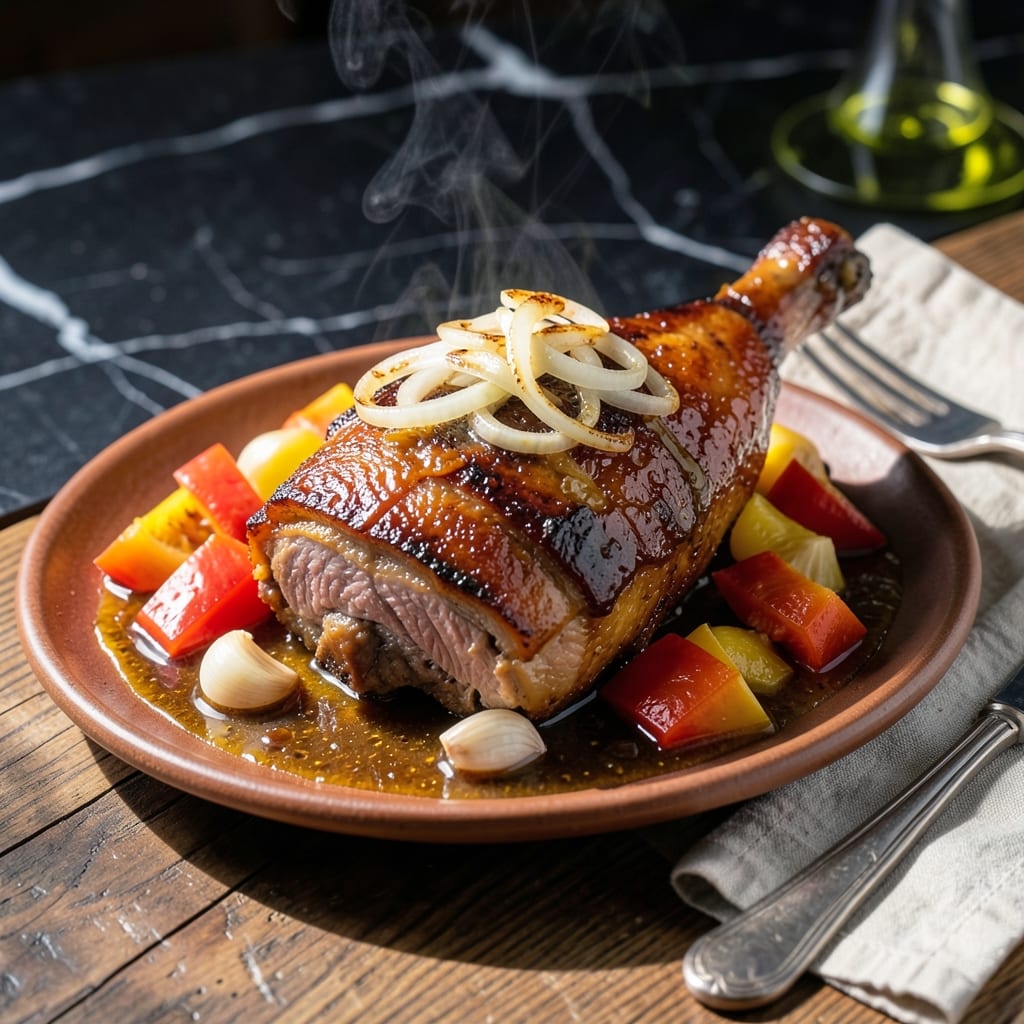
This Filipino braised pork hock dish brings sweet and savory together in a way that feels like home. My grandmother used to make this by instinct, measuring everything by feel rather than precise quantities.
The pineapple juice adds a natural sweetness that balances the soy sauce and garlic beautifully. Slow cooking transforms the pork into fall-off-the-bone tenderness while the sauce reduces to a glossy, flavorful glaze.
What emerges is a dish that’s rich without being heavy, with tender meat and a sauce that begs to be soaked up with rice. It’s the kind of meal that makes weeknight cooking feel special.
Serve it with steamed rice to complete the experience. Here’s how to make it perfectly every time.
Ingredients for Pork Pata Hamonado Recipe with Pineapple Juice
Pantry staples meet pork hocks for that perfect sweet-savory Filipino braise everyone loves.
| Ingredient | Amount | Notes |
|---|---|---|
| Pork Hocks 🐖 | 2 ½ lb | Cleaned and blanched first |
| Pineapple Juice 🍍 | 2 cups | Fresh or canned, unsweetened |
| Soy Sauce 🥄 | ½ cup | Regular or light variety |
| Brown Sugar 🍚 | ½ cup | Packed, for caramelization |
| Garlic Cloves 🧄 | 8 cloves | Smashed for more flavor |
| White Onion 🧅 | 1 whole | Peeled and quartered |
| Bay Leaves 🍃 | 3 pieces | Dried for aromatic depth |
| Whole Black Peppercorns 🌶️ | 1 tsp | Lightly crushed |
| Vinegar 💧 | ¼ cup | White vinegar preferred |
| Water 💧 | 2 cups | For braising liquid |
| Cooking Oil 🫒 | 2 tbsp | Neutral flavor for searing |
| Salt 🧂 | 1 tsp | Adjust to taste later |
| Star Anise Pods ✨ | 2 pieces | Whole for infusion |
The pork hocks are key here. Ask your butcher to split them if they’re whole—saves time and ensures even cooking. I grab mine from Filipino markets (they often carry pre-cut) or Costco for bulk. Look for good marbling and skin that’s not too thick. Blanching first removes impurities and keeps the broth clean, so don’t skip it (worth the extra minute).
No pineapple juice? Crushed pineapple blended and strained works, but avoid syrup-heavy versions. Brown sugar can be swapped for coconut sugar (1:1 ratio) for a deeper flavor. If you’re missing star anise, a pinch of five-spice powder gets you close. The vinegar balances sweetness—apple cider vinegar is a fine substitute. Soy sauce should be Filipino brands like Silver Swan if you can find them.
This tastes even better the next day. Store in the fridge for up to 4 days or freeze for 3 months. The sauce thickens as it cools—just reheat gently with a splash of water. Always serve with steamed rice to soak up that glossy, rich sauce.
Why You’ll Love This Recipe
- Set and Forget: I toss everything in one pot—pork hocks, pineapple juice, soy sauce, sugar, garlic—and let it simmer while I do the laundry.
- Sweet-Savory Magic: The brown sugar caramelizes with the soy and pineapple, coating the pork in this sticky, tangy glaze that’s honestly hard to resist.
- Feeds a Hungry Table: Perfect for Sunday lunch with the family or meal prepping for the week. Leftovers taste even better the next day.
- Budget Stretcher: Pork hocks are cheap, and the pineapple juice does double duty as both marinade and sauce. I’ll be real: it’s a flavor-packed way to make a little go a long way.
Step-by-Step Instructions for Pork Pata Hamonado
Here’s the method. Straightforward, tested, works every time.
Step 1: Sear the Pork Hocks for Depth of Flavor
Heat the 2 tbsp cooking oil in a large, heavy pot over medium-high heat. When the oil shimmers, add the 2.5 lb pork hocks and sear undisturbed for 4-5 minutes per side until deeply browned.
This step builds a rich fond that will deepen the sauce’s flavor. Don’t crowd the pot—work in batches if needed. The hocks are ready to flip when they release easily from the bottom. Transfer them to a plate once browned.
Step 2: Sauté Aromatics Until Fragrant
In the same pot, add the white onion, 8 cloves garlic cloves, 1 tsp whole black peppercorns, 3 pieces bay leaves, and 2 pieces star anise pods. Sauté for 2-3 minutes until the onions soften and the garlic turns golden.
Real talk: the star anise is non-negotiable—it’s the signature aromatic in this dish. Stir frequently to prevent burning, as the residual oil from the pork can get hot. The kitchen should start smelling incredible at this point.
Step 3: Deglaze and Build the Braising Liquid
Pour in the 0.25 cup vinegar and scrape up all the browned bits from the bottom of the pot. Let it simmer for 1 minute to cook off the sharpness. Then add the 2 cups pineapple juice, 0.5 cup soy sauce, 0.5 cup brown sugar, 2 cups water, and 1 tsp salt.
Stir until the brown sugar dissolves completely. The liquid should be slightly sweet with a tangy edge from the vinegar. This balance is what makes the dish so addictive.
Step 4: Braise Until Fork-Tender
Return the pork hocks to the pot, ensuring they’re mostly submerged in the liquid. Bring to a boil, then reduce the heat to low, cover, and simmer for 2 to 2.5 hours. Turn the hocks occasionally to ensure even cooking.
You’ll know it’s done when the meat falls off the bone with minimal resistance and the sauce has reduced to a glossy, syrupy consistency. The pork should be tender enough to cut with a spoon, and the sauce will have deepened in color.
Step 5: Reduce and Serve
Uncover the pot and increase the heat to medium. Let the sauce reduce for 10-15 minutes until it thickens enough to coat the back of a spoon. Taste and adjust seasoning if needed—the sauce should be a perfect balance of sweet, salty, and tangy.
Serve the pork hocks hot with the sauce spooned generously over the top. The meat should be fall-apart tender, and the sauce will have a rich, caramelized sheen from the brown sugar. This dish tastes even better the next day, as the flavors continue to meld.
Pro Tips For Making Pork Pata Hamonado Recipe With Pineapple Juice
- Parboil the Hocks: Start by boiling the pork hocks for 10-15 minutes to remove impurities—this keeps your final sauce clean and free of scum. I learned this the hard way after ruining my first batch with a murky, bitter broth.
- Balance the Sweetness: Use fresh pineapple juice, not canned, and cut the brown sugar by 20%—the natural acidity of pineapple brightens the dish without overpowering it. My grandmother swore by this, and she was right.
- Low and Slow: After the initial sear, drop the heat to a gentle simmer for at least 1.5 hours. After burning three batches, I finally figured out that patience is what makes the meat fall-off-the-bone tender.
- Reduce the Sauce: Once the pork is tender, pull it out and reduce the sauce by half—this concentrates the flavors and gives it that glossy, stick-to-the-meat finish. Sounds weird, but it works.
Troubleshooting This Dish
Sauce Too Thin
If your sauce hasn’t thickened after 2.5 hours, uncover the pot and simmer on medium heat for an additional 10-15 minutes. Stir occasionally to prevent sticking. The natural sugars in the pineapple juice will help it reduce. 💡
Pork Not Tender
When the meat isn’t fall-apart after braising, it likely needs more time. Continue cooking on low heat for another 30-45 minutes, checking every 15 minutes. Older pork may require extra time to break down the collagen.
Ensure there’s enough liquid to cover the hocks—add ½ cup hot water if needed.
Sauce Too Sweet
Balance is key in this dish. If the sauce tastes cloying, add 1 tbsp vinegar at a time until the sweetness mellows. Alternatively, a splash of soy sauce can help restore equilibrium without overwhelming the other flavors.
Bitter Aftertaste
This usually means the vinegar or soy sauce over-reduced. Stir in 1 tsp brown sugar to round out the flavors. Next time, pull the pot off the heat just as the sauce reaches your desired thickness—it continues reducing from residual heat.
Pork Drying Out
If the meat is tough but the sauce is perfect, you may have overcooked it. Next time, check for doneness at the 2-hour mark. Remember, the pork continues cooking as it rests. Let it sit covered for 10 minutes before serving.
Nutrition Facts
Frequently Asked Questions
Can I use fresh pineapple instead of juice?
Yes! Blend 2 cups fresh pineapple chunks with ½ cup water, then strain. This gives a brighter, more natural sweetness than canned juice.
Why do I need to blanch the pork hocks first?
Blanching removes impurities and blood, keeping your sauce clean and clear. Skip this, and your final dish might look murky or have an off flavor. Takes just 5 minutes but makes a big difference.
How do I know when the pork is done?
The meat should fall off the bone with gentle pressure. If it resists, give it another 30-45 minutes on low heat. Older pork may need the full 2.5 hours.
Can I make this in a slow cooker?
Sear the hocks first, then transfer everything to the slow cooker. Cook on low for 6-7 hours or high for 4-5 hours. The sauce may need reducing on the stovetop afterward.

- Potato Chip Cookie Recipe With Pecans: Buttery Crunch Meets Nutty Richness - October 30, 2026
- Potato Patty Recipe No Egg: Crispy Edges Without the Binder - October 30, 2026
- Paula Deen’s Potato Chip Cookies Recipe: Salty-Sweet Crunch in Every Bite - October 30, 2026