
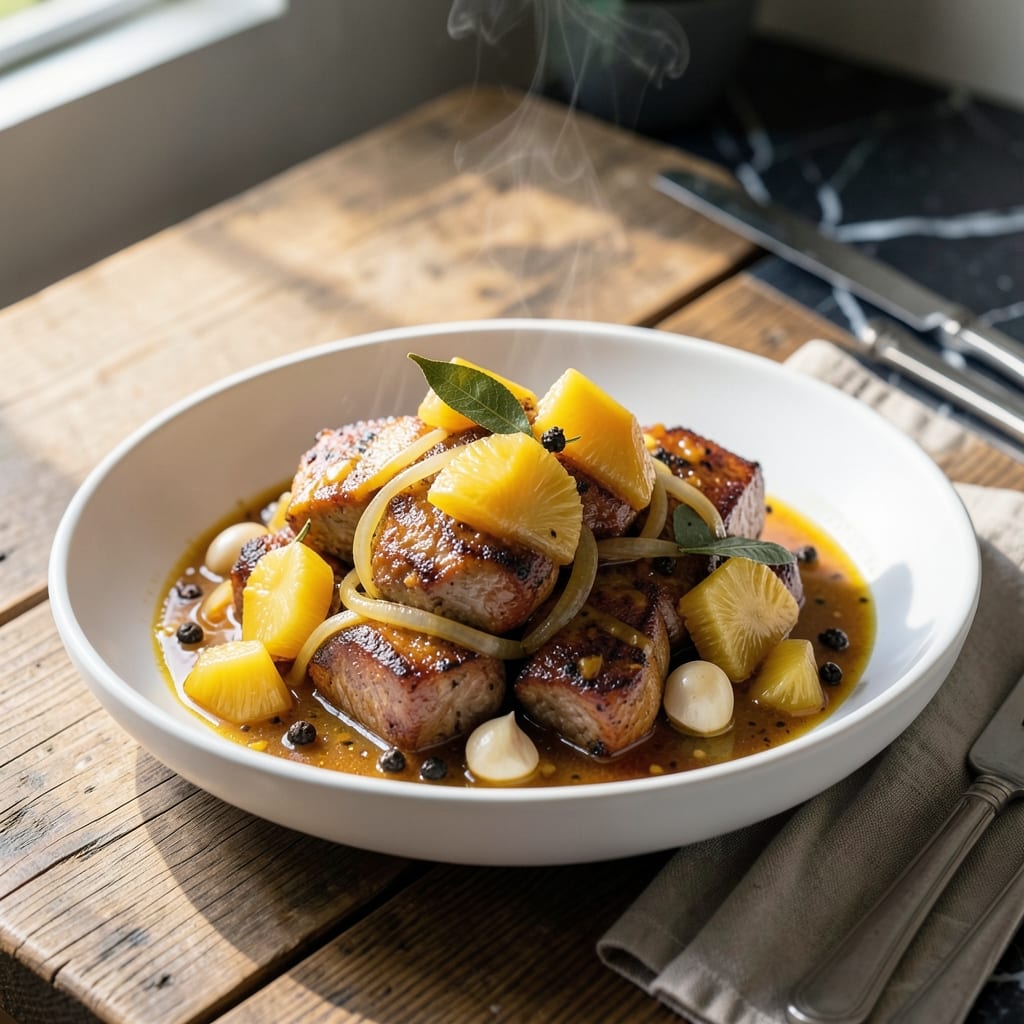
This Filipino pork stew captures the perfect balance of sweet, sour, and savory flavors. I discovered it while studying my grandmother’s handwritten notes, where she simply wrote “pork with pineapple” in her elegant script.
The dish simmers pork shoulder with pineapple chunks, creating a rich broth that’s both tangy and slightly sweet. It’s a comforting one-pot meal that fills the kitchen with an irresistible aroma as it cooks.
Traditionally served over steamed rice, this stew highlights how simple ingredients can create complex, satisfying flavors. The pork becomes fall-apart tender, absorbing the pineapple’s natural sweetness.
It’s an authentic taste of Filipino home cooking that’s surprisingly easy to recreate. This version stays true to the original method while making it accessible for any kitchen.
Ingredients for Pork Pinatisan Recipe Panlasang Pinoy
Pork shoulder, pineapple, and a handful of aromatics create this rich, comforting stew.
| Ingredient | Amount | Notes |
|---|---|---|
| Pork Shoulder 🥩 | 2 lb | Cut into 2-inch chunks, bone-in preferred |
| Fresh Pineapple 🍍 | 2 cups | Cut into bite-sized chunks with juice reserved |
| Yellow Onion 🧅 | 1 whole | Peeled and quartered |
| Garlic Cloves 🧄 | 6 cloves | Peeled and smashed |
| Bay Leaves 🍃 | 2 pieces | Dried, whole leaves |
| Black Peppercorns 🌶️ | 1 tsp | Whole, lightly crushed |
| Fish Sauce 🐟 | 2 tbsp | Filipino patis preferred |
| Soy Sauce 🫙 | 2 tbsp | Regular or light variety |
| Salt 🧂 | 1 tsp | Adjust to taste |
| Water 💧 | 4 cups | Enough to cover pork |
| Green Bell Pepper 🌶️ | 1 whole | Seeded and sliced into strips |
| Carrots 🥕 | 2 whole | Peeled and cut into chunks |
| Potatoes 🥔 | 2 whole | Peeled and cubed |
| Cooking Oil 🫒 | 1 tbsp | Neutral-flavored for sautéing |
The pork shoulder is non-negotiable here—bone-in pieces from Costco or your local butcher yield the most flavorful broth. Look for cuts with good marbling and a bit of fat, as this renders down during the long simmer. Fresh pineapple is essential (the canned kind lacks the bright acidity), and Filipino markets often carry the sweetest varieties. Don’t skip the fish sauce—Red Boat or Datu Puti are authentic choices that add depth.
No fresh pineapple? Canned pineapple chunks in juice (not syrup) work in a pinch—just drain and reserve the liquid for the broth. Out of fish sauce? Soy sauce with a squeeze of lime mimics the salty-tangy balance. For a milder flavor, substitute chicken broth for water. The vegetables can be swapped too—sweet potatoes replace regular potatoes beautifully, and green beans work instead of bell peppers.
This stew tastes even better the next day. Refrigerate leftovers in an airtight container for up to 4 days, or freeze for 3 months. Reheat gently on the stove with a splash of water to thin the broth as needed. The flavors deepen with time, making it perfect for meal prep.
Why You’ll Love This Recipe
- I’ll be real: it’s my Tuesday dinner lifesaver—fast, filling, and feeds the whole family.
- One Pot Meal: Honestly, I just dump everything in and let the pork shoulder and pineapple work their magic together.
- Tangy Sweetness: The fresh pineapple cuts through the richness of the pork with that bright, juicy pop.
- Weeknight Hero: I’ll be real: it’s my Tuesday dinner lifesaver—fast, filling, and feeds the whole family.
Step-by-Step Instructions for Pork Pinatisan
This traditional method ensures tender pork with a tangy, savory broth that defines this Filipino classic.
Step 1: Sear the Pork Shoulder and Aromatics
Heat 1 tbsp cooking oil in a large pot over medium-high heat. Add the 2 lb pork shoulder chunks and sear until lightly browned on all sides—about 5-6 minutes total. This step builds a flavorful foundation and prevents the meat from looking pale in the finished dish.
Push the pork to one side and add the 1 whole yellow onion and 6 cloves garlic cloves. Sauté for 1-2 minutes until the aromatics become fragrant. Be careful not to burn the garlic, as it can turn bitter quickly.
Step 2: Build the Flavor Base with Liquid and Seasonings
Pour in the 4 cups water, ensuring it covers the pork. Add the 2 tbsp fish sauce, 2 tbsp soy sauce, 1 tsp salt, 2 pieces bay leaves, and 1 tsp black peppercorns. Stir gently to distribute the seasonings evenly.
Bring the mixture to a boil, then reduce the heat to medium-low to maintain a gentle simmer. This controlled heat allows the pork to cook evenly without toughening. Skim off any foam that rises to the surface during the first 10 minutes of simmering.
Step 3: Add Vegetables and Pineapple
After the pork has simmered for 30 minutes, add the 2 whole carrots, 2 whole potatoes, and 1 whole green bell pepper. These vegetables absorb the savory broth as they cook, adding heartiness to the dish.
Simmer for another 10 minutes, then add the 2 cups fresh pineapple with its reserved juice. The pineapple should soften slightly but retain some texture. Its natural sweetness balances the salty and umami notes of the broth.
Step 4: Simmer Until Pork is Tender
Continue simmering for 20-25 minutes, or until the pork is fork-tender and the potatoes and carrots are easily pierced with a knife. The pork should fall apart slightly when prodded, indicating it’s fully cooked and infused with flavor.
Taste the broth and adjust the seasoning if needed. If it requires more saltiness, add a bit more fish sauce or soy sauce, but do so gradually to avoid overpowering the dish. The balance of sweet, salty, and tangy should be harmonious.
Step 5: Rest and Serve
Remove the pot from heat and let the pork pinatisan rest for 5-10 minutes. This allows the flavors to meld further and the pork to reabsorb some of the broth, making it even more tender.
Discard the bay leaves before serving. Ladle the pork and vegetables into bowls, ensuring each serving has a generous amount of the flavorful broth. Serve hot with steamed rice to soak up every last bit of the delicious liquid.
Pro Tips For Making Pork Pinatisan Recipe Panlasang Pinoy
- Brown the Pork: Sear the pork shoulder in batches over medium-high heat until deeply browned—this builds flavor that simmering alone can’t achieve. I learned this the hard way after my first few attempts tasted flat.
- Use Ripe Pineapple: Pick a fully ripe pineapple; the natural sweetness balances the dish perfectly. Sounds obvious, but underripe fruit makes the sauce unpleasantly tart.
- Skip the Overcrowding: Don’t dump all the pork in the pan at once—it steams instead of browns. Two batches take 5 extra minutes but guarantee that rich color and flavor.
- Simmer Uncovered: Let the sauce reduce uncovered for the last 10 minutes to thicken naturally. My grandmother swore by this, and she was right: it concentrates the pineapple-onion-garlic flavors beautifully.
Essential Equipment for This Recipe
Large Heavy Pot
A 5-6 quart Dutch oven or heavy stockpot is essential for even heat distribution. I use my Le Creuset for this—it retains heat beautifully and prevents scorching. Thin pots can cause hot spots that burn the pork or vegetables. 🔥
Wooden Spoon
Stir with a wooden spoon to avoid scratching your pot’s surface. It’s perfect for gently moving pork chunks without breaking them. I keep a 12-inch spoon dedicated to stews—long enough to reach the bottom comfortably.
Sharp Chef’s Knife
Cutting the pork and vegetables evenly requires a sharp 8-inch chef’s knife. I swear by my Wüsthof for clean, precise cuts. Dull knives crush instead of slice, which can make the pork tough.
Cutting Board
A large, stable wooden cutting board gives you space to prep all ingredients at once. I use a 18×12-inch board from my local market. Plastic boards work too, but wood is gentler on your knives.
Measuring Spoons
Accurate measurements matter, especially for the fish sauce and soy sauce. I keep a set of stainless steel measuring spoons in my drawer. Even small variations can throw off the dish’s balance.
Ladle for Serving
A 1-cup ladle makes serving this stew easy and mess-free. I use mine to portion both the solids and the broth. Look for one with a long handle to avoid steam burns. 💡
Nutrition Facts
Frequently Asked Questions
Can I use canned pineapple instead of fresh?
Yes, canned pineapple in juice works in a pinch. Drain and reserve the juice for the broth. Avoid pineapple in syrup, as it’s too sweet and can throw off the dish’s balance.
How do I know when the pork is done?
The pork is ready when it’s fork-tender and easily falls apart with gentle pressure. This usually takes 50-60 minutes of simmering. If it resists, cook for another 10 minutes and check again.
Can I make this ahead of time?
The flavors deepen overnight. Store in an airtight container in the fridge for up to 4 days, or freeze for 3 months. Reheat gently on the stove with a splash of water.
Why does my broth taste too salty?
Fish sauce can be potent. If it’s too salty, add a bit of water or pineapple juice to balance it out. Next time, reduce the fish sauce by 1 tbsp and adjust to taste.

- Potato Chip Cookie Recipe With Pecans: Buttery Crunch Meets Nutty Richness - October 30, 2026
- Potato Patty Recipe No Egg: Crispy Edges Without the Binder - October 30, 2026
- Paula Deen’s Potato Chip Cookies Recipe: Salty-Sweet Crunch in Every Bite - October 30, 2026