
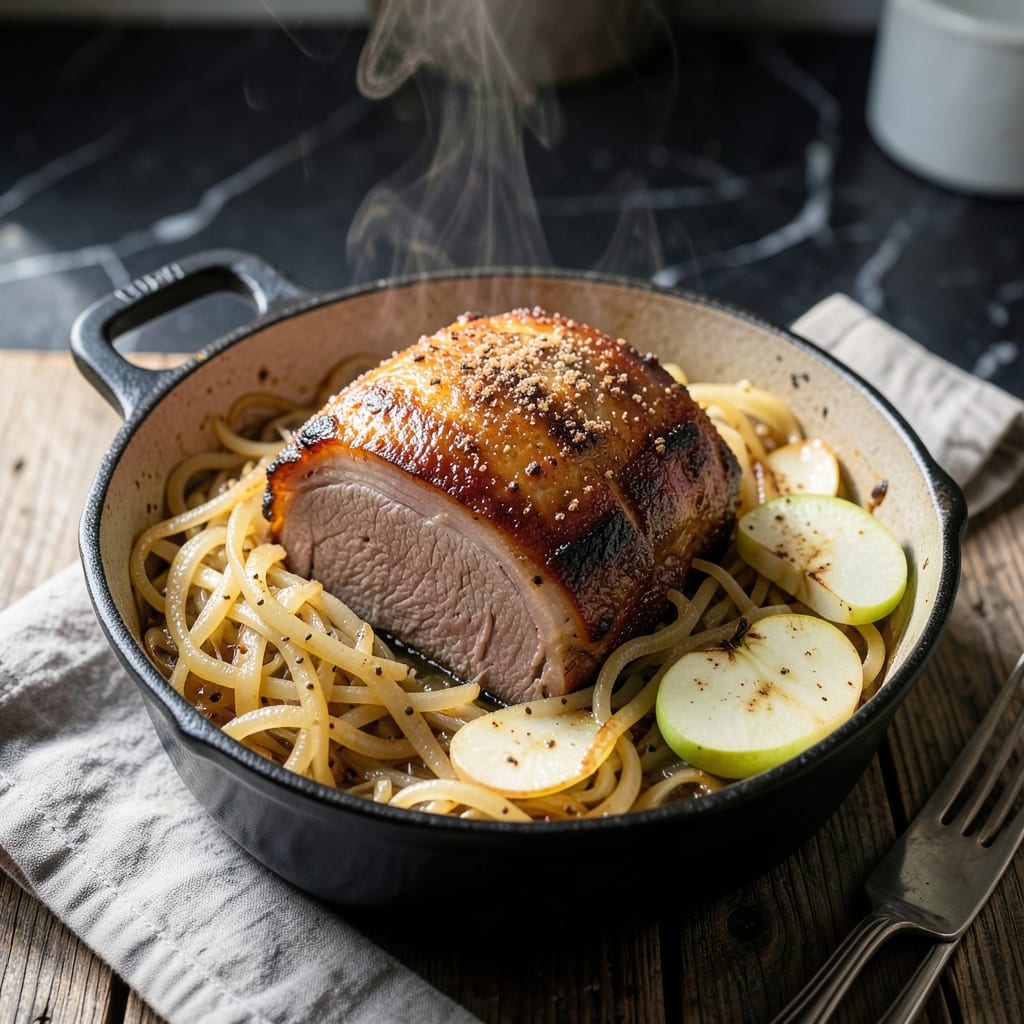
This oven-roasted pork shoulder with sauerkraut honors the slow-cooked traditions of German kitchens. I learned the value of patience watching my grandmother work—she never rushed good food.
The secret lies in low heat and time, allowing the pork to become fall-apart tender while the sauerkraut develops deep, tangy richness. No fancy techniques are needed, just simple, reliable methods.
What emerges is a dish with meltingly soft meat and perfectly balanced sauerkraut, the kind that makes a house smell like home. Every bite carries the warmth of tradition without demanding heroic effort.
Serve it with boiled potatoes or crusty bread to complete the meal. This is comfort food exactly as it should be.
Ingredients for Pork Shoulder and Sauerkraut Recipe in Oven
Traditional flavors meet simple ingredients for a hearty, slow-roasted German classic.
| Ingredient | Amount | Notes |
|---|---|---|
| Pork Shoulder 🥩 | 3 lb | Bone-in, skin-on preferred |
| Sauerkraut 🥬 | 2 lb | Drained, rinsed lightly |
| Yellow Onion 🧅 | 1 whole | Large, thinly sliced |
| Granny Smith Apple 🍏 | 1 whole | Cored, thinly sliced |
| Caraway Seeds 🌿 | 1 tbsp | Lightly crushed |
| Brown Sugar 🧈 | ¼ cup | Light or dark |
| Dijon Mustard 🟡 | 2 tbsp | Whole grain preferred |
| Apple Cider Vinegar 🍷 | ¼ cup | For balancing acidity |
| Juniper Berries 🫒 | 1 tsp | Lightly crushed |
| Bay Leaves 🌿 | 2 pieces | Dried, whole |
| Black Peppercorns 🌶️ | 1 tsp | Freshly cracked |
| Kosher Salt 🧂 | 1 tbsp | Diamond Crystal preferred |
| Chicken Stock 🥫 | 1 cup | Low-sodium preferred |
| Olive Oil 🫒 | 2 tbsp | For searing pork |
The pork shoulder is the star—bone-in, skin-on gives you that melt-in-your-mouth texture. Look for a well-marbled piece at Whole Foods or your local butcher. Sauerkraut matters too: Bagged refrigerated sauerkraut (like Libby’s or Frank’s) has better texture than canned. Don’t skip the caraway seeds—they’re the secret to authentic German flavor (find them in the spice aisle at any major grocer).
No pork shoulder? Pork butt works interchangeably. Out of sauerkraut? Shredded cabbage plus apple cider vinegar in a pinch. The apple can be any tart variety—Granny Smith is ideal but Honeycrisp works too. For depth, substitute juniper berries with ½ tsp crushed coriander seeds. Chicken stock can be swapped for vegetable stock if needed.
This tastes even better the next day. Store in an airtight container in the fridge for up to 5 days. To freeze, portion with some liquid—keeps for 3 months. Reheat gently to preserve the pork’s tenderness (trust me, don’t rush it).
Why You’ll Love This Recipe
- One Pan Wonder: I toss the pork shoulder, sauerkraut, and sliced onion in a roasting pan, pop it in the oven, and walk away.
- Tangy & Rich: The sauerkraut softens into the pork while the caraway seeds and apple add this bright, complex kick.
- Feeds a Crowd: Between us, this is my go-to for Sunday suppers—it stretches easily for 6-8 hungry people.
- Leftovers for Days: Honestly, it tastes even better the next day—shredded pork with sauerkraut makes killer sandwiches.
Step-by-Step Instructions for Pork Shoulder and Sauerkraut in Oven
This slow-roasting method transforms humble ingredients into a tender, flavor-packed German classic.
Step 1: Sear and Season the Pork Shoulder
Pat the 3 lb Pork Shoulder completely dry with paper towels. This ensures a proper sear. Season it aggressively on all sides with the 1 tbsp Kosher Salt, making sure to work it into every crevice. Heat the 2 tbsp Olive Oil in a large Dutch oven over medium-high heat until shimmering.
Sear the pork shoulder on all sides for 3-4 minutes per side until deeply browned. Don’t rush this step—you want a rich, caramelized crust that will develop complex flavors as it roasts. The fat cap should render slightly and turn golden brown. Remove the pork and set it aside briefly.
Step 2: Build the Flavor Base with Aromatics
In the same Dutch oven, add the 1 whole Yellow Onion and 1 whole Granny Smith Apple, both thinly sliced. Sauté for 4-5 minutes until the onions soften and begin to caramelize. The apples will add a subtle sweetness that balances the tang of the sauerkraut beautifully.
Stir in the 1 tbsp Caraway Seeds, 1 tsp Juniper Berries, and 1 tsp Black Peppercorns, all lightly crushed. Toast them for 1 minute until fragrant—this wakes up their essential oils. Add the 2 tbsp Dijon Mustard and 0.25 cup Brown Sugar, stirring to coat the onions and apples in this sweet and tangy glaze.
Step 3: Combine and Slow-Roast
Return the pork shoulder to the Dutch oven, nestling it into the onion-apple mixture. Add the drained and lightly rinsed 2 lb Sauerkraut, spreading it around the pork. Pour in the 0.25 cup Apple Cider Vinegar and 1 cup Chicken Stock, then tuck in the 2 pieces Bay Leaves.
Cover the Dutch oven tightly and transfer it to a preheated 325°F oven. Roast for 2.5 to 3 hours, turning the pork shoulder once halfway through. You’ll know it’s done when the meat pulls apart easily with a fork and reaches an internal temperature of 195°F.
Step 4: Rest and Serve
Carefully remove the Dutch oven from the oven and transfer the pork shoulder to a cutting board. Let it rest for 15-20 minutes before pulling or slicing. This resting period allows the juices to redistribute, ensuring the meat stays moist and tender.
Discard the bay leaves and adjust the seasoning of the sauerkraut mixture if needed. Serve the pork shoulder on a platter surrounded by the sauerkraut, onions, and apples. The pork should be fall-apart tender, and the sauerkraut will have absorbed all the rich, savory-sweet flavors from the roasting liquid.
Pro Tips For Making Pork Shoulder And Sauerkraut Recipe In Oven
- Start Low and Slow: I learned this the hard way—crank the oven to 300°F and give it 3-4 hours for the pork shoulder to turn fork-tender without drying out.
- Rinse the Kraut: Sounds weird, but it works: rinse the sauerkraut under cold water to cut the acidity, then squeeze out excess liquid so it doesn’t waterlog the dish.
- Score the Fat: After burning one too many roasts, I finally figured out that scoring the pork shoulder’s fat cap in a crosshatch pattern helps render the fat and crisp the skin.
- Add Apple Late: My grandmother swore by this, and she was right: toss the Granny Smith slices in during the last hour so they soften but don’t turn to mush.
Troubleshooting This Dish
Pork Not Tender
If your pork isn’t fall-apart tender after 3 hours, it likely needs more time. I’ve learned that oven temperatures vary wildly—use a meat thermometer to check for 195°F internal temperature. If it’s close but not there, return it to the oven for another 30-45 minutes. 🌡️
Sauerkraut Too Sour
Balance the tang by stirring in 1-2 tbsp brown sugar or a splash of apple cider vinegar. The sugar will mellow the acidity while maintaining the dish’s character. I always keep a small bowl of sugar ready for this exact adjustment.
Dry Pork Issue
This usually happens when the Dutch oven isn’t properly sealed. Next time, cover tightly with both the lid and a sheet of aluminum foil. For this batch, try adding ½ cup chicken stock and returning it to the oven for 20 minutes at 300°F.
Bland Flavor
Boost the depth by stirring in 1 tbsp Dijon mustard or an extra ½ tsp caraway seeds. Remember, the flavors develop as it cooks, so taste before the final hour. My grandmother always said, “Season in layers, not all at once.”
Sauerkraut Too Dry
Add ¼ cup chicken stock or water and cover the Dutch oven again. The liquid will rehydrate the sauerkraut while continuing to infuse flavor. I check the moisture level halfway through cooking and adjust as needed.
Uneven Cooking
Rotate the Dutch oven 180 degrees halfway through cooking and turn the pork shoulder. This ensures even heat distribution. If using a convection oven, reduce temperature by 25°F to prevent drying out. 💡
Nutrition Facts
Frequently Asked Questions
What temperature should I cook it at?
Slow-roast at 325°F for 2.5-3 hours. This low temperature ensures the pork becomes fall-apart tender without drying out. Always verify doneness with a meat thermometer reading 195°F.
Do I need to rinse the sauerkraut first?
Lightly rinse and drain the sauerkraut to remove excess brine. This prevents the dish from becoming too salty or sour while keeping its signature tang. A quick rinse under cold water does the trick.
Can I use a slow cooker instead?
Yes, but the texture differs. Cook on low for 8 hours or high for 5-6 hours. The oven method gives better browning and caramelization, but a slow cooker works in a pinch.
How do I prevent the pork from drying out?
Keep the Dutch oven tightly covered and don’t skip the resting step. Adding ½ cup chicken stock halfway through if the pan looks dry helps maintain moisture.

- Potato Patty Recipe No Egg: Crispy Edges Without the Binder - October 30, 2026
- Paula Deen’s Potato Chip Cookies Recipe: Salty-Sweet Crunch in Every Bite - October 30, 2026
- Potato Gnocchi Recipe Ideas: Pillowy Soft Dumplings With Rustic Charm - October 30, 2026