
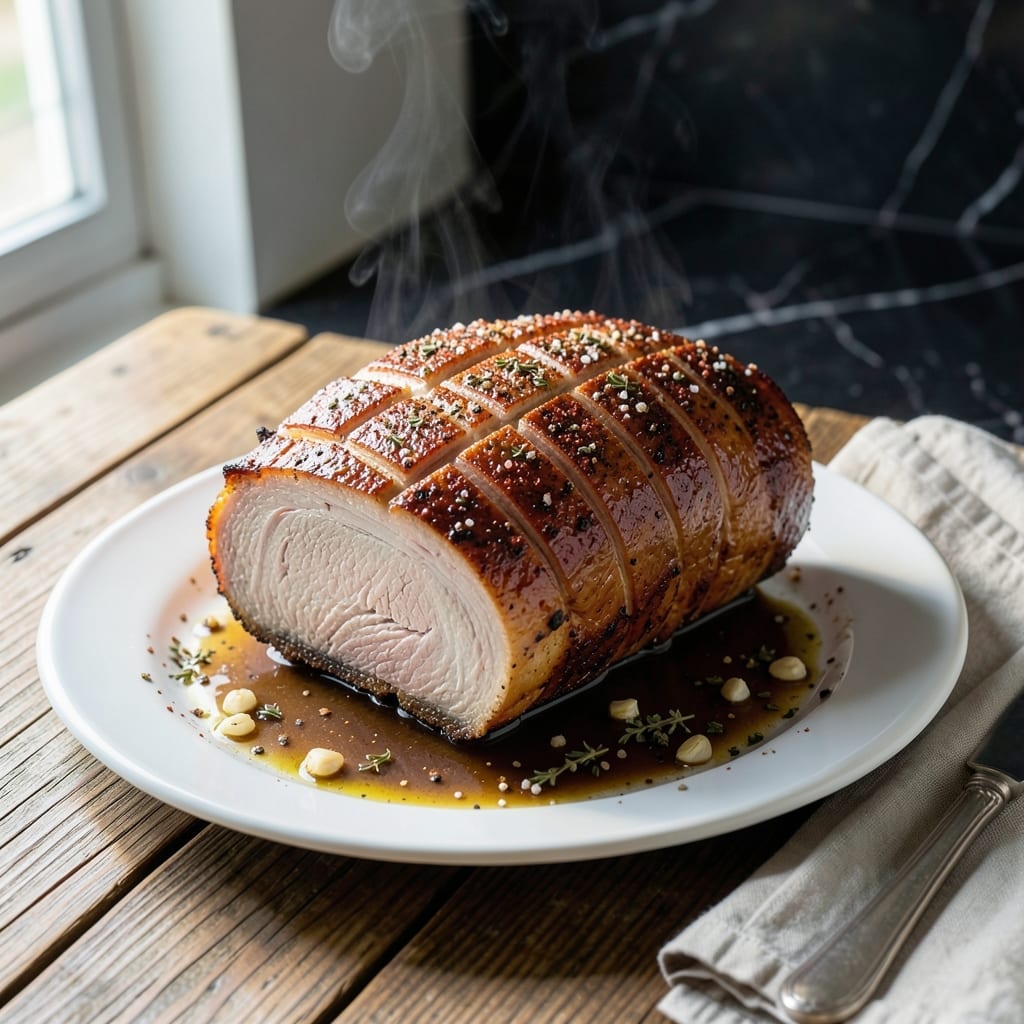
I discovered the magic of slow-roasted pork shoulder at Mrs. Henderson’s kitchen in Cincinnati, where the aroma filled her home for hours. This method transforms tough cuts into tender, flavorful perfection.
The oven does most of the work as the pork cooks low and slow, breaking down connective tissue into melt-in-your-mouth results. A simple dry rub of salt, pepper, and herbs enhances the natural richness without overpowering.
By the time it emerges, the meat will pull apart effortlessly with a fork, juicy and infused with deep, savory flavor. The crust develops a caramelized exterior that seals in every drop of moisture.
This is the kind of dish that turns a regular Sunday into something memorable. The leftovers, if any remain, make incredible sandwiches the next day.
Ingredients for Pork Shoulder Blade Roast Recipe Oven
Slow-roasted perfection starts with just a few quality cuts and spices. Nothing complicated, all delicious.
| Ingredient | Amount | Notes |
|---|---|---|
| Pork Shoulder Blade Roast 🥩 | 4 lb | Bone-in, skin-on preferred |
| Kosher Salt 🧂 | 2 tbsp | Diamond Crystal preferred |
| Freshly Ground Black Pepper 🌶️ | 1 tbsp | Coarse grind ideal |
| Garlic Powder 🧄 | 2 tsp | Not garlic salt |
| Dried Oregano 🍃 | 1 tbsp | Mediterranean variety |
| Smoked Paprika 🌶️ | 1 tsp | Sweet or hot variety |
| Onion Powder 🧅 | 1 tbsp | Fine grind preferred |
| Olive Oil 🫒 | 2 tbsp | Extra-virgin for richness |
| Yellow Onion 🧅 | 1 whole | Large, roughly chopped |
| Carrots 🥕 | 3 whole | Peeled, cut into chunks |
| Celery Stalks 🌿 | 3 pieces | Cut into large pieces |
| Chicken Broth 🥣 | 1 cup | Low-sodium preferred |
| Apple Cider Vinegar 🍏 | 2 tbsp | For brightness and balance |
| Brown Sugar 🍚 | 2 tbsp | Light or dark variety |
The pork is the star here. Bone-in, skin-on shoulder blade roast gives you that fall-apart texture—boneless works but lacks depth. I grab mine from Costco or the butcher counter at Kroger (ask for the blade cut, not picnic). Look for good marbling and a thick fat cap. The dry rub is simple but potent: don’t skimp on the Diamond Crystal kosher salt (it’s less dense, so you need more by volume).
Out of garlic powder? Fresh minced garlic at double the amount works, but the powder distributes better in the rub. No smoked paprika? Regular paprika plus a pinch of chipotle powder gets you close. The vinegar can be swapped for white wine or lemon juice. For the broth, vegetable broth is fine if that’s what you’ve got (just reduce salt in the rub).
Leftover pork keeps in the fridge for 4-5 days—perfect for sandwiches or tacos. Freeze portions for up to 3 months (slice before freezing for easy use). The roast can sit in the rub overnight if you want to prep ahead (worth the extra minute).
Why You’ll Love This Recipe
- Set It and Forget It: I rub the pork with salt, pepper, garlic powder, and oregano, then let the oven do all the work.
- Honestly Addictive: That combo of garlic and oregano creates a crust so flavorful I catch myself sneaking bites straight from the pan.
- Meal Prep Hero: One roast feeds us for days—tacos, sandwiches, or just reheated with veggies.
- Budget Stretch: Pork shoulder blade roast is cheap, and this recipe turns it into something that tastes like a weekend splurge.
Step-by-Step Instructions for Pork Shoulder Blade Roast Oven
Here’s the method I use for that perfect fall-apart texture every single time.
Step 1: Season and Prepare the Pork Shoulder
Pat the 4 lb Pork Shoulder Blade Roast dry with paper towels—this is crucial for achieving that perfect crust. I like to score the fat cap in a crosshatch pattern to help the seasoning penetrate and render the fat more efficiently during cooking.
In a small bowl, combine the 2 tbsp Kosher Salt, 1 tbsp Freshly Ground Black Pepper, 2 tsp Garlic Powder, 1 tbsp Dried Oregano, 1 tsp Smoked Paprika, and 1 tbsp Onion Powder. Rub this mixture all over the pork, making sure to get it into every crevice and under the scored fat. Let the seasoned roast sit at room temperature for 30 minutes to allow the salt to begin working its magic.
Step 2: Sear and Build the Braising Liquid
Preheat your oven to 325°F. While it heats, warm the 2 tbsp Olive Oil in a large Dutch oven over medium-high heat. Sear the pork on all sides until deeply browned—this should take about 3-4 minutes per side. You’re looking for a rich, mahogany crust that forms the flavor foundation.
Remove the pork and set it aside. In the same pot, add the roughly chopped 1 whole Yellow Onion, chunked 3 whole Carrots, and large pieces of 3 pieces Celery Stalks. Sauté for 4-5 minutes until the vegetables begin to soften and develop some color. This builds another layer of flavor in your braising liquid.
Step 3: Braise to Perfection
Return the pork to the Dutch oven, fat-side up. Pour in the 1 cup Chicken Broth, 2 tbsp Apple Cider Vinegar, and 2 tbsp Brown Sugar. The liquid should come about halfway up the roast—if it doesn’t, add a bit more broth. Cover tightly with the lid and transfer to the preheated oven.
Braise for 3 to 3½ hours, checking occasionally and turning the roast every 45 minutes to ensure even cooking. You’ll know it’s ready when the meat pulls apart effortlessly with a fork and reaches an internal temperature of 195-200°F. The house will smell incredible at this point—resist the urge to peek too often, as you’ll lose valuable heat.
Step 4: Rest and Serve
Carefully remove the pork from the Dutch oven and place it on a cutting board. Let it rest for at least 15 minutes—this allows the juices to redistribute throughout the meat. I know it’s tempting to dig in right away, but this step ensures every bite is as juicy as possible.
While the pork rests, you can skim some of the fat from the braising liquid and reduce it on the stovetop for a quick pan sauce if desired. Shred the pork using two forks, discarding any large fat pieces. Serve the tender meat with some of the cooking liquid spooned over the top for maximum flavor. The pork should be so tender it practically melts in your mouth.
Pro Tips For Making Pork Shoulder Blade Roast Recipe Oven
- Start Hot, Finish Low: Sear the roast at 450°F for 20-30 minutes to develop a crust, then drop the oven to 300°F—this renders fat without drying out the meat.
- Salt Generously: Use at least 1 tablespoon of kosher salt per pound of pork and let it sit for an hour before cooking; I learned this the hard way after my first few roasts tasted bland.
- Don’t Rush Resting: Let the roast rest under foil for 15-20 minutes after cooking—skipping this makes the juices run all over the cutting board instead of staying in the meat.
- Pat It Dry: Before seasoning, blot the pork shoulder with paper towels; even a little moisture prevents the rub from sticking and the crust from forming.
Creative Variations of These Flavors
Cincinnati BBQ Style
For a taste of home, I swap the dry rub for a Cincinnati-style mix: 2 tbsp brown sugar, 1 tbsp chili powder, and 1 tsp ground cumin. Add ½ cup ketchup and 2 tbsp apple cider vinegar to the braising liquid. Mrs. Henderson would approve. 🔥
Asian Five-Spice Fusion
Replace the dry rub with 1 tbsp five-spice powder, 1 tbsp soy sauce, and 1 tbsp honey. Use ginger slices and star anise in the braising liquid instead of carrots and celery. This Pacific Northwest twist nods to Portland’s diverse food scene.
Sweet and Spicy Glaze
In the last 30 minutes of cooking, brush the pork with a mix of ¼ cup brown sugar, 2 tbsp sriracha, and 1 tbsp apple cider vinegar. The glaze caramelizes into a sticky, spicy-sweet crust that Lily absolutely loves.
Herb-Crusted Mediterranean
Press a paste of 4 minced garlic cloves, 2 tbsp fresh rosemary, and 2 tbsp olive oil onto the pork before searing. Add 1 cup white wine and 1 tbsp lemon zest to the braising liquid. Tom requests this variation for Sunday dinners.
Coffee and Chili Rub
For a deeper flavor, mix 1 tbsp instant coffee, 1 tbsp chili powder, and 1 tsp cocoa powder into the dry rub. The coffee enhances the pork’s richness without overpowering. I picked up this trick at a Portland farmers market. ✨
Apple Butter Braise
Stir ½ cup apple butter into the braising liquid and add 1 sliced apple to the pot. This variation reminds me of those Cincinnati fall days with Mrs. Henderson. The apple butter adds a subtle sweetness that pairs beautifully with the pork.
Nutrition Facts
Frequently Asked Questions
Can I use a boneless cut instead?
Yes, but bone-in adds more flavor and helps keep the meat moist during the long cook. A boneless roast will still work but may cook slightly faster. Check for doneness at 195°F internal temperature regardless of cut.
Why do I need to turn the roast during cooking?
Turning every 45 minutes ensures even cooking and prevents one side from drying out. It also helps the fat cap render properly, basting the meat as it roasts. This simple step makes a noticeable difference in texture.
What if my pork isn’t tender after 3 hours?
If it hasn’t reached 195-200°F internally, continue cooking. Covered roasts can safely cook at 325°F for up to 4 hours total. The connective tissue needs time to break down completely.
Can I make this in a slow cooker instead?
Sear the meat first, then cook on low for 8-10 hours or high for 5-6 hours. Add ½ cup extra liquid since slow cookers don’t reduce like ovens do.

- Potato Patty Recipe No Egg: Crispy Edges Without the Binder - October 30, 2026
- Paula Deen’s Potato Chip Cookies Recipe: Salty-Sweet Crunch in Every Bite - October 30, 2026
- Potato Gnocchi Recipe Ideas: Pillowy Soft Dumplings With Rustic Charm - October 30, 2026