
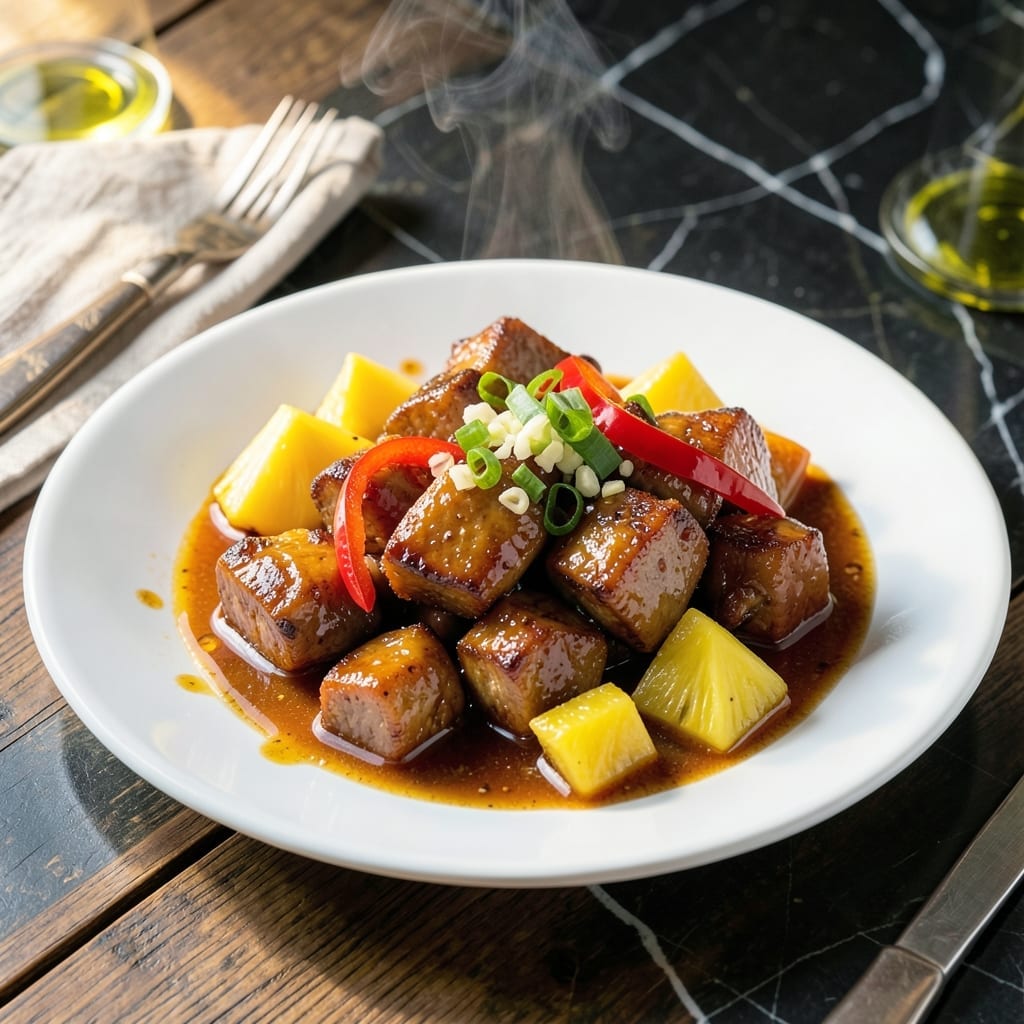
This recipe brings authentic Filipino flavors to your kitchen with a perfect balance of sweet and tangy. I’ve refined the traditional method to ensure every bite delivers the genuine taste of Panlasang Pinoy.
The secret lies in the sauce—a careful blend of pineapple juice, vinegar, and brown sugar that creates that signature sweet-tangy profile. Each ingredient plays a crucial role in building layers of authentic flavor.
You’ll achieve tender pork pieces coated in a glossy, vibrant sauce with vegetables that maintain their crispness. The technique ensures the dish stays true to its roots while being accessible for home cooks.
Serve with steamed rice to complete this classic Filipino meal. The combination is as comforting as it is delicious.
Ingredients for Pork Sweet and Sour Recipe Panlasang Pinoy
Authentic Filipino sweet-tangy perfection starts with these carefully selected ingredients.
| Ingredient | Amount | Notes |
|---|---|---|
| Pork Shoulder 🥩 | 1 ½ lb | Cut into 1-inch cubes, boneless |
| Pineapple Chunks 🍍 | 1 cup | Reserve juice for sauce |
| Pineapple Juice 🍹 | 1 cup | From canned pineapple or fresh |
| White Vinegar 💧 | ½ cup | Standard white variety |
| Brown Sugar 🍚 | ½ cup | Light or dark, packed |
| Soy Sauce 🫒 | 2 tbsp | Regular or low-sodium |
| Tomato Ketchup 🍅 | ½ cup | For color and tang |
| Green Bell Pepper 🌶️ | 1 whole | Seeded and cut into strips |
| Red Bell Pepper 🌶️ | 1 whole | Seeded and cut into strips |
| Carrot 🥕 | 1 whole | Peeled and sliced into rounds |
| Onion 🧅 | 1 whole | Medium, sliced into wedges |
| Garlic Cloves 🧄 | 4 cloves | Minced for maximum flavor |
| Cornstarch 🌾 | 2 tbsp | For thickening the sauce |
| Vegetable Oil 🫒 | 2 tbsp | For frying pork pieces |
| Salt 🧂 | 1 tsp | Adjust to taste |
The pork shoulder is non-negotiable for authentic texture—boneless, well-marbled cuts from Asian markets or Whole Foods yield the most tender results. Fresh pineapple is ideal (look for vibrant color and firm flesh), but canned works in a pinch—just drain and reserve that juice. The brown sugar should be light or dark, packed firmly; it’s doing double duty for sweetness and caramelization.
No pineapple juice? Orange juice with a splash of rice vinegar mimics the tang. Swap bell peppers for green beans or snow peas if you prefer crunch. The soy sauce can be tamari for gluten-free, but stick to regular for the classic flavor. For extra depth, a dash of fish sauce (optional) enhances umami without overpowering the sweet-tangy balance.
The sauce thickens best with fresh cornstarch—store it in an airtight container for up to 6 months. Leftovers keep 3-4 days in the fridge or freeze for 3 months. Reheat gently to preserve the glossy texture.
Why You’ll Love This Recipe
- One Pan Meal: I toss everything in—pork, pineapple, sauce—and walk away while it simmers to perfection.
- Sweet-Tangy Magic: The brown sugar caramelizes with vinegar and pineapple juice into this sticky, finger-licking glaze.
- Feeds a Crowd: I’ve served this at birthdays and random Tuesdays—always disappears first.
- Budget Stretch: Pork shoulder stays cheap, and the pineapple does double duty as fruit and sauce.
Step-by-Step Instructions for Pork Sweet and Sour
Master this authentic technique for perfectly balanced sweet and tangy flavors every time.
Step 1: Prepare and Brown the Pork Shoulder
Cut the 1.5 lb pork shoulder into 1-inch cubes as specified. Pat the pieces dry with paper towels, then season with 1 tsp salt. Heat a large skillet over medium-high heat and add 2 tbsp vegetable oil.
Working in batches, brown the pork cubes for 3-4 minutes per side until golden brown on all sides. Don’t overcrowd the pan—this ensures proper browning instead of steaming. Transfer the browned pork to a plate and set aside.
Step 2: Sauté Aromatics and Vegetables
In the same skillet with the rendered pork fat, add the minced 4 cloves garlic cloves and cook for 30 seconds until fragrant. Add the sliced 1 whole onion, 1 whole green bell pepper, 1 whole red bell pepper, and 1 whole carrot.
Sauté the vegetables for 4-5 minutes until they begin to soften but still retain some crispness. The peppers should brighten in color while the onion becomes translucent. This builds the flavor foundation for the sauce.
Step 3: Create the Sweet and Sour Sauce
Pour in the 1 cup pineapple juice, 0.5 cup white vinegar, 0.5 cup brown sugar, 2 tbsp soy sauce, and 0.5 cup tomato ketchup. Stir well to combine and dissolve the sugar.
In a small bowl, mix 2 tbsp cornstarch with 2 tbsp water to create a slurry. Pour this into the skillet and stir constantly as the sauce thickens. Cook for 2-3 minutes until the sauce coats the back of a spoon.
Step 4: Simmer and Finish
Return the browned pork to the skillet along with 1 cup pineapple chunks. Stir to coat everything in the sauce. Reduce heat to medium-low and simmer uncovered for 8-10 minutes.
The pork should become tender and the sauce should thicken further, creating a glossy coating on all ingredients. Stir occasionally to prevent sticking. The dish is ready when the pork is cooked through and the vegetables are tender-crisp.
Serve immediately over steamed rice, ensuring each portion has a good balance of pork, vegetables, and sauce.
Pro Tips For Making Pork Sweet And Sour Recipe Panlasang Pinoy
- Brown the Pork: Sear the pork shoulder in batches over medium-high heat until golden brown—I learned this the hard way after ending up with pale, soggy meat that didn’t absorb the sauce well.
- Balance the Tang: Taste before adding all the vinegar; I was skeptical until I tried it, but sometimes 1 tablespoon less makes the sweet-sour harmony just right.
- Skip the Overcooking: Simmer the pork just until tender, about 20-25 minutes—any longer and it turns dry, no matter how much pineapple juice you add.
- Use Fresh Pineapple: Fresh pineapple chunks hold their shape better than canned, and the juice tastes brighter—my grandmother swore by this, and she was right.
Best Sauces and Condiments for This Dish
Classic Condiments
I always serve this with banana ketchup on the side for an extra Filipino touch. Its sweeter, fruitier profile complements the dish beautifully. Just 1-2 tbsp per serving adds authentic flavor without overpowering.
Spicy Enhancements
For heat lovers, I recommend sambal oelek or sriracha. Start with ½ tsp and adjust to taste. The spice cuts through the sweetness perfectly, adding depth to each bite. 🌶️
Tangy Accompaniments
A side of calamansi juice or lime wedges brightens the dish. Squeeze 1-2 tbsp over your plate for a citrusy kick. This is my personal favorite way to balance the richness.
Crunchy Toppings
Crushed chicharron (pork rinds) add wonderful texture contrast. Sprinkle ¼ cup over your serving for a crispy finish. I find this especially satisfying with the tender pork.
Fresh Garnishes
Thinly sliced green onions or cilantro add freshness. About 2 tbsp per serving provides color and a mild herbal note. This simple touch makes the dish look restaurant-quality. 💛
Extra Sauce
Always make extra sauce—it’s perfect for drizzling over rice. Double the sauce portion and store in an airtight container for up to 5 days. I use it on everything from fried eggs to grilled chicken.
Nutrition Facts
Frequently Asked Questions
Can I use a different cut of pork?
Yes, but shoulder is ideal for tenderness. Pork tenderloin works but can dry out if overcooked. Avoid lean cuts like pork loin, as they lack the fat needed for rich flavor.
How do I prevent the sauce from being too thin?
Cook the cornstarch slurry for 2-3 minutes until thick. If still thin, mix 1 tsp cornstarch with 1 tbsp water and stir in. Simmer until desired consistency.
Can I make this dish ahead of time?
Cook as directed, cool, and store in an airtight container for up to 3 days. Reheat gently on the stove with a splash of water to restore texture.

- Potato Patty Recipe No Egg: Crispy Edges Without the Binder - October 30, 2026
- Paula Deen’s Potato Chip Cookies Recipe: Salty-Sweet Crunch in Every Bite - October 30, 2026
- Potato Gnocchi Recipe Ideas: Pillowy Soft Dumplings With Rustic Charm - October 30, 2026