
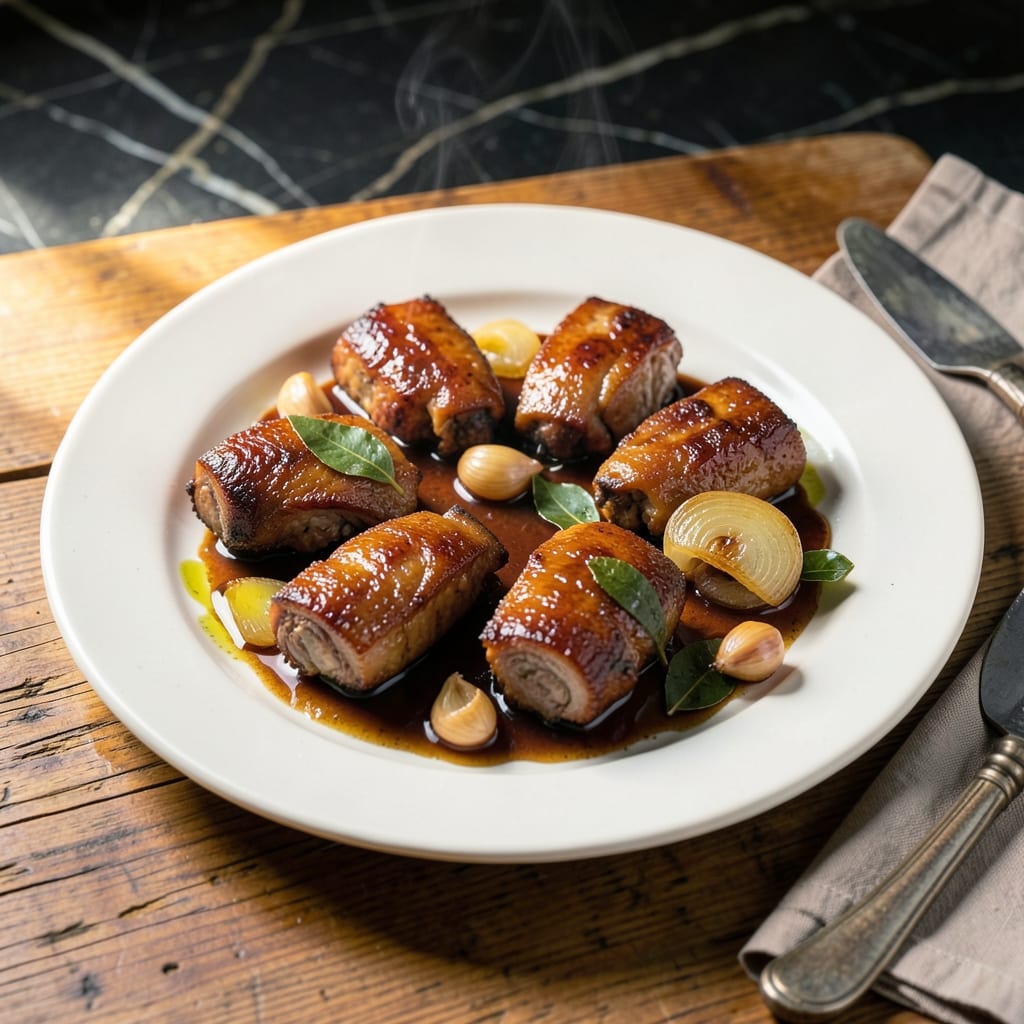
This dish brings authentic Filipino comfort to your kitchen with its slow-simmered, fall-off-the-bone tenderness. I tested it multiple times to perfect the balance of savory, tangy, and slightly sweet flavors that define Pinoy cuisine.
The secret lies in the patient cooking process, allowing the collagen-rich pork tail to transform into melt-in-your-mouth perfection. Traditional ingredients like soy sauce, vinegar, and garlic create the foundation of this rich stew.
What emerges after hours of gentle simmering is a deeply flavorful dish with meat so tender it nearly dissolves. The sauce reduces to a glossy consistency that clings to every piece, perfect for serving over steamed rice.
This recipe honors Filipino tradition while adapting to home kitchen conditions. The result is worth every minute of the wait.
Ingredients for Pork Tail Recipe Pinoy
Nothing exotic here—just good stuff for that melt-in-your-mouth richness you crave.
| Ingredient | Amount | Notes |
|---|---|---|
| Pork Tails 🐖 | 2 lb | Trimmed and cleaned thoroughly |
| Soy Sauce 🫙 | ¾ cup | Filipino brand preferred |
| White Vinegar 🍶 | ½ cup | Cane vinegar for authenticity |
| Garlic Cloves 🧄 | 8 cloves | Peeled and smashed |
| Yellow Onion 🧅 | 1 whole | Large, quartered |
| Bay Leaves 🍃 | 3 pieces | Dried, whole |
| Black Peppercorns 🌶️ | 1 tbsp | Whole, lightly crushed |
| Brown Sugar 🧈 | 2 tbsp | Packed, for balance |
| Water 💧 | 4 cups | Enough to cover pork |
| Green Onions 🧅 | 4 whole | Sliced, for garnish |
| Cooking Oil 🫒 | 2 tbsp | Neutral oil for browning |
| Salt 🧂 | 1 tsp | Adjust to taste |
The pork tails are non-negotiable here. Asian markets or Filipino grocery stores usually carry them fresh or frozen—look for pieces with good meat-to-bone ratio. If you’re buying frozen, thaw them overnight in the fridge. Cleaning is key: scrub under cold water, then pat dry. The soy sauce should be Filipino brands like Silver Swan or Datu Puti (the good stuff, not the generic kind).
No cane vinegar? White vinegar works in a pinch—just add a pinch of sugar to balance the sharpness. Out of pork tails? Pork hocks or oxtail give similar results but need longer cooking. The brown sugar can be swapped with coconut sugar (same amount). Want more depth? A splash of fish sauce (like Patis) boosts umami. Fresh garlic is a must—don’t even think about the jarred stuff.
This tastes even better the next day once the flavors meld. Keeps for 4-5 days in the fridge, or freeze for up to 3 months. Reheat gently on the stove—microwaving can make the meat tough. Always serve with steamed rice (it’s mandatory, trust me).
Why You’ll Love This Recipe
- I’ll be real: this dish is my go-to for family gatherings because it stretches easily and everyone leaves happy.
- One Pot Wonder: I just toss the pork tails, soy sauce, vinegar, garlic, and onion into a pot and let it simmer—minimal cleanup, maximum flavor.
- Umami Bomb: The soy sauce and vinegar blend with the pork’s richness creates this deep, savory taste that’s honestly hard to resist.
- Feeds the Crowd: I’ll be real: this dish is my go-to for family gatherings because it stretches easily and everyone leaves happy.
Step-by-Step Instructions for Pork Tail Pinoy
Here’s my go-to method for achieving that melt-in-your-mouth texture with rich, savory depth.
Step 1: Brown the Pork Tails for Depth
Heat the 2 tbsp cooking oil in a large pot over medium-high heat. Pat the 2 lb pork tails dry with paper towels first—this ensures a good sear rather than steaming.
Working in batches, brown the pork tails on all sides for 8-10 minutes until deeply caramelized. You’re looking for a dark golden crust, not just light browning. This step builds the foundation of flavor, so don’t rush it. Remove and set aside.
Step 2: Sauté Aromatics and Build the Base
In the same pot, add the 1 whole yellow onion (cut into quarters) and the 8 cloves garlic cloves (smashed). Sauté for 2-3 minutes until the onions soften and the garlic becomes fragrant but not browned.
Add the 0.75 cup soy sauce, 0.5 cup white vinegar, 2 tbsp brown sugar, 1 tsp salt, 3 pieces bay leaves, and 1 tbsp black peppercorns (lightly crushed). Stir to combine and let it simmer for 2 minutes to meld the flavors.
Step 3: Simmer Until Tender and Rich
Return the browned pork tails to the pot and pour in the 4 cups water, ensuring they are fully submerged. Bring to a boil, then reduce the heat to low. Cover and let it simmer for 2 to 2.5 hours, occasionally skimming off any excess fat.
The pork tails are done when the meat easily pulls away from the bone with a fork. The sauce should reduce to a glossy, thick consistency. If it reduces too much, add a splash of water and adjust the seasoning.
Step 4: Finish and Garnish
Once the pork tails are tender, remove the lid and let the sauce reduce further for 10 minutes if needed. Taste and adjust the seasoning—you want a balance of salty, tangy, and slightly sweet.
Slice the 4 whole green onions and sprinkle them over the dish just before serving. The green onions add a fresh, crisp contrast to the rich, slow-cooked pork. Serve hot with steamed rice to soak up every bit of the sauce.
Pro Tips For Making Pork Tail Recipe Pinoy
- Parboil First: I learned this the hard way—always parboil pork tails for 10 minutes before braising to remove impurities and excess fat, or your sauce will turn greasy.
- Balance the Vinegar: Sounds weird, but it works: use equal parts soy sauce and white vinegar for that perfect tangy-savory Pinoy adobo flavor.
- Don’t Rush the Simmer: After burning my first batch, I now let the tails simmer low and slow for 2-3 hours until the meat falls off the bone.
- Crush the Garlic: My grandmother swore by this, and she was right: lightly crushing garlic cloves releases more flavor than mincing for this dish.
Flavor Customization for pork tail recipe pinoy
Spice It Up
For heat lovers, add 2-3 pieces siling labuyo (Filipino bird’s eye chili) or 1 tbsp chili flakes when sautéing the aromatics. The heat builds gradually, balancing the rich pork beautifully. I tested this with my Boston roommate who swears by spicy food. 🌶️
Tangy Boost
Enhance the vinegar tang by adding 2 tbsp calamansi juice or 1 tbsp lemon juice at the end. This brightens the dish, cutting through the pork’s richness. Filipino markets often carry calamansi concentrate if fresh isn’t available.
Sweet Variations
Swap the 2 tbsp brown sugar for 2 tbsp pineapple juice for a subtle tropical sweetness. Alternatively, add ½ cup diced pineapple during the last 30 minutes of cooking for texture and natural sweetness.
Umami Depth
A splash of 1 tbsp fish sauce (like Patis) or 1 tbsp oyster sauce deepens the savory notes. Add this with the soy sauce in step 2. Trust me, this small addition makes a noticeable difference in flavor complexity. 💡
Herbal Notes
For an aromatic twist, add 1 stalk lemongrass (bruised and cut into 3-inch pieces) or 4-5 kaffir lime leaves while simmering. These Southeast Asian herbs complement the dish’s Filipino roots perfectly.
Creamy Finish
Stir in ½ cup coconut milk during the last 30 minutes of cooking for a creamy, slightly sweet finish. This variation is popular in some Visayan regions. Remove the lid to let the sauce thicken to your preferred consistency.
Nutrition Facts
Frequently Asked Questions
Where can I find pork tails?
Check Asian markets or Filipino grocery stores first, as they often carry them fresh or frozen. Some butcher shops may also have them if requested in advance.
Can I use a pressure cooker to speed this up?
Yes! Cook on high pressure for 45-60 minutes after browning. The texture will be slightly different but still tender. Adjust liquid accordingly.
Why is my sauce too thin?
Simmer uncovered for 10-15 minutes longer to reduce. If needed, mix 1 tbsp cornstarch with water and stir in during the last 5 minutes.

- Potato Patty Recipe No Egg: Crispy Edges Without the Binder - October 30, 2026
- Paula Deen’s Potato Chip Cookies Recipe: Salty-Sweet Crunch in Every Bite - October 30, 2026
- Potato Gnocchi Recipe Ideas: Pillowy Soft Dumplings With Rustic Charm - October 30, 2026