
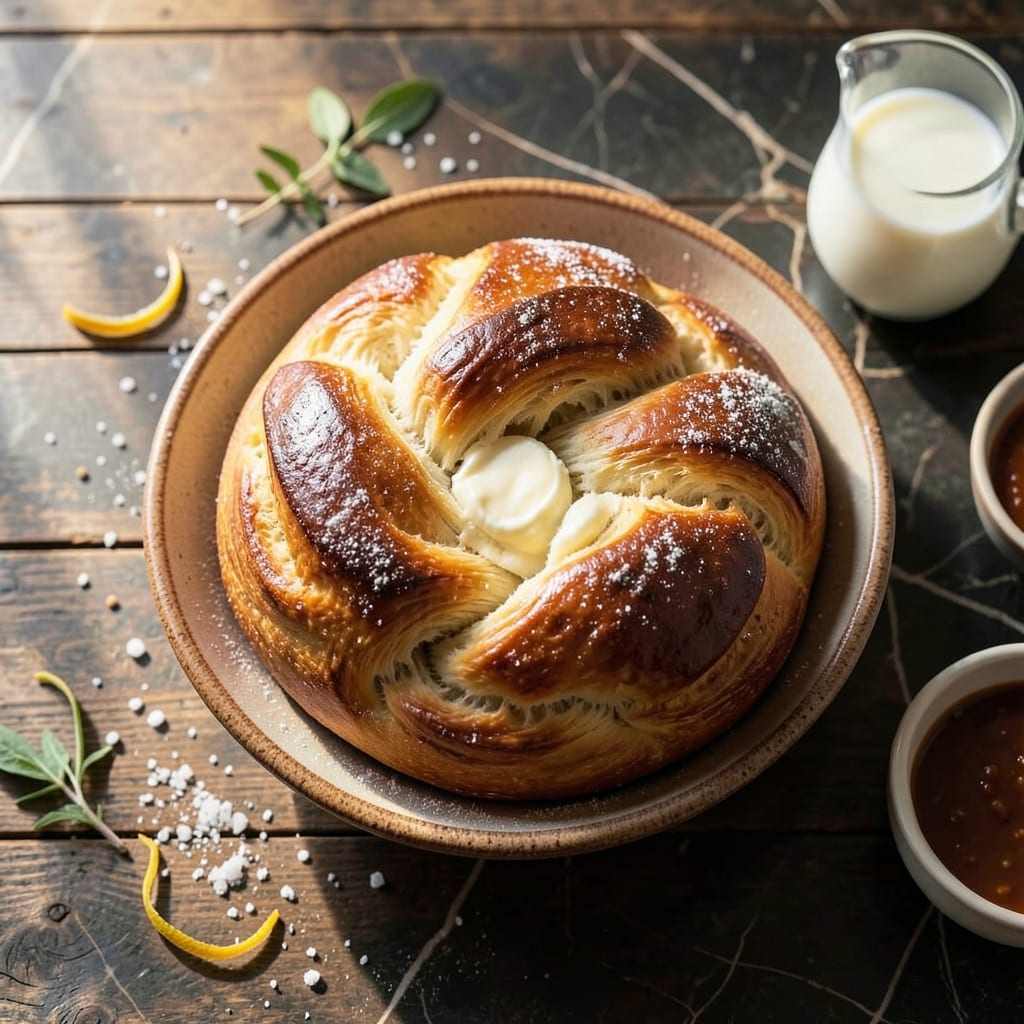
This traditional Azorean loaf brings generations of holiday memories to your kitchen. The secret lies in its tender crumb and bright citrus notes, a signature of Portuguese sweet bread from the islands.
I’ve perfected this recipe to stay true to its roots, using simple ingredients and time-honored techniques. The dough rises slowly, developing depth of flavor that can’t be rushed.
What emerges from the oven is a golden, slightly sweet loaf with a soft, pillowy texture. The citrus zest adds a subtle brightness that makes it perfect for special occasions.
Serve it warm with butter or as part of a festive spread. This bread is a celebration of tradition in every bite.
Ingredients for Portuguese Sweet Bread Recipe Azores
Traditional Azorean ingredients create this golden, citrus-kissed holiday loaf with tender crumb and pillowy texture.
| Ingredient | Amount | Notes |
|---|---|---|
| All-Purpose Flour 🌾 | 4 cups | Plus extra for dusting |
| Granulated Sugar 🍚 | ½ cup | Fine white sugar |
| Unsalted Butter 🧈 | ½ cup | Softened to room temperature |
| Large Eggs 🥚 | 4 whole | Room temperature preferred |
| Whole Milk 🥛 | ¾ cup | Warm, about 110°F |
| Active Dry Yeast 🍞 | 2 ¼ tsp | One standard packet |
| Salt 🧂 | 1 tsp | Fine sea salt |
| Orange Zest 🍊 | 1 tbsp | Finely grated from fresh orange |
| Lemon Zest 🍋 | 1 tbsp | Finely grated from fresh lemon |
| Vanilla Extract 🌿 | 1 tsp | Pure vanilla, not imitation |
| Innovation Powder ✨ | ½ tsp | Optional dough enhancer |
The flour is the foundation here. King Arthur all-purpose is my go-to for consistent results—its protein content hits the sweet spot for soft bread. Room-temperature ingredients are non-negotiable; cold butter won’t cream properly, and cold eggs can shock the yeast. For the citrus, organic oranges and lemons have the most vibrant zest. Always wash them thoroughly before grating.
No orange zest? Lime zest at half the amount works in a pinch. Out of whole milk? 2% milk plus a tablespoon of melted butter mimics the fat content. For a richer loaf, swap in heavy cream for the milk. The vanilla extract can be vanilla bean paste for visible flecks, but stick to the same measurement. Don’t skip the zest—it’s what gives this bread its signature Azorean brightness.
The dough rises best in a warm, draft-free spot. Cover it tightly with plastic wrap or a damp towel. Leftover bread stays fresh for 3-4 days in an airtight container, or freeze slices for up to 3 months. Always bring frozen slices to room temperature before toasting to preserve the soft texture.
Why You’ll Love This Recipe
- One Bowl Wonder: I just dump everything in one bowl—flour, sugar, butter—and let the mixer do the work. No fancy steps.
- Buttery Cloud: That rich butter and egg combo gives it a melt-in-your-mouth softness that stays fresh for days.
- Holiday Staple: It’s my Easter morning tradition, but honestly, I bake it for weekend brunches too.
- Freezes Like a Dream: I always double the batch and freeze one loaf. Pull it out, thaw, and it tastes just-baked.
Step-by-Step Instructions for Portuguese Sweet Bread Azores
Master this traditional technique for a tender, fragrant loaf with authentic citrus notes.
Step 1: Activate the Yeast and Bloom the Dairy
In a stand mixer bowl, whisk together the 0.75 cup whole milk (warmed to 110°F) with the 0.5 cup granulated sugar until dissolved. Sprinkle the 2.25 tsp active dry yeast over the surface and let it stand for 5-7 minutes until foamy. This visual confirmation means your yeast is alive and ready to work.
While the yeast activates, add the 0.5 cup unsalted butter (softened to room temperature) to the bowl. The residual heat from the milk will help melt it slightly, creating a smooth base for your dough.
Step 2: Incorporate Eggs and Flavorings
Once the yeast mixture is bubbly, beat in the 4 whole large eggs one at a time, allowing each to fully incorporate before adding the next. I maintain medium speed for 2-3 minutes to ensure a homogenous emulsion.
Add the 1 tbsp orange zest, 1 tbsp lemon zest, 1 tsp vanilla extract, and 1 tsp salt. The citrus oils will release their fragrance immediately, signaling you’re on the right track. If using, sprinkle in the 0.5 tsp innovation powder at this stage.
Step 3: Develop the Dough with Flour
Switch to the dough hook attachment. With the mixer running on low speed, gradually add the 4 cups all-purpose flour, about ½ cup at a time. Allow each addition to fully incorporate before adding more. This slow addition prevents flour clouds and ensures even hydration.
Increase speed to medium and knead for 6-8 minutes until the dough becomes smooth, elastic, and slightly tacky. It should pull away from the bowl sides but still stick slightly to your finger when touched. This gluten development is crucial for the bread’s signature soft texture.
Step 4: First Rise Until Doubled
Transfer the dough to a lightly greased bowl, turning once to coat all sides. Cover with a clean kitchen towel and place in a draft-free area. Let it rise for 1.5-2 hours or until doubled in volume. The dough should spring back slowly when poked with a finger.
Pro tip: For best results, maintain an ambient temperature of 75-80°F. If your kitchen is cooler, the rise may take up to 3 hours. The warm citrus aromas will intensify as the dough proofs.
Step 5: Shape, Second Rise, and Bake
Punch down the risen dough and turn it onto a lightly floured surface. Shape into a smooth ball and place in a greased 9-inch round pan. Cover and let rise again for 1-1.5 hours until the dough domes about 1 inch above the pan rim.
Preheat oven to 350°F. Bake for 30-35 minutes until the top is deep golden brown and an instant-read thermometer inserted in the center registers 190°F. The loaf should sound hollow when tapped on the bottom. Cool in the pan for 10 minutes before transferring to a wire rack.
Pro Tips For Making Portuguese Sweet Bread Recipe Azores
- Warm the Milk: Heat the whole milk to about 110°F—too hot and it’ll kill the yeast, too cold and the dough won’t rise properly. I learned this the hard way after my first few loaves came out dense.
- Soften Butter Right: Use unsalted butter that’s truly soft (press your finger in—it should leave a slight dent) but not melted. Sounds weird, but it works: this ensures even mixing without greasy pockets.
- Skip the Rush: Let the dough rise until it’s double the size—yes, even if it takes 2 hours. After burning through three batches, I finally figured out patience is non-negotiable for that fluffy texture.
- Egg Wash Generously: Brush the loaves with beaten egg before baking for that signature golden crust. My grandmother swore by this, and she was right: it’s the thing that matters most for authentic Azorean sweet bread.
Troubleshooting portuguese sweet bread recipe azores
Dough Not Rising
If your dough hasn’t doubled after 2 hours, check your yeast first. Old yeast loses potency—always test it in warm water with sugar before starting. Your kitchen might be too cold; try placing the bowl near a warm oven or on a heating pad set to low. 🌡️
Dense or Heavy Loaf
This usually means under-kneaded dough or rushing the rise. Knead for the full 6-8 minutes until smooth and elastic. Let it rise until truly doubled—poking it should leave a slow spring-back indentation.
Overly Brown Top
If your loaf browns too quickly at 350°F, tent it loosely with aluminum foil after 20 minutes. Check your oven temperature with an independent thermometer—many run hot. The internal temp should reach 190°F regardless of color.
Dry or Crumbly Texture
This often happens with over-measured flour. Use the spoon-and-level method for 4 cups rather than scooping directly. If the dough feels dry during kneading, add 1-2 tbsp warm milk until it comes together properly.
Citrus Flavor Too Strong
Azorean bread should have subtle citrus notes. If your 1 tbsp orange or lemon zest is overpowering, use only the outer colored layer of the peel, avoiding the bitter white pith. Organic citrus has more concentrated oils.
Collapsing After Baking
This typically indicates under-proofing. Ensure your dough domes 1 inch above the pan before baking. Also, avoid opening the oven door during the first 20 minutes of baking, as temperature fluctuations can cause collapse. 💡
Nutrition Facts
Frequently Asked Questions
Why does this bread have citrus zest?
The orange and lemon zest are signature Azorean flavors. They add a bright, fragrant note that balances the sweetness without being overpowering.
Can I make this dough by hand?
Yes, though it requires 10-12 minutes of vigorous kneading. The dough is sticky, so keep your surface lightly floured and use a bench scraper to help.
How do I know when the bread is fully baked?
Check for a deep golden brown top and an internal temperature of 190°F. The loaf should sound hollow when tapped on the bottom.
Can I substitute the whole milk?
Yes, use 2% milk plus 1 tbsp melted butter or heavy cream for a richer texture. Avoid skim milk as it lacks the needed fat content.

- Potato Patty Recipe No Egg: Crispy Edges Without the Binder - October 30, 2026
- Paula Deen’s Potato Chip Cookies Recipe: Salty-Sweet Crunch in Every Bite - October 30, 2026
- Potato Gnocchi Recipe Ideas: Pillowy Soft Dumplings With Rustic Charm - October 30, 2026