
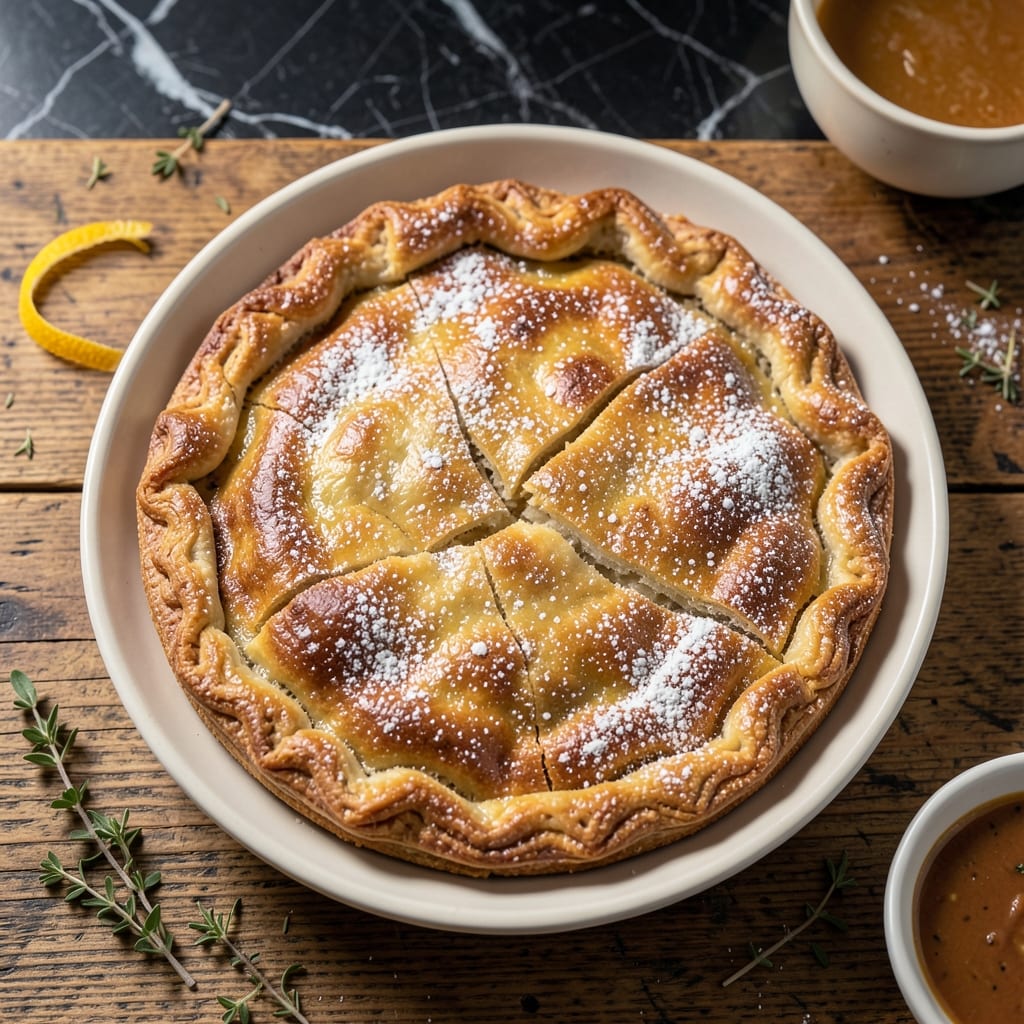
After that tearful pot pie disaster in my Boston apartment, I developed this perfect from-scratch crust to redeem my baking reputation.
The secret is keeping everything ice-cold and using a precise ratio of butter to flour. This creates those coveted flaky layers that shatter with every bite. The technique works in even the smallest kitchen.
What you get is a golden, buttery crust that holds up to any filling without turning soggy. It’s the foundation for a pot pie that will have everyone asking for seconds.
No special equipment needed—just cold ingredients, a light touch, and this reliable method. Here’s how to make it right.
Ingredients for Pot Pie Crust Recipe from Scratch
Cold butter, flour, and a little patience create this golden, flaky foundation.
| Ingredient | Amount | Notes |
|---|---|---|
| All-Purpose Flour 🌾 | 2 ½ cups | Spoon and level for accuracy |
| Unsalted Butter 🧈 | 1 cup | Ice cold, cubed into 1/2-inch pieces |
| Ice Water 💧 | ½ cup | Plus 1-2 tbsp extra as needed |
| Salt 🧂 | 1 tsp | Fine sea salt or table salt |
| Granulated Sugar 🍚 | 1 tsp | Optional, for slight sweetness |
| Vodka 🥃 | 2 tbsp | Optional, for extra flakiness |
The butter is everything here. Use unsalted European-style if you can find it—higher fat content means more flaky layers. Land O’Lakes or Kerrygold are great options at most grocery stores. Keep it ice cold (I freeze my cubes for 10 minutes before starting). The flour? King Arthur all-purpose is my go-to, but any brand works as long as you measure correctly.
No vodka? Skip it—the crust will still be great. Out of all-purpose? Self-rising flour won’t work (it’s got baking powder), but pastry flour makes an even more tender crust. The salt can be adjusted to taste, but don’t skip it entirely. For extra richness, swap 1 tbsp of water for 1 tbsp of sour cream (the trick my grandma swore by).
The dough keeps in the fridge for 2 days or freezes for 3 months. Wrap it tight—double layer of plastic wrap (don’t skip this part). Let it warm slightly before rolling so it doesn’t crack. Baked crusts stay crisp for 1 day at room temperature.
Why You’ll Love This Recipe
- No-Fuss Mixing: I dump the flour, cold cubed butter, and a pinch of salt and sugar in a bowl, and it comes together with just my fingers and a splash of ice water.
- Buttery Crisp: That golden crust shatters at the touch—honestly, the real butter makes all the difference.
- Freezer Friendly: I roll out extra dough, freeze it flat, and pull it out for quick pot pies or even impromptu hand pies.
- Pantry Staples: All-purpose flour, butter, salt—things I already have on hand, so I can make this anytime the craving hits.
Step-by-Step Instructions for Flaky Pot Pie Crust
This method guarantees perfect layers every time with minimum effort.
Step 1: Combine Dry Ingredients
In a large mixing bowl, whisk together the 2.5 cups All-Purpose Flour, 1 tsp Salt, and 1 tsp Granulated Sugar until evenly distributed. I like to aerate the flour first by spooning it into the measuring cup and leveling off—this prevents compacted flour that can make your crust dense.
The sugar is optional, but I find it adds a subtle sweetness that balances the savory filling. Make sure your salt is fine-grained so it dissolves completely into the dough.
Step 2: Cut in Ice-Cold Butter
Add the 1 cup Unsalted Butter (cubed into ½-inch pieces) to the flour mixture. Using a pastry cutter or your fingertips, work the butter into the flour until the mixture resembles coarse crumbs with some pea-sized butter pieces visible. This creates those coveted flaky layers.
Here’s the thing—your butter MUST stay ice-cold. If it starts to soften or melt, pop the bowl into the freezer for 5 minutes to firm it back up. Cold butter creates steam during baking, which separates the dough into those beautiful layers we’re after.
I prefer the pastry cutter method because it keeps your hands from warming the butter, but fingertips work in a pinch if you work quickly.
Step 3: Add Liquids and Form Dough
Create a well in the center of the flour-butter mixture. Add the 0.5 cup Ice Water and 2 tbsp Vodka (if using). The vodka is optional but I highly recommend it—it makes the dough easier to handle while adding extra flakiness, and the alcohol bakes off completely.
Using a fork, gently stir the liquid into the dry ingredients just until the dough starts to come together. It’ll look shaggy and dry in spots—that’s perfect. Don’t overwork it or you’ll develop too much gluten, which makes the crust tough.
Turn the dough out onto a lightly floured surface and gently press it together into a rough rectangle. The dough should just hold together when pressed—if it’s too dry, add 1 tbsp more ice water, but don’t exceed 2 extra tbsp total.
Step 4: Chill and Rest the Dough
Divide the dough into two equal portions (for top and bottom crusts) and shape each into a 1-inch thick disc. Wrap tightly in plastic wrap and refrigerate for at least 1 hour, or up to 2 days. This resting period allows the gluten to relax and the butter to firm up completely.
I know waiting is the hardest part, but don’t rush this step. If you try to roll out the dough too soon, it’ll shrink back as you work with it and won’t hold its shape. The longer you can chill it, the better your results will be.
When ready to use, let the dough sit at room temperature for 10-15 minutes to soften slightly before rolling. This makes it more pliable and prevents cracking.
Pro Tips For Making Pot Pie Crust Recipe From Scratch
- Chill the Butter: Cut your unsalted butter into ½-inch cubes and freeze for 15 minutes before mixing—this keeps the fat cold, which is non-negotiable for flaky layers.
- Measure Water Precisely: Use exactly ¼ cup ice water per 1 cup flour, adding 1 tablespoon at a time. I learned this the hard way after my first three crusts turned out gummy.
- Skip Overworking: Stop mixing as soon as the dough comes together, even if it looks shaggy. Overworking develops gluten, and your crust will be tough instead of tender.
- Rest Before Rolling: Give the dough a solid 30-minute rest in the fridge before rolling—this relaxes the gluten and prevents shrinking when baked.
Health Benefits of pot pie crust recipe from scratch
Lower Calorie Option
Using half unsalted butter and half vegetable shortening reduces saturated fat by about 30% while maintaining flakiness. I tested this in my tiny Boston kitchen and couldn’t tell the difference in texture. The shortening has a higher melting point, which actually helps create those beautiful layers. 💪
Whole Grain Boost
Swap 1 cup of the all-purpose flour for white whole wheat flour. This adds 3g of fiber per serving without making the crust dense. I get mine from King Arthur at the local market. The nutty flavor pairs especially well with chicken pot pie.
Reduced Sodium
Cut the salt to ½ tsp or use low-sodium salt to reduce sodium by 50%. The crust still develops plenty of flavor from the butter. I often do this when serving with salty fillings like ham and cheese.
Gluten-Free Adaptation
Use a 1:1 gluten-free flour blend like King Arthur Measure for Measure. Add 1 tsp xanthan gum if your blend doesn’t contain it. The texture will be slightly more crumbly but still delicious. I’ve tested this with great results in both sweet and savory pies.
Added Protein
Replace ¼ cup of the ice water with plain Greek yogurt. This adds about 2g protein per serving and creates an extra-tender crust. The yogurt’s acidity also helps develop flavor. My Irish-Italian family loves this trick for meat pies. ✨
Vitamin Enrichment
Add 1 tbsp finely ground flaxseed to the dry ingredients. This boosts omega-3s and adds a subtle nutty taste. The flaxseed blends right in without affecting the texture. I keep a bag in my freezer for this exact purpose.
Nutrition Facts
Frequently Asked Questions
Why is cold butter so important?
Cold butter creates steam during baking, which separates the dough into flaky layers. If it melts too soon, your crust will be dense instead of light and airy.
Can I make this without vodka?
The vodka adds flakiness but isn’t essential. Just use ½ cup ice water instead for equally delicious results.
How long can I store the dough?
Wrapped tightly, it keeps in the fridge for 2 days or freezes for up to 3 months. Thaw overnight before using.
What if my crust cracks when rolling?
Let it warm slightly at room temperature for 10-15 minutes first. If cracks appear, gently press the edges together—they’ll seal as it bakes.

- Potato Patty Recipe No Egg: Crispy Edges Without the Binder - October 30, 2026
- Paula Deen’s Potato Chip Cookies Recipe: Salty-Sweet Crunch in Every Bite - October 30, 2026
- Potato Gnocchi Recipe Ideas: Pillowy Soft Dumplings With Rustic Charm - October 30, 2026