
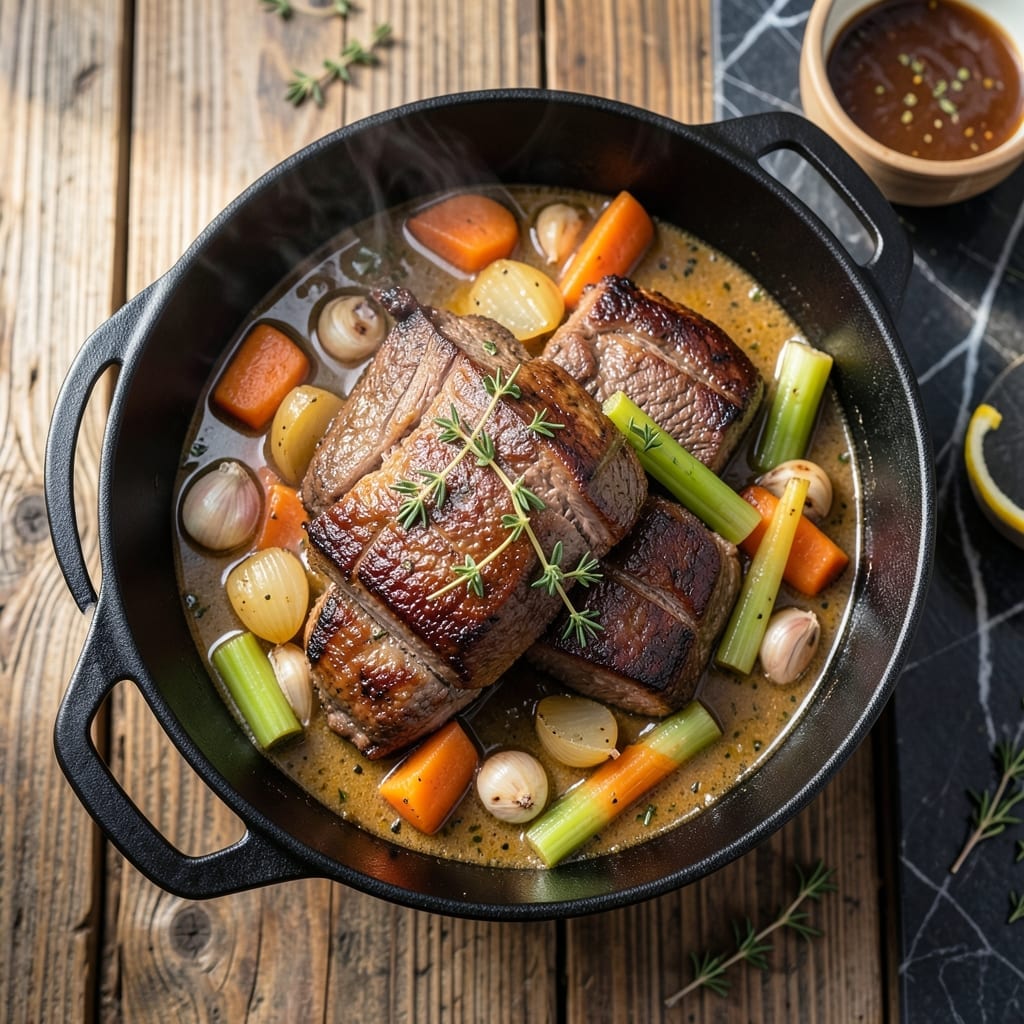
This pot roast transforms tough stew meat into meltingly tender perfection through the magic of slow cooking. The low, gentle heat breaks down connective tissues, creating fall-apart texture that defines comfort food at its best.
I developed this method after years of testing, focusing on building deep flavor through proper browning and a rich braising liquid. The key is patience—letting the meat cook undisturbed until it reaches that ideal state of tenderness.
What emerges is beef so tender it nearly dissolves at the touch of a fork, surrounded by a rich, velvety sauce infused with vegetables and herbs. The stew meat absorbs all the flavors, making every bite intensely satisfying.
Serve this with mashed potatoes or crusty bread to soak up every drop of the delicious sauce. The results speak for themselves.
Ingredients for Pot Roast Recipe with Stew Meat
Pantry staples and a quick grocery run. Nothing exotic, just good, hearty ingredients.
| Ingredient | Amount | Notes |
|---|---|---|
| Beef Stew Meat 🥩 | 2 lb | Chuck roast cut into chunks |
| Olive Oil 🫒 | 2 tbsp | For browning meat |
| Yellow Onion 🧅 | 1 whole | Large, diced |
| Carrots 🥕 | 3 whole | Peeled, cut into chunks |
| Celery Stalks 🌿 | 3 whole | Cut into chunks |
| Garlic Cloves 🧄 | 4 cloves | Minced |
| Tomato Paste 🍅 | 2 tbsp | For depth of flavor |
| Red Wine 🍷 | 1 cup | Dry variety preferred |
| Beef Broth 🥫 | 2 cups | Low-sodium if available |
| Dried Thyme 🌿 | 1 tsp | Crushed between fingers |
| Dried Rosemary 🌿 | 1 tsp | Crushed between fingers |
| Bay Leaf 🍃 | 1 whole | Remove before serving |
| Salt 🧂 | 1 ½ tsp | Kosher or sea salt |
| Black Pepper 🌶️ | 1 tsp | Freshly ground preferred |
The beef is everything here. Chuck roast is the way to go—it has the marbling and connective tissue that turns into that melt-in-your-mouth texture. Most supermarkets sell it pre-cut as stew meat (look for Costco or Sam’s Club for bulk savings). If you’re cubing a whole roast, aim for 1.5-inch chunks so they hold shape during cooking. Fresh stew meat should be bright red with visible fat streaks.
No red wine? Beef broth plus a splash of balsamic vinegar works in a pinch. Fresh thyme and rosemary can replace dried at a 3:1 ratio. Out of tomato paste? Ketchup or tomato sauce (about 3 tbsp) gets you close. The vegetables are flexible—swap in parsnips or potatoes if you prefer. Just keep the total veg volume similar so the braising liquid stays balanced.
This tastes even better the next day. Store in the fridge for up to 4 days or freeze for 3 months. Reheat gently on the stove with a splash of water or broth. The sauce thickens as it cools—perfect for soaking into mashed potatoes or bread.
Why You’ll Love This Recipe
- I’ll be real: stew meat is affordable, and this pot roast makes it taste like a million bucks.
- One Pot Meal: I toss everything in, let it simmer, and dinner practically makes itself.
- Rich and Hearty: The beef stew meat soaks up the carrot and onion flavors until it’s fall-apart tender.
- Feeds Many: Between us, it stretches to four generous servings—plenty for leftovers.
Step-by-Step Instructions for Pot Roast With Stew Meat
This method turns humble stew meat into fall-apart tender perfection with rich, deep flavors.
Step 1: Brown the Beef Stew Meat
Heat the 2 tbsp olive oil in a large Dutch oven over medium-high heat until it shimmers. Add the 2 lb beef stew meat in a single layer, being careful not to overcrowd the pan. You’ll need to work in batches to get a good sear.
Cook undisturbed for 3-4 minutes until the meat develops a deep brown crust on the bottom. Flip and repeat on all sides. This browning step is crucial—it creates the flavor foundation for your pot roast. Transfer the browned meat to a plate and set aside.
Step 2: Sauté the Vegetables and Build the Base
In the same pot, add the diced yellow onion, chunked carrots, and chunked celery stalks. Cook for 5-6 minutes over medium heat, stirring occasionally, until the vegetables begin to soften and the onion turns translucent.
Add the minced 4 cloves garlic cloves and cook for 30 seconds until fragrant. Stir in the 2 tbsp tomato paste and cook for 1-2 minutes until it darkens slightly. This step deepens the tomato flavor and prevents a raw taste in your finished dish.
Step 3: Deglaze and Add Liquids
Pour in the 1 cup red wine, scraping up all the browned bits from the bottom of the pot with a wooden spoon. Let it simmer for 2-3 minutes until the liquid reduces by about half. These browned bits are packed with flavor and will dissolve into your sauce.
Return the beef to the pot. Add the 2 cups beef broth, 1 tsp dried thyme, 1 tsp dried rosemary, 1 whole bay leaf, 1.5 tsp salt, and 1 tsp black pepper. Stir to combine and bring to a gentle simmer.
Step 4: Slow Cook Until Tender
Once simmering, reduce the heat to low, cover the pot, and let it cook for 2 to 2.5 hours. Check occasionally and add a splash of water if needed, but resist the urge to stir too much. The meat should be fork-tender when done—it should pull apart easily with a gentle nudge.
The low and slow cooking method transforms the tough stew meat into meltingly tender pot roast. You’ll know it’s ready when the beef easily shreds with a fork and the vegetables are soft and flavorful.
Step 5: Finish and Serve
Remove the bay leaf and discard it. Taste and adjust the seasoning if needed. The sauce should be rich and flavorful, coating the back of a spoon. If it’s too thin, simmer uncovered for 5-10 minutes to thicken slightly.
Serve the pot roast hot, with plenty of the cooking liquid spooned over the top. The beef should be incredibly tender, the vegetables soft and infused with the rich flavors of the wine and herbs. This dish tastes even better the next day as the flavors continue to meld.
Pro Tips For Making Pot Roast Recipe With Stew Meat
- Sear the Meat Well: I learned this the hard way—browning the stew meat in batches with hot oil (about 2 tablespoons) until deeply browned makes a real difference in flavor. Skip the crowding, or it’ll steam instead of sear.
- Cut Veggies Evenly: My grandmother swore by this, and she was right: chop the onion, carrots, and celery into uniform 1-inch pieces so they cook at the same rate and don’t turn to mush.
- Don’t Rush the Braise: After burning a few batches, I finally figured out low and slow (3-4 hours at 300°F) is non-negotiable for tender stew meat—yes, even if you’re impatient like me.
- Use a Dutch Oven: Sounds weird, but it works: a heavy Dutch oven distributes heat evenly and keeps the moisture locked in, so the meat stays juicy and the veggies don’t dry out.
Essential Equipment for This Dish
Dutch Oven Essentials
Your most important tool is a heavy 5-6 quart Dutch oven with a tight-fitting lid. I swear by my Le Creuset—it distributes heat evenly and retains moisture perfectly. The enameled cast iron handles the long, slow cooking without hot spots that can burn your sauce. 🔥
Wooden Spoon Magic
A wooden spoon is indispensable for deglazing—it scrapes up all those flavorful browned bits without scratching your pot. Look for one with a flat edge, like the OXO Good Grips model. You’ll be amazed how much flavor comes from those little browned pieces.
Meat Thermometer
While not strictly necessary, a probe thermometer takes the guesswork out of doneness. I use my ThermoWorks to check the internal temperature reaches at least 195°F for that perfect fall-apart texture. It’s the difference between good and extraordinary pot roast.
Sharp Chef’s Knife
Invest in a good 8-inch chef’s knife for prepping your vegetables. A sharp Wüsthof or Victorinox makes quick work of carrots and celery. Uniform chunks ensure even cooking and a more professional presentation.
Tongs for Turning
Use 12-inch locking tongs to turn your beef while browning. This gives you precision without piercing the meat, which helps retain juices. I keep a pair of OXO tongs dedicated to my Dutch oven cooking—they’re heat-resistant and comfortable.
Glass Measuring Cups
Accurate measurements matter, especially for the wine and broth. I prefer Pyrex glass measuring cups with clear markings. They’re microwave-safe too, for when you need to warm your broth before adding it to the pot.
Nutrition Facts
Frequently Asked Questions
Can I use a slow cooker instead of a Dutch oven?
Yes! Transfer everything to a slow cooker after browning. Cook on low for 7-8 hours or high for 4-5 hours. The texture will be just as tender, though the browning may be less pronounced.
Why do I need to brown the meat first?
Browning creates a flavorful crust through the Maillard reaction, adding depth to your dish. Skipping this step results in a bland, gray pot roast. Always sear in hot oil for best results.
What if my sauce is too thin after cooking?
Simmer uncovered for 5-10 minutes to reduce and thicken. Alternatively, mix 1 tbsp cornstarch with cold water, stir into the sauce, and cook for 2-3 minutes.
Can I add potatoes to the pot?
Add 1 lb baby potatoes (halved) during the last 45-60 minutes of cooking. They’ll soak up the delicious flavors without turning mushy.

- Protein Pudding Recipe With Sugar Free Pudding: High-Protein Creamy Indulgence - November 3, 2026
- Progresso Recipe Starters Creamy Parmesan Basil Cooking Sauce: Rich Herb-Infused Base for Pasta and More - November 3, 2026
- Pudding Recipe With Egg Yolks: Silky Smooth Custard in Minutes - November 3, 2026