
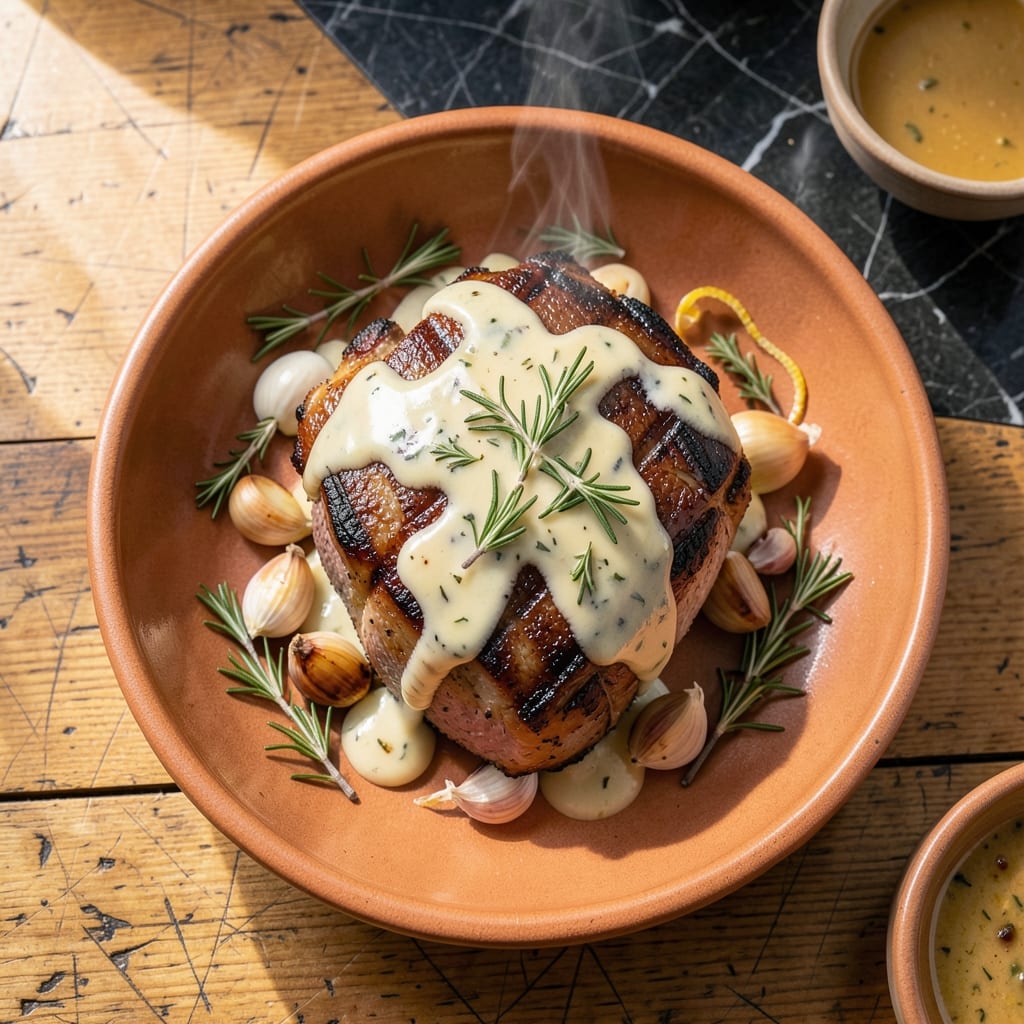
Achieving perfect medium-rare prime rib is within reach with the reverse sear method. This approach ensures even cooking from edge to center, delivering consistent results every time.
The process begins with a low oven temperature, allowing the meat to cook gently before a final high-heat sear. A butter and herb mixture enhances the flavor, creating a rich, aromatic crust that complements the tender beef.
You’ll be rewarded with a prime rib that’s juicy, evenly cooked, and bursting with savory depth. The reverse sear technique guarantees the ideal finish without overcooking.
This method is reliable, precise, and designed for those who demand excellence in every bite.
Ingredients for Prime Rib Recipe with Butter and Herbs
Quality beef and aromatic herbs form the foundation of this exceptional reverse-seared dish.
| Ingredient | Amount | Notes |
|---|---|---|
| Prime Rib Roast 🥩 | 4 lb | Bone-in or boneless, well-marbled |
| Unsalted Butter 🧈 | ½ cup | Softened to room temperature |
| Fresh Rosemary 🌿 | 2 tbsp | Finely chopped, stems removed |
| Fresh Thyme 🌿 | 2 tbsp | Finely chopped, stems removed |
| Garlic Cloves 🧄 | 6 cloves | Minced to fine paste |
| Kosher Salt 🧂 | 2 tbsp | Diamond Crystal preferred for even seasoning |
| Coarse Black Pepper 🌶️ | 1 tbsp | Freshly ground for optimal aroma |
| Olive Oil 🫒 | 2 tbsp | High smoke point for searing |
| Red Wine 🍷 | ½ cup | Dry variety like Cabernet Sauvignon |
| Beef Stock 🥘 | 1 cup | Low-sodium for controlled seasoning |
| Shallots 🧅 | 2 whole | Finely minced for sauce |
| Dijon Mustard 🟡 | 2 tbsp | For herb butter binding |
| Fresh Parsley 🌿 | ¼ cup | Chopped for garnish |
The prime rib quality is non-negotiable. USDA Prime or Choice grades with abundant marbling ensure tenderness. Source from a reputable butcher—ask for the ribeye end for best flavor. The butter must be European-style (higher fat content) for superior crust formation. Fresh herbs should be organic if possible; their essential oils create the aromatic depth promised in the reverse sear method.
No fresh herbs? Dried at one-third the quantity, but rehydrate in warm water first. Substitute Cabernet with a bold Merlot if needed—avoid sweet wines. Beef stock can be homemade (recommended) or low-sodium store-bought. For the butter mixture, Dijon mustard can be replaced with whole-grain mustard, but avoid yellow mustard as it lacks complexity.
Store the raw prime rib uncovered on a rack in the fridge for 1-2 days to dry the surface for better searing. The herb butter keeps 1 week refrigerated or 3 months frozen. Always bring the roast to room temperature before cooking for even results.
Why You’ll Love This Recipe
- Minimal Effort: I just rub the roast with butter, herbs, and garlic—no fancy techniques or hard-to-find ingredients.
- Holiday Star: It’s my go-to for Christmas dinner, but honestly, I’ve made it for Sunday supper too.
- Leftovers Dream: The slices reheat beautifully for sandwiches that taste even better the next day.
Step-by-Step Instructions for Prime Rib With Butter and Herbs
Master the reverse sear technique for evenly cooked meat with a herbaceous crust.
Step 1: Season and Prep the Prime Rib
Pat the 4 lb Prime Rib Roast completely dry with paper towels—this is critical for achieving a proper sear later. Generously season all surfaces with the 2 tbsp Kosher Salt and 1 tbsp Coarse Black Pepper, pressing the seasoning into the meat so it adheres well.
Let the seasoned roast rest at room temperature for 1-2 hours before cooking. This allows the salt to penetrate deeply and the meat to cook more evenly. The surface should develop a slightly tacky texture, which helps the herb butter cling during the searing phase.
Step 2: Prepare the Herb Butter Mixture
In a small bowl, combine the 0.5 cup Unsalted Butter (softened to room temperature) with the 2 tbsp Fresh Rosemary, 2 tbsp Fresh Thyme, and 6 cloves Garlic Cloves (minced to a fine paste). Add the 2 tbsp Dijon Mustard to bind the mixture together.
This compound butter will create a flavorful crust and baste for the prime rib. The mustard not only binds the herbs but adds a subtle tang that complements the richness of the beef. Mix thoroughly until all ingredients are evenly distributed.
Step 3: Reverse Sear for Even Cooking
Preheat your oven to 250°F. Place the seasoned Prime Rib Roast on a wire rack set over a baking sheet. Roast in the oven until the internal temperature reaches 110-115°F for medium-rare, which should take approximately 1.5-2 hours for a 4 lb roast.
This low-and-slow method ensures the center cooks evenly without overcooking the outer layers. Use a meat thermometer to monitor the internal temperature accurately—this is the most reliable indicator of doneness.
Step 4: Sear and Baste to Finish
Heat the 2 tbsp Olive Oil in a large skillet over high heat until shimmering. Sear the roast on all sides for 2-3 minutes per side until deeply browned and a thick crust forms. Reduce heat to medium and add the herb butter mixture to the pan.
Baste the roast continuously with the melted herb butter for 3-4 minutes, using a spoon to pour the butter over the top and sides. This step builds layers of flavor and creates a glossy, aromatic crust. The internal temperature should rise to 125-130°F for perfect medium-rare.
Step 5: Rest and Prepare the Pan Sauce
Transfer the roast to a cutting board and tent loosely with foil. Let it rest for 15-20 minutes to allow the juices to redistribute. Meanwhile, place the skillet over medium heat and add the 2 whole Shallots (finely minced).
Sauté for 2-3 minutes until softened, then deglaze with the 0.5 cup Red Wine, scraping up all the browned bits. Add the 1 cup Beef Stock and simmer for 5-7 minutes until reduced by half. Strain the sauce and serve alongside the sliced prime rib, garnished with 0.25 cup Fresh Parsley.
Pro Tips For Making Prime Rib Recipe With Butter And Herbs
- Reverse sear first: Start at 250°F until the internal temp hits 115°F, then crank the oven to 450°F for 10-15 minutes to get that crust—I learned this the hard way after serving gray prime rib to my in-laws.
- Dry the roast: Pat the prime rib bone-dry with paper towels before seasoning, or the butter-herb crust won’t stick properly. Sounds tedious, but it actually changes the outcome.
- Temper the butter: Let the unsalted butter sit out for 30 minutes before mixing with herbs and garlic—cold butter won’t spread evenly, and you’ll end up with sad, clumpy patches.
- Rest before carving: Tent the roast with foil and give it a solid 20 minutes to rest, or all those juices will end up on your cutting board instead of in the meat.
Health Benefits of This Recipe
Rich in Protein
This dish delivers an impressive 46 grams of protein per 6-ounce serving, supporting muscle growth and repair. The high-quality beef provides all essential amino acids your body needs for optimal function. I notice I feel more satisfied after meals with this protein powerhouse. 💪
Iron and Zinc Boost
Prime rib is packed with heme iron, the most easily absorbed form, providing about 3.5mg per serving. This helps prevent anemia and supports energy levels. The zinc content—around 8mg per serving—boosts immune function and wound healing.
B Vitamin Complex
You’ll get a significant dose of vitamin B12, B6, and niacin from this cut. These nutrients are vital for energy metabolism and nervous system health. A 6-ounce serving provides over 50% of your daily B12 needs.
Healthy Fats
The marbling in prime rib contains monounsaturated fats, similar to those in olive oil, which support heart health. While higher in saturated fat, the moderate portions in this recipe fit well within a balanced diet. I always pair it with veggies to round out the meal. 🥗
Selenium Source
This cut is an excellent source of selenium, with one serving providing about 40% of your daily needs. This mineral acts as a powerful antioxidant, protecting cells from damage and supporting thyroid function.
Low-Carb Friendly
With virtually no carbohydrates, this dish fits perfectly into low-carb or keto diets. The natural fats in the beef provide sustained energy without spiking blood sugar. It’s a satisfying option for those watching their carb intake.
Nutrition Facts
Frequently Asked Questions
What’s the ideal internal temperature for medium-rare?
Remove from oven at 110-115°F and sear until 125-130°F. The temp rises 5-10°F while resting. Use a meat thermometer for accuracy.
Can I use dried herbs instead of fresh?
Yes, use 1/3 the amount and rehydrate in warm water first. Fresh herbs are preferred for maximum flavor impact.
How long should the roast rest before slicing?
Let it rest for 15-20 minutes tented with foil. This allows juices to redistribute for moist, tender slices.
Why use reverse sear instead of traditional roasting?
It cooks the meat evenly from edge to center. Traditional roasting can overcook outer layers while the center finishes.

- Mary Berry’s Boiled Fruit Cake Recipe: Moist Center and Spiced Crust Magic - November 5, 2026
- Atlantic Salmon Recipe: Honey-Dill Pan-Seared With Crispy Skin - November 5, 2026
- Blaze Pizza Copycat Dough Recipe: Chewy, Airy Crust That Mimics the Original - November 5, 2026