
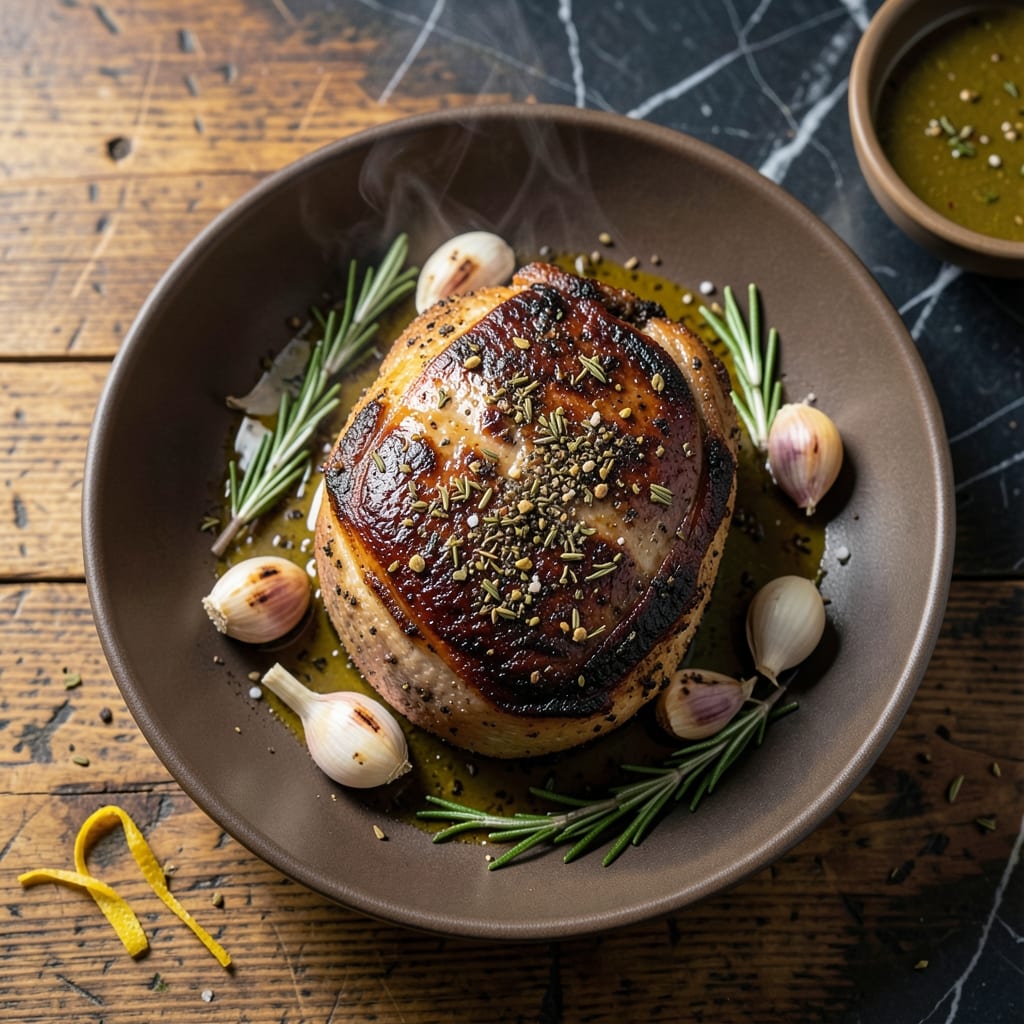
This prime rib roast delivers tender, juicy slices with a fragrant herb crust. I developed this method after years of holiday trial and error, refining the technique to ensure perfect results every time.
The key is a generous rub of herbs de Provence, which creates an aromatic crust while allowing the beef’s natural flavors to shine. A slow roast at 325°F ensures even cooking from edge to edge, with a final high-heat sear for ideal browning.
What emerges is a centerpiece-worthy roast with a perfectly pink interior and a crust infused with the earthy, floral notes of Provence. The meat rests before slicing to lock in every drop of flavor.
Serve with au jus for dipping and your favorite sides. This is holiday cooking at its finest.
Ingredients for Prime Rib Roast Recipe Herbs De Provence
Quality beef and a handful of herbs create this showstopping centerpiece. Nothing less will do.
| Ingredient | Amount | Notes |
|---|---|---|
| Prime Rib Roast 🥩 | 5 lb | Bone-in, well-marbled preferred |
| Herbes de Provence 🌿 | 2 tbsp | Dried blend, or make your own |
| Kosher Salt 🧂 | 2 tbsp | Diamond Crystal preferred for texture |
| Freshly Ground Black Pepper 🌶️ | 2 tsp | Coarse grind for crust |
| Garlic Cloves 🧄 | 6 cloves | Minced into paste consistency |
| Extra-Virgin Olive Oil 🫒 | ¼ cup | For herb paste and searing |
| Dijon Mustard 🟡 | 2 tbsp | Helps herb rub adhere to roast |
| Red Wine 🍷 | 1 cup | Dry variety, for au jus |
| Beef Stock 🥩 | 2 cups | Low-sodium preferred |
| Unsalted Butter 🧈 | 4 tbsp | For finishing au jus |
| Fresh Rosemary Sprigs 🌿 | 4 sprigs | For garnish and flavor |
| Fresh Thyme Sprigs 🍃 | 6 sprigs | For garnish and flavor |
The prime rib is non-negotiable here. USDA Prime grade delivers the marbling you need for that buttery texture—Choice works but avoid Select. Source from Whole Foods or a trusted butcher who dry-ages in-house. Ask for the rib end (not the loin end) for richer flavor. The herbes de Provence should list lavender, thyme, and rosemary—Penzeys has an excellent blend if you’re not mixing your own.
No herbes de Provence? Mix 1 tbsp each dried thyme, rosemary, and savory with 1 tsp each lavender and marjoram. The Dijon can be swapped for whole-grain mustard, but avoid yellow—too sharp. For the au jus, substitute port wine for red if you want deeper fruit notes. The beef stock can be homemade, but Better Than Bouillon base is a solid shortcut.
The roast needs to sit uncovered in the fridge for 12-24 hours after seasoning—this dries the surface for better browning. Cooked roast rests 30-45 minutes before slicing. Au jus keeps 3 days refrigerated or 3 months frozen. Always slice against the grain for maximum tenderness.
Why You’ll Love This Recipe
- I’ll be real: the sandwiches I make with the leftovers might be even better than the original meal.
- Set It and Forget: I rub the roast with Kosher salt, pepper, garlic, and Herbes de Provence, then let the oven do all the work.
- That Herbal Crust: Honestly, the mix of rosemary, thyme, and lavender in the Herbes de Provence with the garlic makes every bite ridiculously good.
- Holiday or Tuesday: Between us, this feels fancy enough for Christmas but unfussy enough for a regular dinner with friends.
Step-by-Step Instructions for Prime Rib Roast with Herbes de Provence
Here’s the method. Straightforward, tested, works every time.
Step 1: Prepare the Herb Rub
In a small bowl, combine the 2 tbsp Herbes de Provence, 2 tbsp Kosher Salt, and 2 tsp Freshly Ground Black Pepper. I use a fork to break up any clumps in the dried herbs, ensuring even distribution throughout the rub.
Add the 6 cloves Garlic Cloves (minced into a paste) and 0.25 cup Extra-Virgin Olive Oil, then mix thoroughly. Stir in the 2 tbsp Dijon Mustard until fully incorporated. This paste will create a flavorful crust that adheres beautifully to the roast.
Step 2: Season and Sear the Roast
Pat the 5 lb Prime Rib Roast dry with paper towels to ensure the rub sticks properly. Place the roast on a rack set in a roasting pan, bone-side down. Spread the herb paste evenly over the entire surface, pressing it into the meat for maximum adhesion.
Let the seasoned roast sit at room temperature for 1 hour before cooking. This step is crucial for even cooking and allows the flavors to penetrate the meat. Preheat your oven to 450°F during the last 20 minutes of this resting period.
Step 3: Roast at High Heat Then Reduce
Place the roast in the preheated oven and cook for 20 minutes at 450°F. This initial high heat creates a beautiful crust. After 20 minutes, reduce the oven temperature to 325°F without opening the door to maintain consistent heat.
Continue roasting for approximately 1 hour and 15 minutes to 1 hour and 30 minutes, or until the internal temperature reaches 120-125°F for medium-rare. Use a meat thermometer inserted into the thickest part of the roast, avoiding the bone, for accurate reading.
Step 4: Rest and Prepare Au Jus
Transfer the roast to a cutting board, tent loosely with foil, and let it rest for 20-30 minutes. This resting period allows the juices to redistribute throughout the meat for optimal tenderness and flavor.
Meanwhile, place the roasting pan on the stovetop over medium heat. Add the 1 cup Red Wine and 2 cups Beef Stock, scraping up all the browned bits from the bottom of the pan. Simmer for 5-7 minutes until reduced by about one-third.
Stir in the 4 tbsp Unsalted Butter until melted and fully incorporated. Strain the au jus through a fine-mesh sieve into a gravy boat or serving bowl.
Step 5: Carve and Serve
Carve the roast by slicing between the bones for perfect portions. Arrange the slices on a serving platter and garnish with the 4 sprigs Fresh Rosemary Sprigs and 6 sprigs Fresh Thyme Sprigs for a beautiful presentation.
Serve immediately with the prepared au jus on the side. Each slice should have a perfectly pink center with a fragrant, herbaceous crust. The au jus adds a rich, savory finish to every bite.
Pro Tips For Making Prime Rib Roast Recipe Herbs De Provence
- Dry the Roast First: Pat the prime rib completely dry with paper towels before seasoning—I learned this the hard way after my first few roasts came out steamed instead of seared.
- Crush the Garlic: Smash the garlic cloves with the side of your knife before rubbing them on the meat; it releases way more flavor than mincing or leaving them whole.
- Use a Meat Thermometer: Skip guessing and pull the roast at 115°F for medium-rare; after burning one to well-done, I finally invested in a good instant-read.
- Rest Under Foil: Tent the cooked roast with foil and let it rest 15-20 minutes before slicing—sounds tedious but it keeps every bite juicy.
Common Mistakes When Making Great prime rib roast recipe herbs de provence
Skipping the Dry Brine
I learned the hard way that dry brining the roast for 12-24 hours in the fridge makes all the difference. Skipping this step means your seasoning won’t penetrate deeply, and you’ll lose that beautiful crust. Pat the roast dry first, then apply the herb paste. 💡
Rushing the Rest
Carving too soon causes all those precious juices to spill out onto the cutting board. Let it rest for 20-30 minutes tented with foil. I use this time to finish the au jus and set the table.
Ignoring the Thermometer
Never rely on time alone for doneness. Invest in a good instant-read thermometer—I swear by my ThermoWorks. Pull the roast at 120-125°F for perfect medium-rare. The temperature will rise 5-10°F while resting.
Uneven Seasoning
Don’t just rub the top. Get the herb paste into every nook, including the sides and bone area. I use my hands to press it in thoroughly. This ensures even flavor in every bite.
Overcrowding the Pan
Use a roasting rack to elevate the meat. If the roast sits in its own juices, the crust won’t form properly. A simple wire rack in a baking sheet works if you don’t have a roasting pan. 🔥
Skipping the High-Heat Start
That initial 20 minutes at 450°F creates the Maillard reaction for a deep, flavorful crust. Don’t skip it for fear of overcooking—the lower temperature afterward ensures even doneness.
Nutrition Facts
Frequently Asked Questions
Can I use fresh herbs instead of dried?
Yes, but use 3x the amount since fresh herbs contain more water. Finely chop 6 tbsp of mixed fresh thyme, rosemary, and lavender. The flavor will be brighter but may not adhere as well to the roast.
How do I know when it’s done without a thermometer?
Press the roast with tongs—medium-rare feels like the fleshy part below your thumb when your hand is relaxed. But for best results, invest in a thermometer and aim for 120-125°F internally.
What sides pair best with this dish?
Classic pairings include creamy horseradish mashed potatoes, roasted root vegetables, or a simple green salad. The rich flavors also work well with a bold red wine like Cabernet Sauvignon.
Can I make this a day ahead?
Season and dry-brine the roast up to 24 hours ahead, but cook it the same day for best texture. Leftovers keep well in the fridge for 3-4 days and make excellent sandwiches.

- Pudding Recipe With Egg Yolks: Silky Smooth Custard in Minutes - November 3, 2026
- Pudding Pops Recipe Cook and Serve: Silky Frozen Treats Without the Machine - November 3, 2026
- Protein Ice Cream Recipe Blender Xanthan Gum: Ultra Creamy Texture Without the Guilt - November 3, 2026