
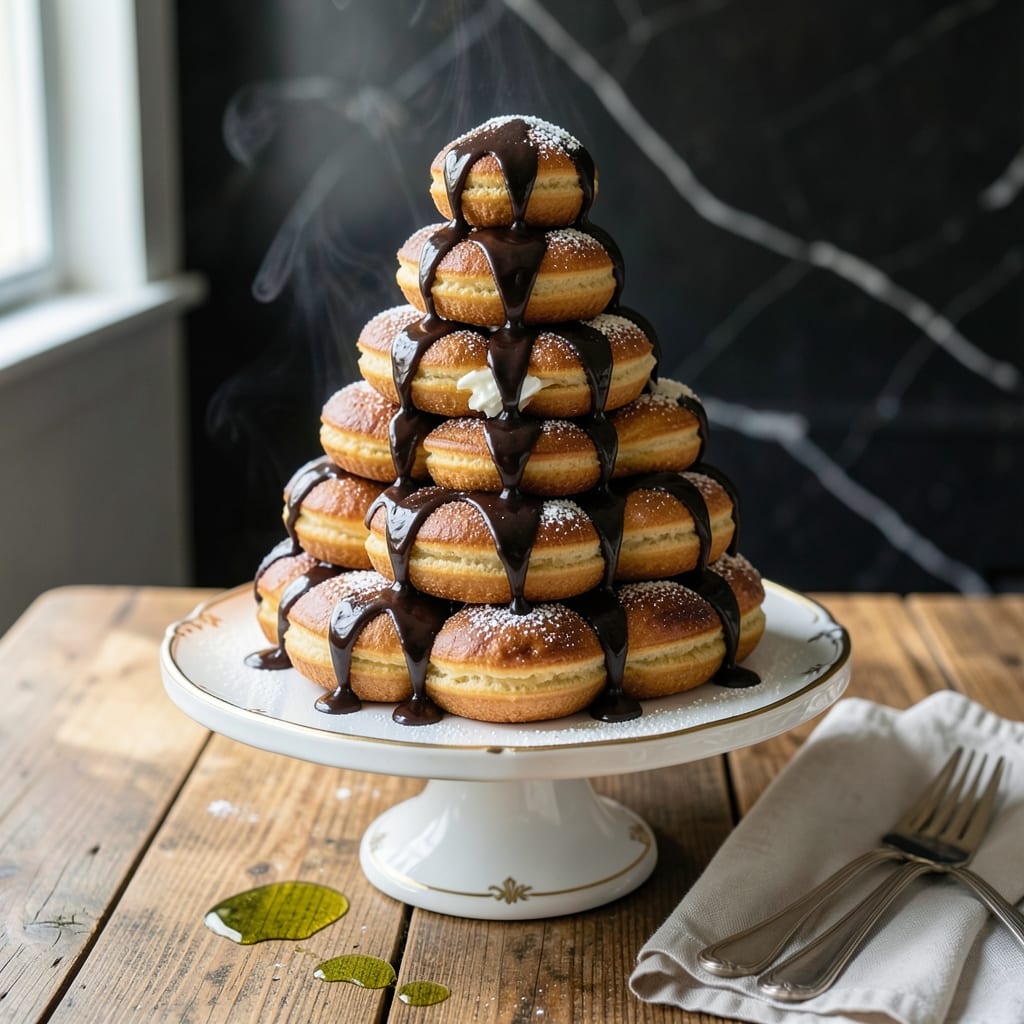
Mastering choux pastry is the foundation of perfect profiteroles, and this recipe delivers professional results every time. The key lies in precise technique—heating the butter, water, and flour to create a smooth dough that pipes beautifully and puffs dramatically in the oven.
Once baked, these hollow pastry shells become the ideal vessel for a creamy filling. I use a simple but rich whipped cream, sweetened just enough to complement rather than overpower the delicate choux. The contrast between the light, airy pastry and the smooth filling is what makes this dish exceptional.
The beauty of this method is its reliability. Follow the steps carefully, and you’ll achieve evenly risen, golden profiteroles with a crisp exterior and a hollow center ready to be filled. It’s a test of patience and precision, but the results are well worth the effort.
Serve them as a dessert or an elegant sweet course. The technique is straightforward, but the outcome is anything but ordinary.
Ingredients for Profiteroles Recipe Great British Bake Off
Craft these elegant pastries with a handful of quality ingredients for showstopping results.
| Ingredient | Amount | Notes |
|---|---|---|
| Unsalted Butter 🧈 | ½ cup | Cut into small cubes |
| Water 💧 | 1 cup | Room temperature |
| All-Purpose Flour 🌾 | 1 cup | Sifted for smooth texture |
| Large Eggs 🥚 | 4 whole | Room temperature, beaten |
| Granulated Sugar 🍚 | 1 tbsp | Divided for dough and cream |
| Salt 🧂 | ¼ tsp | Fine grain preferred |
| Heavy Cream 🥛 | 2 cups | Cold, for whipped cream |
| Vanilla Extract 🌿 | 1 tsp | Pure extract for best flavor |
| Powdered Sugar 🍬 | 2 tbsp | For dusting finished profiteroles |
| Whole Milk 🥛 | ¼ cup | Optional for richer cream |
The butter is critical here. Use high-fat European-style (like Plugrá or Kerrygold) for superior flavor and structure. The flour should be all-purpose—no need for bread or cake flour. Eggs at room temperature incorporate more smoothly into the dough. Most supermarkets carry everything you need; no specialty stores required for this classic.
No heavy cream? Whipped topping works in a pinch, but the texture won’t be as rich. Out of vanilla extract? Vanilla bean paste at half the amount adds depth. For a lighter filling, fold in Greek yogurt at a 1:1 ratio with the whipped cream. The sugar can be adjusted to taste—some prefer it sweeter, others more subtle.
Choux dough is best used immediately, but the baked shells freeze beautifully for up to 1 month. Store filled profiteroles in the fridge for 2 days max—the pastry softens quickly. Dust with powdered sugar just before serving to keep the presentation crisp.
Why You’ll Love This Recipe
- One Bowl Wonder: I mix everything in a single saucepan—no fancy equipment, just butter, water, flour, and eggs coming together like magic.
- Crowd-Pleasing Dessert: I’ve served these at dinner parties and weekday treats alike—everyone from my picky nephew to my foodie friends goes wild.
- Budget-Friendly Fancy: Five basic ingredients transform into something that looks and tastes like it came from a high-end bakery. I’ll be real: it’s my secret to impressing without breaking the bank.
Step-by-Step Instructions for Profiteroles
Master the choux pastry technique and pipe perfect profiteroles with a luscious cream filling.
Step 1: Create the Choux Pastry Base
In a medium saucepan, combine 0.5 cup unsalted butter (cut into small cubes) and 1 cup water over medium-high heat. Bring to a rolling boil, then immediately remove from heat and add 1 cup all-purpose flour all at once.
Stir vigorously with a wooden spoon until a smooth dough forms and pulls away from the sides of the pan. Return to medium heat for 1-2 minutes to dry the dough slightly—you should see a thin film forming on the bottom of the pan.
Transfer the dough to a mixing bowl and let it cool for 3-4 minutes until it’s just warm to the touch. This prevents cooking the eggs when you add them next.
Step 2: Incorporate the Eggs for Lightness
With the dough still warm, add 4 whole large eggs (room temperature, beaten) one at a time, beating thoroughly after each addition. I use a stand mixer for this step to ensure complete incorporation and a smooth, glossy dough.
The dough should be thick but pipeable—when you lift the beater, it should form a V-shape that slowly collapses. If it’s too stiff, the profiteroles won’t puff properly. Add a pinch of 0.25 tsp salt and ½ tbsp granulated sugar during this process for balanced flavor.
Step 3: Pipe and Bake the Choux
Preheat oven to 400°F. Line a baking sheet with parchment paper. Transfer the dough to a piping bag fitted with a large round tip. Pipe 1-inch rounds onto the prepared sheet, spacing them 2 inches apart to allow for expansion.
Bake for 20-25 minutes until deep golden brown and hollow inside. Don’t open the oven during the first 15 minutes—this could cause them to collapse. They’re done when they sound hollow when tapped on the bottom.
Remove from oven and immediately poke a small hole in the side of each profiterole with a toothpick to release steam. Let cool completely on a wire rack.
Step 4: Prepare the Cream Filling
In a chilled bowl, whip 2 cups heavy cream with the remaining ½ tbsp granulated sugar, 1 tsp vanilla extract, and 0.25 cup whole milk (for extra richness) until soft peaks form. Be careful not to overwhip—the cream should hold its shape but still be smooth and spreadable.
For the best texture, keep your bowl and beaters chilled in the freezer for 10 minutes before starting. This helps the cream whip up faster and more stable. The addition of milk creates a lighter, more pipeable consistency perfect for filling.
Step 5: Fill and Finish the Profiteroles
Once the choux are completely cool, use a small piping tip to fill them with the whipped cream through the hole you made earlier. Pipe until the profiterole feels full but not overstuffed—the cream should just barely peek out of the hole.
Arrange the filled profiteroles on a serving platter and dust generously with 2 tbsp powdered sugar using a fine-mesh sieve. Serve immediately for the best texture, as the cream will soften the choux over time.
For an elegant presentation, stack them in a pyramid shape. The contrast between the crisp choux exterior and creamy filling is what makes this dessert truly special.
Pro Tips For Making Profiteroles Recipe Great British Bake Off
- Boil the Butter: Melt the unsalted butter with water until it reaches a full rolling boil—this ensures the flour absorbs the fat properly for a sturdy choux pastry.
- Beat Eggs Separately: Whisk the large eggs in a separate bowl before adding them to the dough—this prevents overmixing and makes incorporating them much smoother.
- Skip Cold Eggs: Use room-temperature eggs; cold ones can cause the dough to seize up, and I learned this the hard way after my first few batches collapsed.
- Pipe Evenly: Use a piping bag to drop uniform mounds of dough—this guarantees even baking and professional-looking profiteroles every time.
Troubleshooting This Dish
Flat Profiteroles
If your choux doesn’t puff, the dough was likely too wet or the oven not hot enough. Ensure your 400°F oven is fully preheated and the dough forms a V-shape when piped. Under-mixed eggs can also prevent proper rise.
Collapsing After Baking
This happens when they cool too quickly. After baking, turn off the oven, crack the door, and let them sit for 10 minutes to dry out gradually. Also, poke the hole immediately to release steam, which prevents internal moisture from making them sag. 💡
Hollow Centers Missing
Overworking the dough or adding eggs too quickly can create dense centers. Add eggs one at a time, fully incorporating each before the next. The dough should be smooth and glossy, not sticky or dry.
Cracked Exteriors
Cracks often form from uneven heating. Pipe uniform 1-inch rounds and ensure even oven airflow. If using multiple racks, rotate pans halfway through baking for consistent results.
Wet Filling
Chill your bowl and beaters for 10 minutes before whipping the cream. Use the coldest 2 cups heavy cream possible, and stop at soft peaks. Overwhipping turns the filling grainy and hard to pipe.
Soggy Choux
Fill profiteroles just before serving to maintain crispness. If you must prep ahead, store shells and cream separately. Dust with 2 tbsp powdered sugar right before serving to keep the presentation fresh. 🌟
Nutrition Facts
Frequently Asked Questions
Can I make the choux pastry ahead of time?
Choux dough is best used immediately after making. However, baked shells can be stored in an airtight container for up to 2 days or frozen for 1 month. Re-crisp in a 350°F oven for 5 minutes before filling.
Why did my profiteroles deflate after cooling?
This usually happens if they weren’t baked long enough or cooled too quickly. Ensure they’re deep golden brown and poke steam holes immediately after baking. Let them cool gradually in the turned-off oven.
How do I get the filling to pipe smoothly?
Chill your bowl and beaters for 10 minutes before whipping. Use cold heavy cream and stop at soft peaks. For extra ease, add 1-2 tbsp powdered sugar to stabilize the cream.

- White Jello Shot Recipe: Creamy Vodka Magic in 30 Seconds - November 5, 2026
- Mary Berry’s Boiled Fruit Cake Recipe: Moist Center and Spiced Crust Magic - November 5, 2026
- Atlantic Salmon Recipe: Honey-Dill Pan-Seared With Crispy Skin - November 5, 2026