
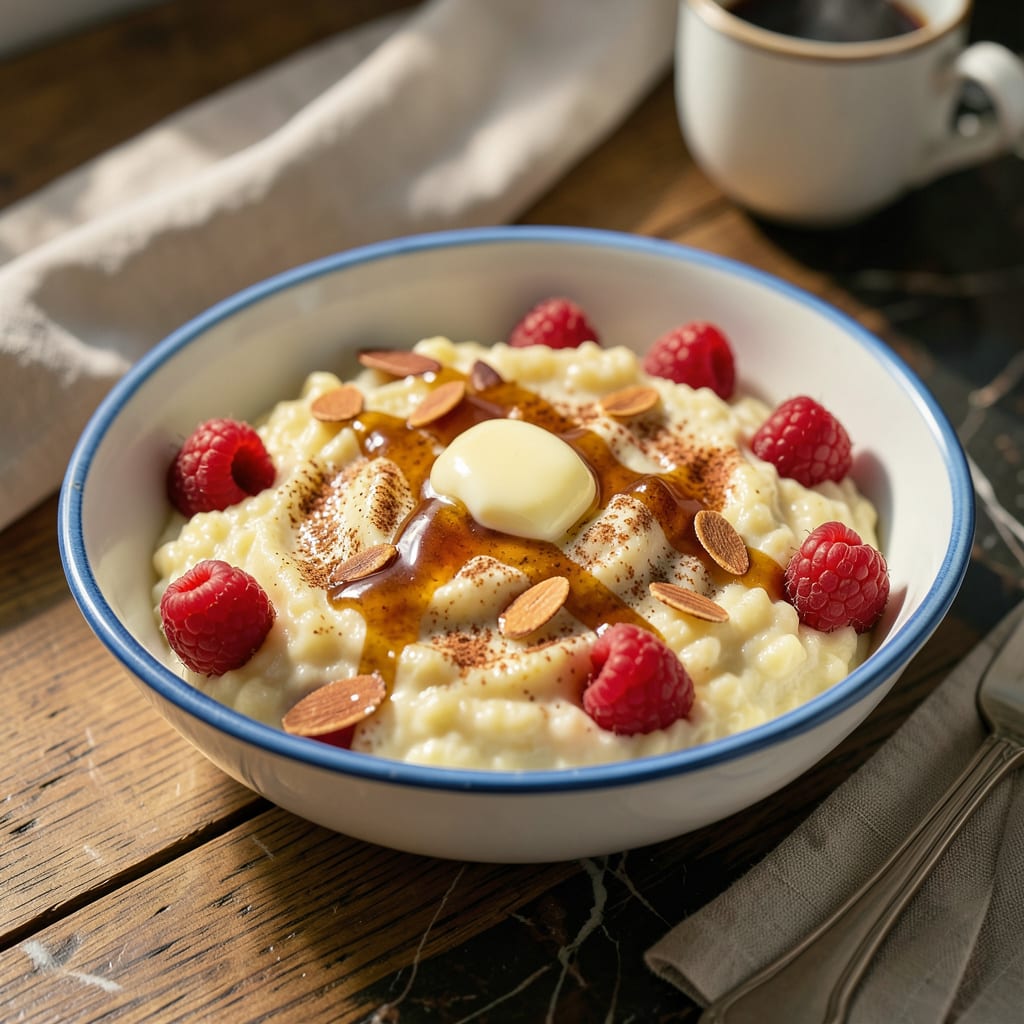
Cook 1/2 cup farina in 2 cups boiling milk (or water) with a pinch of salt for 5-7 minutes, stirring constantly. Sweeten with sugar, honey, or maple syrup, then top with cinnamon, fruit, or nuts for a warm, creamy breakfast.
This humble wheat-based porridge transforms into a velvety breakfast staple thanks to its unique starch structure. 🔥 When heated, farina’s semolina granules absorb liquid gradually, creating that signature smooth texture without the gumminess of oatmeal. I love how it adapts to different dietary needs—swap dairy for coconut milk for vegan versions, or boost protein by stirring in Greek yogurt after cooking. The key is maintaining that gentle simmer and constant stirring to prevent clumping while the starches fully gelatinize.
What sets farina apart from other hot cereals is its neutral base that carries flavors beautifully. A sprinkle of cardamom with brown sugar creates a chai-like experience, while savory versions with Parmesan and black pepper make an unexpected but delicious alternative. The 5-7 minute cook time makes it perfect for busy mornings, and leftovers reheat beautifully with a splash of milk to restore creaminess.
💡 In This Article
- Why Farina Creates the Perfect Creamy Breakfast Texture
- 5 Easy Farina Recipe Variations for Any Diet
Why Farina Creates the Perfect Creamy Breakfast Texture
Farina’s magic lies in its wheat semolina base, where the starch granules behave differently than oats or corn grits. When heated, these granules absorb liquid gradually through a process called starch gelatinization. The semolina’s medium-grind particles (about 0.25-0.5mm in diameter) create more surface area than whole oats, allowing for faster, more even liquid absorption.
This is why farina achieves that signature velvety texture in just 5-7 minutes of cooking. 🔥
The ideal liquid-to-farina ratio of 4:1 (like 2 cups milk to 1/2 cup farina) ensures proper starch expansion without becoming gluey. Unlike oatmeal that relies on soluble fiber for thickness, farina’s amylose and amylopectin starches form a stable gel network when heated to 180-212°F.
Constant stirring prevents these starches from clumping by distributing heat evenly and breaking up any forming lumps. The result? A smooth, creamy consistency that coats your spoon perfectly. ✨
Temperature control is crucial during this process. Boiling liquid provides the necessary heat to fully gelatinize the starch, but too high heat can cause the milk proteins to scorch. That’s why maintaining a gentle boil (around 200°F) creates the perfect environment.
The semolina’s protein content (about 12-14%) also contributes to the final texture by providing structure that prevents the porridge from becoming runny as it cools. 💫
What makes farina particularly special is how it handles reheating. The gelatinized starch network remains stable when cooled and reheated, unlike rice porridge that often becomes gluey. A simple splash of milk and 30 seconds in the microwave restores its original creaminess.
This stability comes from the wheat’s unique starch composition, where the amylopectin branches create a flexible gel that resists breaking down. 🌟
For comparison, corn grits require nearly double the cooking time (15-20 minutes) to achieve similar creaminess because their starch granules are more resistant to gelatinization. Steel-cut oats take even longer as their intact bran layers slow water absorption.
Farina’s semolina strikes the perfect balance—quick cooking with luxurious results that make it ideal for busy mornings while delivering restaurant-quality texture. ⚡
The neutral wheat flavor serves as the perfect canvas for both sweet and savory applications. The creamy base can carry bold flavors like cinnamon and brown sugar or delicate ones like vanilla and fresh berries. This versatility, combined with its scientific texture advantages, explains why farina has remained a breakfast favorite across cultures for generations.
The science is simple, but the results are anything but ordinary. 💛

- Beyond Burger Recipe Ideas: Plant-Based Creativity for Every Meal - September 28, 2026
- BBQ Bison Recipe Steaks: Smoky Grill Mastery with Bold Flavor - September 28, 2026
- Chicken Breast Recipe Tender: Brine-Soaked Juiciness Without Overcooking - September 28, 2026