
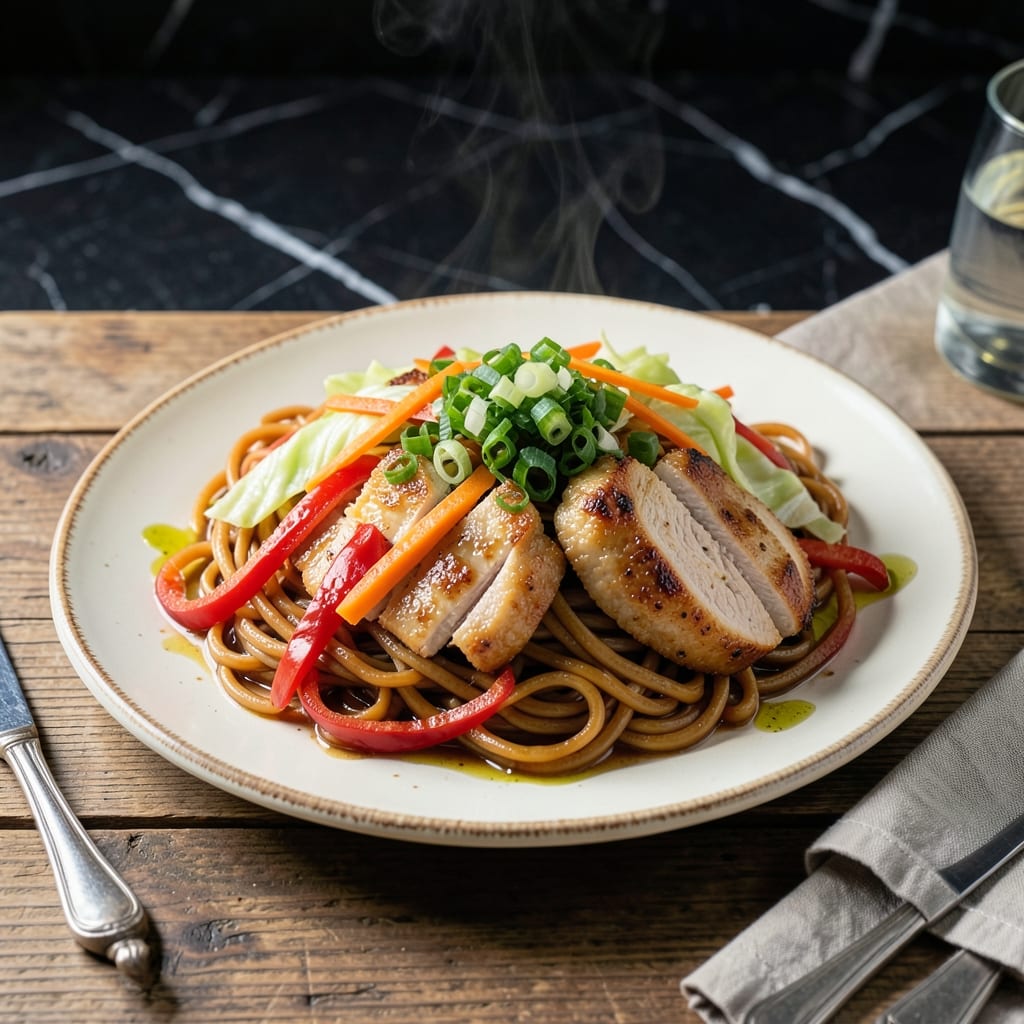
This Wagamama-inspired yaki udon delivers the bold flavors of Japanese stir-fried noodles with a savory sauce that coats every bite. The dish transforms thick udon noodles, tender vegetables, and your choice of protein into a satisfying one-pan meal.
The secret lies in the balance of sweet, salty, and umami in the sauce, which clings perfectly to the chewy noodles. I’ve refined this version to capture that signature restaurant taste without complicated techniques. High heat and quick cooking keep the vegetables crisp.
You’ll achieve that characteristic smoky depth by stir-frying everything in stages, ensuring each ingredient retains its texture. The udon noodles soak up the sauce while staying pleasantly chewy, not mushy.
Ready in under 30 minutes, this recipe brings authentic Japanese takeout flavor to your kitchen with minimal effort.
Ingredients for Yaki Udon Recipe Wagamama
Thick udon, crisp veggies, and savory sauce come together for bold Japanese flavors at home.
| Ingredient | Amount | Notes |
|---|---|---|
| Udon Noodles 🍜 | 14 oz | Fresh or frozen, not dried |
| Chicken Breast 🍗 | 1 lb | Boneless, skinless, thinly sliced |
| Red Bell Pepper 🌶️ | 1 whole | Thinly sliced into strips |
| Napa Cabbage 🥬 | 2 cups | Thinly shredded |
| Carrots 🥕 | 2 whole | Julienned or matchstick cut |
| Green Onions 🧅 | 3 whole | Sliced into 1-inch pieces |
| Garlic Cloves 🧄 | 3 cloves | Minced finely |
| Fresh Ginger 🌿 | 1 tbsp | Peeled and grated |
| Soy Sauce 🥢 | ⅓ cup | Use Japanese soy for authenticity |
| Oyster Sauce 🍶 | 2 tbsp | Vegetarian oyster sauce optional |
| Mirin 🍚 | 2 tbsp | Sweet cooking rice wine |
| Sugar 🍚 | 1 tbsp | White granulated or brown |
| Sesame Oil 🫒 | 1 tbsp | Toasted for depth of flavor |
| Neutral Oil 🛢️ | 2 tbsp | For high-heat stir-frying |
| Sesame Seeds 🌰 | 1 tbsp | Toasted, for garnish |
The udon noodles are non-negotiable here—look for fresh or frozen in the Asian aisle (dried won’t give you that signature chew). For the chicken, thighs work even better than breast (more flavor, stays juicier). Most Asian markets carry all the sauces, but Whole Foods or Amazon are solid backups. The ginger and garlic should be fresh—powders won’t cut it for that bright, punchy taste.
Vegetarian? Swap chicken for tofu or shiitake mushrooms. No oyster sauce? Use hoisin or extra soy (add a pinch of sugar). Mirin’s hard to find? 1 tbsp sugar + 1 tbsp rice vinegar mimics the sweet-tangy balance. The bell pepper can be any color (red’s sweeter), and snap peas or bok choy make great cabbage substitutes.
Sauce keeps 1 week in the fridge (great for doubling). Noodles and veggies are best fresh—leftovers keep 3-4 days but lose some texture. Toast sesame seeds just before serving (worth the extra minute).
Why You’ll Love This Recipe
- One Pan Wonder: I toss the udon, chicken, and veggies together in one pan—less washing up, more eating.
- Umami Bomb: That sweet-savory sauce clinging to the chewy udon and crisp peppers? Ridiculously good.
- Meal Prep Hero: I make a double batch on Sunday and it reheats beautifully for lunches all week.
- Budget Stretcher: Honestly, chicken breast and seasonal veggies keep this dish filling without breaking the bank.
Step-by-Step Instructions for Stir-Fried Noodles With Savory Udon Sauce
This method delivers the authentic Wagamama experience with crisp-tender veggies and noodles coated in rich umami sauce.
Step 1: Prepare the Udon Noodles and Chicken
Cook the 14 oz Udon Noodles according to package instructions, drain, and rinse under cold water to stop the cooking process. This prevents them from becoming mushy when stir-fried later. Toss the noodles with the 1 tbsp Sesame Oil to keep them from sticking together.
While the noodles cook, thinly slice the 1 lb Chicken Breast into bite-sized pieces. I like to cut them against the grain for maximum tenderness. Pat the chicken dry with paper towels—this ensures it sears properly instead of steaming in the pan. Set both the noodles and chicken aside until ready to use.
Step 2: Stir-Fry the Aromatics and Vegetables
Heat the 2 tbsp Neutral Oil in a wok or large skillet over medium-high heat until shimmering. Add the 3 cloves Garlic Cloves and 1 tbsp Fresh Ginger, stir-frying for 30 seconds until fragrant but not browned. Immediately add the 1 whole Red Bell Pepper, 2 whole Carrots, and 2 cups Napa Cabbage.
Stir-fry the vegetables for 4-5 minutes until they’re tender-crisp and the bell pepper starts to blister slightly. The carrots should still have a slight bite to them. Push the vegetables to one side of the pan to make room for the chicken.
Step 3: Cook the Chicken and Combine Everything
Add the sliced chicken to the cleared side of the pan and cook undisturbed for 2 minutes to develop a light sear. Stir and cook for another 2-3 minutes until the chicken is no longer pink and cooked through.
Once the chicken is cooked, add the prepared udon noodles to the pan along with the vegetables. Toss everything together gently to combine, ensuring the noodles don’t break apart. Cook for 1-2 minutes to heat the noodles through.
Step 4: Add the Sauce and Finish
In a small bowl, whisk together the 0.33 cup Soy Sauce, 2 tbsp Oyster Sauce, 2 tbsp Mirin, and 1 tbsp Sugar until the sugar dissolves. Pour this sauce over the noodle mixture in the pan.
Stir-fry everything together for 1-2 minutes until the sauce coats the noodles evenly and thickens slightly. The dish is ready when the noodles are glossy and the sauce clings to every strand. Remove from heat and stir in the 3 whole Green Onions.
Step 5: Garnish and Serve
Transfer the yaki udon to serving plates and sprinkle with the 1 tbsp Sesame Seeds. The seeds add a nutty crunch that contrasts beautifully with the tender noodles and vegetables. Serve immediately while hot—the sauce will continue to thicken slightly as it cools.
Each serving should have a balanced mix of noodles, chicken, and vegetables, all coated in that rich, savory sauce. The flavors meld together perfectly, delivering that signature Wagamama taste with every bite.
Pro Tips For Making Yaki Udon Recipe Wagamama
- Pre-cook the noodles: Boil the udon noodles for 1-2 minutes less than the package says—they’ll finish cooking in the pan with the sauce and veggies. I learned this the hard way after ending up with mushy noodles more than once.
- Slice chicken thin: Cut the chicken breast into thin, even strips (about ¼-inch thick) so it cooks through quickly in the high heat of the wok. After chewy chicken in my first few attempts, I finally figured out thickness was the issue.
- Skip the watery cabbage: Pat the shredded napa cabbage dry with a paper towel before tossing it in—it releases a surprising amount of water and can turn your stir-fry into a soggy mess.
- Hot pan, cold oil: Heat the pan until it’s smoking hot before adding the oil and chicken. Sounds weird, but it works: this is how you get that signature Wagamama sear on the veggies and meat.
Creative Variations of These Flavors
Vegetarian Delight
Swap the chicken for 14 oz extra-firm tofu, pressed and cubed. Pan-fry the tofu until golden before adding the vegetables. The tofu soaks up the sauce beautifully, giving you that same satisfying bite without meat. I love this version just as much as the original.
Seafood Lovers
Use 1 lb shrimp or scallops instead of chicken for a coastal twist. Cook the seafood just until opaque—about 2-3 minutes per side—to keep it tender. The sweetness of shrimp pairs perfectly with the savory sauce. 🌊
Spicy Kick
Add 1-2 tbsp sriracha or 1 tsp chili flakes to the sauce for heat lovers. I also like to toss in 1 sliced jalapeño with the vegetables for extra spice. This variation wakes up the flavors beautifully.
Mushroom Medley
Replace the chicken with 8 oz shiitake mushrooms, sliced. Sauté them until they release their moisture and turn golden. The umami from the mushrooms deepens the dish’s richness. Perfect for a meaty texture without meat.
Kids’ Friendly
Reduce the soy sauce by half and add 1 tbsp honey to the sauce for a sweeter, milder version. Skip the ginger if your kids are sensitive to strong flavors. This version is a hit with my little ones.
Extra Veggie Boost
Add 1 cup snap peas or bok choy along with the other vegetables. Both cook quickly and add vibrant color. I often throw in whatever veggies I have on hand—this dish is super versatile. 🥗
Nutrition Facts
Frequently Asked Questions
Can I use dried udon instead of fresh?
Yes, but soak dried udon in hot water for 5 minutes before cooking. They won’t have the same chew as fresh, so reduce stir-fry time by 1 minute to prevent mushiness.
What’s the best way to slice the chicken?
Cut against the grain into thin strips for tenderness. Pat dry with paper towels to ensure it sears instead of steams in the pan.
Can I make this ahead of time?
Cook and store components separately in the fridge for up to 1 day. Reheat noodles and veggies in a pan with a splash of water to restore texture.
Why is my sauce too thin or thick?
If too thin, simmer uncovered for 1-2 minutes. Too thick? Add 1-2 tbsp water or broth. The sauce should coat the noodles glossily.

- BBQ Sausage Recipe Oven: Smoky Depth Without the Grill - September 28, 2026
- BBQ Chicken Bowl Recipe Rice: Smoky Sweetness Over Fluffy Grains - September 28, 2026
- Beef Cutlet Recipe Ideas: Crispy Breaded Patties With Bold Seasonings - September 28, 2026